
Equipo Shieldworkz
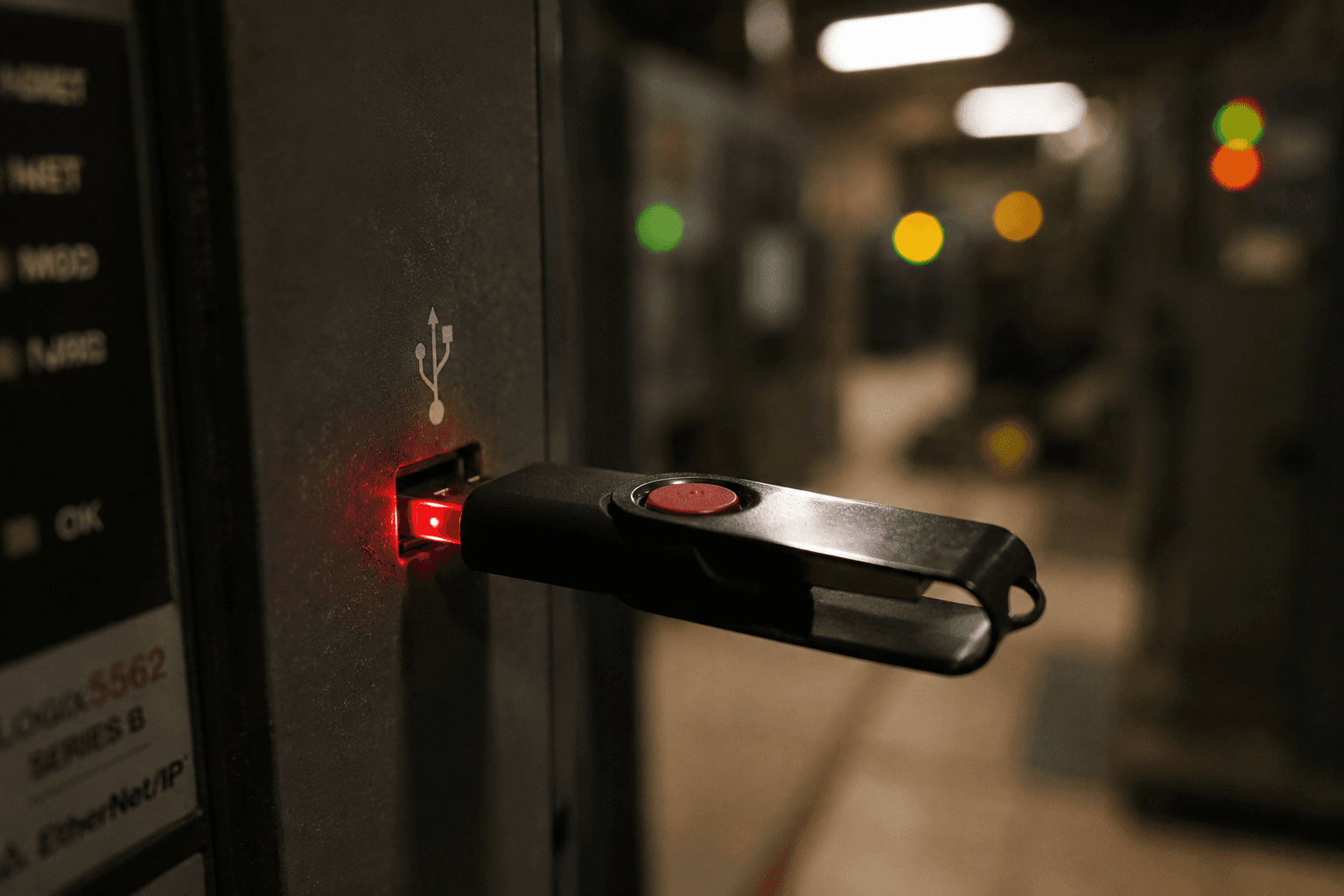
Una sola unidad USB. Aproximadamente del tamaño de un pulgar. Capaz de apagar una red eléctrica, paralizar una instalación de tratamiento de agua o detener una línea de producción entera durante días.
Esto no es una hipótesis. Los incidentes relacionados con medios extraíbles, especialmente dispositivos USB, le han costado a las organizaciones industriales decenas de millones de dólares en tiempo de inactividad operativa, respuesta a emergencias, sanciones regulatorias y daños a la reputación. Y, sin embargo, en muchos entornos de infraestructura crítica, la gestión de puertos USB sigue siendo un tema secundario.
Para los líderes de seguridad de OT, los CISO, los gerentes de planta y los operadores industriales, comprender la verdadera exposición financiera generada por el acceso USB no gestionado ya no es opcional. Es una conversación sobre riesgos a nivel de junta directiva que está por ocurrir.
Este blog desglosa el panorama de costos en el mundo real, la mecánica de los ataques, las consecuencias regulatorias y los controles estratégicos que protegen su entorno, sin interrumpir la continuidad operativa.
Por qué la seguridad USB es un problema de infraestructura crítica y no solo un asunto de TI
En los entornos de TI tradicionales, los controles de endpoints, las herramientas de prevención de pérdida de datos y el monitoreo de redes proporcionan capas de defensa contra las amenazas de medios extraíbles. En los entornos de OT e ICS, esas mismas protecciones a menudo no existen, o no se pueden implementar sin riesgo de interrupción operativa.
La tecnología operativa se ejecuta en sistemas heredados. Los controladores lógicos programables, las estaciones de trabajo SCADA, los sistemas de control distribuido y las interfaces humano-máquina se construyeron para durar décadas. Muchos ejecutan sistemas operativos obsoletos, no pueden aceptar agentes de seguridad y nunca se diseñaron para operar en un entorno consciente de las amenazas.
Los puertos USB de estos sistemas se utilizan con frecuencia para fines legítimos: actualizaciones de firmware, transferencias de archivos de configuración, recopilación de datos de diagnóstico y mantenimiento por parte de proveedores. Ese uso legítimo genera un camino abierto para uno de los vectores de ataque más efectivos y financieramente devastadores en la ciberseguridad industrial.
El panorama de costos financieros: lo que realmente cuesta el acceso USB no gestionado
Cuando los profesionales de la seguridad analizan las amenazas transmitidas por USB, la conversación suele centrarse en la entrega de malware. Sin embargo, las consecuencias financieras se extienden mucho más allá del incidente inicial y repercuten en las operaciones, la posición regulatoria, la responsabilidad legal y la competitividad a largo plazo.
1. Tiempo de inactividad operativa: el mayor factor de costo individual
Las instalaciones industriales operan con márgenes delgados. El tiempo de inactividad en una planta de fabricación, una instalación de energía o una empresa de servicios de agua no significa simplemente detener la producción; significa fallas en cadena en los SLA, interrupciones en la cadena de suministro y cláusulas de penalización activadas en los acuerdos con socios.
El incidente de ransomware de Norsk Hydro en 2019, que se originó a través de sistemas infectados y se propagó por entornos conectados, provocó pérdidas estimadas que superaron los $70 millones de dólares, atribuibles en gran medida al tiempo de inactividad de la producción en las operaciones globales de aluminio. Aunque ese ataque utilizó el phishing como vector de entrada, el malware entregado por USB en entornos de OT puede producir resultados comparables en instalaciones donde la segmentación de la red es limitada.
La investigación de la industria muestra de manera consistente que el evento promedio de tiempo de inactividad no planificado en una instalación industrial mediana cuesta entre $100,000 y $500,000 dólares por hora, según el sector, el volumen de producción y las dependencias subsiguientes. Un ataque iniciado por USB que cause incluso 48 horas de tiempo de inactividad puede generar pérdidas en el rango de siete cifras antes de que se calculen los costos de remediación.
Categoría de costo | Impacto financiero estimado | Factor clave |
Tiempo de inactividad operativa | $100K – $500K por hora | Paro de producción, penalizaciones por SLA, interrupción de la cadena de suministro |
Respuesta a incidentes y recuperación | $250K – $2M+ por incidente | Análisis forense, reconstrucción del sistema, contratación de proveedores |
Multas y sanciones regulatorias | $500K – $5M+ | NERC CIP, NIS2, IEC 62443, mandatos específicos del sector |
Responsabilidad y exposición legal | Variable (puede superar los $10 millones) | Reclamaciones de terceros, demandas colectivas, exclusiones de seguros |
Daño a la reputación | Impacto en los ingresos a largo plazo | Pérdida de contratos, descalificación de adquisiciones, escrutinio de los medios |
2. Respuesta a incidentes y remediación: un costo que a menudo se subestima
Cuando una amenaza transmitida por USB se activa dentro de un entorno de OT, el proceso de remediación es mucho más complejo que una recuperación de TI estándar. Desconectar un sistema SCADA para un análisis forense significa detener las operaciones. Reconstruir una configuración heredada de HMI o PLC sin copias de seguridad validadas lleva días, a veces semanas.
Las organizaciones que no han preparado un plan estructurado de respuesta a incidentes de OT suelen gastar entre dos y cuatro veces más en la recuperación que aquellas que sí lo han hecho. Los contratos de emergencia con proveedores, las empresas especializadas en análisis forense de OT y el reemplazo de hardware para los activos comprometidos agregan costos sustanciales que la mayoría de las evaluaciones de riesgo financiero nunca tienen en cuenta.
3. Sanciones regulatorias: una exposición creciente y no negociable
Los operadores de infraestructura crítica en energía, agua, transporte y manufactura operan bajo marcos regulatorios cada vez más rigurosos. En los Estados Unidos, las normas NERC CIP rigen la protección de los ciberactivos para el sistema eléctrico a granel. En Europa, la Directiva NIS2 ha ampliado las obligaciones de ciberseguridad en sectores críticos. A nivel global, la norma IEC 62443 proporciona el marco fundamental para los controles de seguridad industrial.
El incumplimiento en la implementación de controles adecuados sobre los medios extraíbles, específicamente identificados como un vector de riesgo en múltiples marcos regulatorios, puede resultar en multas sustanciales. Históricamente, las violaciones de NERC CIP han resultado en sanciones que van desde cientos de miles hasta millones de dólares por violación, por día. La exposición regulatoria de un solo incidente relacionado con USB no es teórica. Es exigible.
4. Responsabilidad legal y complicaciones con los seguros
A medida que maduran los mercados de seguros de ciberseguridad, las aseguradoras aplican un escrutinio más estricto a los entornos de OT. Las organizaciones que no pueden demostrar controles documentados sobre el acceso a medios extraíbles se encuentran con reclamos rechazados, primas elevadas y, en algunos casos, pólizas anuladas debido al incumplimiento de los estándares mínimos de seguridad.
Más allá de los seguros, los incidentes relacionados con USB que afectan las operaciones de terceros (una red de servicios compartidos, un socio de la cadena de suministro conectada o un entorno de servicios gestionados) generan una exposición de responsabilidad civil extracontractual que puede eclipsar los costos directos del incidente.
Cómo los atacantes aprovechan el acceso USB en entornos industriales
Comprender la mecánica de los ataques ayuda a los líderes de seguridad a justificar internamente la inversión en controles. Las amenazas transmitidas por USB en entornos de OT suelen seguir varios patrones bien documentados.
Vector de ataque | Cómo funciona | Impacto en OT/ICS |
Medios de actualización de firmware infectados | El atacante compromete las unidades USB utilizadas por los proveedores o contratistas para las actualizaciones de PLC/HMI | El malware incrustado en el firmware persiste tras la limpieza estándar |
Ingeniería social mediante unidades USB abandonadas | Dispositivos USB dejados en estacionamientos o áreas comunes, insertados por empleados incautos | Ofrece registradores de pulsaciones de teclas (keyloggers), herramientas de acceso remoto o cargas destructivas |
Herramientas de proveedores comprometidas | Software de diagnóstico legítimo distribuido en medios infectados por socios de la cadena de suministro | Con la confianza del personal de OT, evita la sospecha del usuario |
Exfiltración de datos a través de USB | Un actor interno o externo extrae datos operativos confidenciales, propiedad intelectual o configuraciones | Pérdida de datos de procesos patentados, planos de sistemas de seguridad |
Superación del aislamiento de red (Air-Gap) | Dispositivos USB utilizados para pasar de entornos de TI a entornos de OT aislados de la red | Permite a los atacantes llegar a sistemas que no tienen conectividad de red |
El gusano Stuxnet, ampliamente reconocido como uno de los ciberataques industriales más sofisticados jamás documentados, utilizó la propagación por USB para superar una red aislada y entregar una carga útil que dañó físicamente las centrifugadoras de enriquecimiento de uranio. Aunque Stuxnet fue una operación respaldada por un estado nación, la técnica de propagación que demostró ahora es replicada por grupos cibercriminales que atacan entornos industriales en todo el mundo.
Sectores que enfrentan la mayor exposición financiera
No todos los sectores de infraestructura crítica enfrentan el mismo riesgo, pero todos enfrentan una exposición significativa. Los siguientes sectores presentan la mayor combinación de probabilidad de ataque, costo potencial del tiempo de inactividad y gravedad de las sanciones regulatorias.
Sector | Riesgo principal de USB | Nivel de exposición financiera |
Energía y servicios públicos | Superación del aislamiento de red, alteración del firmware en sistemas de control | Extremo |
Petróleo y gas | Explotación de sitios remotos a través de medios USB de contratistas | Extremo |
Agua y aguas residuales | Equipos de seguridad pequeños, alta dependencia de medios extraíbles | Alto |
Manufactura | Acceso de mantenimiento del proveedor, sistemas HMI heredados | Alto |
Transporte y logística | Interrupción operativa, interferencia en el sistema de seguridad | Alto |
Farmacéutica | Robo de propiedad intelectual, violaciones de cumplimiento de GMP | Alto |
Recomendaciones prácticas: construcción de un marco de seguridad USB para entornos de OT
Reducir el riesgo financiero del acceso USB no gestionado en infraestructuras críticas no requiere reemplazar sistemas heredados ni interrumpir las operaciones. Requiere un enfoque estructurado para el control, la visibilidad y la respuesta.
Implementar control USB a nivel de endpoint sin interrumpir los flujos de trabajo de OT
Las soluciones modernas de gestión de medios extraíbles compatibles con OT permiten a los equipos de seguridad aplicar listas de permitidos a nivel de dispositivo, autorizando únicamente a los dispositivos USB preaprobados y verificados criptográficamente para conectarse con activos de OT específicos. Esto elimina el riesgo de dispositivos desconocidos sin interrumpir los flujos de trabajo legítimos de proveedores y mantenimiento.
Establecer un protocolo de estación de escaneo USB
Cada dispositivo USB que ingrese a un entorno industrial, ya sea portado por un empleado, proveedor o contratista, debe pasar por una estación de escaneo dedicada antes de tocar cualquier activo de OT. Estas estaciones realizan análisis de malware, inspección de archivos y verificación de integridad en un entorno aislado, detectando amenazas antes de que lleguen a los sistemas operativos.
Aplicar controles de puertos a nivel de activos en sistemas heredados
En los casos en que no se puedan implementar controles basados en software en los activos de OT heredados, los controles físicos de puertos, incluidos los bloqueadores de puertos y los mecanismos de desactivación basados en hardware, proporcionan una capa de protección básica. Estos deben complementarse con un monitoreo a nivel de red para detectar transferencias de datos inesperadas.
Integrar el riesgo de USB en la planificación de respuesta a incidentes de OT
Los incidentes relacionados con USB requieren un manual de respuesta diferente al de los ataques basados en la red. Las organizaciones deben desarrollar procedimientos de respuesta a incidentes específicos de OT que aborden escenarios de medios extraíbles, incluidos pasos de contención que eviten activar paradas operativas de forma innecesaria.
Alinear los controles con los marcos regulatorios aplicables
Las medidas de control de USB deben mapearse explícitamente con los requisitos de los marcos normativos relevantes, NERC CIP-007 (Gestión de seguridad de sistemas), IEC 62443-3-3 (Requisitos de seguridad del sistema) y las disposiciones de NIS2 sobre control de acceso y seguridad de la cadena de suministro. Esta documentación proporciona defensa regulatoria en caso de una auditoría o investigación de un incidente.
La dimensión del riesgo interno: cuando la amenaza proviene de adentro
Las conversaciones sobre seguridad de USB a menudo se centran en atacantes externos. La dimensión del riesgo interno merece la misma atención. Un empleado descontento, una acción involuntaria de un ingeniero con buenas intenciones o una cuenta de contratista comprometida pueden provocar la exfiltración de datos a través de USB o el compromiso del sistema, con las mismas consecuencias financieras que un ataque externo.
Los incidentes originados por personal interno suelen ser más difíciles de detectar, requieren más tiempo para remediarse y conllevan una mayor responsabilidad legal, ya que a menudo implican la falla de controles internos que los reguladores y las aseguradoras esperan que estén implementados. Construir un marco de seguridad USB que aborde el riesgo interno a través del monitoreo del comportamiento, el registro de accesos y la detección de anomalías es tan importante como protegerse contra las amenazas externas.
Cómo Shieldworkz apoya a las organizaciones para asegurar el acceso USB en toda la infraestructura crítica
En Shieldworkz, nuestro enfoque para la seguridad de medios extraíbles se basa en un principio: protección que funcione dentro de su realidad operativa, no en su contra. Entendemos que los entornos de OT no pueden tolerar soluciones que introduzcan riesgos de tiempo de inactividad, requieran rediseñar sistemas heredados o creen fricciones en los flujos de trabajo de mantenimiento establecidos.
|
Conclusión: El costo de la inacción siempre es mayor
El impacto financiero de los dispositivos USB no gestionados en la infraestructura crítica no es un riesgo futuro, es una exposición actual que acumula riesgo con cada dispositivo no controlado que cruza el umbral de su instalación.
Las organizaciones que han enfrentado los incidentes más costosos comparten una característica común: subestimaron las consecuencias operativas y financieras de las vulnerabilidades de los medios extraíbles hasta que un incidente las obligó a hacer el cálculo. Las organizaciones que evitaron esos resultados invirtieron en marcos de seguridad USB estructurados y operativamente compatibles antes de que ocurriera un evento.
Para los líderes de seguridad de OT, los CISO, los gerentes de planta y los ingenieros industriales, el mensaje es claro. El costo de un programa estructurado de seguridad USB, implementado correctamente, alineado con su entorno operativo y documentado conforme a los requisitos regulatorios aplicables, es una fracción de lo que costará un solo incidente significativo.
La pregunta no es si su organización puede permitirse implementar controles de seguridad USB. La pregunta es si puede permitirse no hacerlo.
Reserve una consulta gratuita con nuestros expertos
Su infraestructura operativa merece más que una postura de seguridad reactiva. Cada día sin una estrategia estructurada de seguridad USB es un día en que sus sistemas críticos permanecen expuestos.
Póngase en contacto con el equipo de Shieldworkz para recibir una consulta sin compromiso, guiada por expertos y adaptada a su entorno industrial. Evaluaremos su exposición actual, le guiaremos a través de marcos de control prácticos y le ayudaremos a crear una hoja de ruta que alinee la seguridad con la continuidad operativa.
Recursos adicionales:
Asesoría de Inteligencia sobre Ciberamenazas de OT - Medio Oriente de forma aquí
Directiva NIS2 Lograr el Cumplimiento de NIS2 a través de IEC 62443 de forma aquí
¿Qué son los medios extraíbles? Riesgos, políticas y soluciones de seguridad para OT industrial de forma aquí
Plantilla gratuita de política de medios extraíbles para equipos de OT y TI de forma aquí
Recibe semanalmente
Recursos y Noticias
Vea cómo nuestras soluciones de seguridad de OT líderes en la industria abordan los desafíos de seguridad críticos
También te puede interesar

What the French supermarket cyberattack reveals about OT security
Prayukth K V

Inside the Albert Heijn cyber incident: Investigating the attack, the IT/OT exposure, and the risks to critical operations
Team Shieldworkz

50°C by cyberattack? Inside France’s supermarket refrigeration crisis
Prayukth K V

Automating IEC 62443 Compliance Assessments Without Losing Expert Control
Team Shieldworkz

Investigative cyber threat intelligence report: Daiichi Kosho supply-chain data exposure
Prayukth K V

How AI Is Changing IEC 62443 Assessments
Team Shieldworkz