Equipo Shieldworkz
El 4 de agosto de 2026, la Autoridad de Puertos del Estado de Carolina del Norte (NC Ports) detectó una intrusión cibernética no autorizada que provocó una interrupción de TI en todos sus sistemas. El incidente afectó directamente los flujos de trabajo de procesamiento en los tres centros logísticos marítimos estatales de la Autoridad: el Puerto de Wilmington, el Puerto de Morehead City y el Puerto Interior de Charlotte.
El hallazgo analítico central de esta investigación es sencillo: un ciberataque no necesita comprometer ni tocar la tecnología operativa (OT) para inducir una interrupción grave y física en la cadena de suministro global.
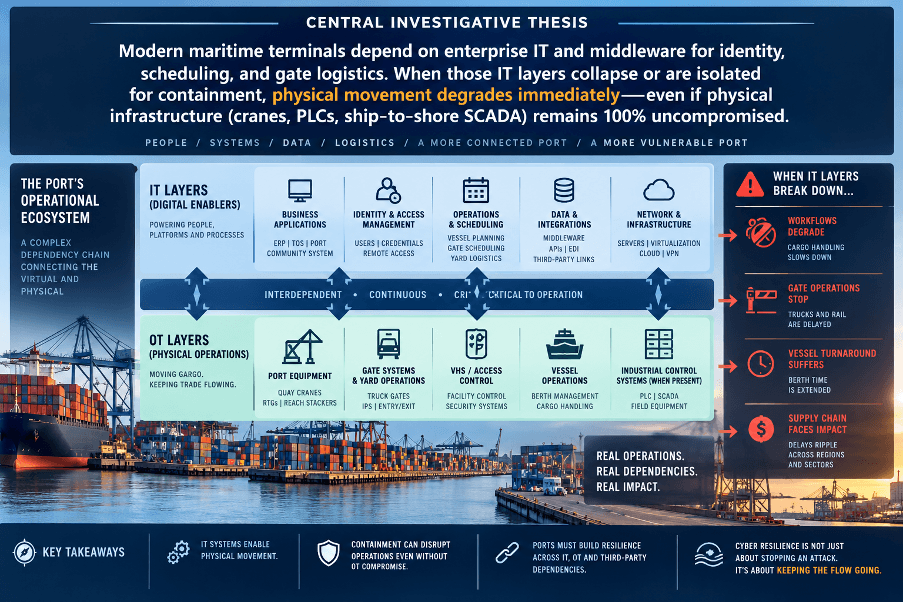
A pesar de la interrupción operativa (aperturas de puertas retrasadas, registros manuales de camiones y acumulaciones de contenedores), existe cero evidencia pública que indique que los actores de amenazas obtuvieron acceso a PLCs, sistemas de control industrial, servicios de tráfico de embarcaciones o grúas pórtico. Más bien, el incidente ejemplifica la realidad de alto impacto del acoplamiento operativo IT-OT en la logística marítima.
El incidente
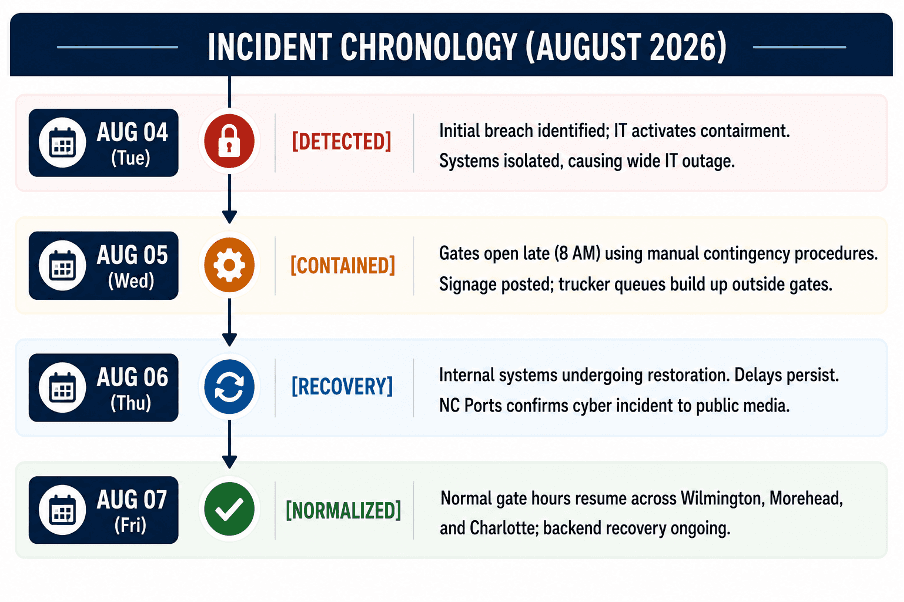
El martes 4 de agosto de 2026, el monitoreo de seguridad de TI en NC Ports detectó actividad no autorizada dentro de su entorno de red. En respuesta, el personal de seguridad activó el plan de contingencia de ciberseguridad de la Autoridad.
Para evitar un mayor movimiento lateral o una posible filtración de datos, los administradores aislaron los sistemas centrales, lo que provocó una interrupción generalizada de los servicios de TI en toda la red portuaria.
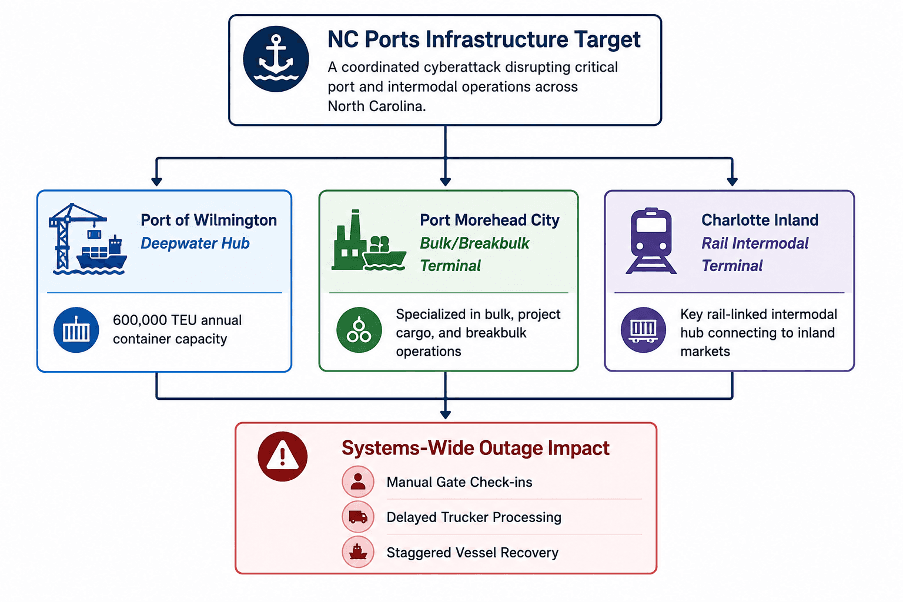
Infraestructura afectada
• Puerto de Wilmington: Centro principal de contenedores de aguas profundas y carga general equipado con 9 instalaciones de atraque y una capacidad anual de 600,000 TEUs (unidades equivalentes a veinte pies), que procesa aproximadamente 5,000 movimientos de puertas de contenedores semanalmente.
• Puerto de Morehead City: Instalación principal de manejo de carga general y a granel.
• Puerto Interior de Charlotte: Terminal ferroviaria intermodal que proporciona rutas logísticas directas entre el comercio interior y las rutas de envío costeras.
Lo que realmente sucedió vs. Lo que se interrumpió
Para evaluar el alcance del incidente, debemos separar los hechos operativos confirmados de las interrupciones sistémicas y las suposiciones no verificadas.
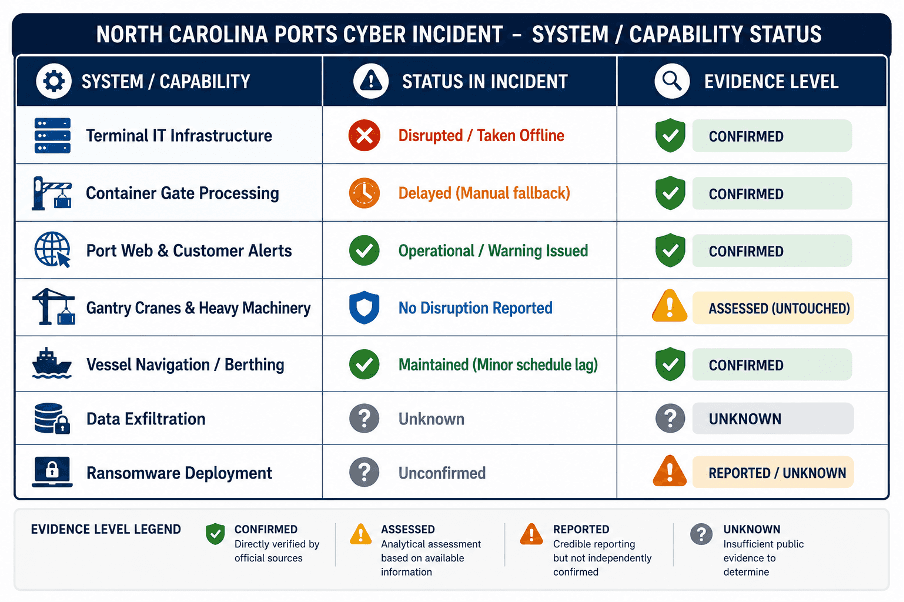
Lo que se interrumpió
• Ingreso de puertas y procesamiento automatizado: Los portales automatizados OCR (Reconocimiento Óptico de Caracteres) de las puertas, las bases de datos de verificación TWIC (Credencial de Identificación de Trabajador del Transporte) y las interfaces de programación de camión a patio no estuvieron disponibles o se restringieron, lo que retrasó las aperturas de las puertas hasta las 8:00 AM del 5 de agosto.
• Flujos de trabajo del Sistema Operativo de la Terminal (TOS): La búsqueda de inventario, la asignación de posiciones de contenedores y los mensajes de intercambio electrónico de datos (EDI) en tiempo real a las empresas de transporte sufrieron retrasos graves o fallas manuales.
• Rendimiento logístico: Se acumularon largas filas de camiones fuera de las puertas de entrada de la terminal a lo largo de los corredores de tránsito costeros.
Lo que no se reportó como comprometido
• Activos físicos de OT: Las grúas de barco a tierra (STS), las grúas pórtico sobre neumáticos (RTG), los sistemas de apilamiento automatizados y los segmentos de red de PLC no mostraron evidencia de manipulación directa o compromiso.
• Movimiento de embarcaciones: Los pilotos marinos y los sistemas de tráfico de embarcaciones operaron según lo programado sin pérdida de control de navegación.
Cronología de eventos
La cuestión IT-OT: Cadena de dependencia ciberfísica
Un error grave en la investigación de infraestructura crítica es asumir que el impacto operativo requiere un compromiso de la Tecnología Operativa (OT). En un puerto automatizado moderno, la IT y la OT están vinculadas a través de una compleja red de dependencias.
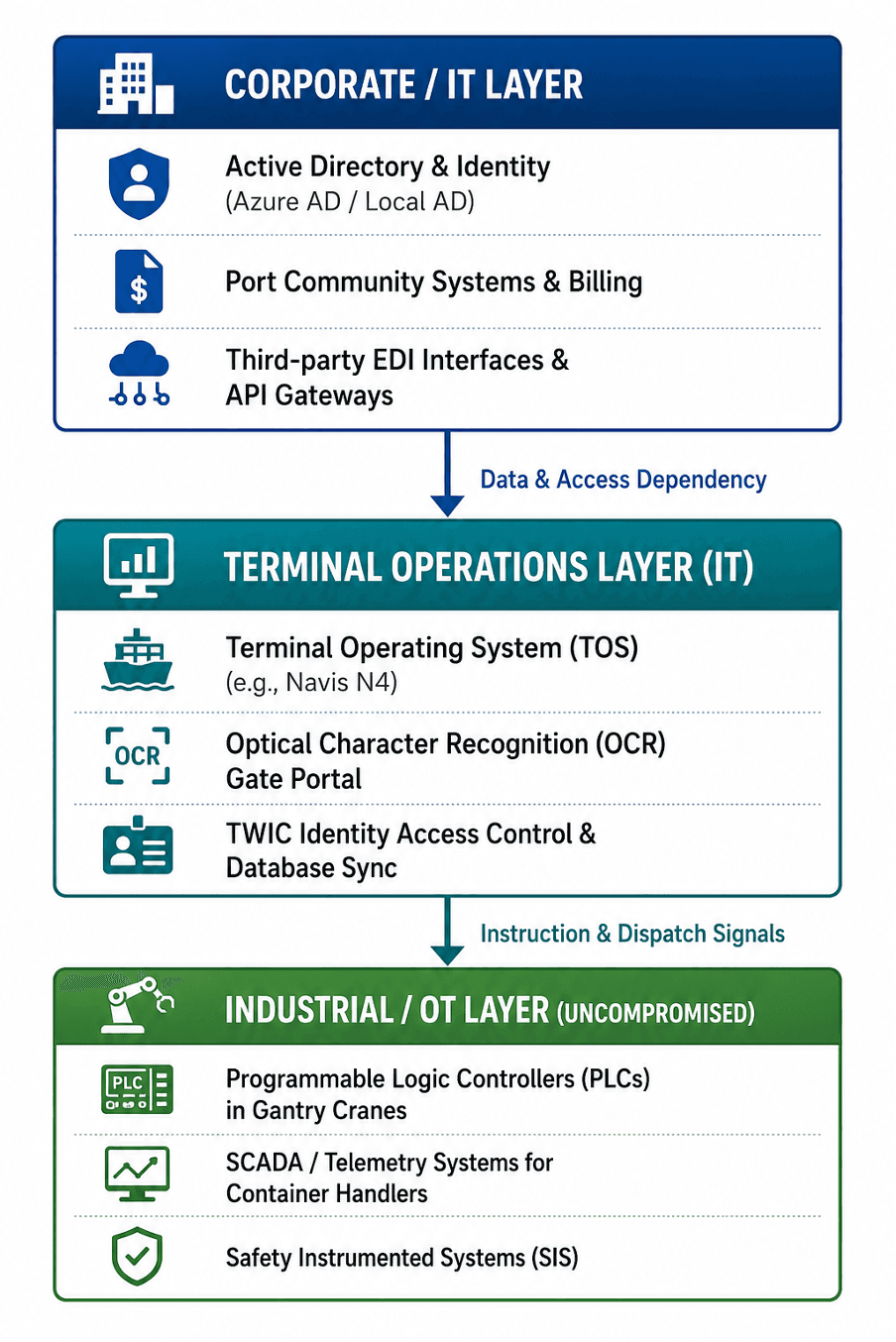
Cómo una interrupción de TI paraliza las operaciones físicas
• El TOS es el cerebro: El Sistema Operativo de la Terminal (TOS) se ejecuta en servidores de TI empresariales (a menudo máquinas virtuales Windows/Linux). Sabe dónde se encuentra cada contenedor en un patio que contiene decenas de miles de cajas.
• Sin el TOS, las grúas están ciegas: Incluso si la red de PLC de una grúa STS de 100 toneladas funciona perfectamente, el operador de la grúa no puede mover la carga de manera segura o eficiente si la base de datos del TOS está fuera de línea. El operador no tiene instrucciones verificadas sobre qué contenedor levantar, dónde colocarlo o si la Oficina de Aduanas y Protección Fronteriza de EE. UU. (CBP) ha otorgado la liberación aduanera.
• El procesamiento en las puertas se detiene: Las puertas del puerto utilizan pórticos automatizados OCR y lectores de matrículas que asignan los camiones que llegan a los números de reserva pendientes en el TOS. Cuando los sistemas de TI se aíslan durante la respuesta a un incidente, el control de las puertas debe volver a los registros en papel y a la verificación manual de TWIC. Las velocidades de procesamiento caen de 45 segundos por camión a 5-10 minutos por camión, lo que genera retrasos masivos de tráfico.
Ángulos de investigación que los informes principales pasan por alto
La identidad como punto único de fallo operativo
Los puertos modernos dependen de arquitecturas de identidad federadas para gestionar el acceso de empleados, contratistas, agentes federales (CBP, Guardia Costera) y miles de conductores independientes de camiones de transporte. Si los atacantes comprometen un controlador de dominio central o una instancia de proveedor de identidad (IdP), los equipos de seguridad deben revocar la confianza en todos los ámbitos. El apagón de identidad resultante aísla los servicios operativos críticos, lo que hace que el compromiso de credenciales sea tan efectivo como el malware destructivo para detener las operaciones.
Riesgo de concentración en la agroindustria y la manufactura regional
Aunque la capacidad de 600,000 TEU del Puerto de Wilmington es menor que la de los principales centros como Los Ángeles o Nueva York/Nueva Jersey, sirve como un punto de estrangulamiento crítico para las cadenas de suministro regionales. Maneja exportaciones refrigeradas especializadas (productos agrícolas, carne de cerdo, aves de corral) y materias primas industriales. Un retraso de 48 horas en un puerto especializado regional puede provocar fallas en la cadena de frío, pérdida de conexiones de buques alimentadores e interrupciones inmediatas en las líneas de fábrica en todo el sureste, resultados que rara vez se capturan en los informes de incidentes superficiales.
Corredores de acceso de proveedores externos
Las autoridades portuarias albergan docenas de sistemas de inquilinos, integradores logísticos, proveedores de mantenimiento de equipos y enlaces de bases de datos federales. Con frecuencia, los ataques a infraestructuras críticas no se originan a partir de violaciones directas del perímetro, sino a través de credenciales robadas pertenecientes a un contratista de mantenimiento externo con privilegios de acceso remoto a los segmentos de gestión de la terminal.
Evaluación del actor de la amenaza y atribución
Evaluación de hipótesis y evidencia
Hipótesis A: Ciberdelincuencia con motivación financiera (Ransomware / Caza mayor)
• Evidencia de respaldo: Coincide con el perfil operativo estándar de los grupos de ransomware que se dirigen a entidades e infraestructuras del sector público para forzar acuerdos de extorsión rápidos. El aislamiento de todo el sistema el 4 de agosto es una respuesta de manual ante el despliegue activo de ransomware o el escalado de credenciales previo al ransomware.
• Evidencia contraria / Brechas: Ningún grupo de ransomware ha reclamado la responsabilidad públicamente en sitios de filtración hasta principios de agosto de 2026. NC Ports no ha confirmado ninguna demanda de rescate.
Hipótesis B: Sabotaje de Estado-Nación / Pre-posicionamiento (por ejemplo, Volt Typhoon, Salt Typhoon)
• Evidencia de respaldo: Las agencias de inteligencia de EE. UU. (FBI, CISA) han advertido repetidamente sobre actores patrocinados por estados extranjeros que se dirigen a los sectores de transporte y logística marítima para mantener un acceso persistente ante posibles interrupciones durante crisis geopolíticas.
• Evidencia contraria / Brechas: Los actores estatales que buscan persistencia operativa a largo plazo suelen evitar acciones ruidosas que provoquen interrupciones inmediatas del sistema y activen equipos de respuesta a incidentes, a menos que el objetivo sea una distracción estratégica inmediata.
Conclusión: Existe EVIDENCIA INSUFICIENTE para atribuir de manera concluyente este incidente a un grupo de amenazas específico.
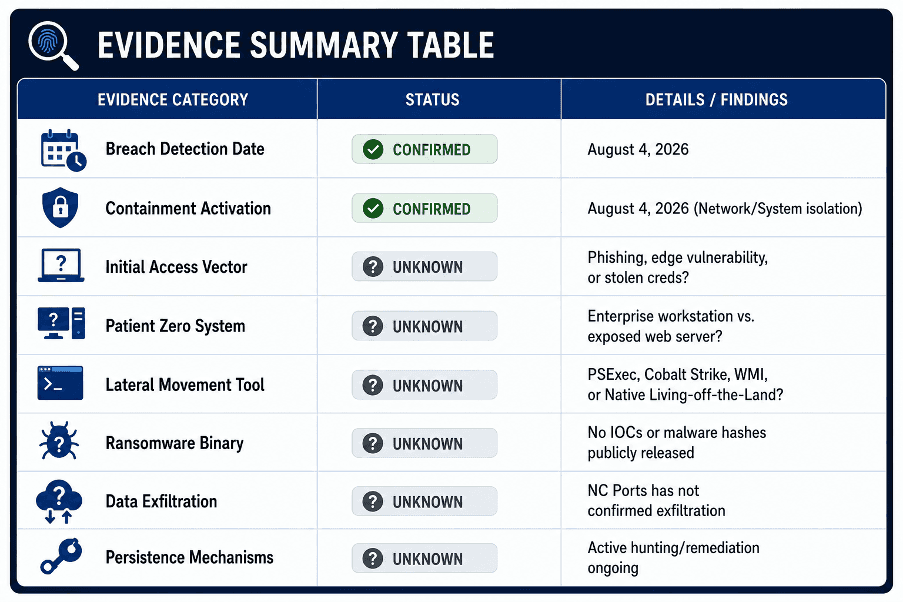
Matriz de evidencia forense
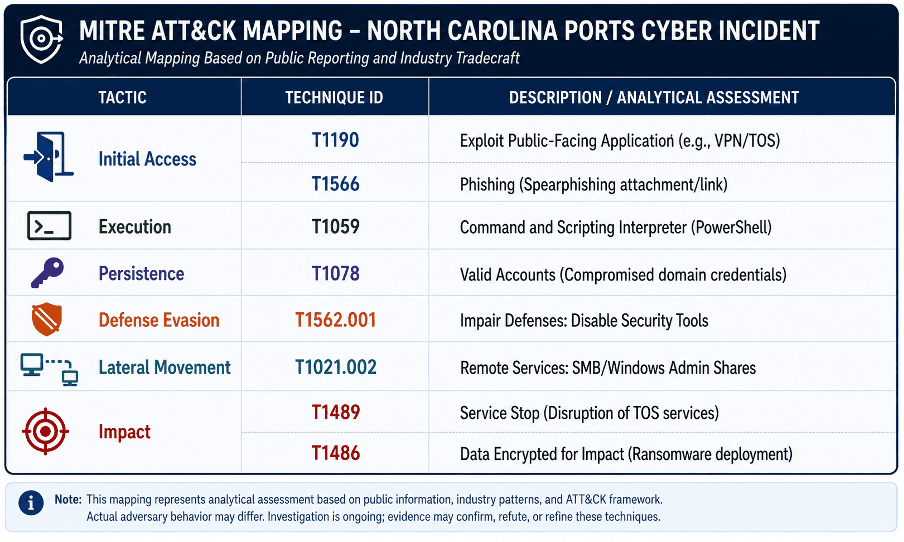
Mapeo técnico (MITRE ATT&CK Framework)
Nota: El siguiente mapeo representa técnicas de alta probabilidad basadas en perfiles estándar de incidentes forenses para interrupciones de redes de TI de infraestructura crítica, proporcionadas como referencia analítica.
Lo que el registro público no nos dice
Un análisis de investigación honesto debe resaltar las brechas de evidencia:
• Vector de acceso inicial: ¿Se obtuvo acceso a través de una vulnerabilidad de dispositivo perimetral sin parchear (como puertas de enlace VPN, Citrix, Fortinet), spearphishing o credenciales de contratista comprometidas?
• Estado de la filtración: ¿Filtraron los actores de la amenaza datos corporativos, aduaneros o de empleados confidenciales antes del aislamiento del sistema?
• Herramientas de malware: ¿Qué cargas útiles específicas, webshells o scripts de living-off-the-land (LotL) se ejecutaron durante la intrusión?
• Alcance del compromiso de identidad: ¿Se comprometió por completo el Active Directory local, lo que requirió una reconstrucción completa del bosque y el restablecimiento de los tickets de Kerberos?
• Tiempo de permanencia (Dwell Time): ¿Cuánto tiempo estuvieron presentes los atacantes dentro del entorno de red antes de la detección el 4 de agosto?
Lecciones defensivas para operadores de infraestructuras críticas
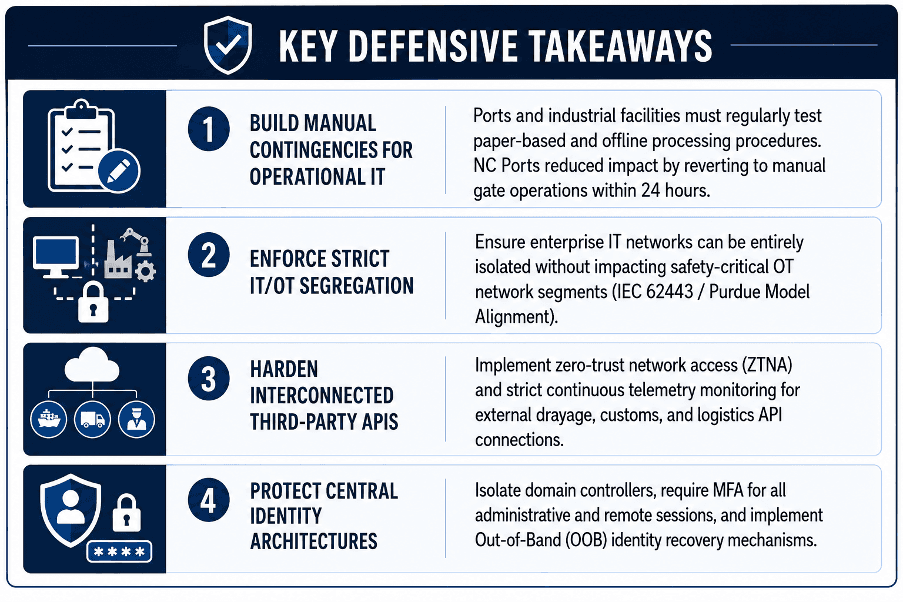
Conclusión
El incidente cibernético en los puertos de Carolina del Norte ilustra una realidad recurrente en la seguridad de infraestructuras críticas: la resiliencia física está ligada a la seguridad de TI de la empresa.
A medida que las terminales marítimas aumentan la automatización y la dependencia de la entrada de datos en tiempo real, el perímetro que separa los sistemas de TI de las operaciones físicas de la cadena de suministro se vuelve cada vez más fluido. Proteger estos entornos requiere reconocer que una brecha en la TI empresarial puede paralizar el comercio físico de manera tan efectiva como un ataque directo a los sistemas de control industrial.
Reserve una consulta gratuita para su puerto.
Lecturas recomendadas
Seguridad OT para puertos e infraestructura marítima
Lista de verificación para control de grúas y PLC en automatización portuaria
Recibe semanalmente
Recursos y Noticias
Vea cómo nuestras soluciones de seguridad de OT líderes en la industria abordan los desafíos de seguridad críticos
También te puede interesar

Fresenius medical care cyber incident: Investigating trusted access, third-party exposure and enterprise blast radius
Team Shieldworkz

OT Removable Media Security: Close the USB Risk Gap Before It Reaches Production
Team Shieldworkz
The Canva breach and the hidden risk of third-party trust
Prayukth K V

NERC CIP Compliance Assessment: Find Gaps Before Auditors Do
Team Shieldworkz

Beyond substitution: Strategic takeaways from India’s SCADA indigenisation
Team Shieldworkz

Investigative cyber threat research report: Colorado water utilities OT attacks
Prayukth K V