Equipo Shieldworkz
Actualizado para el paquete de ciberseguridad de la UE de enero de 2026 y el estado actual de transposición nacional. Una guía práctica para líderes de OT, ICS e ingeniería que operan bajo la Directiva (UE) 2022/2555.
Veintidós de los 27 Estados miembros de la UE ya han incorporado la NIS2 a su legislación nacional, y los que aún van con retraso (Francia, Irlanda, Luxemburgo, Países Bajos y España) lo están haciendo bajo una remisión activa del Tribunal de Justicia, no en un periodo de gracia silencioso. Al mismo tiempo, la Comisión Europea utilizó su paquete de ciberseguridad del 20 de enero de 2026 para proponer la primera simplificación real de la Directiva: una nueva categoría de entidad "pequeña de mediana capitalización", normas armonizadas de divulgación de pagos por ransomware y un papel operativo más importante para ENISA. Nada de eso cambia el fondo del Artículo 21 ni el plazo de notificación de incidentes. Cambia la paciencia que tienen los reguladores con las organizaciones que siguen tratando la NIS2 como un problema del futuro.
Para los líderes de OT, ICS e ingeniería, esa combinación (transposición casi universal más cumplimiento activo más un primer plazo de auditoría de cumplimiento el 30 de junio de 2026 en la mayoría de los estados transpuestos) significa que la presión del plazo ya no es teórica. Esta guía desglosa lo que la Directiva realmente exige en la planta de producción, donde los entornos industriales crean problemas de ingeniería reales que la ley no resuelve por usted, y cómo es un programa de cumplimiento defendible a mediados de 2026.
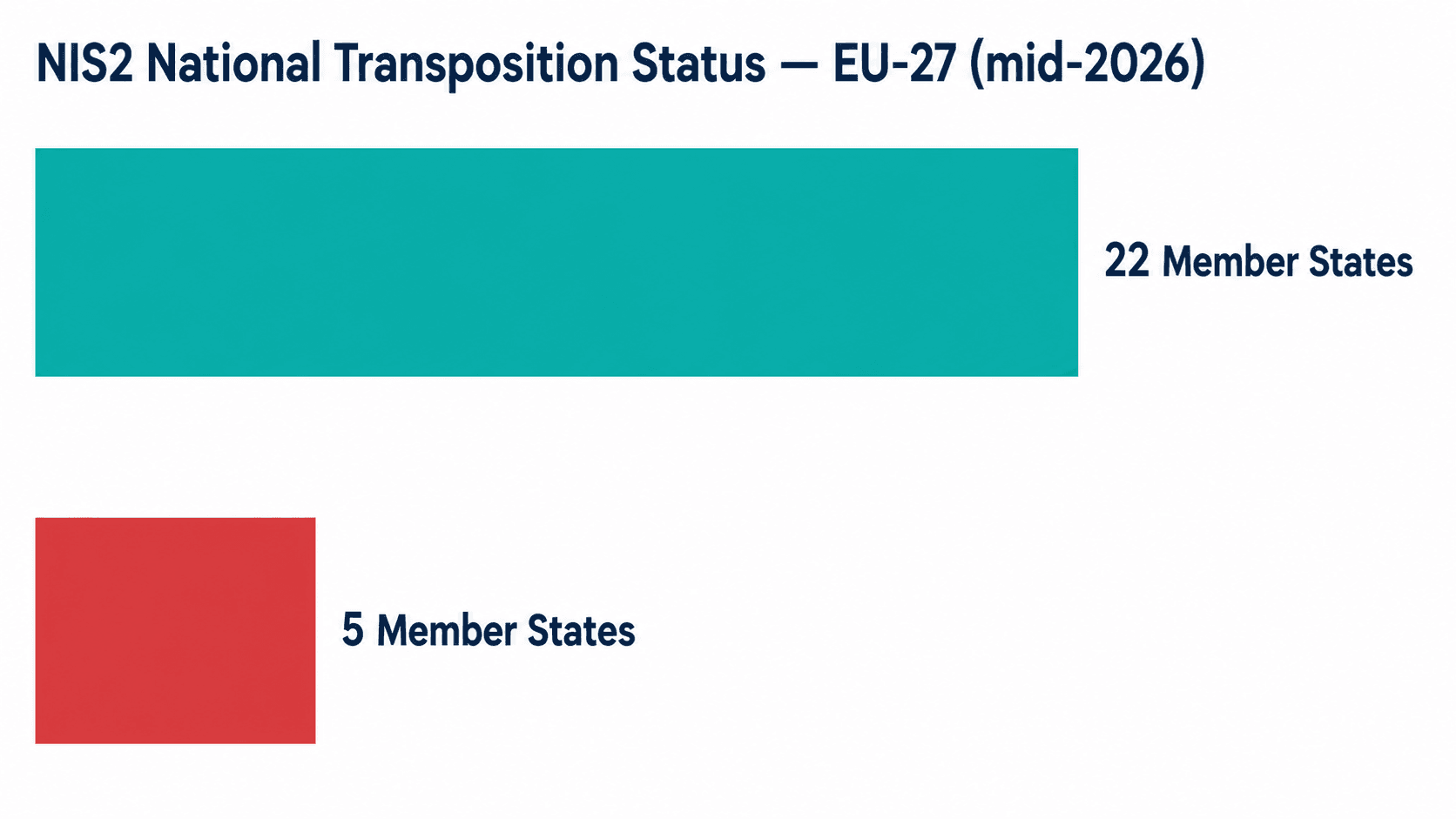
Figura 1: Estado de la transposición nacional de NIS2 en toda la UE, mediados de 2026.
Lo que NIS2 realmente cambió y por qué la letra pequeña importa ahora
La NIS2, formalmente la Directiva (UE) 2022/2555, sustituyó a la Directiva NIS de 2016 porque la ley original dejaba fuera de su ámbito de aplicación a la mayor parte de la base industrial de Europa. La NIS2 amplía la cobertura a dieciocho sectores (energía, transporte, salud, agua, infraestructura digital, manufactura, espacio y más), y las propias cifras de la Comisión Europea sitúan a aproximadamente más de 100,000 organizaciones dentro del nuevo perímetro, un orden de magnitud superior al de la primera directiva.
Los Estados miembros estaban obligados legalmente a transponer la Directiva antes del 17 de octubre de 2024. Casi ninguno cumplió ese plazo. La Comisión respondió enviando cartas de emplazamiento a 23 Estados miembros en noviembre de 2024, pasando a dictar dictámenes motivados contra 19 de ellos en mayo de 2025, y remitiendo a Irlanda, España, Francia y los Países Bajos ante el Tribunal de Justicia de la UE por no haber notificado las medidas de transposición. Esa presión de cumplimiento es la razón por la que los rezagados restantes se están moviendo ahora y no más tarde, y por la que "nuestro país aún no la ha transpuesto" es una excusa más débil para un equipo de OT de lo que era en 2024.
Vale la pena conocer específicamente dos novedades de principios de 2026, porque modifican el calendario de cumplimiento sin alterar las obligaciones del Artículo 21:
Un portal único de notificación de la UE. La propuesta de Ómnibus Digital de noviembre de 2025 canalizaría las notificaciones de incidentes de los Artículos 23 y 30 a través de un único portal gestionado por ENISA en lugar de sistemas nacionales independientes, un cambio de ruta, no de plazo. El reloj de 24-72-30 horas se mantiene exactamente donde está.
Enmiendas específicas a la NIS2 (20 de enero de 2026). La propuesta de la Comisión introduce una categoría de entidad "pequeña de mediana capitalización" más flexible (menos de 750 empleados, menos de 150 millones de euros de facturación), añade la divulgación obligatoria de pagos por ransomware en virtud del Artículo 23, exige a las entidades de fuera de la UE dentro del alcance que nombren a un representante en la UE, y empuja las estrategias nacionales de ciberseguridad hacia objetivos de migración a la criptografía poscuántica para 2030 y 2035. La Comisión estima que el paquete alivia la carga de cumplimiento para unas 28,700 empresas, pero los operadores de infraestructuras críticas en el nivel de entidad esencial no ven casi nada de ese alivio.
Específicamente para los líderes de OT e ICS, nada de lo anterior cambia el hecho fundamental de que las obligaciones de gestión de riesgos se extienden más allá del firewall que separa TI de la planta de producción. Los sistemas que mantienen la producción en marcha, los sistemas de seguridad funcionando y los servicios públicos fluyendo están explícitamente dentro del alcance, tanto legal como operativamente.
Entidades esenciales frente a importantes: Dónde se sitúa realmente su organización
La NIS2 clasifica a las organizaciones dentro del alcance en dos niveles según el sector y el tamaño. La distinción determina con qué atención vigila un regulador a su organización, cómo se calculan las sanciones y cuánta documentación debe tener lista en cualquier momento, no solo qué casilla marca en un formulario.
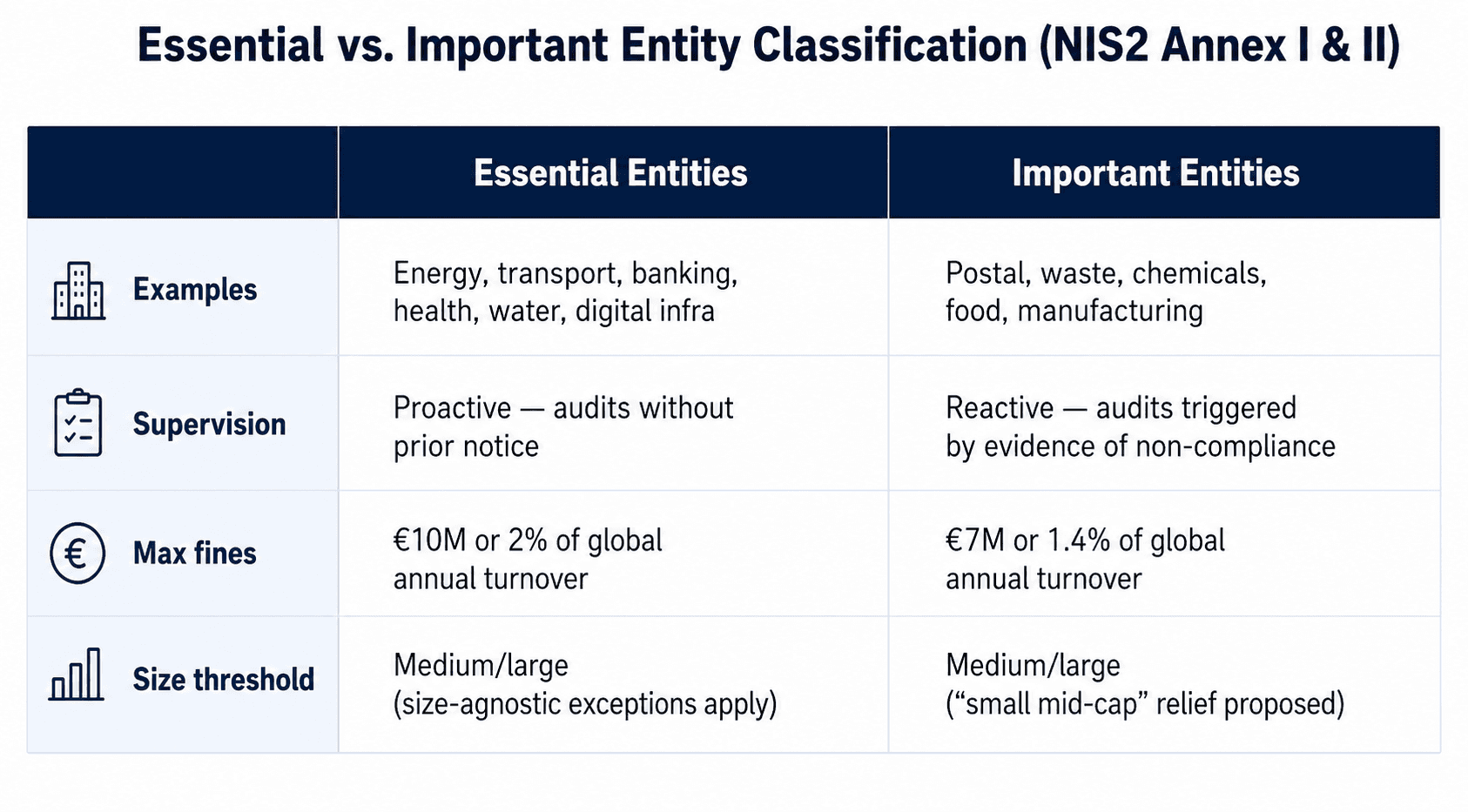
Figura 2: Clasificación de entidades esenciales frente a importantes bajo los Anexos I y II de la NIS2.
El detalle que toma por sorpresa a los operadores industriales es la regla de captura independiente del tamaño: ciertas entidades están dentro del alcance independientemente del número de empleados o de la facturación, incluidos los proveedores únicos de un servicio nacional crítico y las organizaciones ya designadas como críticas bajo la legislación de resiliencia relacionada, como la Directiva CER. Si su planta es la única fuente de un servicio público regional, el umbral de 50 empleados o 10 millones de euros que de otro modo eximiría a un pequeño operador no se aplica en su caso.
La nueva categoría de "pequeña de mediana capitalización" de la propuesta de enero de 2026 se sitúa dentro del nivel de entidad importante; no crea una tercera clasificación y no afecta en absoluto a las obligaciones de las entidades esenciales. Si su organización gestiona infraestructuras de energía, agua o transporte a escala de entidad esencial, esta reforma no modifica su nivel de exigencia de cumplimiento.
Las diez medidas de seguridad mínimas en virtud del Artículo 21
Independientemente del nivel, el Artículo 21 establece la misma línea base de diez medidas de gestión de riesgos. Sobre el papel, esto se lee como una lista de verificación de gobernanza. En un entorno industrial, cada elemento choca con una limitación física en la que un equipo de TI corporativo nunca tiene que pensar.
Análisis de riesgos y políticas de seguridad de los sistemas de información que abarquen tanto los activos de TI como de OT
Procedimientos de gestión de incidentes, que incluyan la detección, respuesta y escalamiento estructurado
Continuidad del negocio y gestión de crisis, que incluyan copias de seguridad y recuperación ante desastres para los sistemas de control
Seguridad de la cadena de suministro, incluidos los requisitos de seguridad incorporados en los contratos con proveedores e integradores
Seguridad en la adquisición, desarrollo y mantenimiento de redes y sistemas de información, incluida la gestión y divulgación de vulnerabilidades
Políticas y procedimientos para evaluar la eficacia de las medidas de gestión de riesgos de ciberseguridad
Prácticas básicas de higiene cibernética y capacitación periódica del personal en ciberseguridad
Políticas sobre el uso de criptografía y cifrado cuando sea apropiado
Seguridad de los recursos humanos, políticas de control de acceso y gestión de activos
Autenticación multifactor, comunicaciones seguras y sistemas seguros de comunicación de emergencia
Para las plantas que ejecutan PLC heredados o sistemas de control distribuido diseñados antes de que la autenticación y el registro de eventos fueran consideraciones de diseño estándar, varias de estas medidas requieren controles de ingeniería de compensación en lugar de un cambio de configuración. Esa brecha es exactamente la razón por la que la experiencia específica en OT importa más aquí que en un proyecto de cumplimiento de TI típico, y es la razón por la que la hoja de ruta más adelante en esta guía trata la visibilidad de activos como el requisito previo para todo lo demás, no como un flujo de trabajo paralelo.
Obligaciones de notificación de incidentes: La regla de las 24-72-30 horas
El requisito operativamente más exigente de la NIS2 es su plazo de notificación de incidentes, establecido en el Artículo 23. Una vez que se detecta un incidente significativo, el reloj empieza a correr inmediatamente, y la obligación se aplica independientemente de si el sistema afectado se encuentra en el centro de datos corporativo o dentro de una sala de control.
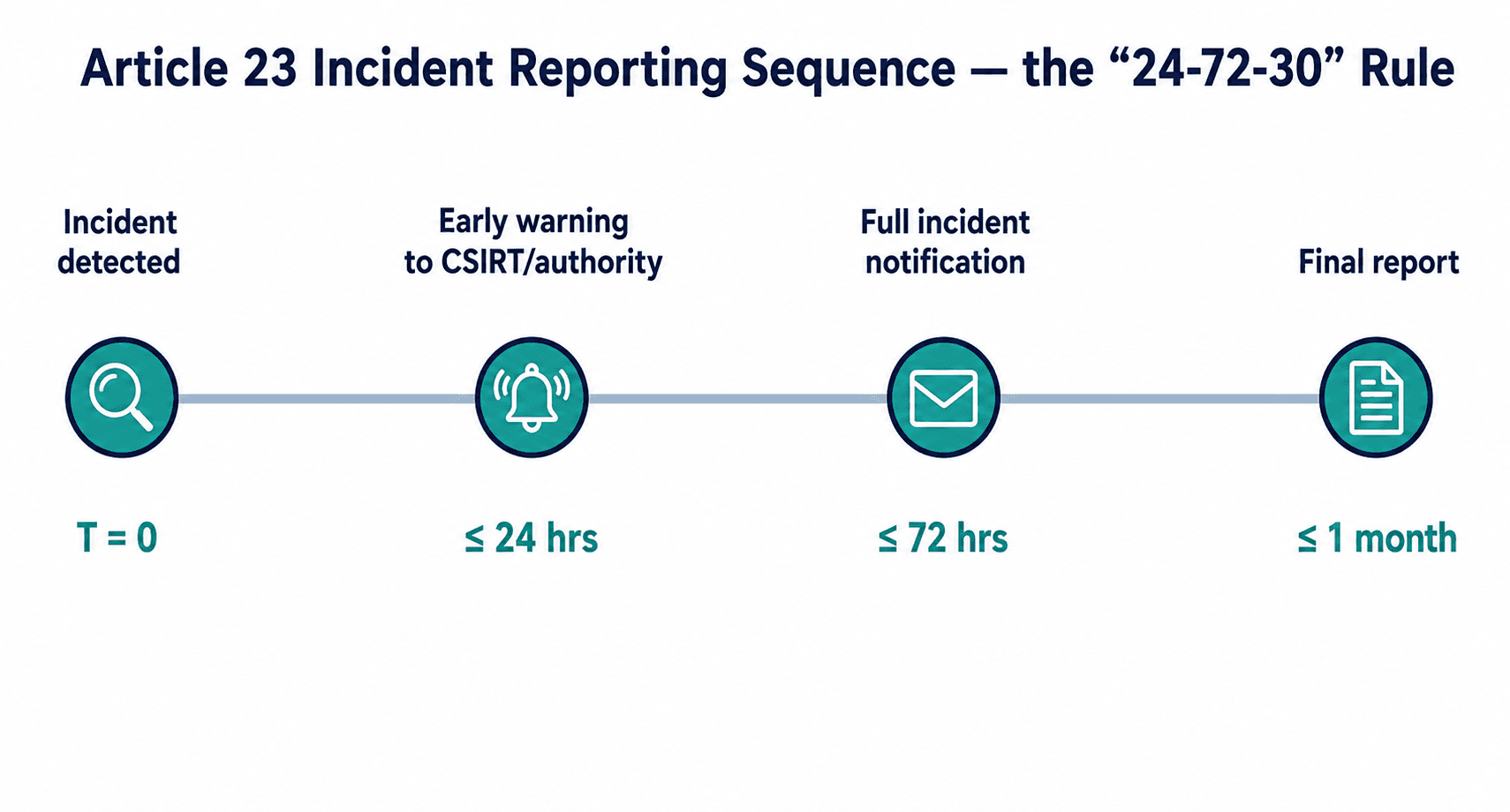
Figura 3: Secuencia obligatoria de notificación de incidentes de NIS2 para entidades esenciales e importantes.
Para los equipos de OT, el cuello de botella práctico no es el papeleo, es la velocidad de detección. No se puede notificar un incidente en un plazo de 24 horas si la red de control carece de la visibilidad necesaria para detectar un comportamiento anómalo en primer lugar. Muchos entornos industriales todavía dependen de revisiones manuales periódicas o de visitas de proveedores a las instalaciones para identificar problemas, una frecuencia que se mide en semanas y que es estructuralmente incompatible con un reloj de notificación de 24 horas.
Dos detalles de notificación adicionales son fáciles de pasar por alto en una primera lectura de la Directiva: el paquete de enmiendas de enero de 2026 exigiría a las entidades revelar, previa solicitud, si se pagó un rescate, la cantidad y el método de pago; y los Estados miembros están obligados, en virtud del mismo paquete, a integrar la planificación de la migración a la criptografía poscuántica en las estrategias nacionales de ciberseguridad, con los años objetivo de 2030 y 2035. Ninguna de las dos obligaciones recae todavía directamente sobre las empresas individuales, pero ambas señalan hacia dónde se dirige la próxima ronda de requisitos de notificación.
Por qué los entornos de OT e ICS presentan problemas de NIS2 genuinamente más difíciles
Los marcos de cumplimiento escritos pensando en los sistemas de TI rara vez se traducen de forma limpia a la planta de producción. Cuatro realidades estructurales hacen que la implementación de la NIS2 sea más difícil, y no solo administrativamente diferente, en los entornos operativos.
Los sistemas heredados nunca se diseñaron para esto
Muchos PLC, HMI y sistemas de control supervisorio en uso activo hoy en día se diseñaron hace décadas, mucho antes de que la autenticación, el cifrado o el registro de eventos fueran consideraciones de diseño estándar. Adaptar la autenticación multifactor a un sistema de control que nunca se construyó para admitirla rara vez es un cambio de configuración; a menudo es un proyecto de ingeniería de varios años que implica la coordinación con proveedores, la recertificación de seguridad y ventanas de inactividad cuidadosamente programadas.
La convergencia TI/OT amplía la superficie de ataque
A medida que las plantas adoptan el mantenimiento predictivo, el monitoreo remoto y los historiadores conectados a la nube, la red de control antes aislada entra cada vez más en contacto con el entorno de TI corporativo. Esa conectividad aporta un valor operativo real, pero también significa que un compromiso que comience en una bandeja de entrada de correo electrónico puede, sin una segmentación adecuada, llegar a los sistemas que controlan los procesos físicos.
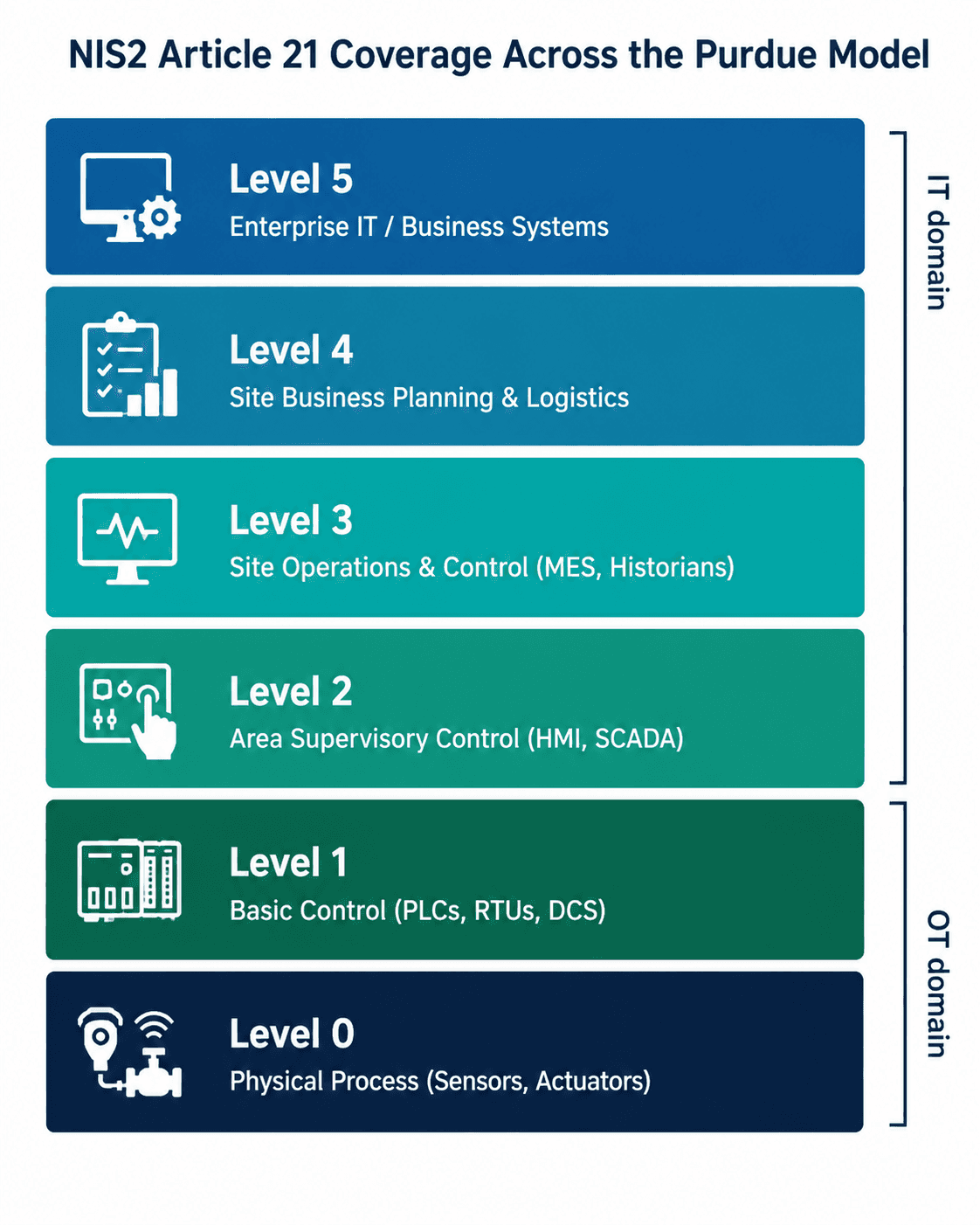
Figura 4: Mapeo de las obligaciones del Artículo 21 de la NIS2 a lo largo de la pila de control industrial (modelo Purdue, Niveles 0–5).
La visibilidad de la cadena de suministro suele ser incompleta
La NIS2 exige explícitamente a las organizaciones que gestionen el riesgo de ciberseguridad que representan los proveedores y prestadores de servicios. En entornos industriales, esa cadena de suministro incluye proveedores de equipos, integradores de sistemas y técnicos de mantenimiento externos que habitualmente conectan computadoras portátiles directamente a las redes de control. Pocas organizaciones mantienen un inventario completo y actualizado de cada tercero con acceso al sistema, y mucho menos evaluaciones de riesgo documentadas para cada uno de ellos.
La tolerancia al tiempo de inactividad es casi nula
A diferencia de una interrupción de TI corporativa, una parada no planificada en un proceso de manufactura continua, un sistema de distribución de energía o una planta de tratamiento de agua puede tener consecuencias para la seguridad, el medio ambiente y la salud pública. Cada control de seguridad que se introduzca en un entorno de OT debe validarse frente a la continuidad operativa antes de su despliegue, lo que naturalmente ralentiza los plazos de implementación en comparación con un despliegue de TI típico.
Qué ocurre cuando se explotan estas brechas
Los riesgos que aborda la NIS2 no son teóricos. Un patrón constante de incidentes reales es exactamente la razón por la que los reguladores decidieron que la tecnología operativa ya no podía quedar al margen de la ley de ciberseguridad.
Colonial Pipeline, 2021. Un ataque de ransomware a los sistemas de TI empresariales (no directamente a los sistemas de control) obligó al cierre preventivo total de un importante gasoducto de EE. UU., lo que provocó escasez de combustible y picos de precios a nivel regional. La decisión de cierre ilustra cómo un compromiso de TI por sí solo puede forzar una parada de OT cuando la segmentación y la contención son insuficientes.
Servicios de agua europeos. Múltiples intentos de intrusión reportados en los sistemas de control de plantas de tratamiento en los últimos años han incluido esfuerzos para manipular los parámetros de dosificación química, un escenario con consecuencias directas para la salud pública.
Manufactura en toda la UE. Los eventos de ransomware han detenido las líneas de producción durante días o semanas seguidas, y los costos de recuperación con frecuencia superan la demanda de rescate en sí una vez que se factorizan la pérdida de producción, las penalizaciones contractuales y el daño a la reputación.
Reconocimiento de la red eléctrica. Las agencias nacionales de ciberseguridad de toda la región han documentado actividades de reconocimiento coordinadas de actores de amenazas sofisticados que sondean las configuraciones de acceso remoto en la infraestructura de la red.
Lo que conecta estos ejemplos no es un único punto de falla, sino un patrón: segmentación de red insuficiente, detección tardía y planes de respuesta a incidentes creados en torno a supuestos de TI en lugar de realidades industriales. Los requisitos de la NIS2 son, en efecto, una respuesta legislativa directa a este patrón exacto.
Creación de una hoja de ruta de cumplimiento de NIS2 para entornos industriales
Cumplir con las obligaciones de la NIS2 en un entorno industrial requiere un programa construido en torno a las realidades de la planta de producción, no una copia de un marco de seguridad de TI. Dado que las primeras auditorías independientes deben realizarse antes del 30 de junio de 2026 en la mayoría de los Estados miembros transpuestos, la siguiente secuencia refleja dónde las organizaciones industriales suelen ganar más terreno con mayor rapidez.
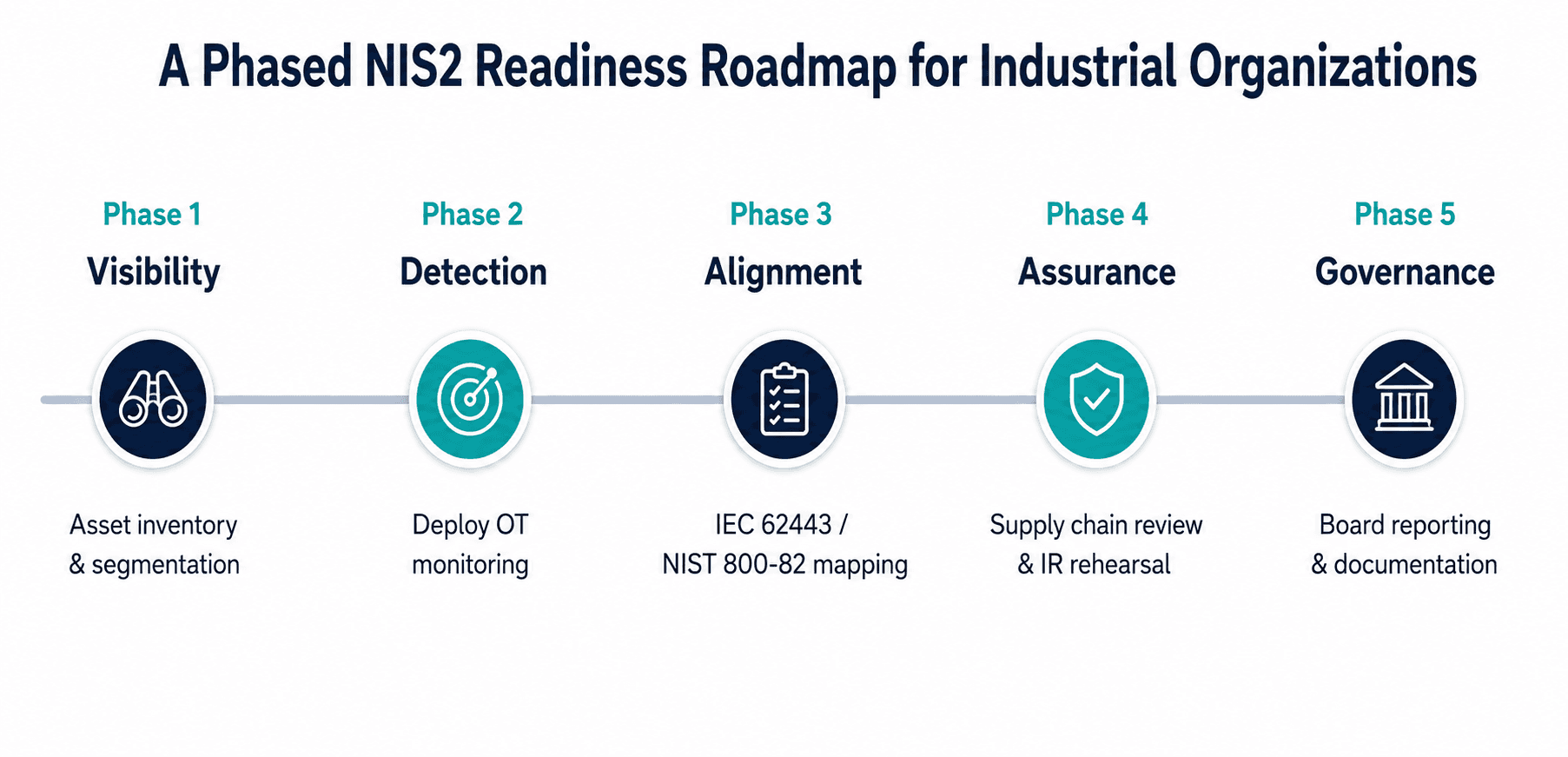
Figura 5: Un enfoque por fases para la preparación de NIS2 para organizaciones industriales.
Crear y mantener un inventario completo de activos de OT. No se pueden proteger, monitorear ni reportar sistemas que no se han identificado: cada controlador, HMI, estación de trabajo de ingeniería y dispositivo de campo conectado a la red.
Segmentar las zonas de TI y OT. Siga modelos de arquitectura reconocidos que separen la red empresarial, la DMZ industrial y la red de control en zonas distintas y monitoreadas.
Desplegar el monitoreo pasivo de OT. Detecte comportamientos anómalos sin interrumpir los procesos de control sensibles, cerrando la brecha de visibilidad que hace posible un plazo de notificación de 24 horas.
Alinearse con estándares de seguridad industrial reconocidos. Marcos como IEC 62443 y NIST SP 800-82 se adaptan de forma natural a las diez medidas del Artículo 21, al tiempo que respetan las limitaciones operativas propias de los sistemas de control.
Formalizar las evaluaciones de riesgo de la cadena de suministro. Cubra a cada proveedor, integrador y proveedor de mantenimiento con acceso al sistema, e incorpore cláusulas de ciberseguridad directamente en los contratos nuevos y renovados.
Crear y ensayar un plan de respuesta a incidentes específico para OT. Los ejercicios teóricos deben simular el compromiso de un sistema de control, no solo una filtración de datos corporativos.
Establecer informes a nivel de junta directiva. Dado que la NIS2 atribuye responsabilidad directa a los órganos de dirección, los líderes necesitan una visibilidad periódica y comprensible del riesgo de OT, no un apéndice técnico oculto.
Documentarlo todo. Las evaluaciones de riesgos, los registros de capacitación, los registros de incidentes y los resultados de las pruebas de control son las primeras pruebas que solicitan los reguladores durante cualquier revisión de supervisión.
Cómo apoya Shieldworkz a las organizaciones
Shieldworkz trabaja exclusivamente en la intersección de la tecnología operativa y la ciberseguridad, lo que significa que nuestro enfoque para el cumplimiento de la NIS2 comienza desde la planta de producción en lugar de adaptar un marco de TI a los sistemas industriales. Las organizaciones se asocian con nosotros para traducir la obligación legal en un programa de seguridad funcional y sostenible.
Descubrimiento integral de activos de OT e ICS para construir el inventario preciso del que depende el cumplimiento de la NIS2
Clasificación de entidades y evaluación de brechas con respecto a las diez medidas mínimas de seguridad del Artículo 21
Diseño y validación de la segmentación de red en las zonas de TI, DMZ y sistemas de control
Monitoreo continuo y no disruptivo de OT diseñado para detectar anomalías con la suficiente rapidez como para cumplir con el reloj de notificación de 24 horas
Planificación de respuesta a incidentes y ejercicios teóricos diseñados específicamente para escenarios de sistemas de control
Evaluaciones de riesgo de terceros y de la cadena de suministro que cubren a proveedores, integradores y prestadores de mantenimiento
Informes listos para la junta directiva que traducen el riesgo técnico al lenguaje que los líderes necesitan para la rendición de cuentas de la gobernanza
Soporte de asesoría continuo para mantener su programa actualizado a medida que las directrices de la NIS2, las enmiendas de enero de 2026 y las prácticas de cumplimiento sigan evolucionando
En lugar de entregar una auditoría única y una carpeta de recomendaciones, Shieldworkz se asocia con organizaciones industriales a largo plazo, porque el cumplimiento regulatorio no es un proyecto con fecha de finalización. Es una disciplina operativa.
Conclusión
La NIS2 representa el endurecimiento más significativo de las expectativas de ciberseguridad al que se han enfrentado los operadores de infraestructuras críticas en más de una década y, a diferencia de 2024, ya no es una directiva a la espera de que la legislación nacional se ponga al día. Veintidós Estados miembros la han transpuesto, las remisiones por incumplimiento están activas contra el resto y las primeras auditorías deben realizarse antes del 30 de junio de 2026. Para los líderes de OT e ICS, ese calendario convierte la visibilidad de los activos, la velocidad de detección y la estructura de gobernanza de objetivos aspiracionales en entregables a corto plazo con un plazo estricto asociado.
Las organizaciones que traten la NIS2 como una oportunidad para modernizar su postura de seguridad industrial, en lugar de como una carga burocrática que minimizar, serán las mejor posicionadas para soportar el próximo incidente grave, regulatorio o de otro tipo. El panorama de amenazas al que se enfrentan las redes eléctricas, los sistemas de agua, los fabricantes y las redes de transporte no se está ralentizando, y el cumplimiento regulatorio tampoco.
La pregunta para cada líder de seguridad de OT ya no es si actuar, sino con qué rapidez se puede poner en marcha un programa defendible y bien documentado antes de que se cierre el plazo de auditoría del 30 de junio de 2026.
Reserve una consulta gratuita con nuestros expertos Si su organización gestiona infraestructuras críticas y desea tener una visión clara de su situación con respecto a los requisitos de la NIS2, nuestro equipo está listo para ayudarle. Hable con un especialista en seguridad de OT de Shieldworkz para obtener una evaluación sin compromiso de su postura actual, sus brechas prioritarias y un camino práctico hacia el cumplimiento que respete sus realidades operativas. Sin presiones, sin tecnicismos, solo una conversación directa sobre la protección de los sistemas de los que depende. |
Recursos adicionales:
Guía completa para la detección y respuesta de red NDR en 2026 aquí
Lista de verificación de preparación para el monitoreo de seguridad de la red interna NERC CIP-015 para empresas de energía eléctrica aquí
Guía fundacional de OT SOC aquí
Servicio de SOC administrado aquí
Asesoría de inteligencia sobre ciberamenazas de OT - Medio Oriente aquí
Directiva NIS2: Lograr el cumplimiento de NIS2 a través de IEC 62443 aquí
¿Qué son los medios extraíbles? Riesgos, políticas y soluciones de seguridad de OT industrial aquí
Plantilla gratuita de política de medios extraíbles para equipos de OT y TI aquí
Recibe semanalmente
Recursos y Noticias
Vea cómo nuestras soluciones de seguridad de OT líderes en la industria abordan los desafíos de seguridad críticos
También te puede interesar

What the French supermarket cyberattack reveals about OT security
Prayukth K V

Inside the Albert Heijn cyber incident: Investigating the attack, the IT/OT exposure, and the risks to critical operations
Team Shieldworkz

50°C by cyberattack? Inside France’s supermarket refrigeration crisis
Prayukth K V

Automating IEC 62443 Compliance Assessments Without Losing Expert Control
Team Shieldworkz

Investigative cyber threat intelligence report: Daiichi Kosho supply-chain data exposure
Prayukth K V

How AI Is Changing IEC 62443 Assessments
Team Shieldworkz