E-Book
OT Media Scan Foundational Cybersecurity Guide
OT Media Scan, Foundational Cybersecurity Guide for Industrial Environments
Removable media threats are not hypothetical. They are responsible for some of the most consequential cyberattacks ever recorded against industrial infrastructure. A single USB drive penetrated an air-gapped nuclear facility in 2010. Contractor laptops carried dormant malware into process control networks for years without detection. Vendor-supplied firmware media bypassed standard antivirus entirely. And in each case, the industrial environment had no systematic control in place at the point of media entry.
This guide, developed by the OT security practice at Shieldworkz - is a practitioner-grade framework for deploying, governing, and operationalizing media scanning solutions in Operational Technology (OT) and Industrial Control System (ICS) environments. It is written for the people accountable for industrial cybersecurity decisions: CISOs, OT security managers, risk managers, compliance officers, and plant engineering teams who need to close one of the most persistent and underaddressed gaps in their security programs.
Why This E-Book Matters to Your Organisation
OT environments are fundamentally different from enterprise IT networks. They run legacy operating systems that cannot support endpoint agents. They operate on strict uptime requirements that resist security changes. They grant routine physical access to third-party vendors and contractors carrying devices that have passed through dozens of other sites. And they are increasingly targeted by nation-state actors, ransomware operators, and industrial espionage groups who know exactly how these constraints work - and exploit them deliberately.
Removable media sits at the center of this exposure. It is the attack vector that works precisely because OT environments are isolated. Where network-based intrusion is impractical, a USB drive is not. Where endpoint detection cannot be deployed, physical media access remains wide open. Media scanning is one of the few security controls that directly addresses this gap without requiring any changes to the OT assets it protects. It operates at the boundary - as an external gatekeeping control - making it uniquely suited to air-gapped, legacy, and operationally constrained industrial environments. This guide explains how to implement it properly, govern it effectively, and measure it honestly.
The financial case is equally direct. A single successful compromise of a Distributed Control System (DCS) or Safety Instrumented System (SIS) via infected media can result in weeks of lost production and remediation costs running into tens of millions of dollars. The cost of a mature media scanning program is a fraction of that exposure - and that comparison belongs in every budget conversation.
Why It Is Important to Download This Guide
If you are responsible for OT or ICS security in any capacity - whether you oversee a single plant or a global portfolio of industrial sites - this guide closes a knowledge and implementation gap that most organizations have not fully addressed.
Regulatory pressure is increasing. IEC 62443, NIS2 Article 21, NIST SP 800-82 Rev.3, and CIS Controls v8 all explicitly require documented media handling controls and scanning procedures. Organizations that cannot demonstrate a mature, documented, and enforced media security posture face audit findings, compliance penalties, and - for critical national infrastructure operators - direct regulatory scrutiny. This guide gives you the framework, the evidence artifacts, and the implementation roadmap to meet those requirements.
Operationally, it addresses scenarios that generic cybersecurity guidance ignores: what to do when a vendor arrives on-site with unvetted media, how to handle emergency maintenance when normal scanning procedures cannot be followed, how to scan PLC logic files and HMI configuration data that IT-focused scanning tools do not recognize, and how to manage a media security program across air-gapped sites with no internet connectivity.
It is also candid about what media scanning cannot do - covering residual risks including zero-day malware, fileless threats, hardware-based attacks like BadUSB, and insider threats - and providing specific compensating controls for each. That honesty is intentional. Organizations that understand the limitations of any control are better positioned to manage residual risk than those operating under false assurance.
Key Takeaways From the OT Media Scan Foundational Cybersecurity Guide
The threat is real, documented, and ongoing. Four major OT incidents - Stuxnet (2010), Conficker in industrial environments, TRITON/TRISIS (2017), and NotPetya (2017) - are analyzed in detail, with the specific media security lessons extracted from each. Stuxnet demonstrated that air-gap isolation is not sufficient protection. Conficker showed that OT patch cycles leave legacy vulnerabilities active for years. TRITON elevated media security from a cybersecurity issue to a process safety issue. NotPetya proved that recovery operations are as high-risk as the attack itself.
Not all removable media carries equal risk. The guide maps eight distinct media categories - USB flash drives, external hard drives, engineering laptops, contractor and vendor devices, portable maintenance workstations, firmware update media, backup media, and supply chain hardware - each with its own risk profile and required control.
Content Disarm and Reconstruction (CDR) is the most underutilized capability in OT media security. Unlike signature-based scanning, CDR does not attempt to detect malware - it removes the possibility of active malicious content from document types entirely, reconstructing a clean functional version. For zero-day threats embedded in PDFs and Office files entering OT networks, CDR is the only viable control. Most organizations have never deployed it.
Vendor media is the highest-risk category. Contractors and OEMs routinely arrive on-site with devices that have been connected to multiple unknown environments. The guide provides explicit procedures for vendor access, including why no exception should ever be granted based on vendor assurances, and how to embed scanning requirements into procurement contracts, site access agreements, and master service agreements.
A policy without enforcement is security theater. Publishing an OT removable media policy without deploying technology and active enforcement mechanisms is one of the eight most common deployment failures documented in this guide. The others - excessive exception management, missing program ownership, ignoring signature update currency, and treating scanning as a complete solution - are equally common and equally damaging.
A five-level maturity model gives every organization a starting point. From Level 1 (Ad Hoc - no formal controls, unmanaged USB usage) through Level 5 (Optimized - threat-intelligence-driven, sandboxing, red team exercises), the model maps exactly where your organization sits and what the next step looks like. KPIs and KRIs are defined for each level, making progress measurable rather than aspirational.
Implementation checklists are ready to use immediately. The guide includes role-specific checklists for executives, OT security teams, plant operations, vendor management, and audit readiness - structured for day-one practical use.
How Shieldworkz Supports Your OT Media Security Program
Shieldworkz is a global OT security company founded by senior industrial cybersecurity practitioners, with operations spanning energy, manufacturing, oil and gas, utilities, chemicals, and transportation sectors worldwide. This guide is backed by the same operational expertise that supports critical infrastructure operators across more than 30 countries.
Our support for OT media security programs is end-to-end:
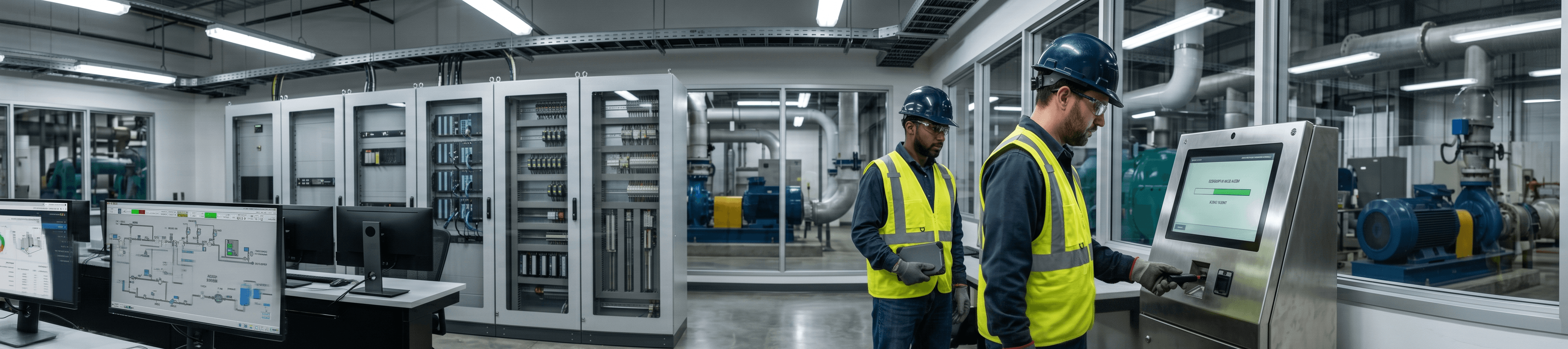
Media Scan Solution - Purpose-built OT media scanning kiosks and portable scanning stations. Air-gap capable. Compatible with legacy operating systems including Windows XP and Windows 7. Equipped with parsers for industrial file formats including PLC logic files, HMI configuration files, and proprietary firmware formats. Deployable as standalone kiosks, portable field units, or integrated centralized architectures.
Othello Assess - OT-specific vulnerability and risk assessment platform for current-state gap analysis, media port auditing, and maturity benchmarking aligned to IEC 62443 and NIST SP 800-82. Produces the evidence-based documentation required for regulatory compliance and audit readiness.
Shieldworkz NDR - OT network detection and response platform that integrates with media scanning events for real-time correlation between media-borne threat detections and post-compromise network behavior - feeding directly into OT SOC operations.
OT Security Advisory Services - Governance framework development, vendor management program design, media security policy architecture, exception management process design, and full regulatory compliance support across NIS2, IEC 62443, NERC CIP, and regional requirements.
Organizations that work with Shieldworkz do not receive a generic cybersecurity framework applied to an industrial context. They receive OT-native expertise, built from the ground up for the operational constraints, legacy environments, and threat landscape specific to industrial infrastructure.
Fill the Form to Download the Guide & Book Your Free Consultation
Fill the form to download the full OT Media Scan Foundational Cybersecurity Guide and speak directly with a Shieldworkz OT security expert - at no cost and no obligation. Our practitioners will review your current media security posture, help you identify where your organization sits on the five-level maturity model, and outline the highest-priority actions specific to your environment, sector, and regulatory obligations. Book Your Free Consultation with our OT security experts. The consultation takes 30 minutes. The insight it delivers is immediate.
Download your copy today!