Analyse zur Kompromittierung der Lieferkette durch Dritte und Erpressung bei Stadler Rail


Prayukth K V
Kürzlich geriet der Schweizer Schienenfahrzeughersteller Stadler Rail AG ins Visier einer Erpressungskampagne. Die Ereignisse folgten auf eine Sicherheitsverletzung in der Lieferkette, die eine Datenaustauschplattform eines Drittanbieters betraf. Der Akteur, identifiziert als die Ransomware- und Erpressergruppe Everest, forderte 10 Millionen Schweizer Franken (~12,3 Millionen USD), nachdem er technische Dokumentationen eines externen Zulieferers exfiltriert hatte.
Lesen Sie unsere Analyse zur Sicherheitsverletzung im Kernkraftwerk Kudankulam.
Stadler Rail wies die Lösegeldforderung zurück und erstattete formell Strafanzeige bei der Kantonspolizei Thurgau. Zudem bestätigte das Unternehmen, dass seine internen Unternehmens-IT-Netzwerke, industriellen Steuerungssysteme (ICS), die Operational Technology (OT) sowie der weltweite Bahnbetrieb vollständig unbeeinträchtigt blieben.
Dieser Vorfall verdeutlicht einmal mehr die operative Verschiebung bei finanziell motivierten Bedrohungsakteuren weg von netzwerkweiten Ransomware-Verschlüsselungen hin zur reinen Erpressung über Filesharing- und Datenaustauschmechanismen von Drittanbietern. Obwohl keine Operational Technology (OT) oder sicherheitskritischen Signalsysteme gestört wurden, unterstreicht die gezielte Attacke auf einen Tier-1-Schienenfahrzeughersteller die systemischen Risiken, die durch Abhängigkeiten in der Lieferkette innerhalb von KRITIS-Ökosystemen entstehen.
Überblick über den Vorfall
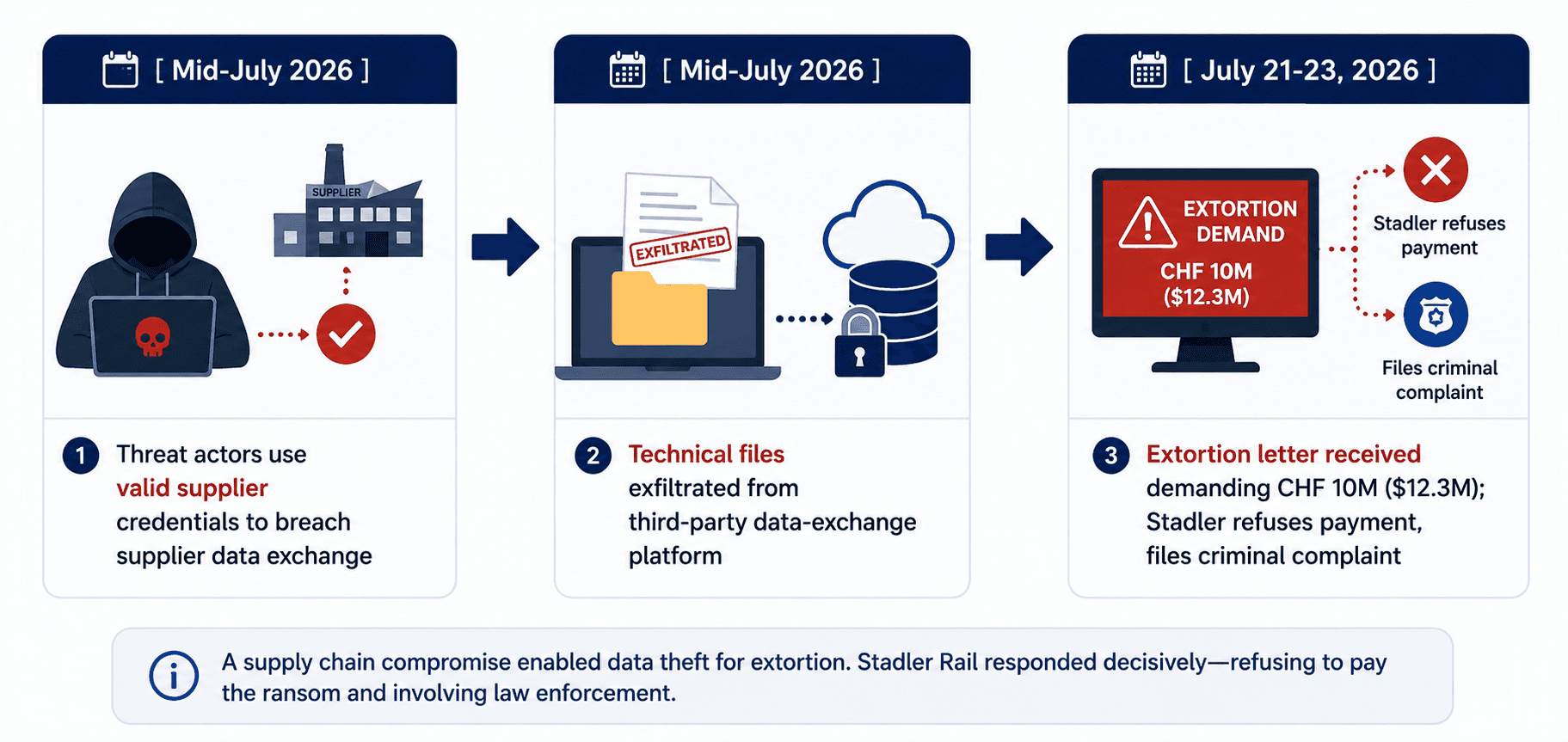
Mitte Juli 2026 erlangten Bedrohungsakteure unbefugten Zugriff auf eine Datenaustauschplattform eines Drittanbieters, die von einem Zulieferer von Stadler Rail genutzt wird. Die Akteure verschafften sich gültige Zugangsdaten für die gemeinsam genutzte Plattform und exfiltrierten heimlich die darauf gehosteten technischen Dokumente. Nur wenige Tage nach der Exfiltration erhielt Stadler Rail eine Erpresserforderung über 10 Millionen CHF (~12,3 Mio. USD) unter der Drohung einer Veröffentlichung der Daten.
Chronologie der Ereignisse
Mitte Juli 2026: Angreifer kompromittieren gültige Benutzerdaten für eine von einem Zulieferer gehostete Datenaustauschplattform und exfiltrieren technische Dokumentationen.
Mitte Juli 2026: Die Everest-Gruppe sendet ein Erpresserschreiben an Stadler Rail und fordert 10 Millionen CHF (~12,3 Millionen USD).
21.–23. Juli 2026: Stadler bestätigt den Vorfall öffentlich, weist die Lösegeldforderung formell zurück, kontaktiert die Kantonspolizei Thurgau in der Schweiz und gibt Entwarnung, indem das Unternehmen bestätigt, dass keinerlei Auswirkungen auf den Betrieb oder die Sicherheit vorliegen.
Öffentliche Erklärungen und Ermittlungsstand
Stadler Rail hat den Erpressungsversuch öffentlich bestätigt und erklärt:
„Stadler zahlt unter keinen Umständen Lösegeld und lässt sich daher nicht erpressen.“
Das Unternehmen bestätigte, dass die Backup-Systeme intakt waren, die internen IT-Netzwerke nicht kompromittiert wurden, keine sicherheitskritische Zugsteuerungs- oder Signalsoftware beeinträchtigt wurde und die globale Produktion in allen Werken voll funktionsfähig blieb. Die Ermittlungen dauern in Abstimmung mit den Schweizer Strafverfolgungsbehörden (Kantonspolizei Thurgau) an.
Opferprofil und Bedrohungslage
Unternehmensprofil
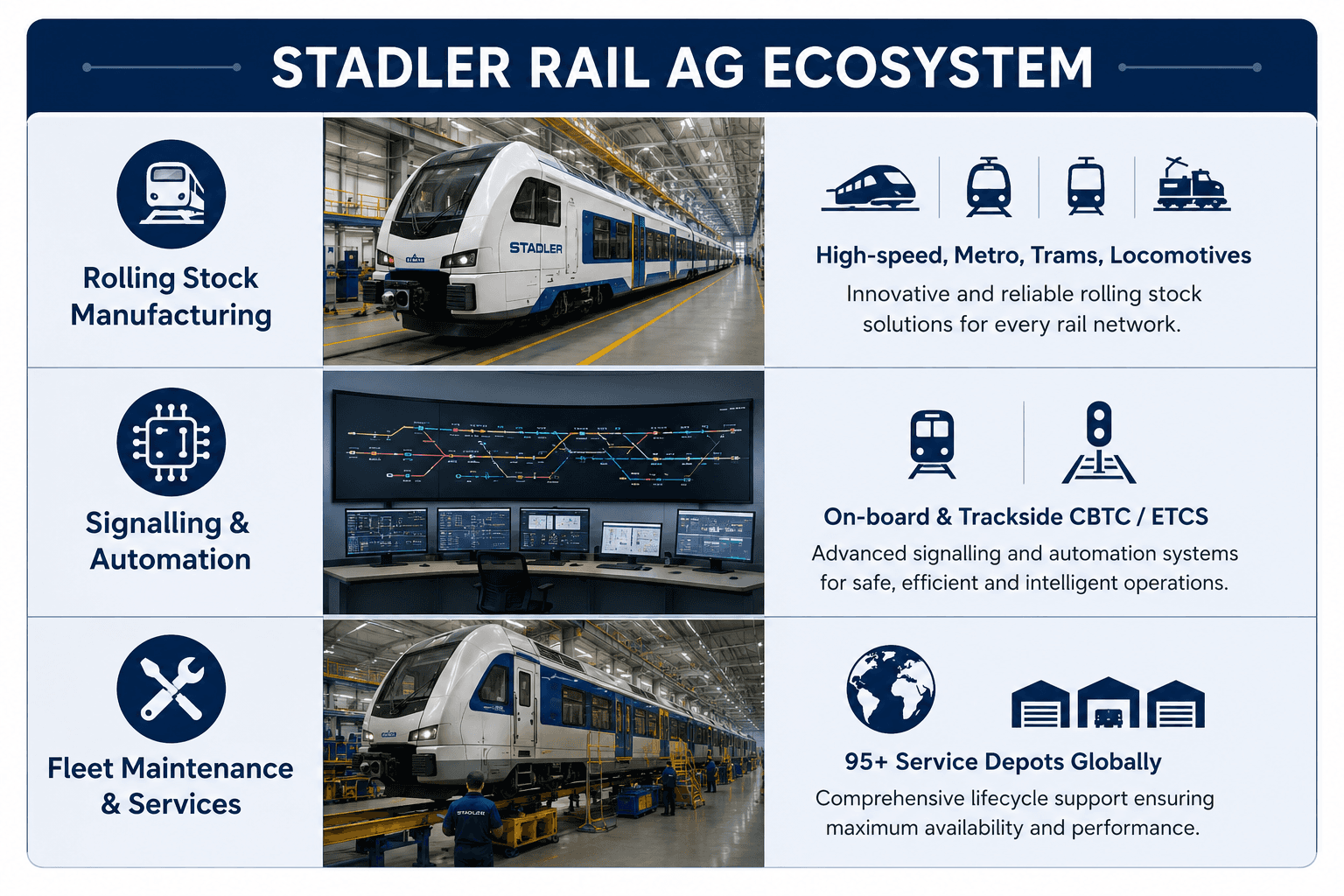
Die Stadler Rail AG (mit Hauptsitz in Bussnang, Schweiz) ist ein internationaler Hersteller von Schienenfahrzeugen und Bahnsystemen. Zu den wichtigsten operativen Kennzahlen gehören:
Globale Präsenz: Über 18.000 Mitarbeitende an 8 Produktionsstandorten, 6 Engineering-Zentren und über 95 Servicestandorten weltweit.
Umsatz: Über 4,9 Milliarden USD jährlich.
Produktportfolio: Hochgeschwindigkeitszüge, Regional- und S-Bahnen, U-Bahnen, Straßenbahnen, Lokomotiven (dieselelektrisch und elektrisch) sowie eigene Zugsicherungslösungen.
Stadler liefert Schienenfahrzeuge, Signaltechnik und Instandhaltungsdienstleistungen für den Personen-, Güter- und Nahverkehr in Europa, Nordamerika und Asien. Obwohl der Vorfall keine operativen Systeme beeinträchtigte, ist die Rolle des Unternehmens innerhalb der Transport-Lieferketten von strategischer Bedeutung.
Strategische Attraktivität von Schienenfahrzeugherstellern
Schienenfahrzeughersteller und Engineering-Dienstleister nehmen eine kritische Position in der nationalen Verkehrsinfrastruktur ein:
Hohe Sensibilität für Erpressungen: Die Schienenfahrzeugproduktion arbeitet mit engen Projektlaufzeiten und strikten regulatorischen Compliance-Fristen. Wahrgenommene operative Verzögerungen erhöhen den Druck, Vorfälle schnell zu lösen.
Proprietäres technisches geistiges Eigentum: Moderne Züge basieren auf spezialisierten Konstruktionszeichnungen, Train Control and Management Systemen (TCMS) und Signalbauplänen für das European Train Control System (ETCS). Der Zugriff auf diese Assets bietet Erpressungspotenzial.
Vernetzung der Lieferkette: Hersteller unterhalten gemeinsam genutzte technische Repositories und Fernzugriffskanäle mit Hunderten von Tier-1- und Tier-2-Zulieferern, was eine große, verteilte Angriffsfläche schafft.
Analyse des Bedrohungsakteurs: Everest-Gruppe
Gruppenprofil und Entwicklung
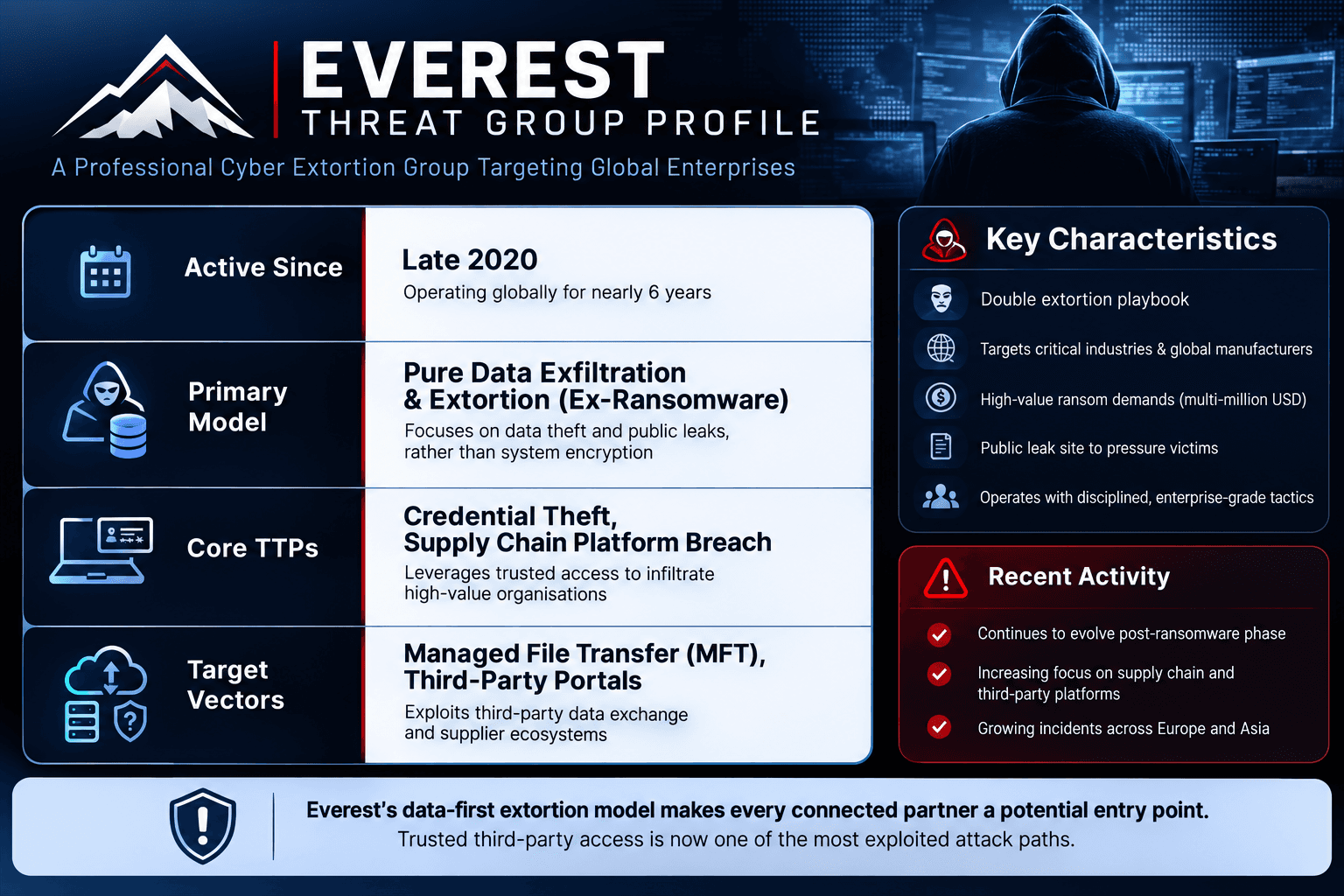
Herkunft und Aktivität: Everest ist eine finanziell motivierte, mutmaßlich russischsprachige Bedrohungsgruppe, die seit mindestens Ende 2020 aktiv ist.
Taktische Entwicklung: Ursprünglich als klassische Double-Extortion-Ransomware-Gruppe aktiv, die eigene Verschlüsselungssoftware einsetzte, verlagerte Everest den Schwerpunkt weg von netzwerkweiten Verschlüsselungen hin zu Datendiebstahl, Initial Access Broker (IAB)-Aktivitäten und reiner Erpressung.
Zugriffserlangung: Everest kauft häufig kompromittierte Unternehmenszugangsdaten von Initial Access Brokern oder erwirbt von anderen Akteuren gestohlene Daten, um sekundäre Erpressungskampagnen durchzuführen.
Frühere Kampagnen und Zielbranchen
Everest hat systematisch kritische Infrastrukturen, staatliche Dienstleister und große Industrieunternehmen ins Visier genommen:
Svenska kraftnät Dienstleister (2025): Angriff auf ein externes File-Transfer-System, das vom staatlichen schwedischen Stromnetzbetreiber genutzt wird.
Automobilsektor (Nissan-Dienstleister): Kompromittierung von Plattformen von Drittanbietern, die große Automobilhersteller beliefern.
Luftfahrt & Industrie: Historische Angriffe auf Fertigungs- und Engineering-Unternehmen in Nordamerika und Europa.
Attributionsmatrix
Bestätigte Zuordnung: Das bei Stadler Rail eingegangene Erpresserschreiben mit der Forderung von 10 Millionen CHF wurde explizit im Namen der Everest-Gruppe verfasst.
Vermutete Zuordnung / Analystenbewertung: Die Analyse deutet darauf hin, dass die Kompromittierung in der Infrastruktur eines externen Zulieferers ihren Ursprung hatte und nicht durch eine direkte Verletzung des Perimeters von Stadler erfolgte. Dies deckt sich mit der Historie von Everest, Drittanbietersoftware und Zuliefererportale auszunutzen.
Technische Analyse
Die folgende Aufschlüsselung analysiert den technischen Lebenszyklus des Angriffs ausschließlich auf Basis öffentlicher Erklärungen von Stadler Rail und Sicherheitsberichten.
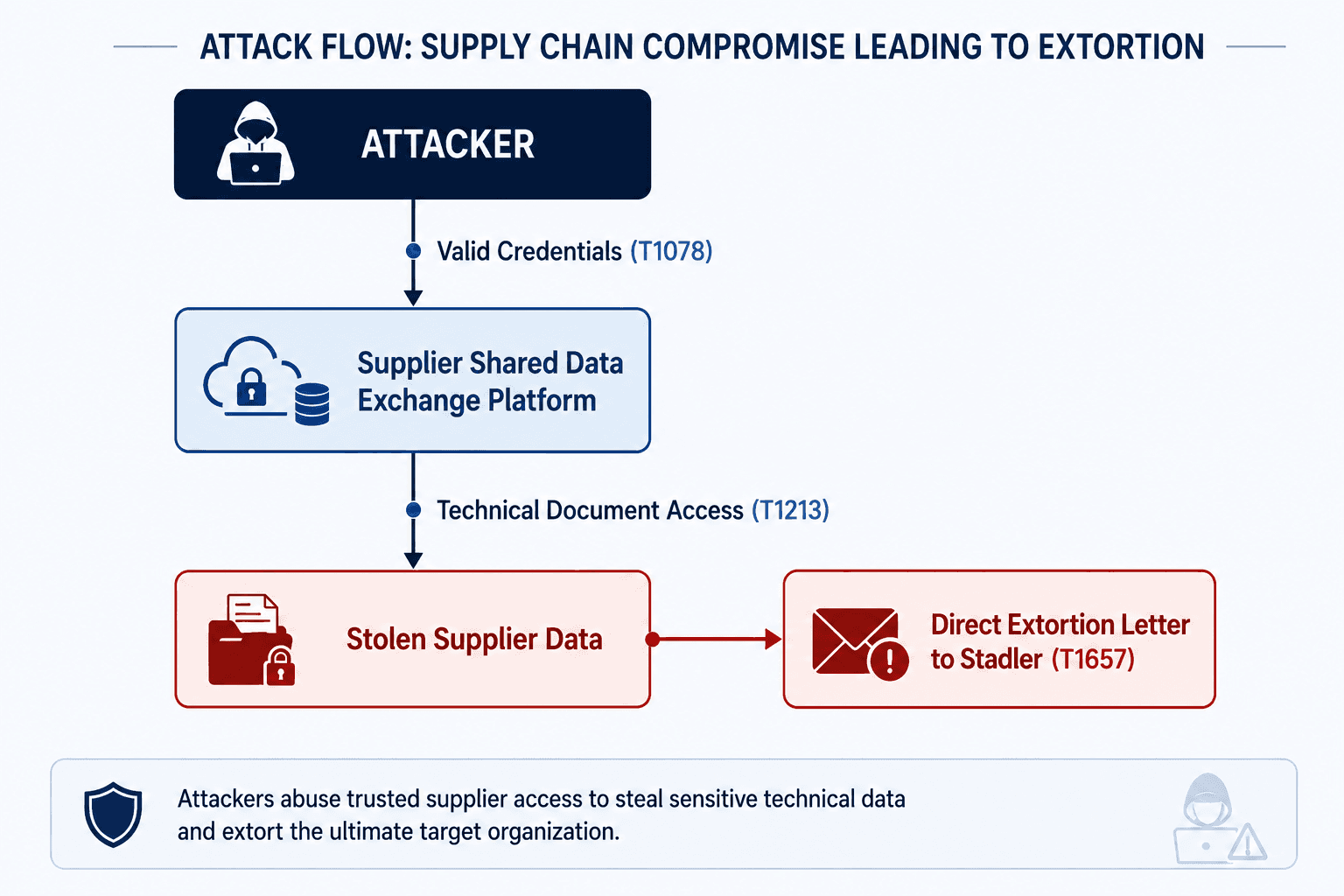
Erstzugang (Initial Access): Die Angreifer erlangten Zugriff auf eine cloudbasierte oder zum Perimeter ausgerichtete Datenaustauschplattform eines Drittanbieters unter Verwendung von kompromittierten gültigen Zugangsdaten (T1078) eines Zulieferers.
Persistenz und Privilegieneskalation: Es gibt derzeit keine öffentlichen Belege für interne Persistenzmechanismen oder eine Eskalation von Privilegien innerhalb der Unternehmensumgebung von Stadler.
Laterale Bewegung (Lateral Movement): Es gibt derzeit keine öffentlichen Belege für laterale Bewegungen in das interne Unternehmensnetzwerk, das Active Directory oder die OT/ICS-Netzwerke von Stadler Rail.
Datenexfiltration: Technische Dateien und Dokumente des Zulieferers wurden direkt von der gemeinsam genutzten Datenaustauschplattform exfiltriert.
Verschlüsselung: Es wurden keine Verschlüsselungs-Locker auf internen Endpunkten oder Servern von Stadler Rail ausgeführt.
Auswirkungen (Impact): Nicht sicherheitskritische technische Dokumente des Drittzulieferers waren exponiert. Die Unternehmens-IT, OT, Zugsicherungssysteme und Fertigungslinien verzeichneten keinerlei betriebliche Ausfallzeiten.
Indicators of Compromise (IOCs)
Zum Zeitpunkt der Erstellung dieses Berichts wurden weder von Stadler Rail noch von der Kantonspolizei oder Bedrohungsanalysten verifizierte technische IOCs (z. B. spezifische IP-Adressen, Dateihashes, Registrierungsschlüssel, Domainnamen oder Wallet-Adressen) öffentlich bekannt gegeben.
Sollten nach Abschluss der polizeilichen Ermittlungen forensische Artefakte oder Dateiindikatoren veröffentlicht werden, sind diese mit den offiziellen Meldungen des Schweizer Nationalen Zentrums für Cybersicherheit (NCSC) abzugleichen.
MITRE ATT&CK Mapping
Die unten stehenden Mappings stellen das Angreiferverhalten dar, das durch öffentliche Erklärungen von Stadler Rail sowie Berichte von BleepingComputer und The Record bestätigt wurde.
MITRE ATT&CK für Enterprise
Taktik | Technik-ID | Technik-Name | Beleg |
Initial Access | T1078 | Valid Accounts | Kompromittierte Zugangsdaten zur Anmeldung bei der Datenaustauschplattform des Zulieferers genutzt. |
Initial Access | T1195.002 | Supply Chain Compromise: Compromise Software Supply Chain | Ausnutzung des File-Sharing-Dienstes eines externen Zulieferers zum Zugriff auf technische Dateien. |
Collection | T1213 | Data from Information Repositories | Exfiltration technischer Dokumentation, die im gemeinsam genutzten Austauschportal gespeichert war. |
Impact | T1657 | Financial Extortion | Zustellung einer Lösegeldforderung über 10 Millionen CHF unter Androhung der Datenveröffentlichung. |
MITRE ATT&CK for ICS
Es gibt derzeit keine öffentlichen Belege für Aktivitäten von Bedrohungsakteuren, Netzwerkdurchquerungen oder technische Interaktionen innerhalb von MITRE ATT&CK for ICS-Umgebungen (Ebene 0–3). Stadler erklärte ausdrücklich, dass die Fahrzeugsicherheitssysteme und die Fertigungssteuerungsumgebungen nicht betroffen waren.
Potenzielle Auswirkungen auf den Eisenbahn- und OT-Betrieb
Um CISOs und Bahnbetreiber bei der Risikobewertung zu unterstützen, ordnet die folgende Tabelle die bestätigten Ergebnisse den theoretischen operativen Risiken von Bahnsystemen gegenüber.
Operativer Bereich | Status der Auswirkung | Analytische Risikobewertung |
Unternehmens-IT | Keine Auswirkung | Die interne Infrastruktur war von der kompromittierten Plattform des Dienstleisters isoliert. |
OT und Fertigung | Keine Auswirkung | SPS-, SCADA- und Montagelinien-Prozesse liefen normal weiter. |
Zugsicherung (ETCS/CBTC) | Keine Auswirkung | Auf fahrzeugseitige und streckenseitige sicherheitskritische Code-Repositories wurde nicht zugegriffen. |
Fahrzeugbetrieb (Rolling Stock) | Keine Auswirkung | Züge im weltweiten aktiven Dienst verzeichneten keinerlei Unterbrechungen oder Beeinträchtigungen der Sicherheit. |
Lieferkettendaten | Bestätigter Abfluss | Nicht sicherheitsrelevante technische Dokumentation eines externen Zulieferers war exponiert. |
Strategische Lehren zur Verteidigung für Bahn- und OT-Betreiber
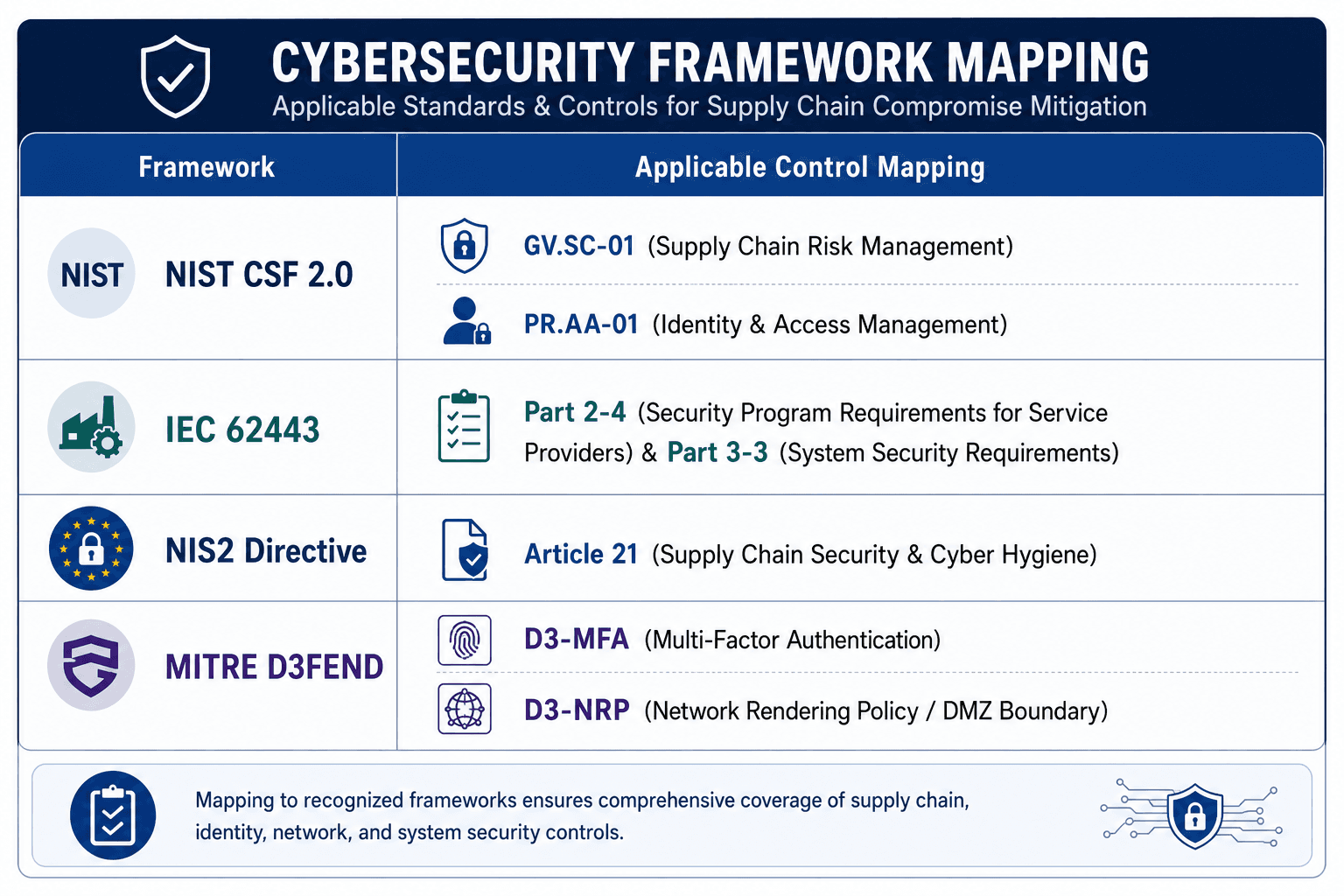
Isolierung externer Datenaustauschplattformen: Dateiaustauschsysteme mit Drittanbietern müssen in isolierten demilitarisierten Zonen (DMZs) betrieben werden, ohne implizites Vertrauen oder automatische Datensynchronisation in interne Engineering-Netzwerke.
Einführung von Phishing-resistenter MFA: Erzwingen Sie FIDO2/WebAuthn-Hardware-Token oder verwaltete Identity Provider für alle externen Partnerzugriffe, um Credential-Stuffing und Account-Takeover-Angriffe (T1078) zu verhindern.
Datenminimierung & Löschrichtlinien: Implementieren Sie ein automatisiertes Lifecycle-Management auf gemeinsam genutzten Extranets, um technische Zeichnungen und Dokumente nach Abschluss aktiver Projekte zu löschen.
Zero-Trust-Architektur für Zuliefererportale: Wenden Sie eine strikte rollenbasierte Zugriffskontrolle (RBAC) an, um sicherzustellen, dass ein kompromittiertes Zuliefererkonto keine Dokumente außerhalb seines expliziten Arbeitsbereichs einsehen kann.
Regulatorische Konformität und Standardisierung
Die aus diesem Vorfall abgeleiteten Empfehlungen stehen im Einklang mit den etablierten Cybersecurity-Frameworks und KRITIS-Vorgaben:
Strategische Erkenntnisse für Betreiber kritischer Infrastrukturen
Verschiebung der Erpressungsmethoden über Verschlüsselung hinaus: Ransomware-Aktivitäten verlagern sich zunehmend von auffälligen Netzwerkverschlüsselungen hin zur unauffälligen Exfiltration von Zulieferer-Repositories. Verteidigungsstrategien müssen Data Loss Prevention (DLP) und Identitätssicherheit gleichwertig neben Wiederherstellungsplänen priorisieren.
Konsequente Haltung gegen Lösegeldforderungen: Die Weigerung von Stadler Rail zu verhandeln zeigt, wie robuste Backups, Netzwerksegmentierung und eine strukturierte Krisenkommunikation es einem Unternehmen ermöglichen, Erpressungen ohne betriebliche Beeinträchtigungen abzuwehren.
Risikomanagement im Zulieferer-Ökosystem: Die Resilienz kritischer Infrastrukturen hängt maßgeblich vom Sicherheitsniveau der Tier-1- und Tier-2-Zulieferer ab. Unternehmen müssen eine kontinuierliche Sicherheitsüberwachung und Audit-Rechte in Drittanbieter-Umgebungen durchsetzen.
Der Cyber-Vorfall bei Stadler Rail von Mitte Juli 2026 verdeutlicht die inhärenten Schwachstellen in Zulieferer-Ökosystemen. Durch die Durchsetzung von Netzwerkgrenzkontrollen und die Isolierung der Drittanbieter-Plattform von den IT- und OT-Kernnetzen verhinderte Stadler Rail betriebliche Ausfallzeiten, schützte sicherheitskritische Signalsysteme und neutralisierte die operativen Auswirkungen des Erpressungsversuchs von Everest in Höhe von 12,3 Millionen USD.
Betreiber kritischer Infrastrukturen müssen ihre externen Datenaustausch-Schnittstellen evaluieren, eine Multi-Faktor-Authentisierung an allen Zulieferer-Zugangspunkten erzwingen und die Sicherheit der Lieferkette als integralen Bestandteil der Betriebssicherheit behandeln.
Empfohlene Lektüre
Sicherheit der Lieferkette in ICS: Vorlage zur Lieferantenbewertung
Leitfaden zur Netzwerksegmentierung in der OT-Sicherheit
Strategischer Leitfaden zur NIS2-Konformität für OT-, ICS- und IoT-Infrastrukturen
5 Schlüsselstrategien zur Stärkung industrieller Sicherheitsoperationen
Das ultimative E-Book zur OT-Sicherheit: Schutzstrategien für ICS & IIoT
Wöchentlich erhalten
Ressourcen & Nachrichten
Erfahren Sie, wie unsere branchenführenden OT-Security-Lösungen kritische Sicherheitsherausforderungen gemäß KRITIS-Anforderungen bewältigen
Dies könnte Ihnen auch gefallen.

Modbus TCP Security: Firewall Rules and Best Practices
Team Shieldworkz

IEC 62443 Zones and Conduits: Practical Industrial Examples
Team Shieldworkz

OT Removable Media Security: NIST SP 1334 Implementation Guide
Team Shieldworkz

CVE-2026-92817: Ignition SCADA Privilege Escalation - Affected Versions & Mitigation
Team Shieldworkz

Preventing USB-Based Cyberattacks in OT: From Malware Detection to Secure File Approval
Team Shieldworkz

OpenPLC Runtime v3 Security Advisory: Potential Risks for Industrial Deployments
Team Shieldworkz