CEA Cyber Incident Response Requirements: How Power Utilities Can Build a Practical Security Plan


Team Shieldworkz
Every power utility already has a plan for a transformer fire, a line trip, or a storm that takes down a feeder. Fewer have a plan for the moment a control room screen shows commands nobody issued, or a historian server stops responding while operators are managing live load.
That gap is exactly what the Central Electricity Authority (Cyber Security in Power Sector) Regulations, 2026 are designed to close. Notified on July 31, 2026, and coming into force on April 1, 2027, the regulations move cybersecurity in India's electricity sector from advisory guidance to binding obligation. Incident response sits at the center of that shift: who detects, who decides, who reports, and how quickly.
This Blog explains what the CEA cyber incident response requirements mean in practice for generation, transmission, and distribution organizations. It draws on real incidents from the energy sector, breaks down the regulatory timelines, and gives CISOs, security operations teams, plant managers, and control room engineers a clear structure for building a response plan that works under pressure, not just on paper.
Why an OT security leader should read this The regulations put a six-hour reporting clock on your organization, give a national coordinating team the power to request logs and forensic records, and hold senior leaders accountable for the outcome. A response plan that lives in a binder, or that only the IT team understands, will not hold up when that clock starts. |
Why Incident Response Has Become a Regulatory Priority in the Power Sector
Electricity is the dependency behind every other critical service. Hospitals, railways, water treatment, telecom towers, and factories all assume the grid will be there. When a cyber incident reaches the systems that monitor and control generation, transmission, or distribution, the consequence is not a data breach headline. It is a physical outage, a safety event, or a loss of visibility that forces operators to run blind.
Power systems have also become far more connected. Smart meters, remote terminal units, substation automation, energy management platforms, and vendor support links have all improved efficiency. They have also widened the number of paths an attacker can use to reach equipment that was designed decades ago with reliability in mind, not hostile networks.
The CEA regulations respond to this reality in a few important ways. They require a documented Cyber Security Policy, a Cyber Crisis Management Plan, and a current Asset Register, each reviewed at least annually. They call for separation between operational technology (the systems that control physical equipment) and public or business networks. They require round-the-clock security monitoring based in India. They mandate annual audits, with the same audit agency limited to two consecutive years. And they create a single national point of coordination for incidents: CSIRT-Power.
Incident response is where every one of these requirements gets tested. A policy shows intent. An asset register shows awareness. Only a well-rehearsed response shows control.
What the CEA Cyber Security Regulations 2026 Require for Incident Response
Who the regulations cover
The regulations apply to entities that own, manage, or operate operational technology infrastructure connected to the interconnected power system, along with the information technology systems linked to it. For generating companies, captive generating plants, and entities with energy storage systems, the framework applies to installations of 50 MW and above. Power exchanges and over-the-counter trading platforms are covered under specified provisions. Distribution companies are within scope, and no capacity threshold has been stated for distribution.
If your organization touches the grid in any of these ways, planning should begin now. The regulations take effect on April 1, 2027, which leaves a limited window to review architecture, vendor arrangements, and response processes.
Key incident response obligations at a glance
Requirement | What it means in practice | Why it matters |
Six-hour reporting | The CISO must report cybersecurity incidents to both CSIRT-Power and CERT-In within six hours of detection. | Detection, triage, and escalation must be fast and pre-agreed. |
24-hour sabotage reporting | Incidents classified as cyber sabotage of critical systems must be reported within 24 hours. | Teams need clear criteria for when an event is sabotage, not just a fault. |
Cyber Crisis Management Plan | A written plan covering how the organization handles a serious cyber event, reviewed annually. | Roles, decisions, and contacts must be defined before the incident. |
Cyber Asset Register | An up-to-date record of IT and OT assets. | You cannot assess impact on assets you do not know exist. |
Designated CISO and alternate | A senior CISO and an alternate, reporting to the head of the organization. | Someone always has authority to act and report. |
24x7 monitoring in India | Continuous security monitoring located domestically. | Detection cannot depend on business hours or offshore handoffs. |
Evidence and log availability | CSIRT-Power can request network details, asset information, logs, and forensic records. | Evidence must be preserved and retrievable, not overwritten during recovery. |
Vulnerability closure and audits | Critical and high-risk findings closed within one month; medium and low within three months. Annual audits on a 9 to 15 month cycle. | Response readiness is checked against real, documented gaps. |
Summary of incident-related provisions as published in the notified regulations. Always confirm against the official text for your entity type.
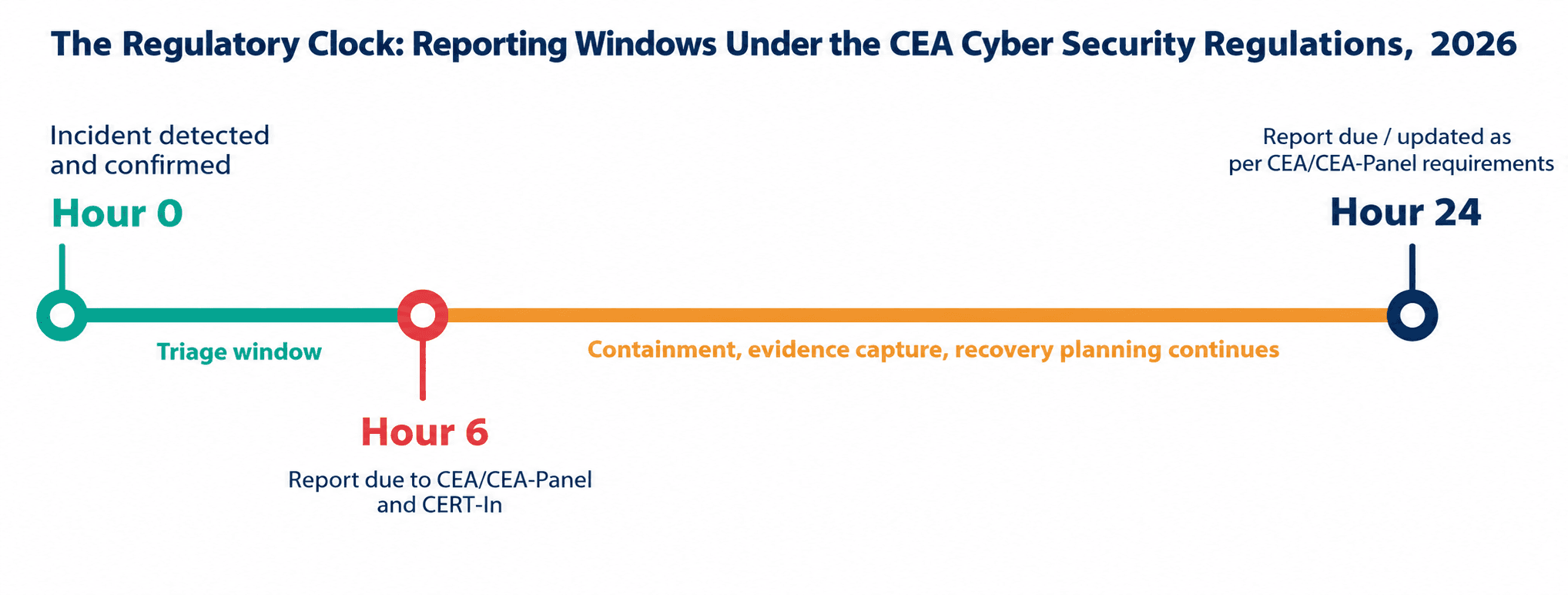
Figure 1: The reporting clock under the CEA Cyber Security Regulations, 2026
The role of CSIRT-Power
CSIRT-Power is the Computer Security Incident Response Team for the power sector, established under the Ministry of Power as an extended arm of CERT-In. It coordinates incident reporting and response, issues alerts and advisories, and supports assessments, exercises, and supply chain security. Its directions are binding on covered entities and their vendors.
For utility teams, this changes the relationship with national authorities. Incident response is no longer only an internal matter with an optional phone call afterward. It is a coordinated process with a defined recipient, defined timelines, and defined expectations for evidence.
Lessons from Real Energy Sector Incidents
Regulations make more sense when you see what happened to organizations that did not have a tested response. The incidents below are widely documented, and each one highlights a different response failure point.
Incident | What happened | Response lesson | Relevance to CEA requirements |
Ukraine power distribution attack (December 2015) | Attackers accessed the control systems of three regional distribution companies and remotely opened breakers. Roughly 225,000 customers lost power, for hours in many areas. | Operators could see the attack happening but lacked ways to stop it remotely. Manual restoration saved the day. | Manual operating procedures and OT isolation must be planned and practiced. |
Ukraine transmission attack (December 2016) | Malware designed for grid protocols de-energized a Kyiv transmission substation, causing an outage of about an hour. | Attack tools can be reused and adapted; a single event is a signal, not an isolated case. | Threat advisories and shared intelligence must feed response planning. |
Substation attack attempt (April 2022) | A newer variant of grid-attack malware was aimed at Ukrainian high-voltage substations and was detected and stopped before causing an outage. | Prepared defenders and quick coordination with national teams prevented impact. | Coordination with a national response team can decide the outcome. |
Denmark energy sector intrusions (May 2023) | Around 22 Danish energy organizations were compromised in a coordinated campaign, and some had to operate in isolated mode. | A shared sector monitoring center detected the pattern early and spread warnings to peers. | A national coordinating body, like CSIRT-Power, multiplies the value of each report. |
Pipeline ransomware (May 2021) | A major fuel pipeline operator shut down operations after ransomware hit its business systems, and supply was disrupted for roughly six days. | The operator shut down control systems as a precaution because it could not confirm whether they were safe. | Clear IT and OT boundaries give leaders confidence to keep operations running. |
Aluminum manufacturer ransomware (March 2019) | A global producer lost access to much of its IT and shifted plants to manual operation. Losses were estimated at about 70 million dollars. | Rapid, open communication with staff, customers, and authorities preserved trust. | Communication is part of response, not an afterthought. |
Nuclear plant administrative network (2019) | Malware was found on the administrative network of an Indian nuclear power plant. Officials later confirmed the finding while stating the control systems were not affected. | Delayed clarity creates public doubt and pressure on operators. | Fast, factual internal assessment supports timely reporting. |
Table: Publicly documented incidents and the response lessons they offer power sector organizations
Three themes appear again and again. First, organizations that could operate manually and isolate systems quickly recovered faster. Second, organizations that could not quickly determine whether control systems were affected often chose to shut down, which cost far more than the intrusion itself. Third, those connected to a coordinating body that shared intelligence gained time, and time is the most valuable resource in any incident.
Risks and Challenges Utilities Face Today
Knowing what the regulation requires is the easy part. Making it work across substations, control centers, vendor teams, and field crews is harder. These are the challenges we see most often.
1. The six-hour clock meets unclear ownership
Many organizations know who runs the security tools. Fewer know who decides that an event is a reportable incident, who drafts the report, who approves it, and who submits it. When these steps are unassigned, the first two hours disappear into debate. A six-hour window sounds generous until an event happens at 2 a.m. on a weekend.
2. Safety decisions and security decisions collide
In an office network, the instinct is to disconnect an infected machine. In a power plant or substation, disconnecting the wrong device can trip a unit, block protection functions, or remove an operator's view of the grid. The question is never just what is the safest security action. It is what is the safest action for people, equipment, and supply.
Response plans must therefore give operations leaders a formal seat at the table, with authority to say when isolation is safe and when it is not.
3. Limited visibility into control networks
Most control networks were built without monitoring in mind. Legacy protocols, unmanaged devices, and serial links leave blind spots. If you cannot see traffic between a control center and a remote unit, you cannot confirm whether a fault is a failing relay or a manipulated command. Detection quality directly determines reporting quality.
4. Vendor and remote access pathways
Equipment suppliers and service partners often maintain remote access for support. During an incident, these links are both a potential entry point and a potential lifeline. Without a documented process to review, restrict, or temporarily suspend vendor access, teams end up making those calls under stress. The regulations also place responsibility on vendors, which means contracts and support arrangements need to reflect response duties.
5. Evidence lost during recovery
The pressure to restore power is intense and justified. But rebuilding a server, wiping a workstation, or rolling back a controller can destroy the evidence needed to understand what happened and to answer CSIRT-Power requests. Without a rule that says what must be captured before restoration begins, valuable logs vanish.
6. The IT and OT divide
IT security teams think in terms of confidentiality and patching. OT engineers think in terms of availability, safety, and uptime. Both views are right, but they are rarely written into a shared plan. Different vocabulary, different tools, and different reporting lines can turn a manageable event into a slow, disjointed response.
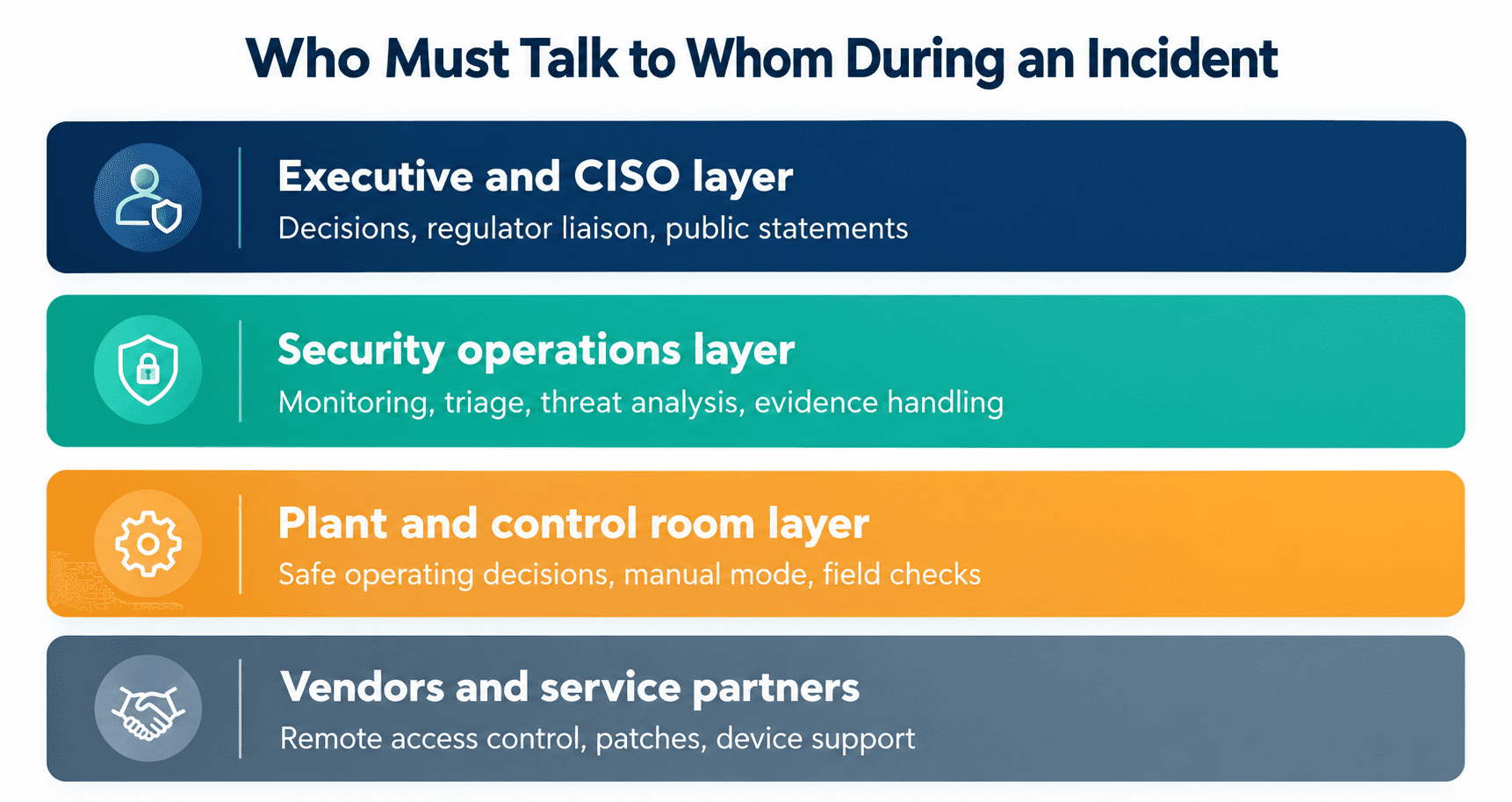
Figure 2: Every layer must know its role before an incident begins
Building a Practical Incident Response Plan for Power Sector Operations
A response plan is useful only if a tired person can follow it at 3 a.m. The seven steps below give structure without adding complexity.
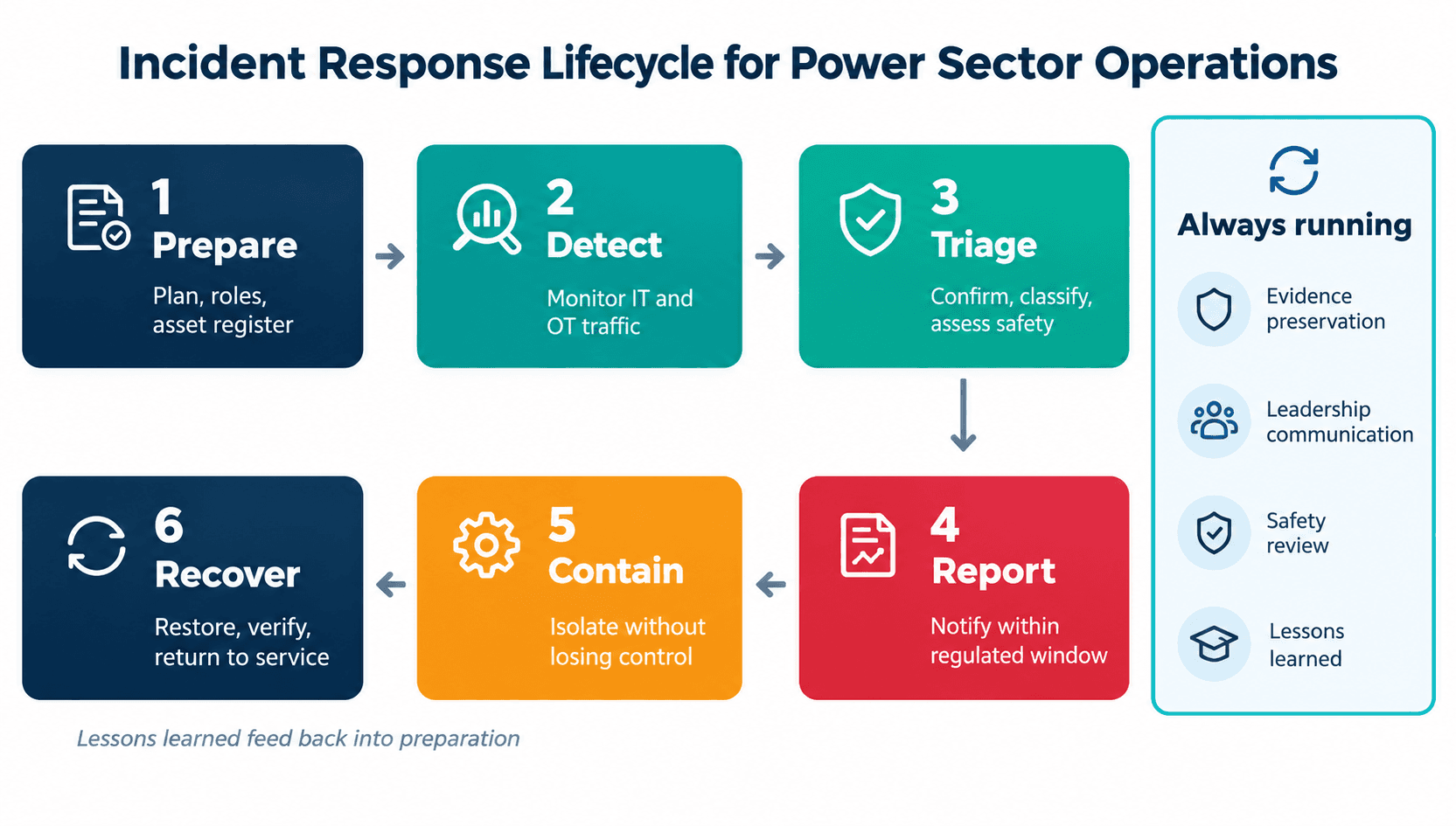
Figure 3: A lifecycle view of response from preparation to recovery
Step 1: Define what counts as an incident, and how serious it is
Start by agreeing on levels. A shared severity scale removes guesswork and speeds up decisions about who to call and what to report.
Level | Example situation | Who is involved | Reporting posture |
Level 1: Low | Blocked phishing email; failed logins on a business system. | SOC analyst, IT team | Log and monitor |
Level 2: Moderate | Malware on a corporate laptop; suspicious vendor login attempt. | SOC lead, IT and OT contacts | Assess promptly; prepare for possible report |
Level 3: High | Unexpected commands or unknown device on a control network; ransomware on a supervisory server. | CISO, plant or control room head, incident lead | Treat as reportable; start the six-hour clock |
Level 4: Critical | Confirmed loss of control or manipulation of critical systems; suspected sabotage. | Head of organization, CISO, operations, legal, communications | Report immediately; assess 24-hour sabotage criteria |
Table: Sample severity matrix that can be adapted to each organization
Whatever levels you choose, write down the trigger for the reporting clock. Is it first alert, first analyst review, or confirmed impact? Ambiguity here is one of the most common sources of compliance risk.
Step 2: Detect and triage across both environments
Detection should not stop at the firewall between business and control networks. Security monitoring should include network traffic in OT zones, remote access sessions, changes to controller configurations, and unusual behavior of engineering workstations. Triage then asks three practical questions: What is affected? Is it safe to keep operating? Could this spread?
• Know your assets. Maintain a live inventory so analysts can instantly see what an affected asset does and what depends on it.
• Map processes, not just devices. Give the security team plain-language descriptions of each process, so alerts from a turbine or a feeder can be read in context.
• Set safety triggers. Define which situations require a control room supervisor to be pulled in immediately.
Step 3: Escalate and communicate on a schedule
Good escalation is fast and predictable. Poor escalation depends on personal relationships. Create a call tree with names, alternates, and after-hours numbers. Pair it with a communication rhythm, for example a leadership update every 60 minutes during a Level 3 or Level 4 event, even if there is nothing new to report.
Prepare templates in advance for the report to CSIRT-Power and CERT-In, internal management updates, customer or public statements, and instructions to field teams. Templates remove the pressure of drafting under stress and reduce the chance of inconsistent facts.
Step 4: Contain without losing control
Containment in a power environment is a decision made jointly by security and operations. Pre-approved playbooks help. For example: which network segments can be isolated without affecting protection systems? Which remote links can be suspended? Which functions can operators run manually, and for how long?
Rehearse these choices with the people who will make them. A playbook that operators have never seen will not be used.
Step 5: Preserve evidence before you restore
Make evidence preservation a written step, with a named owner, that must be completed or consciously waived before rebuilding systems. At a minimum, capture:
Network traffic captures and firewall logs from the time of the event
System and authentication logs from affected servers and workstations
Copies of controller configurations and project files, before and after changes
Remote access records, including vendor sessions
A time-stamped record of decisions, actions, and who took them
This record supports CSIRT-Power requests, internal review, insurance discussions, and any later legal or regulatory follow-up.
Step 6: Recover in a controlled, verified way
Recovery is more than turning things back on. It means restoring from known-good backups, verifying that controllers run approved logic, confirming that accounts and credentials are reset, and monitoring closely for signs that the intruder is still present. Include return-to-service criteria signed off by operations.
Test backups regularly, including offline copies of controller programs and network device settings. A backup that has never been restored is a hope, not a control.
Step 7: Learn, document, and improve
Hold a blameless review within two weeks. Record what worked, what slowed you down, and which decisions lacked authority or information. Feed the findings into the crisis plan, monitoring rules, vendor arrangements, and training. The regulations require regular review of the crisis management plan, and real incidents and exercises are the best source of meaningful updates.
IT and OT Incident Response: Where the Approach Must Differ
Utilities often try to extend the corporate IT response plan to cover control systems. It rarely fits. The table below shows why a joint approach is needed.
Factor | Typical IT response | Power sector OT response |
Top priority | Protect data and restore services | Protect people, equipment, and continuity of supply |
Isolation | Disconnect affected machines quickly | Assess safety and protection impact before disconnecting |
Patching and rebuilding | Apply updates rapidly | Test first; schedule around outages and maintenance windows |
Tools | Standard endpoint and network tools | Passive, protocol-aware monitoring that will not disturb devices |
Decision authority | IT and security leadership | Shared decision with control room and plant management |
Recovery test | Application works, data intact | Process stable, protection functions verified, safe to operate |
Vendor role | Support tickets and updates | Often essential for device-level recovery and configuration |
Table: Why a single, shared plan works better than separate IT and OT playbooks
How to Review Your Cyber Crisis Management Plan
If you already have a crisis plan, a structured review is the fastest way to see how ready you are. Use the questions below as a starting checklist, and involve both security and operations in scoring the answers.
Can a named person on any shift decide that an event is reportable within the first hour?
Does the plan list the authority and contact details for the CISO and the alternate CISO?
Do the report templates match what CSIRT-Power and CERT-In are likely to ask for?
Are there written manual-operation procedures for each critical process, and have operators practiced them?
Is there a rule for suspending or restricting vendor remote access during an incident?
Are logs from control networks retained long enough, and can they be retrieved quickly?
Have leaders and control room staff taken part in at least one joint exercise in the past year?
Does the plan match the current asset register and network drawings?
Any question answered with a hesitant yes deserves attention. Because the regulations call for annual review, the review process itself should be scheduled, owned, and documented.
A Practical Roadmap to April 2027
With the regulations coming into force on April 1, 2027, a phased plan keeps the effort realistic. Here is a sample sequence for a mid-sized utility. Adjust the timing to fit your environment.
Phase | Key activities | Outcome |
Months 1 to 2: Assess | Map current assets and network connections; review the existing crisis plan and reporting process; identify vendor access paths. | A clear gap list ranked by risk and regulatory relevance. |
Months 3 to 5: Design | Define severity levels, reporting triggers, roles, and templates; design monitoring coverage for OT zones; set evidence rules. | An approved response framework and monitoring plan. |
Months 6 to 8: Build | Deploy or extend monitoring; segment networks where needed; update vendor contracts and access controls; write playbooks. | Working detection and containment capabilities. |
Months 9 to 10: Test | Run tabletop exercises with leaders; run technical drills with operators; test backup restoration. | Evidence of readiness and a refined plan. |
Months 11 to 12: Prepare to comply | Complete audit preparation; finalize documentation; train staff and alternates; confirm the reporting workflow end to end. | Audit-ready operation before April 1, 2027. |
Table: Sample twelve-month path from assessment to audit readiness
Best Practices That Make Response Plans Work
Involve operations early. Bring plant managers and control room leads into planning from day one. Plans written only by security teams tend to fail on the plant floor.
Practice regularly. Tabletop sessions reveal missing authority, unclear ownership, and unrealistic timelines. Run at least one per year and one after any major change.
Include suppliers in the plan. Treat vendors as part of the response team. Confirm who they call, how fast they respond, and what evidence they can supply.
Plan communication carefully. Decide in advance who says what to staff, customers, regulators, and the media. Consistent messages prevent rumors and protect credibility.
Use threat intelligence in practice. Convert alerts and advisories from national teams into specific checks against your own environment.
Measure response time. Track how long it takes to detect, classify, and report an incident during drills. Aim to improve each cycle.
Prepare for offline conditions. Keep printed copies of contact lists, playbooks, and key network drawings. If systems are down, the plan must still be readable.
How Shieldworkz Supports Organizations
Shieldworkz focuses on operational technology and industrial control system security for energy, utilities, manufacturing, and other critical infrastructure. Our teams combine engineering understanding with security expertise, so response plans reflect how plants and grids actually operate. Support typically includes:
Regulatory readiness assessment. A structured review of your organization against the incident response, crisis management, and reporting provisions of the CEA Cyber Security Regulations, 2026, with a prioritized action list.
Asset and network visibility. Discovery and mapping of IT and OT assets, network connections, and remote access paths to build a current, usable asset register.
Crisis plan development. Design and refinement of your Cyber Crisis Management Plan, severity model, escalation paths, and reporting templates tailored to generation, transmission, or distribution environments.
OT-aware detection and monitoring. Monitoring approaches for control networks that detect abnormal activity without disrupting sensitive equipment, supporting a 24x7 operating model.
Incident simulations. Facilitated tabletop and technical exercises for executives, SOC teams, engineers, and operators, with clear findings and follow-up actions.
Evidence and vendor governance. Support with evidence preservation procedures, vendor access governance, and supply chain requirements.
Audit preparation. Preparation for annual audits, including documentation, gap closure tracking, and remediation planning.
Response support. Practical support for teams during a live incident, from triage through recovery and post-incident review.
Our approach is collaborative. We work alongside your security, engineering, and operations teams, and we focus on building capability inside your organization rather than creating dependency.
Conclusion
The CEA Cyber Security Regulations, 2026 make one thing clear: a cyber incident in the power sector is a matter of national interest, and preparation cannot wait for the incident itself. Six-hour reporting, structured crisis planning, and coordination with CSIRT-Power all depend on the same foundation: people who know their roles, systems they can see, and processes they have rehearsed.
Utilities that start now have time to do this well. That means clarifying ownership, joining IT and OT under one plan, protecting evidence, and testing decisions under realistic pressure. Those that wait may find themselves trying to build a response plan in the middle of an incident, which is the worst possible moment to learn what is missing.
The goal is not perfection. It is confidence: knowing that when something goes wrong, your teams can detect it quickly, decide together, report accurately, and restore safe operation.
Frequently Asked Questions
1.When do the CEA cyber security regulations come into force?
The regulations were notified on July 31, 2026, and come into force on April 1, 2027.
2.What is the incident reporting deadline under the CEA regulations?
Cybersecurity incidents must be reported to CSIRT-Power and CERT-In within six hours of detection. Incidents classified as cyber sabotage of critical systems must be reported within 24 hours.
3.Do the regulations apply to distribution companies?
Yes. Distribution companies are within scope, and no capacity threshold has been stated for distribution. Generating companies, captive plants, and energy storage entities are covered from 50 MW upward.
4.What is CSIRT-Power?
CSIRT-Power is the national incident response team for the power sector, set up under the Ministry of Power. It coordinates incident reporting and response, issues advisories, and can request logs and forensic records from covered entities.
Book a Free Consultation with Our Experts Not sure whether your current plan can meet a six-hour reporting window, or how your IT and OT teams would work together in a real event? Speak with a Shieldworkz specialist for a focused, no-obligation conversation about your environment, your gaps, and your next practical steps toward CEA readiness. Schedule your free consultation with Shieldworkz today. |
Wöchentlich erhalten
Ressourcen & Nachrichten
Erfahren Sie, wie unsere branchenführenden OT-Security-Lösungen kritische Sicherheitsherausforderungen gemäß KRITIS-Anforderungen bewältigen
Dies könnte Ihnen auch gefallen.

Investigative cyber threat research report: Colorado water utilities OT attacks
Prayukth K V

IEC 62443 for Pharmaceutical Manufacturing: Secure Critical Production OT
Team Shieldworkz

Investigative cyber threat research report: Cyberattacks on U.S.-bound energy tankers
Team Shieldworkz

The OT Lull: What a 30-day decline in direct intrusion activity actually tells us
Prayukth K V

Inside the Revolut data disclosure incident
Prayukth K V

NERC CIP Compliance Software: 9 Capabilities Utilities Should Compare
Team Shieldworkz