Prayukth K V
Recientemente, el fabricante suizo de vehículos ferroviarios Stadler Rail AG fue blanco de una campaña de extorsión. Los hechos ocurrieron tras una vulneración de la cadena de suministro que involucró a una plataforma externa de intercambio de datos. El actor de la amenaza, identificado como el grupo de ransomware y extorsión Everest, exigió 10 millones de francos suizos (~$12.3 millones de dólares) tras exfiltrar documentación técnica perteneciente a un proveedor externo.
Lea nuestro análisis sobre la vulneración de la planta nuclear de Kundankulam.
Stadler Rail rechazó la demanda de rescate y presentó una denuncia penal formal ante la policía cantonal de Turgovia. También confirmó que sus redes internas de TI corporativa, sistemas de control industrial (ICS), tecnología de operación (OT) y las operaciones ferroviarias mundiales se mantuvieron completamente a salvo.
Este incidente ilustra una vez más el cambio operativo entre los actores de amenazas con motivaciones financieras, pasando del cifrado mediante ransomware a nivel de toda la red a la extorsión pura a través de mecanismos de transferencia de archivos e intercambio de datos de terceros. Si bien no se interrumpieron los sistemas de tecnología de operación (OT) ni los de señalización críticos para la seguridad, el ataque a un fabricante de equipos ferroviarios de nivel 1 (Tier-1) subraya los riesgos sistémicos que plantean las dependencias de la cadena de suministro en los ecosistemas de infraestructura crítica.
Descripción general del incidente
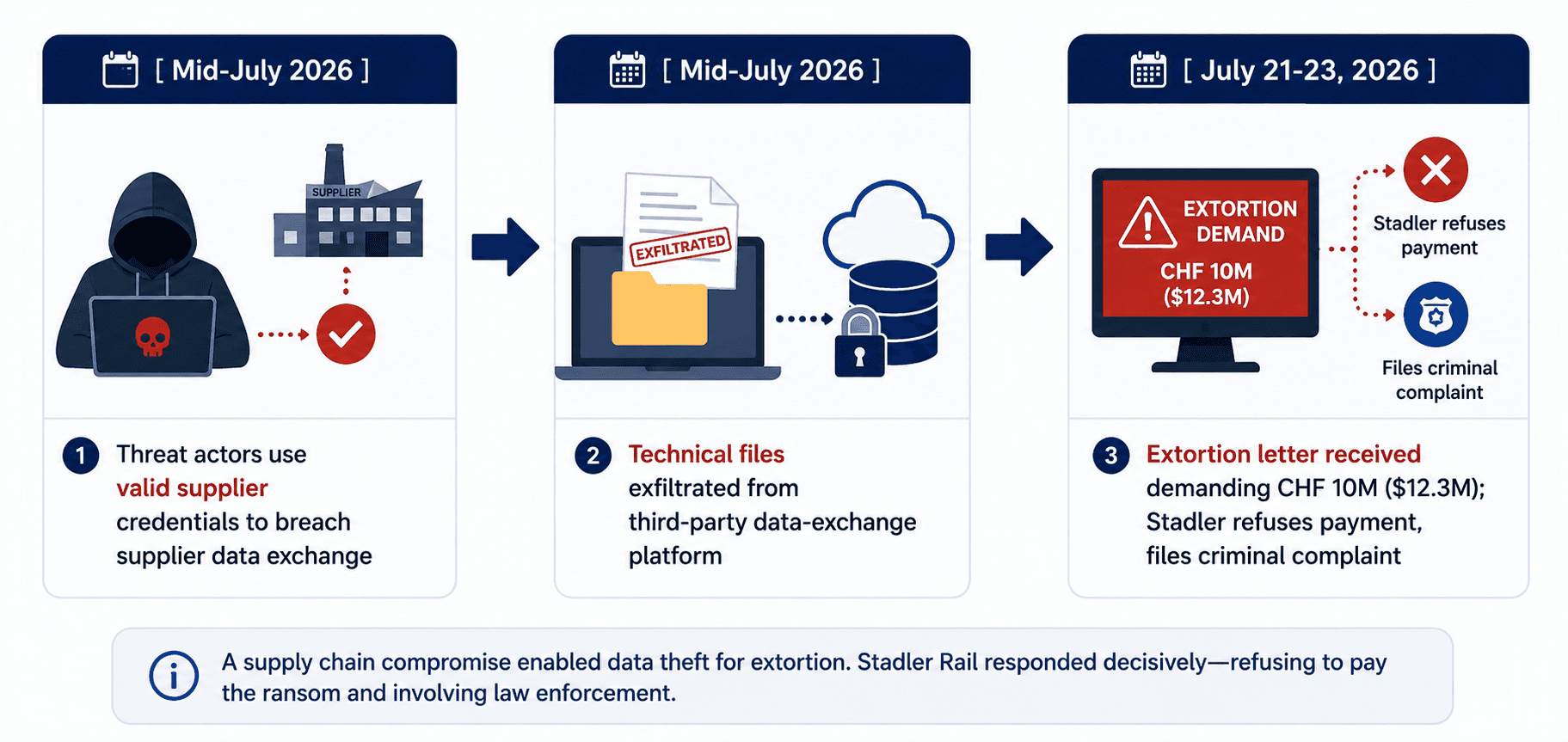
A mediados de julio de 2026, los actores de amenazas obtuvieron acceso no autorizado a una plataforma externa de intercambio de datos utilizada por uno de los proveedores de Stadler Rail. Los atacantes obtuvieron credenciales válidas para acceder a la plataforma compartida y exfiltraron de forma sigilosa documentos técnicos alojados en ella. Apenas unos días después de la exfiltración, Stadler Rail recibió una demanda de extorsión por 10 millones de francos suizos (~$12.3 millones de dólares) bajo la amenaza de publicar los datos.
Cronología de eventos
Mediados de julio de 2026: Los atacantes comprometen credenciales de usuario válidas para una plataforma de intercambio de datos alojada por el proveedor, accediendo y exfiltrando documentación técnica.
Mediados de julio de 2026: El grupo Everest envía una carta de extorsión a Stadler Rail exigiendo 10 millones de francos suizos (~$12.3 millones de dólares).
Del 21 al 23 de julio de 2026: Stadler reconoce públicamente el incidente, rechaza formalmente la demanda de rescate, se pone en contacto con las autoridades policiales cantonales en Turgovia, Suiza, y emite un comunicado de tranquilidad confirmando que no hay impacto operativo ni de seguridad.
Declaraciones públicas y estado de la investigación
Stadler Rail ha confirmado públicamente el intento de extorsión y declaró:
"Stadler no pagará ningún rescate bajo ninguna circunstancia y, por lo tanto, no es susceptible de extorsión".
La compañía confirmó que los sistemas de respaldo estaban intactos, las redes internas de TI no fueron vulneradas, ningún software de señalización o control de trenes crítico para la seguridad se vio comprometido y la producción global en todas las plantas de fabricación se mantuvo totalmente operativa. La investigación sigue en curso en coordinación con las autoridades suizas (policía cantonal de Turgovia).
Perfil de la víctima y panorama de amenazas
Perfil de la organización
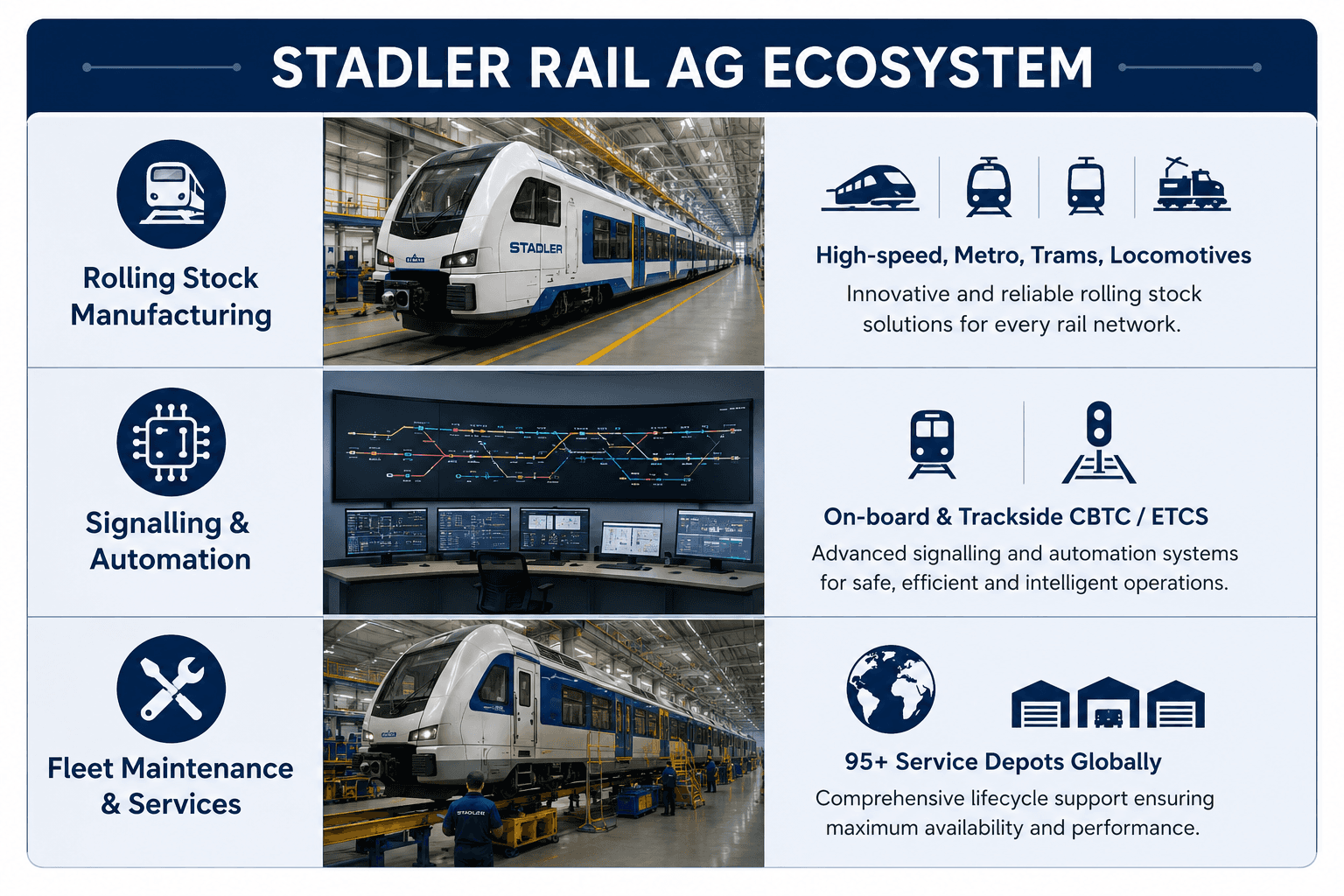
Stadler Rail AG (con sede en Bussnang, Suiza) es un fabricante internacional de material rodante y sistemas ferroviarios. Las métricas operativas clave incluyen:
Presencia global: Más de 18,000 empleados en 8 instalaciones de producción, 6 centros de ingeniería y más de 95 ubicaciones de servicio en todo el mundo.
Ingresos: Más de $4.9 mil millones de dólares anuales.
Portafolio de productos: Trenes interurbanos de alta velocidad, trenes regionales/de cercanías, metros, tranvías, locomotoras (diésel-eléctricas y eléctricas) y soluciones propias de señalización ferroviaria.
Stadler suministra material rodante, tecnologías de señalización y servicios de mantenimiento que dan soporte a operadores de pasajeros, carga y metro en Europa, América del Norte y Asia. Aunque el incidente no afectó a los sistemas operativos, el papel de la organización dentro de las cadenas de suministro de transporte la hace estratégicamente significativa.
Atractivo estratégico de los fabricantes ferroviarios
Los fabricantes ferroviarios y los contratistas de ingeniería ocupan una posición crítica en la infraestructura nacional de transporte:
Alta sensibilidad al rescate: La fabricación ferroviaria opera con plazos de entrega de proyectos muy ajustados y fechas límite de cumplimiento normativo estrictas. La percepción de retrasos operativos genera presión para resolver los incidentes rápidamente.
Propiedad Intelectual Técnica Exclusiva: Los trenes modernos dependen de esquemas de diseño especializados, sistemas de control y gestión de trenes (TCMS) y planos de señalización del Sistema de Control Ferroviario Europeo (ETCS). El acceso a estos activos presenta oportunidades para la extorsión.
Interconectividad de la cadena de suministro: Los fabricantes mantienen repositorios técnicos compartidos y canales de acceso remoto con cientos de proveedores de nivel 1 (Tier-1) y nivel 2 (Tier-2), creando una superficie de ataque amplia y distribuida.
Análisis del actor de la amenaza: Everest Group
Perfil y evolución del grupo
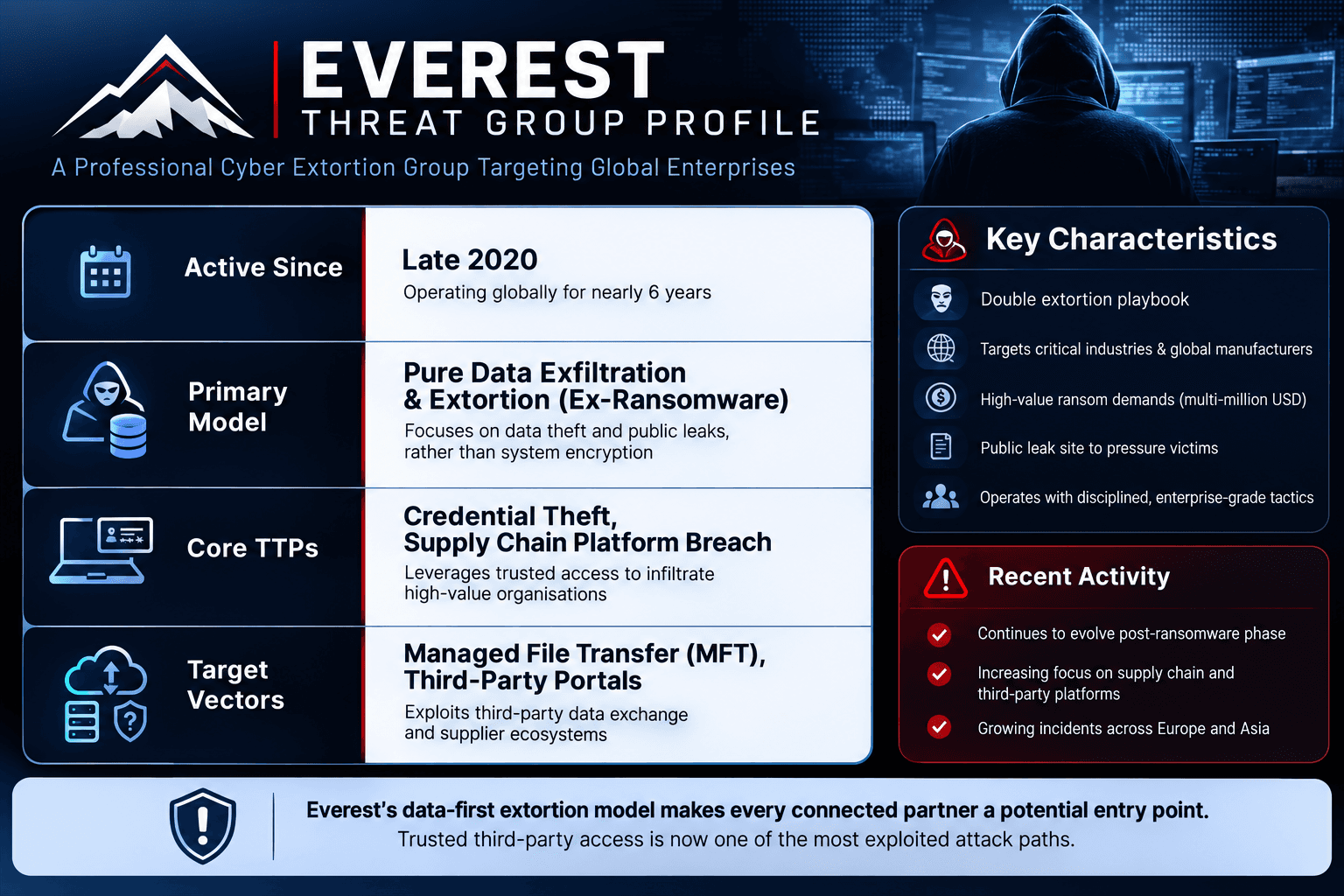
Origen y actividad: Everest es un grupo de actores de amenazas con motivaciones financieras que se cree que es de habla rusa, activo al menos desde finales de 2020.
Evolución táctica: Operando inicialmente como un grupo estándar de ransomware de doble extorsión que desplegaba bloqueadores personalizados, Everest se alejó del cifrado de toda la red para centrarse en el robo de datos, operaciones de intermediación de acceso inicial (IAB) y extorsión pura.
Adquisición de acceso: Everest suele comprar credenciales corporativas comprometidas a intermediarios de acceso inicial (Initial Access Brokers) o adquiere datos robados por otros actores de amenazas para llevar a cabo campañas de extorsión secundaria.
Campañas anteriores y sectores objetivo
Everest ha atacado de manera constante a infraestructuras críticas, contratistas relacionados con el gobierno y grandes entidades industriales:
Contratista de Svenska kraftnät (2025): Dirigido a un sistema externo de transferencia de archivos utilizado por el operador estatal de la red eléctrica de Suecia.
Sector automotriz (contratista de Nissan): Compromiso de plataformas de proveedores externos que abastecen a importantes fabricantes de automóviles.
Aeronáutica e industrial: Historial de ataques a empresas de fabricación e ingeniería en América del Norte y Europa.
Matriz de atribución
Atribución confirmada: La carta de extorsión recibida por Stadler Rail exigiendo 10 millones de francos suizos se emitió explícitamente bajo el nombre del grupo Everest.
Atribución sospechada / Evaluación de analistas: La evaluación de los analistas indica que el compromiso se originó en la infraestructura de un proveedor externo en lugar de una vulneración directa del perímetro de Stadler, lo que se alinea con el historial de Everest de explotar software de terceros y portales de proveedores.
Análisis técnico
El siguiente desglose analiza el ciclo de vida técnico basándose estrictamente en las declaraciones públicas de Stadler Rail y en los informes de seguridad.
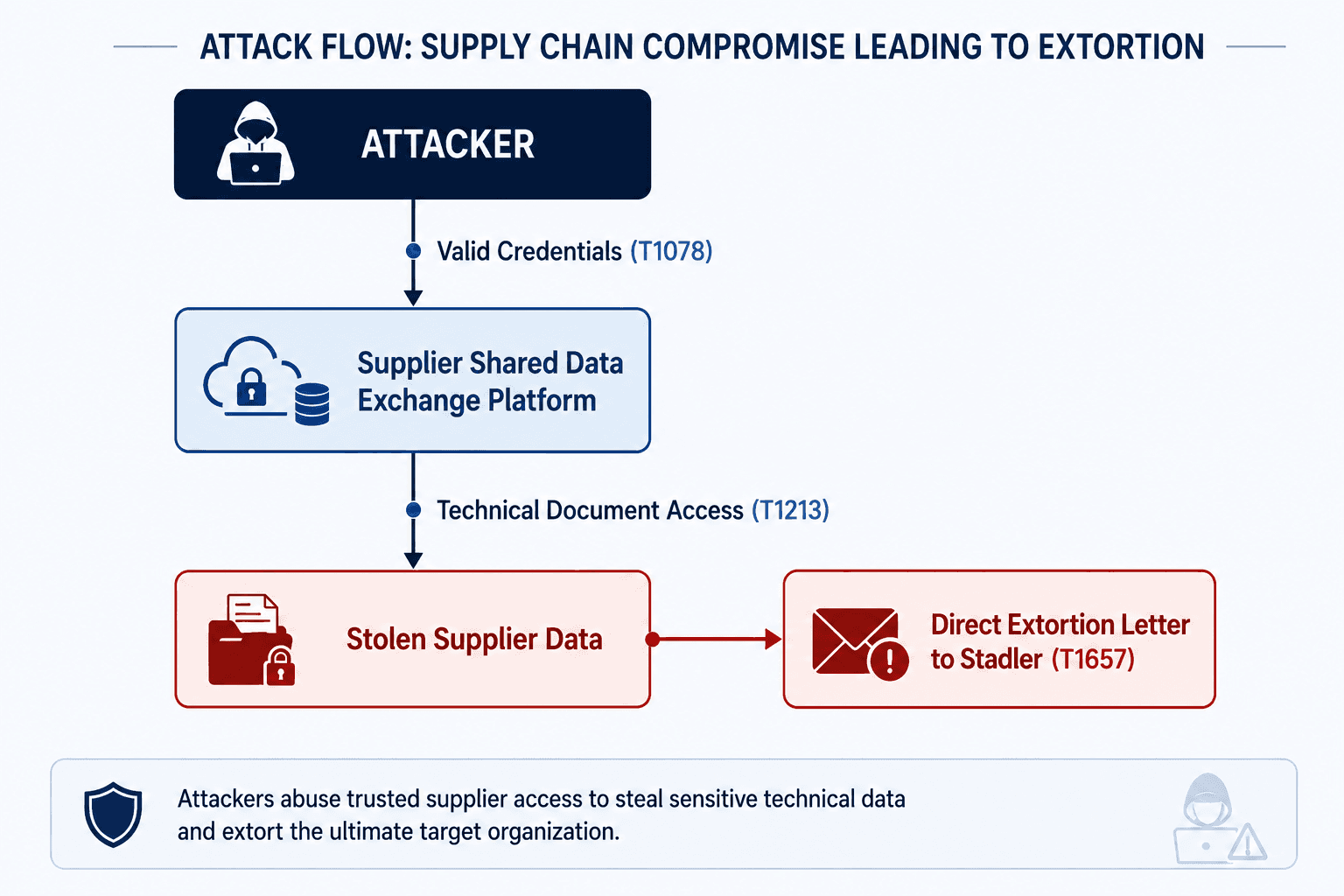
Acceso inicial: Los atacantes obtuvieron acceso a una plataforma de intercambio de datos externa alojada en la nube o expuesta en el perímetro utilizando credenciales válidas comprometidas (T1078) pertenecientes a un proveedor.
Persistencia y escalada de privilegios: Actualmente no existe evidencia pública que confirme mecanismos de persistencia interna o escalada de privilegios dentro del entorno corporativo de Stadler.
Movimiento lateral: Actualmente no existe evidencia pública que confirme el movimiento lateral hacia la red corporativa interna, el directorio activo o las redes OT/ICS de Stadler Rail.
Exfiltración de datos: Los archivos técnicos y la documentación del proveedor se exfiltraron directamente de la plataforma compartida de intercambio de datos.
Cifrado: No se ejecutaron bloqueadores de cifrado en los servidores o puntos finales internos de Stadler Rail.
Impacto: Se expusieron documentos técnicos no críticos para la seguridad pertenecientes al proveedor externo. TI corporativa, OT, sistemas de seguridad ferroviaria y líneas de fabricación sufrieron cero tiempo de inactividad operativa.
Indicadores de Compromiso (IOCs)
Al momento de redactar este informe, ni Stadler Rail, ni la policía cantonal, ni los investigadores de inteligencia de amenazas han divulgado públicamente IOCs técnicos verificados (por ejemplo, direcciones IP específicas, hashes de archivos, claves de registro, nombres de dominio o direcciones de billeteras).
Si se publican artefactos forenses o indicadores de archivos tras la conclusión de la investigación policial, estos deben validarse frente a los avisos oficiales del Centro Nacional de Ciberseguridad de Suiza (NCSC).
Mapeo de MITRE ATT&CK
Los mapeos a continuación representan el comportamiento del atacante confirmado a través de declaraciones públicas de Stadler Rail e informes de BleepingComputer y The Record.
MITRE ATT&CK corporativo
Táctica | ID de Técnica | Nombre de la Técnica | Evidencia |
Acceso inicial | T1078 | Cuentas válidas | Credenciales comprometidas utilizadas para iniciar sesión en la plataforma de intercambio de datos del proveedor. |
Acceso inicial | T1195.002 | Compromiso de la cadena de suministro: Compromiso de la cadena de suministro de software | Explotación del servicio de intercambio de archivos de un proveedor externo para acceder a archivos técnicos. |
Recopilación | T1213 | Datos de repositorios de información | Exfiltración de documentación técnica almacenada dentro del portal de intercambio compartido. |
Impacto | T1657 | Extorsión financiera | Emisión de una demanda de rescate de 10 millones de francos suizos bajo amenaza de publicar datos. |
MITRE ATT&CK para ICS
Actualmente no existe evidencia pública que confirme actividad de actores de amenazas, cruce de redes o interacción técnica dentro de los entornos MITRE ATT&CK para ICS (Nivel 0–3). Stadler declaró explícitamente que los sistemas de seguridad de los vehículos y los entornos de control de fabricación no se vieron afectados.
Impacto potencial en las operaciones ferroviarias y de OT
Para ayudar a los CISO y a los operadores ferroviarios en la evaluación de riesgos, la siguiente tabla clasifica los resultados confirmados frente a los riesgos operativos teóricos inherentes a los sistemas ferroviarios.
Dominio Operativo | Estado de Impacto Confirmado | Evaluación Analítica de Riesgos |
TI Corporativa | Sin impacto | La infraestructura interna se mantuvo aislada de la plataforma del proveedor comprometido. |
OT y fabricación | Sin impacto | Las operaciones de PLC, SCADA y de la línea de ensamblaje continuaron normalmente. |
Señalización ferroviaria (ETCS/CBTC) | Sin impacto | No se accedió a los repositorios de código críticos para la seguridad a bordo ni a pie de vía. |
Operaciones de material rodante | Sin impacto | Los trenes en servicio activo a nivel mundial experimentaron cero interrupciones o disminución de la seguridad. |
Datos de la cadena de suministro | Exposición confirmada | Se expuso documentación técnica no relevante para la seguridad de un proveedor externo. |
Lecciones defensivas estratégicas para operadores ferroviarios y de OT
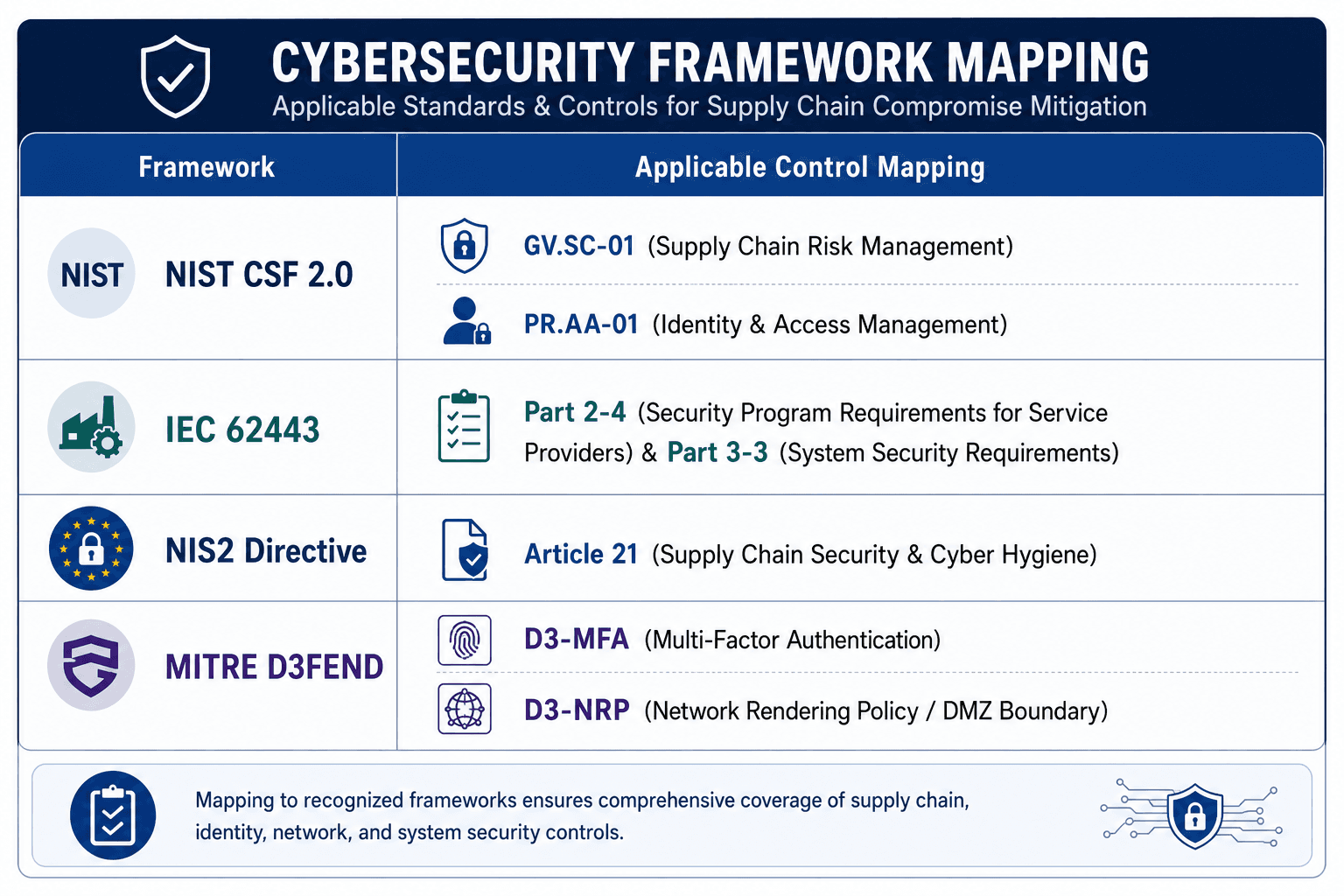
Aislar las plataformas externas de intercambio de datos: Los sistemas de intercambio de archivos con terceros proveedores deben residir en zonas desmilitarizadas (DMZ) aisladas, sin confianza implícita ni sincronización automatizada de datos hacia las redes internas de ingeniería.
Imponer MFA resistente al phishing: Requerir tokens de hardware FIDO2/WebAuthn o proveedores de identidad gestionados para todo acceso de proveedores externos, a fin de evitar ataques de relleno de credenciales (credential stuffing) y de toma de control de cuentas (T1078).
Políticas de minimización y expiración de datos: Implementar la gestión automatizada del ciclo de vida en extranets compartidas para depurar esquemas y documentos técnicos una vez finalizados los proyectos activos.
Arquitectura Zero Trust para portales de proveedores: Aplicar un control estricto de accesos basado en roles (RBAC) para garantizar que una cuenta de proveedor comprometida no pueda ver documentos fuera de su alcance explícito.
Alineación con normativas y estándares
Las recomendaciones derivadas de este incidente se alinean con los principales marcos de ciberseguridad:
Conclusiones estratégicas para infraestructuras críticas
El cambio de la extorsión más allá del cifrado: Las operaciones de ransomware están migrando cada vez más del cifrado ruidoso de redes hacia la exfiltración silenciosa de repositorios de proveedores. Las estrategias de defensa deben priorizar la prevención de pérdida de datos (DLP) y la seguridad de la identidad, junto con los planes de recuperación de ransomware.
Postura firme contra las demandas de rescate: La negativa de Stadler Rail a negociar demuestra cómo copias de seguridad robustas, la segmentación de redes y la comunicación de crisis permiten a una organización resistir la extorsión sin interrupciones operativas.
Gestión de riesgos en el ecosistema de proveedores: La resiliencia de la infraestructura crítica depende en gran medida de la postura de seguridad de los proveedores de nivel 1 (Tier-1) y nivel 2 (Tier-2). Las organizaciones deben exigir un monitoreo continuo de seguridad y derechos de auditoría en los entornos de terceros.
El incidente cibernético de mediados de julio de 2026 que involucró a Stadler Rail resalta las vulnerabilidades inherentes a los ecosistemas de proveedores. Al aplicar controles de límites de red y aislar la plataforma de terceros de sus redes centrales de TI y OT, Stadler Rail evitó el tiempo de inactividad operativa, protegió los sistemas de señalización críticos para la seguridad y neutralizó el impacto operativo del intento de extorsión de $12.3 millones de dólares de Everest.
Los operadores de infraestructuras críticas deben evaluar sus interfaces externas de intercambio de datos, aplicar autenticación multifactor en todos los puntos de entrada de proveedores y tratar la seguridad de la cadena de suministro como un componente integral de la seguridad operativa.
Lecturas recomendadas
Seguridad en la cadena de suministro en ICS: Plantilla de evaluación de proveedores
Guía de segmentación de redes de seguridad OT
Guía estratégica para el cumplimiento de NIS2 en infraestructuras OT, ICS e IoT
5 estrategias clave para fortalecer las operaciones de seguridad industrial
El libro electrónico definitivo sobre seguridad OT: Estrategias de protección para ICS e IIoT
Recibe semanalmente
Recursos y Noticias
Vea cómo nuestras soluciones de seguridad de OT líderes en la industria abordan los desafíos de seguridad críticos
También te puede interesar

PHP2Shell Update: First Confirmed Exploitation, OT Vendor Fallout and the CISO Response Plan
Team Shieldworkz

PLC Penetration Testing: A Safe Methodology That Works
Team Shieldworkz

Investigative report on Lamashtu extortion operations: German brewery incident analysis
Prayukth K V

Passive OT Asset Discovery Techniques: The Complete Guide for Industrial Environments
Team Shieldworkz

Modbus TCP Security: Firewall Rules and Best Practices
Team Shieldworkz

IEC 62443 Zones and Conduits: Practical Industrial Examples
Team Shieldworkz