Prayukth K V
REF. DEL INCIDENTE: TI-2026-0713-JP
OBJETIVO: Nihon Kotsu Co., Ltd.
INDUSTRIA: Transporte, Logística de Flotas, Infraestructura Crítica
JURISDICCIÓN OPERATIVA: Japón (Tokio, Musashino, Mitaka, Tachikawa, Yokohama, Saitama)
Durante el fin de semana del 11 de julio de 2026, el mayor operador de taxis y choferes de Japón, Nihon Kotsu Co., Ltd., sufrió un ciberataque masivo que obligó a realizar un apagado de emergencia de su infraestructura operativa y corporativa principal. Con unos ingresos anuales de aproximadamente 1,000 millones de dólares (155,000 millones de yenes) y más de 18,000 empleados, la empresa es un componente vital para la logística de transporte municipal dentro del Área Metropolitana de Tokio y las principales prefecturas colindantes. La compañía tiene un eslogan interesante que dice “Te llevamos a donde desees”. Según TripAdvisor, Nihon Kotsu tiene una calificación excelente por su servicio premium. Los pasajeros elogian constantemente a sus conductores políglotas y amables, sus vehículos impecablemente limpios y su excelente confiabilidad.
Qué ocurrió: El sábado por la mañana temprano, los equipos de seguridad interna detectaron un acceso no autorizado a la red externa que estaba vinculado a una infección de malware. El vector motivó la segmentación e aislamiento inmediato de la infraestructura interna.
Impacto comercial: Los canales principales de reservación, los marcos de liquidación financiera y las bases de datos de reservas quedaron completamente deshabilitados, lo que sumó una vertiente financiera a la interrupción.
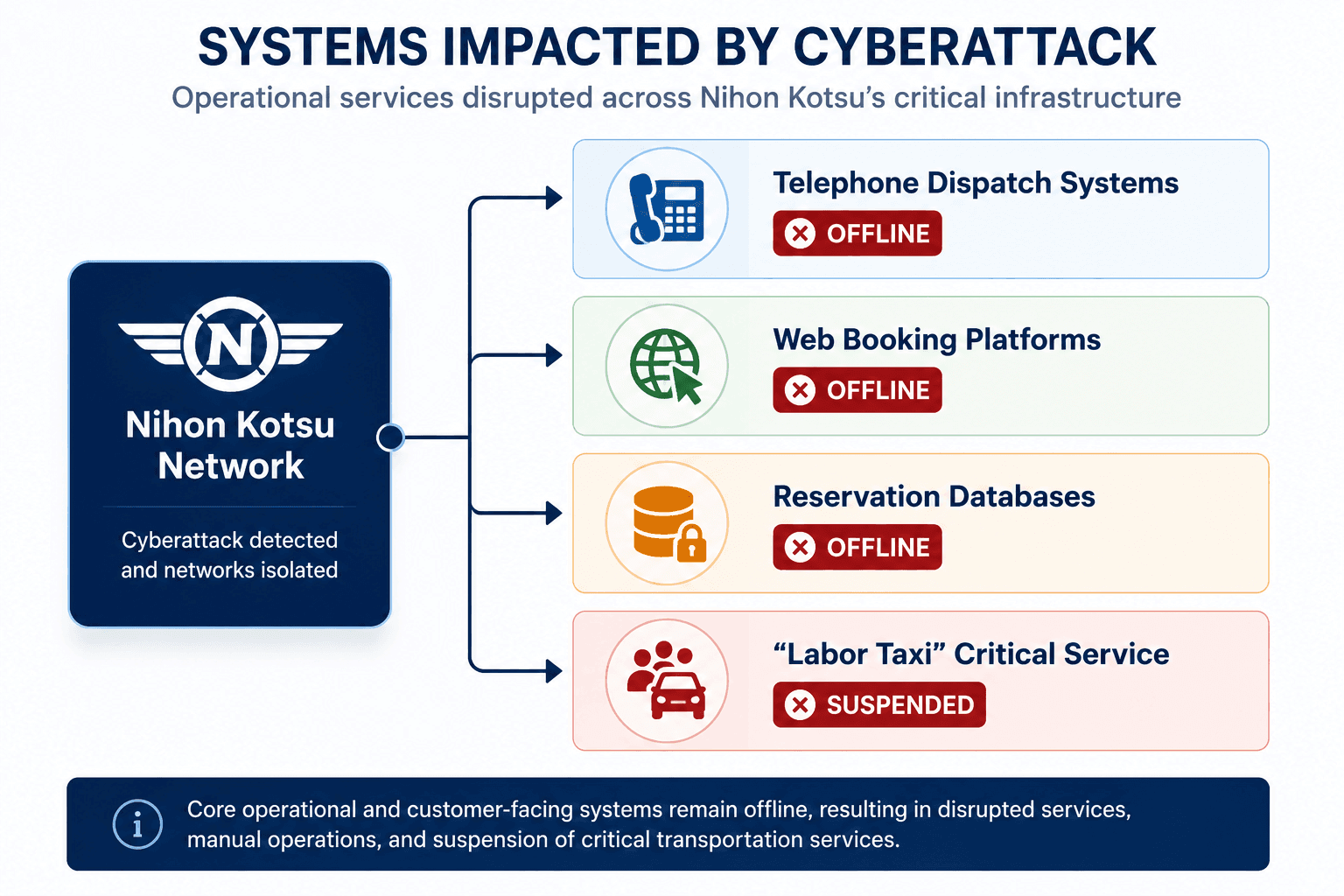
Impacto operativo: Interrupción total de los sistemas de despacho telefónico, la programación basada en web y el servicio de alta prioridad "taxi de maternidad" diseñado para mujeres embarazadas. Las operaciones de despacho de la flota regresaron al método físico de paradas de taxi fijas y solicitudes en la calle.
Estado actual: Los sistemas permanecen fuera de línea. Especialistas externos en análisis forense digital y respuesta a incidentes (DFIR) están llevando a cabo la recopilación de artefactos forenses y reconstrucciones estructuradas de sistemas. La exfiltración de datos sigue siendo una hipótesis de investigación activa pero no confirmada.
Por qué es importante este incidente: Este ataque resalta la extrema vulnerabilidad de los ecosistemas modernos de movilidad urbana. Al explotar las dependencias entre la tecnología operativa (enrutamiento de flotas) y los entornos de TI empresariales, los actores de amenazas demostraron cómo las infecciones de malware corporativo estándar pueden paralizar instantáneamente la logística de tránsito en tiempo real en toda una región metropolitana.
Cronología de los hechos
La fase inicial del incidente se desarrolló rápidamente en un período de 48 horas. Debido a la naturaleza activa de la investigación forense en curso, no se han confirmado las correlaciones exactas de las marcas de tiempo para el acceso inicial del actor de la amenaza.

Primer indicio / detección: Sábado por la mañana temprano, 11 de julio de 2026. La telemetría de seguridad marcó conexiones externas anómalas y alertas simultáneas de malware a nivel de host.
Contención: Ejecutada inmediatamente después de la detección. Al actuar con rapidez, los ingenieros de redes cortaron el enrutamiento entre sitios y localizaron las subredes para evitar el movimiento lateral.
Divulgación pública: Lunes 13 de julio de 2026, a través de canales corporativos oficiales y boletines públicos de seguridad.
Recuperación operativa e investigación: En curso. La infraestructura corporativa crítica se está auditando antes de su restauración; el análisis forense está verificando activamente si hubo preparación o exfiltración no autorizada de datos.
Análisis técnico y reconstrucción de la ruta de ataque
Los parámetros técnicos de la intrusión se guardan con recelo debido a los procedimientos forenses y regulatorios activos. Sin embargo, un análisis estructural basado en el radio de afectación operativa permite realizar una evaluación técnica de alta confianza de la ruta de ataque.
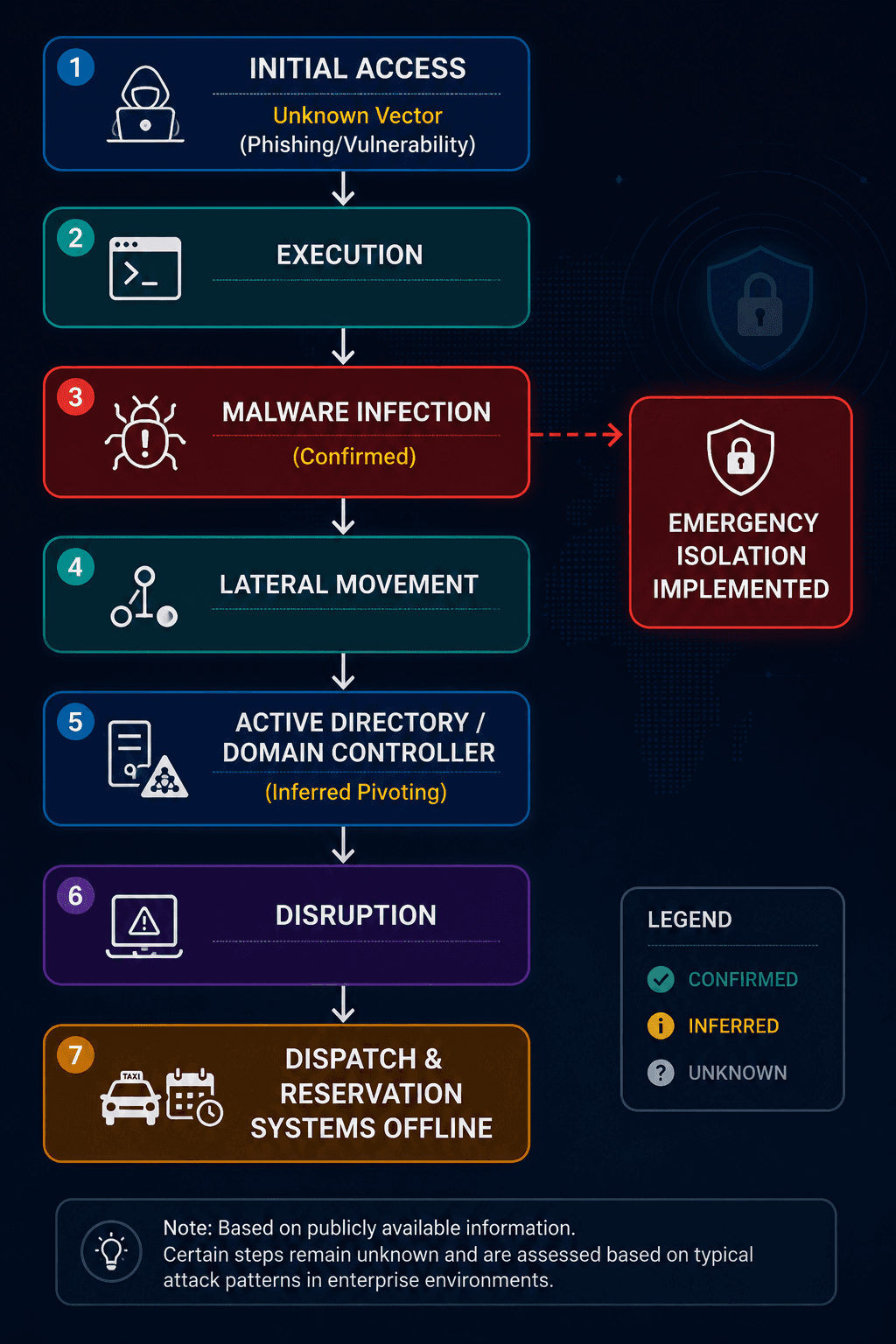
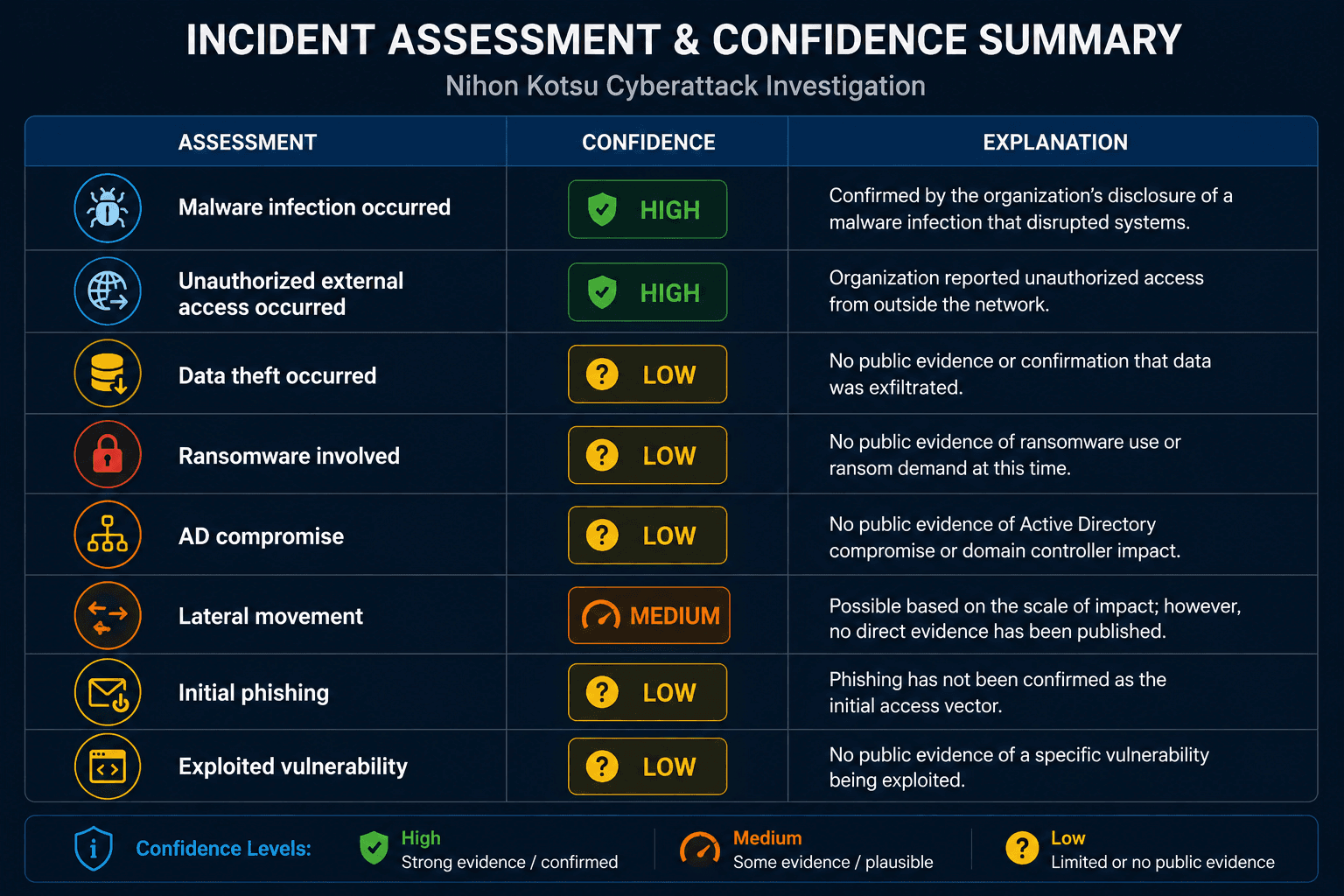
Acceso inicial: Desconocido. Actualmente no hay evidencia pública que respalde un vector de acceso inicial definitivo (por ejemplo, explotación de vulnerabilidades en el perímetro frente a spear-phishing).
Ejecución y persistencia: Infección de malware confirmada. La telemetría interna confirmó la ejecución activa de malware en múltiples segmentos de servidores. Los mecanismos exactos de persistencia (por ejemplo, tareas programadas, modificaciones del registro) siguen sin revelarse.
Movimiento lateral y descubrimiento: Inferido. El amplio impacto operativo en la telefonía, la gestión de reservaciones y las bases de datos de reservas web implica un movimiento lateral exitoso desde la zona de aterrizaje inicial hasta los controladores de la infraestructura central.
Cifrado o interrupción: Interrupción confirmada. Aunque el incidente coincide con el perfil operativo de un evento de ransomware, no se ha confirmado explícitamente el despliegue de archivos binarios de cifrado de archivos. La causa principal de la indisponibilidad del sistema fue el aislamiento defensivo e intencionado de la red ejecutado por el equipo interno de respuesta de TI para bloquear una mayor propagación del malware.
Los posibles vectores de entrada incluyen
credenciales de VPN robadas
phishing
servicios remotos expuestos
compromiso de terceros
explotación de dispositivos perimetrales (edge appliances)
Ninguno confirmado actualmente.
Mapeo de MITRE ATT&CK
Con base en los resultados observados y las declaraciones corporativas confirmadas, la intrusión se mapea en los siguientes dominios tácticos:
TA0002 (Ejecución): Se ejecutaron binarios de malware no autorizados dentro de la red interna.
TA0011 (Comando y control): Se establecieron conexiones externas no autorizadas con la infraestructura de salida.
TA0040 (Impacto): Se causó una interrupción operativa significativa, lo que resultó en la indisponibilidad del sistema para reservas web, despacho telefónico y aplicaciones administrativas internas.
Otros posibles mapeos de ATT&CK incluyen:
Acceso inicial
Ejecución
Descubrimiento
Impacto
Análisis del actor de la amenaza y del malware
Estado de atribución: No se ha atribuido públicamente a ningún actor de la amenaza. Al momento de redactar este artículo, ningún colectivo destacado de ransomware o sindicato de extorsión de datos ha reclamado la responsabilidad en los sitios públicos de filtraciones de la dark web, ni los equipos de inteligencia de amenazas han vinculado la infraestructura con Amenazas Persistentes Avanzadas (APT) respaldadas por algún estado.
Clasificación del malware: La empresa de respuesta a incidentes no ha revelado la familia, variante o firma criptográfica específica del malware que causó la infección.
Proximidad táctica con campañas históricas: La rápida escalada desde una alerta interna de malware hasta un apagado operativo total refleja las TTP utilizadas por afiliados de ransomware modernos (como LockBit, BlackBasta o ALPHV/BlackCat). Estos grupos despliegan habitualmente herramientas de doble uso (por ejemplo, Impacket, Advanced Port Scanner) para un descubrimiento automatizado rápido antes de lanzar cargas destructivas.
Impacto en el sector empresarial y de transporte
La parálisis operativa en Nihon Kotsu subraya las frágiles dependencias integradas en los ecosistemas modernos de transporte público.
Sin embargo, debemos enfatizar que las operaciones de taxi modernas dependen de:
· optimización del despacho
· autenticación del conductor
· enrutamiento GPS
· pagos digitales
· identidad del cliente
· sistemas de reservación
Durante este evento, la pérdida del despacho fue el resultado más significativo (analizaremos esto en detalle más adelante).
Interrupción operativa
El impacto principal fue la pérdida inmediata de las capacidades de programación en tiempo real para el operador. El marco de despacho telefónico, que coordina miles de vehículos de forma simultánea, se cortó por completo. Esto obligó a la empresa a suspender su servicio especializado de "taxi de maternidad" en las regiones de Tokio, Musashino, Mitaka, Tachikawa, Yokohama y Saitama, afectando directamente al transporte de atención crítica para mujeres embarazadas.
Implicaciones en la cadena de suministro y efectos derivados
Por el lado positivo, de manera interesante, el ecosistema utilizó una estrategia de contingencia resiliente con mucha eficacia. El enrutamiento de pasajeros pasó a la aplicación móvil de taxis "GO" en un corto período de tiempo. Dado que la aplicación "GO" funciona a través de una infraestructura de nube independiente y separada de los sistemas internos principales de Nihon Kotsu, permaneció operativa, absorbiendo así una parte significativa de la demanda de transporte. Sin embargo, las cámaras de compensación financiera secundarias y los sistemas de reserva de cuentas corporativas de empresa a empresa (B2B) sufrieron bloqueos de transacciones de inmediato.
Contexto del panorama de amenazas
Este incidente forma parte de un aumento claro y de varios años en las ciberoperaciones dirigidas contra activos industriales y de infraestructura japoneses. Los actores de amenazas sofisticados explotan cada vez más las redes corporativas interconectadas de las principales organizaciones japonesas para crear una interrupción generalizada. Las empresas japonesas siguen estando en la mira de una amplia gama de actores de amenazas y se enfrentan cada vez más a ciberriesgos asociados con
ransomware
ataques a la cadena de suministro
explotación de dispositivos perimetrales (edge devices)
robo de credenciales
extorsión de datos
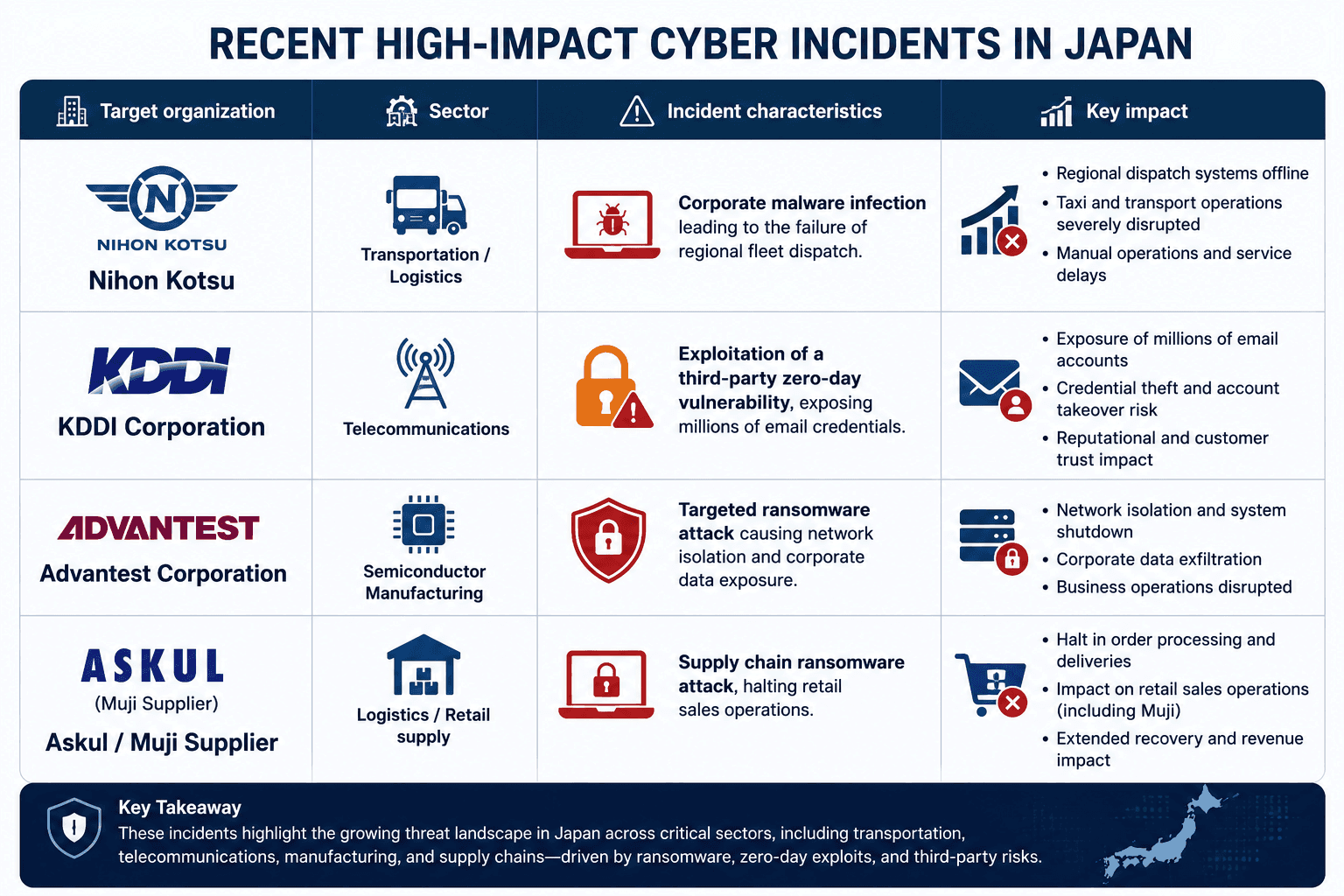
Los sindicatos de amenazas consideran a las empresas japonesas como objetivos de alto valor debido a sus sustanciales ingresos, su baja tolerancia al tiempo de inactividad operativa y su compleja red de relaciones de confianza con proveedores externos. Estos sindicatos creen que se puede llevar a las empresas japonesas a la mesa de negociación mucho más rápido que a sus contrapartes en otras regiones.
Indicadores de compromiso (IOC)
Estado oficial: Nihon Kotsu o sus socios externos de DFIR no han revelado públicamente ningún IOC verificado (hashes criptográficos, direcciones IP de comando y control o estructuras de dominios maliciosos) al momento de escribir este artículo.
Por lo tanto, se advierte a los defensores que monitoreen las comunicaciones salientes sospechosas que imiten la infraestructura de correo electrónico corporativo de Nihon Kotsu. La empresa ha advertido explícitamente a los clientes que no abran archivos adjuntos inesperados ni hagan clic en enlaces de comunicaciones que afirmen representar a la firma, lo que indica un alto riesgo de campañas de phishing oportunistas o de ingeniería social secundaria.
IOC conocidos:
Ninguno
Nota de ransomware conocida:
Ninguna
Sitio de filtraciones conocido:
Ninguno
Publicación de TOR conocida:
Ninguna
Hash de malware conocido:
Ninguno
IP conocidas:
Ninguna
Hoja de ruta de detección y defensa
Ante la propagación automatizada de malware capaz de obligar a un apagado de toda la empresa, los centros de operaciones de seguridad (SOC) deben desplegar lógica de detección específica y controles de arquitectura.
Oportunidades de detección
Monitoreo de eventos de Windows y SIEM
ID de evento 4624 (Tipo 3 / Tipo 10): Auditar autenticaciones de red rápidas y secuenciales en ventanas de tiempo breves, dirigidas especialmente hacia controladores de dominio o segmentos críticos de bases de datos de flotas.
ID de evento 7045 / 4697: Rastrear la creación repentina de servicios en segundo plano del sistema en múltiples servidores dentro de una misma ventana de 60 minutos, un indicador principal de herramientas automatizadas de despliegue lateral.
Oportunidades adicionales
ID de eventos de Windows
4672
4688
5145
Sysmon
Evento 1
Evento 3
Evento 11
Evento 13
PowerShell
4104
Telemetría de EDR y linaje de procesos
Monitorear invocaciones inesperadas de la línea de comandos originadas en servidores web o portales orientados a internet (por ejemplo, cmd.exe /c o powershell.exe -encodedcommand generados por w3wp.exe o tomcat.exe).
Marcar cualquier ejecución de endpoint que involucre utilidades de descubrimiento de red (por ejemplo, net.exe view, nltest.exe /dclist o ejecuciones no autorizadas de adfind.exe).
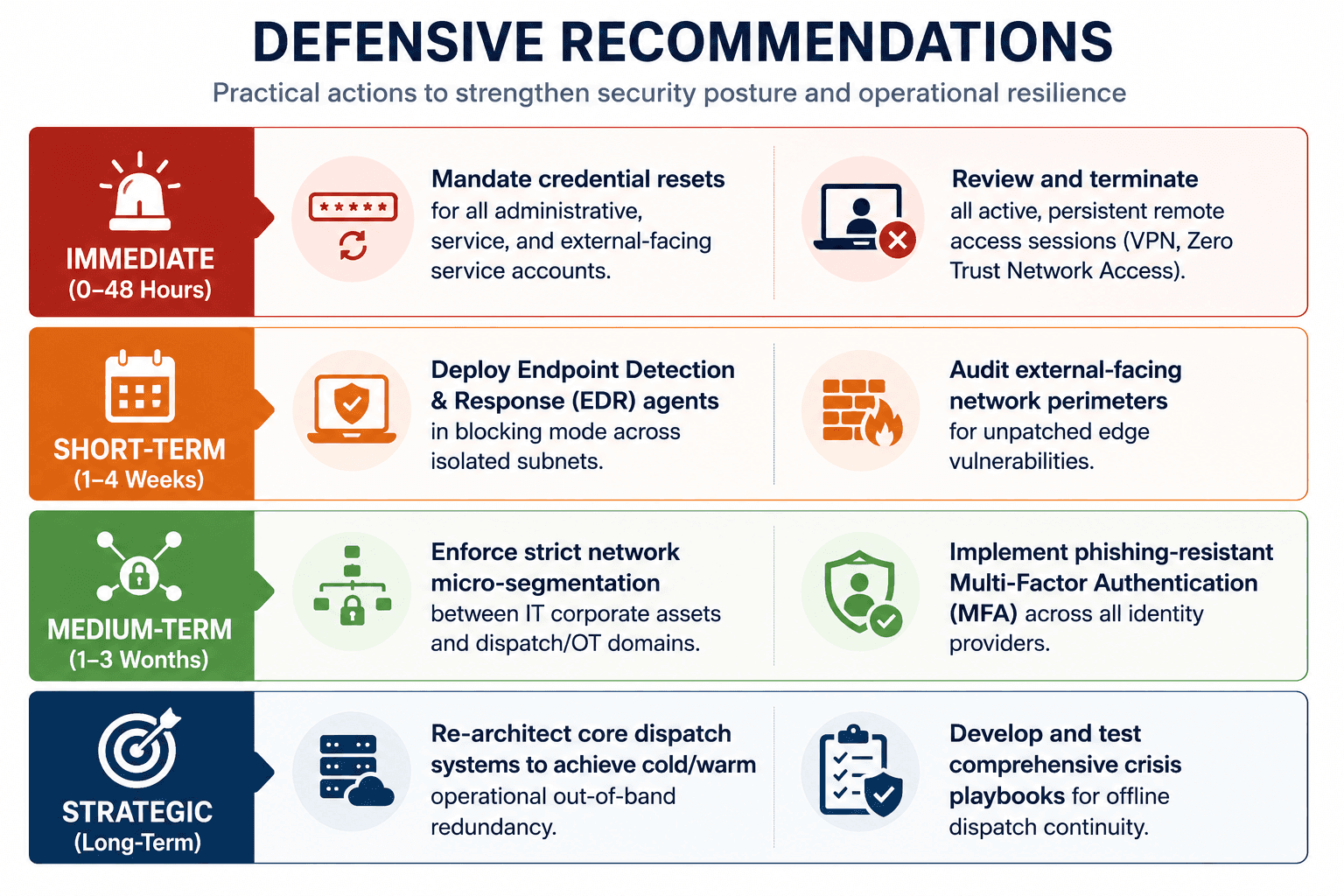
Lecciones aprendidas y conclusiones clave
Para directores de seguridad de la información (CISO) y líderes técnicos
Aislar de forma inteligente: El aislamiento defensivo de la red es una herramienta eficaz para detener la propagación del malware, pero debe combinarse con arquitecturas segmentadas. Esto garantiza que una infección en la red de TI corporativa no desconecte automáticamente la red de despacho operativo.
Reforzar las alternativas fuera de banda: La disponibilidad de la aplicación independiente "GO" salvó a Nihon Kotsu de un cierre comercial total. Los servicios críticos deben mantener rutas de infraestructura desacopladas.
Verificar los límites laterales: Revisar las relaciones de confianza de Active Directory y las listas de control de acceso a la red (ACL) para garantizar que el compromiso de una estación de trabajo estándar no pueda otorgar control administrativo sobre la capa de la base de datos operativa.
Prepararse para los indicadores de preparación de datos: Monitorear transferencias internas de datos de gran volumen que se muevan hacia puntos de preparación inusuales (por ejemplo, directorios de respaldo locales o recursos compartidos de archivos internos ocultos) antes de que ocurra la exfiltración de salida.
Cumplimiento continuo de EDR: Garantizar que la telemetría de EDR cubra los servidores de aplicaciones heredadas, que suelen ser el objetivo de los actores de amenazas durante la fase de movimiento lateral.
Para ejecutivos y gestión de operaciones
Priorizar los servicios de seguridad vital: La suspensión inmediata del servicio de "taxi de maternidad" demuestra que los ciberincidentes se transforman rápidamente en desafíos de seguridad pública. Los servicios vulnerables y de alta prioridad requieren modos operativos de contingencia distintos y gestionados manualmente.
Controlar la narrativa de la comunicación: Establecer plantillas de comunicación claras y verificadas de manera oportuna. La rápida orientación pública de Nihon Kotsu con respecto a posibles vectores secundarios de phishing minimizó el impacto derivado en su base de clientes.
Probar la continuidad fuera de línea: Las organizaciones deben realizar simulacros que representen una pérdida total prolongada de las herramientas de TI principales durante varios días, lo que obligue a los equipos a dirigir las operaciones utilizando registros en papel, radios locales o flujos de trabajo alternativos.
Presupuestar para contratos de retención independientes de DFIR: Cuando ocurre un incidente importante, la experiencia forense externa es fundamental. Contar con acuerdos de nivel de servicio (SLA) prenegociados garantiza un despliegue rápido y un análisis más ágil de la causa raíz.
Reconocer el contexto cambiante de las amenazas en Japón: A medida que los actores de amenazas se dirigen cada vez más a los centros logísticos y de manufactura japoneses, los ejecutivos deben reconocer que la ciberseguridad es un requisito central para la resiliencia operativa, no solo un elemento de cumplimiento de TI.
Evaluación de confianza
Proteja sus operaciones de OT. Programe hoy mismo una consulta gratuita con un experto en seguridad de OT de Shieldworkz
Lectura recomendada
Para ayudar a sus equipos de ingeniería, seguridad y protección a cerrar la brecha entre la teoría del cumplimiento y la realidad de la planta de producción, revise estos recursos esenciales de la biblioteca de proyectos de Shieldworkz:
Gobernanza de IA para Tecnología Operativa (OT) (Enlace)
Lista de verificación de seguridad operativa para ciberseguridad de OT / ICS (Enlace)
Guía de defensa contra ransomware en ICS: Guía de ciberseguridad para OT e ICS (Enlace)
Lista de verificación completa de NIS2 con evidencia requerida (Enlace)
Paquete de plantillas de políticas de ciberseguridad para OT/ICS (Enlace)
Recibe semanalmente
Recursos y Noticias
Vea cómo nuestras soluciones de seguridad de OT líderes en la industria abordan los desafíos de seguridad críticos
También te puede interesar

Inside the Albert Heijn cyber incident: Investigating the attack, the IT/OT exposure, and the risks to critical operations
Team Shieldworkz

50°C by cyberattack? Inside France’s supermarket refrigeration crisis
Prayukth K V

Automating IEC 62443 Compliance Assessments Without Losing Expert Control
Team Shieldworkz

Investigative cyber threat intelligence report: Daiichi Kosho supply-chain data exposure
Prayukth K V

How AI Is Changing IEC 62443 Assessments
Team Shieldworkz

Deep investigative threat intelligence report: Alleged SafePay cyberattack on T-Systems
Team Shieldworkz