Equipo Shieldworkz
Un ingeniero de control en una instalación mediana de tratamiento de agua describió una vez el momento en que su equipo finalmente desplegó el monitoreo continuo en su red operativa con una frase simple: “No sabíamos lo que no sabíamos”. Durante la primera semana, la plataforma detectó un punto de acceso inalámbrico que nadie en el personal podía justificar, tres PLC heredados que aún funcionaban con credenciales predeterminadas y un patrón de inicios de sesión remotos fuera del horario laboral que había pasado desapercibido durante meses. Nada en ese entorno había cambiado de la noche a la mañana. Lo que cambió fue la visibilidad.
Esa historia no es inusual. De hecho, es la norma en plantas de fabricación, empresas de servicios públicos, refinerías y sitios de infraestructura crítica de todo el mundo. Los entornos de tecnología operativa (OT) se construyeron para ofrecer confiabilidad y seguridad física, no para ser sometidos a auditorías de ciberseguridad, y la mayoría nunca se diseñó para informar sobre su propio estado de seguridad. A medida que estos entornos se conectan más, ese punto ciego se ha convertido en uno de los riesgos más consecuentes que enfrentan las organizaciones industriales hoy en día.
Esta guía analiza a fondo y de manera práctica el monitoreo de seguridad de CPS, por qué se ha vuelto esencial para los sistemas ciberfísicos, qué necesita hacer realmente una plataforma de seguridad de CPS moderna y cómo la visibilidad continua cambia la forma en que los líderes de seguridad de OT detectan, investigan y responden al riesgo operativo.
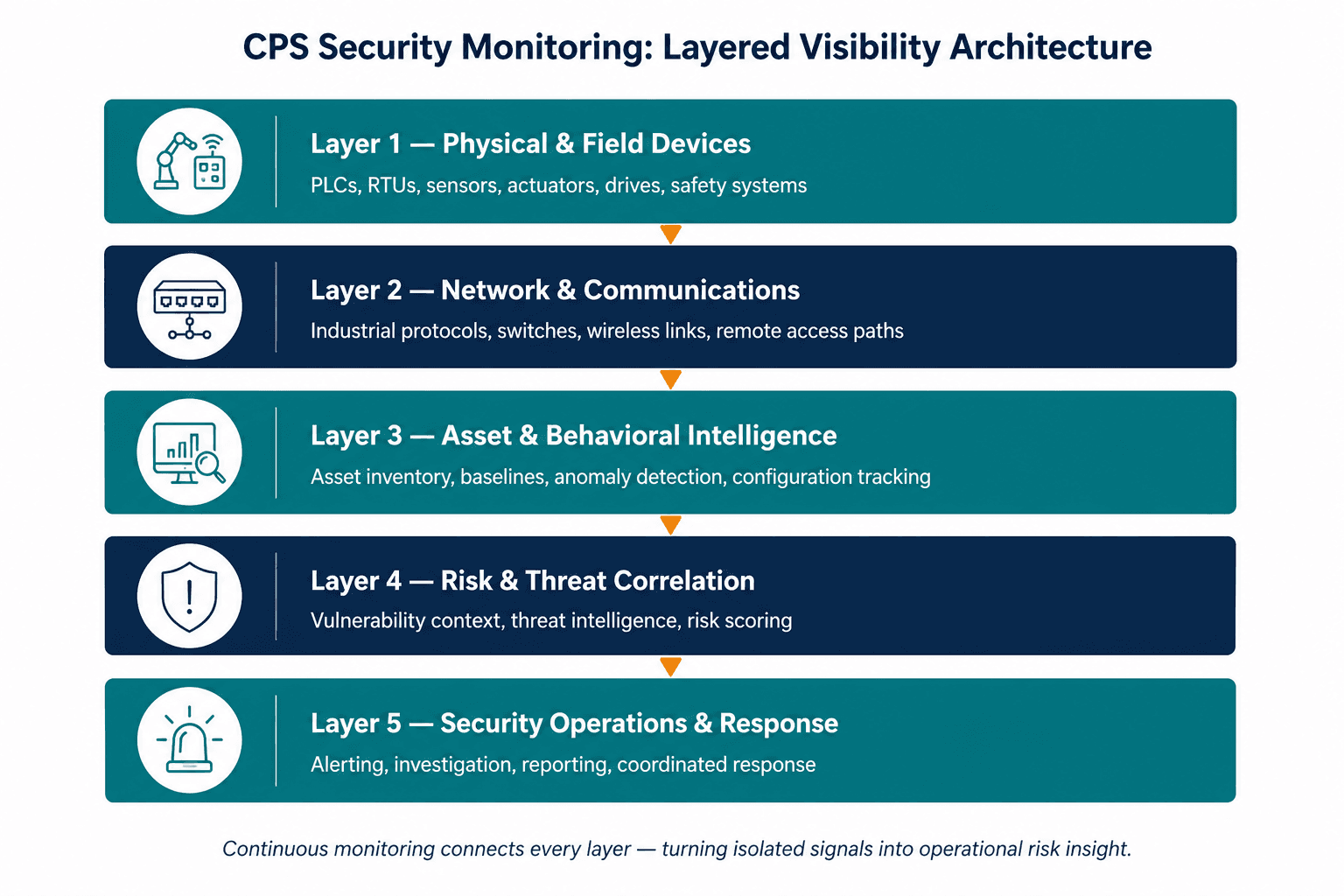
Figura 1: Arquitectura en capas para el monitoreo de seguridad de CPS, desde dispositivos de campo hasta operaciones de seguridad.
Comprendiendo los sistemas ciberfísicos y por qué son diferentes
Los sistemas ciberfísicos, o CPS, son las tecnologías donde el control digital se une a la acción física. Un controlador lógico programable que abre una válvula, un variador de frecuencia que regula un motor, un sistema instrumentado de seguridad que detiene un proceso antes de que se vuelva peligroso; estos no son activos de TI abstractos. Son sistemas donde un evento de ciberseguridad puede traducirse directamente en una consecuencia física: una línea de producción detenida, un lote contaminado, un incidente de seguridad o un apagón de servicios públicos regional.
Esta es la razón principal por la que la seguridad de los CPS no puede simplemente copiar el manual de estrategias de seguridad de TI. En una red de oficina, una laptop comprometida puede significar el robo de datos. En un entorno ciberfísico, un controlador comprometido puede significar que una bomba funcione en seco, que una caldera opere fuera de los parámetros seguros o que un sistema de dosificación química administre la cantidad incorrecta. Lo que está en juego es físico, y la urgencia también lo es.
El monitoreo de seguridad de CPS existe para cerrar la brecha de visibilidad entre lo que los operadores creen que está sucediendo en su entorno físico y lo que realmente está ocurriendo. Es la práctica de observar continuamente los activos, las comunicaciones de red, las configuraciones y el comportamiento en los sistemas OT, ICS, SCADA e IoT conectados, de modo que el riesgo se vuelva visible mucho antes de convertirse en un incidente.
También refleja un cambio más amplio en la forma en que las organizaciones industriales piensan sobre la resiliencia. Durante años, la seguridad de OT se abordó principalmente desde la perspectiva de la segmentación y el control de acceso, construyendo muros entre los sistemas y esperando que esos muros resistieran. Los muros siguen importando, pero ya no son suficientes por sí solos. Los entornos industriales modernos tienen demasiados puntos de conexión legítimos, acceso remoto de proveedores, sensores inalámbricos e historiadores conectados a la nube para que una estrategia basada únicamente en el perímetro resista bajo una presión constante. El monitoreo continuo acepta esa realidad y desplaza el enfoque de simplemente mantener fuera las amenazas a saber, con total confianza, exactamente qué está sucediendo dentro del perímetro en todo momento.
Más allá de la detección: por qué esta distinción es importante para el liderazgo
Para un líder de seguridad de OT que está construyendo un caso de negocio, la diferencia entre el monitoreo de TI y el monitoreo de CPS no es un matiz técnico, es todo el argumento. Los comités de presupuesto, las juntas directivas y la dirección de la planta responden al riesgo planteado en términos que reconocen: horas de inactividad, incidentes de seguridad física, exposición regulatoria y pérdidas de producción. Una plataforma de seguridad de CPS gana su lugar en la conversación precisamente porque traduce el ciberriesgo al lenguaje operativo, brindando al liderazgo una forma de analizar la exposición de la misma manera que analizan la falla de un equipo, la interrupción del suministro o el cumplimiento de las normas de seguridad.
Esta es también la razón por la que el monitoreo de seguridad de CPS aparece cada vez más en los registros de riesgo a nivel de junta directiva y en las conversaciones de suscripción de seguros. Las aseguradoras de riesgos cibernéticos que cubren operaciones industriales realizan preguntas más detalladas sobre la segmentación de la red, la visibilidad de los activos y la madurez del monitoreo antes de extender o renovar las coberturas. Los reguladores que supervisan la infraestructura crítica, desde la energía y el agua hasta el transporte, están endureciendo las expectativas en torno al monitoreo continuo y el reporte de incidentes. La visibilidad ya no es solo una mejor práctica de seguridad; se está convirtiendo en una expectativa básica desde todas las direcciones: financiera, regulatoria y operativa.
Riesgos, desafíos e información del sector
El panorama de amenazas industriales ha cambiado significativamente en los últimos años, y los datos reflejan un patrón que los líderes de seguridad de OT ya no pueden tratar como una preocupación futura. Es una preocupación actual.

Figura 2: Indicadores clave de riesgo operativo extraídos de investigaciones recientes del sector sobre la seguridad de ICS/OT.
El problema de la convergencia
Durante décadas, las redes de OT operaron en relativo aislamiento, separadas de la TI corporativa por diseño. Esa separación está desapareciendo. Las plantas de producción ahora se conectan a sistemas de planificación de recursos empresariales, plataformas de análisis en la nube, herramientas de acceso remoto para proveedores y redes de sensores inalámbricos. Esta convergencia aporta un valor operativo real (mejores datos, decisiones más rápidas, mantenimiento más eficiente), pero también elimina la barrera natural que antes mantenía a los sistemas industriales fuera del alcance de las amenazas externas.
Los fabricantes que han integrado recursos de TI empresarial en las redes de las plantas han informado de un fuerte aumento de los incidentes de seguridad como consecuencia directa de esa convergencia. El patrón es constante en todos los sectores: cuanto más conectado está un entorno, más necesita una visibilidad dedicada de lo que realmente transita por su red.
La infraestructura heredada nunca se construyó para informar sobre sí misma
Una parte importante de los controladores, historiadores y dispositivos de campo que ejecutan procesos críticos en la actualidad se instalaron hace diez, veinte o incluso treinta años. Fueron diseñados para maximizar el tiempo de actividad y el determinismo, no para generar telemetría de seguridad. Muchos no admiten agentes de endpoint tradicionales. Muchos ejecutan firmware desactualizado que no se puede parchear sin programar una ventana de parada completa. Esto no es un fallo de los equipos de ingeniería que construyeron y mantienen estos sistemas; es simplemente un desajuste entre la época en que fueron diseñados y el entorno de amenazas en el que operan ahora.
Esta es precisamente la razón por la que los enfoques de monitoreo pasivo y no intrusivo son tan importantes en la seguridad de los CPS. La visibilidad debe lograrse sin afectar los lazos de control críticos para la seguridad o introducir riesgos en sistemas donde el tiempo de inactividad se mide en pérdidas de producción, no en meras molestias.
Incidentes del mundo real que cambiaron la conversación
Varios incidentes documentados públicamente ilustran por qué el monitoreo continuo de CPS ha pasado de ser algo deseable a ser una prioridad a nivel de junta directiva:
Un software malicioso sofisticado descubierto en 2010 se dirigió específicamente al software de control industrial utilizado en operaciones de centrifugadoras, demostrando por primera vez que el código malicioso podía diseñarse para manipular procesos físicos en lugar de simplemente robar datos.
Los ataques coordinados a una red eléctrica nacional en 2015 y nuevamente en 2016 dejaron a cientos de miles de residentes sin electricidad, ejecutados por adversarios que habían pasado meses dentro de la red estudiando los flujos de trabajo de los operadores antes de actuar.
El malware descubierto en una instalación petroquímica en 2017 tenía como objetivo específico los sistemas instrumentados de seguridad, la última línea de defensa diseñada para prevenir fallas físicas catastróficas, lo que supuso uno de los primeros intentos conocidos de desactivar directamente los sistemas de seguridad.
Un ataque de ransomware a un importante operador de oleoductos en 2021 obligó a un cierre operativo total, no porque los sistemas de control en sí estuvieran comprometidos, sino porque la organización carecía de la visibilidad y segmentación necesarias para aislar con confianza la OT del entorno de TI afectado.
Un productor de aluminio afectado por un ransomware en 2019 se vio obligado a cambiar partes de su producción a operación manual en múltiples instalaciones durante semanas, lo que ilustra cómo un único evento originado en TI puede derivar en un impacto operativo físico prolongado.
Lo que conecta a estos incidentes no es solo la sofisticación de los atacantes. En casi todos los casos, las organizaciones afectadas carecían de una visibilidad continua y contextual de su entorno operativo. Las señales de advertencia existían. Simplemente no eran visibles para los equipos que necesitaban verlas a tiempo para actuar.
Vale la pena reflexionar sobre ese patrón por un momento, porque se repite en casi todos los incidentes industriales bien documentados de los últimos quince años. Los atacantes no necesitaron necesariamente técnicas novedosas para tener éxito. Necesitaron tiempo dentro de una red que no se estaba monitoreando a sí misma lo suficientemente de cerca como para notar el reconocimiento, el movimiento lateral o la preparación silenciosa de cargas útiles maliciosas. El tiempo de permanencia (la cantidad de tiempo que un adversario opera sin ser detectado dentro de un entorno) sigue siendo una de las métricas más reveladoras en la seguridad industrial, y es una métrica que el monitoreo continuo mejora de manera directa y medible.
El costo real de un incidente no detectado
El impacto financiero de un incidente de seguridad en OT rara vez se detiene en el costo de la remediación. El tiempo de inactividad de la producción por sí solo puede costar millones de dólares por día para las grandes operaciones de fabricación o energía, y esa cifra no incluye las sanciones regulatorias, las penalizaciones contractuales vinculadas a compromisos de entrega incumplidos, el daño a la reputación o el costo de las operaciones manuales durante la recuperación. Casi una de cada ese cinco organizaciones afectadas por un incidente reciente de OT informó que la remediación tomó más de un mes en completarse, un plazo que refleja no solo la recuperación técnica, sino la dificultad de confirmar con confianza que un entorno está limpio cuando la visibilidad era limitada para empezar.
Este es el costo silencioso que rara vez aparece en los titulares: el período prolongado posterior a un incidente en el que una organización opera bajo incertidumbre, sin saber si un adversario aún tiene acceso, sin estar seguro de en qué sistemas se puede confiar y sin poder responder a preguntas básicas con confianza. El monitoreo continuo reduce drásticamente ese período de incertidumbre, porque el registro histórico del comportamiento de la red, el estado de los activos y los cambios de configuración ya existen cuando los investigadores más los necesitan.
Dónde persisten hoy las brechas de detección
Investigaciones recientes del sector muestran claramente dónde se encuentran las mayores brechas. Aproximadamente la mitad de los incidentes de seguridad de ICS y OT se pueden atribuir a accesos externos o remotos no autorizados, con frecuencia a través de conexiones de mantenimiento de terceros que nunca se inventariaron ni monitorearon por completo. El ransomware sigue siendo el principal factor de interrupción operativa, y la actividad de ransomware reportada dirigida a entornos de OT ha seguido aumentando año tras año. Quizás lo más revelador es que una parte sustancial de los entornos de OT evaluados todavía reporta una visibilidad de red inadecuada como uno de sus principales desafíos de seguridad operativa.
El riesgo interno agrava el problema. La mayoría de los incidentes relacionados con personal interno en entornos industriales no se deben a intenciones maliciosas, sino a negligencia: una laptop sin parches conectada a la red de una planta, una regla de firewall mal configurada, una credencial compartida de manera informal entre los cambios de turno. Sin un monitoreo continuo, estos hábitos operativos cotidianos se convierten en factores de riesgo invisibles que se acumulan silenciosamente con el tiempo.
Qué implica realmente el monitoreo de seguridad de CPS
El monitoreo continuo de seguridad de CPS no es una sola herramienta ni un solo tablero. Es una disciplina en capas que combina varias capacidades que funcionan en conjunto para construir una imagen precisa y viva del riesgo operativo.
Visibilidad integral de activos
La seguridad comienza sabiendo qué existe. Una plataforma integral de seguridad de CPS descubre e inventaría de forma pasiva cada activo conectado: controladores, historiadores, estaciones de trabajo de ingeniería, interfaces hombre-máquina, dispositivos inalámbricos e incluso la TI en la sombra (shadow IT) que ha encontrado silenciosamente su camino hacia la red. Sin un inventario de activos preciso y continuamente actualizado, cualquier otro control de seguridad se construye sobre una base incompleta.
Monitoreo de comunicaciones de red
Los protocolos industriales se comportan de manera muy diferente al tráfico de TI estándar, y comprenderlos requiere un conocimiento profundo de los protocolos. Un monitoreo eficaz observa el tráfico de este-oeste y norte-sur a lo largo del entorno, mapeando cómo se comunican realmente los dispositivos en lugar de cómo dice la documentación que deberían comunicarse. Esto a menudo revela conexiones no documentadas, flujos de datos no autorizados y rutas de comunicación que nunca formaron parte del diseño original de la red.
Líneas base de comportamiento y detección de anomalías
Una vez que la plataforma comprende cómo son las operaciones normales (patrones de comunicación, tiempos, secuencias de comandos, volúmenes de datos), puede identificar las desviaciones importantes. Aquí es donde el monitoreo continuo demuestra su valor. Un único comando inusual enviado a un controlador a una hora inusual, un dispositivo que de repente se comunica con un sistema con el que nunca antes había hablado, un cambio de configuración realizado fuera de una ventana de mantenimiento programada; estas son las señales que indican que algo ha cambiado, a menudo mucho antes de que ocurra un incidente evidente.
Seguimiento de configuraciones y cambios
Los cambios de configuración no autorizados o no documentados se encuentran entre los precursores más comunes de los incidentes operativos, ya sean causados por actividades maliciosas, errores humanos o acceso no gestionado de terceros. El monitoreo continuo rastrea la desviación de configuración en los controladores y dispositivos de campo, brindando a los equipos de ingeniería y seguridad un registro claro y auditable de qué cambió, cuándo y por qué medios.
Contexto de vulnerabilidad y riesgo
No todas las vulnerabilidades tienen el mismo peso. Una falla teórica en un dispositivo aislado y no crítico representa un riesgo muy diferente al de una debilidad explotable en un controlador que gestiona un proceso crítico para la seguridad. Las plataformas de monitoreo de CPS robustas correlacionan los datos de vulnerabilidad con la criticidad real del activo, la exposición y el contexto operativo, de modo que los equipos de seguridad e ingeniería puedan priorizar lo que realmente importa en lugar de perseguir cada hallazgo por igual.
Integración de inteligencia de amenazas
La inteligencia de amenazas operativas (información sobre campañas activas, infraestructura maliciosa conocida y tácticas de adversarios específicas para entornos industriales) agrega un contexto crucial a los datos de monitoreo sin procesar. Cuando la inteligencia de amenazas se superpone a los análisis de comportamiento, los equipos de seguridad adquieren la capacidad de reconocer no solo que algo es inusual, sino por qué es importante y con qué urgencia requiere atención.
Comparación de capacidades de monitoreo
La siguiente tabla describe cómo progresa típicamente la madurez del monitoreo en las organizaciones industriales y qué ofrece de manera realista cada nivel.
Capacidad | Monitoreo básico | Monitoreo continuo de CPS |
Visibilidad de activos | Hojas de cálculo manuales, auditorías periódicas | Inventario automatizado y continuamente actualizado |
Información de red | Limitada a segmentos orientados a TI | Visibilidad completa de OT/ICS con reconocimiento de protocolos |
Detección de anomalías | Alertas basadas únicamente en firmas | Líneas base de comportamiento más detección de anomalías |
Gestión de vulnerabilidades | Puntuación de gravedad genérica | Ponderación de riesgo por criticidad y exposición del activo |
Seguimiento de configuración | Reactivo, descubierto después de los incidentes | Seguimiento continuo de cambios y detección de desviaciones |
Preparación para respuestas | Detección retrasada, mayor tiempo de permanencia del atacante | Detección más rápida y contención más confiable |
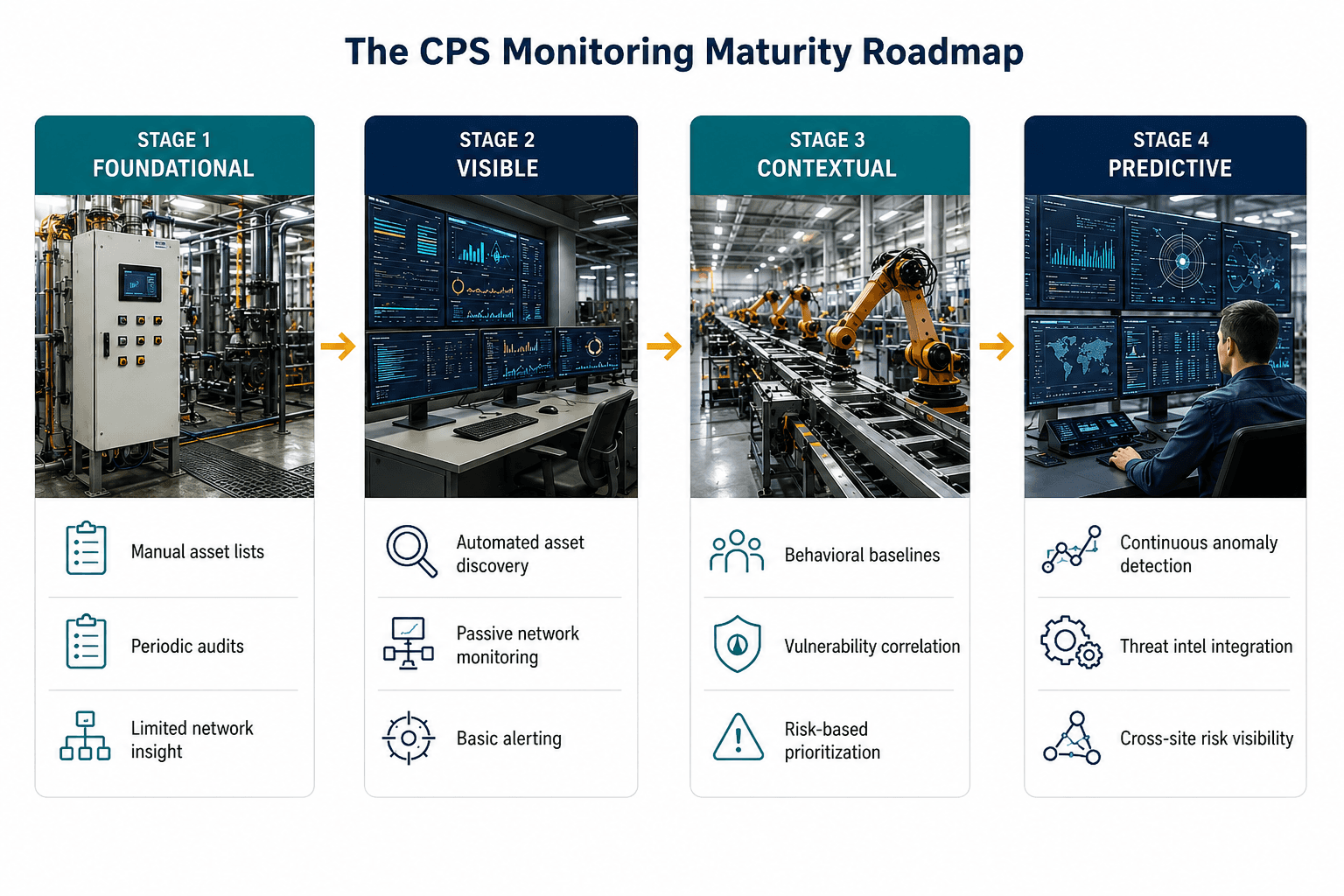
Figura 3: Una hoja de ruta de madurez práctica para organizaciones que desarrollan la capacidad de monitoreo continuo de CPS.
Recomendaciones prácticas y mejores prácticas
Desarrollar una visibilidad continua de CPS no requiere desmantelar la infraestructura existente ni detener las operaciones. Las organizaciones que tienen éxito suelen seguir un enfoque deliberado y por fases.
Comience con visibilidad pasiva, no con escaneo activo
In los entornos donde la disponibilidad y la seguridad física no son negociables, los enfoques de monitoreo pasivo que observan el tráfico de red sin enviar comandos a dispositivos sensibles son el punto de partida más seguro. El escaneo activo tiene su lugar, pero debe introducirse con cuidado y solo después de que la visibilidad pasiva establezca una imagen clara del entorno.
Priorice primero los activos críticos
No todos los activos necesitan el mismo nivel de escrutinio desde el primer día. Comience con los sistemas cuya falla tendría el mayor impacto en la seguridad física, el medio ambiente o la producción. Desarrollar la visibilidad hacia afuera a partir de los procesos más críticos garantiza que los primeros esfuerzos ofrezcan la mayor reducción de riesgo posible.
Establezca líneas base de comportamiento antes de esperar valor de detección
La detección de anomalías es tan buena como la línea base con la que se compara. Permita que las plataformas de monitoreo tengan el tiempo adecuado (típicamente varias semanas) para aprender cómo son realmente las operaciones normales a través de los turnos, los ciclos de producción y las ventanas de mantenimiento antes de ajustar los umbrales de alerta.
Cierre la brecha entre los equipos de TI y OT
El monitoreo continuo funciona mejor cuando los hallazgos de seguridad se traducen a un lenguaje en el que los equipos de operaciones e ingeniería puedan actuar. Un hallazgo planteado puramente en terminología de seguridad de TI a menudo se estanca, mientras que el mismo hallazgo planteado en torno al impacto en el proceso y las implicaciones de seguridad física avanza rápidamente. Desarrollar un vocabulario compartido entre seguridad, ingeniería y liderazgo de la planta es uno de los factores de éxito más subestimados en los programas de monitoreo de CPS.
Trate el acceso remoto como una prioridad de monitoreo de primer nivel
Dado con qué frecuencia los incidentes se originan a través de accesos remotos o de terceros, el monitoreo debe prestar atención explícita a quién se conecta, desde dónde, a través de qué ruta y a qué sistemas. Las sesiones remotas merecen el mismo escrutinio que cualquier otra actividad privilegiada dentro del entorno.
Revise y pruebe los planes de respuesta a incidentes con regularidad
La visibilidad solo es valiosa si conduce a la acción. Las organizaciones que actualizan sus planes de respuesta a incidentes regularmente, incorporando nueva inteligencia de amenazas y lecciones de eventos recientes del sector, están mediblemente mejor posicionadas para contener los incidentes rápidamente y limitar el impacto operativo.
Mida lo que importa, no solo lo que es fácil de contar
Muchos programas de monitoreo recurren por defecto a rastrear el volumen de alertas como un indicador de éxito, pero un alto número de alertas a menudo indica un ajuste deficiente de las reglas en lugar de una seguridad sólida. Las métricas más significativas incluyen el tiempo medio de detección, el tiempo medio de investigación, el porcentaje de activos con visibilidad confirmada y la reducción de dispositivos desconocidos o no gestionados a lo largo del tiempo. El seguimiento de estas cifras trimestre tras trimestre ofrece a los líderes de seguridad de OT una forma defendible y basada en datos de demostrar la madurez del programa a las partes interesadas ejecutivas.
Brechas comunes de monitoreo y su impacto operativo
Brecha | Por qué ocurre | Consecuencia operativa |
Acceso remoto no monitoreado | Conexiones de proveedores externos configuradas de manera informal | Punto de entrada principal en aproximadamente la mitad de los incidentes reportados |
Inventario de activos incompleto | Dispositivos heredados agregados fuera de la gestión de cambios | Puntos ciegos que retrasan la detección y la respuesta |
Sin línea base de comportamiento | Dependencia de alertas estáticas basadas en firmas | Las amenazas novedosas o de desarrollo lento pasan desapercibidas |
Parcheo retrasado | Costo de inactividad por desconectar sistemas | Las vulnerabilidades conocidas siguen siendo explotables durante meses |
Coordinación de TI/OT fragmentada | Equipos, herramientas y líneas de reporte aislados | Contención más lenta y respuesta inconsistente |
Cómo apoya Shieldworkz a las organizaciones
Shieldworkz trabaja junto a las organizaciones industriales para construir el tipo de visibilidad continua y contextual que se describe a lo largo de esta guía, sin interrumpir las operaciones que esa visibilidad debe proteger. Nuestro enfoque se basa en las realidades de los entornos de producción reales, no adaptado de marcos de seguridad de TI genéricos.
Descubrimiento de activos pasivo y no intrusivo que construye un inventario completo y continuamente actualizado de dispositivos OT, ICS e IoT conectados sin afectar los lazos de control críticos para la seguridad física.
Monitoreo de red profundo con reconocimiento de protocolos que comprende las comunicaciones industriales y detecta conexiones no documentadas, flujos de datos no autorizados y patrones de tráfico inusuales.
Definición de líneas base de comportamiento y detección de anomalías adaptadas a los ritmos operativos reales, patrones de turnos, ciclos de mantenimiento y programas de producción, de modo que las alertas reflejen riesgos reales en lugar de ruido.
Inteligencia de vulnerabilidades ponderada por riesgo que prioriza los hallazgos en función de la criticidad del activo, la exposición y el contexto operativo en lugar de puntuaciones de gravedad genéricas.
Seguimiento de configuración y cambios que brinda a los equipos de ingeniería y seguridad un registro claro y auditable de qué cambió en los dispositivos críticos y cuándo.
Monitoreo dedicado de accesos remotos y conexiones de terceros, abordando uno de los puntos de entrada más comunes detrás de los incidentes reales de OT.
Soporte guiado para la respuesta a incidentes, ayudando a los equipos a pasar de la detección a una contención coordinada y confiable cuando algo requiere acción.
Implementación colaborativa que respeta los flujos de trabajo de ingeniería existentes, los requisitos de seguridad física y los procesos de gestión de cambios desde el primer día.
Nuestro objetivo es sencillo: brindar a los líderes de seguridad de OT, gerentes de planta y CISO una imagen precisa y continuamente actualizada del riesgo operativo, de modo que las decisiones sobre dónde invertir tiempo, presupuesto y atención se basen en evidencia y no en suposiciones.
Preguntas frecuentes sobre el monitoreo de seguridad de CPS
1. ¿El monitoreo continuo requiere tocar o escanear sistemas de control activos?
No necesariamente. El enfoque más adoptado en entornos de OT sensibles es el monitoreo pasivo, que observa el tráfico de red y las comunicaciones de los dispositivos sin enviar comandos a los controladores o dispositivos de campo. Esto permite a las organizaciones desarrollar una visibilidad integral sin introducir ningún riesgo operativo en los procesos críticos para la seguridad física.
2. ¿Cuánto tiempo se tarda en ver resultados significativos después del despliegue?
El descubrimiento de activos y la visibilidad de la red suelen aparecer en los primeros días del despliegue. Las líneas base de comportamiento que respaldan una detección precisa de anomalías generalmente tardan varias semanas en madurar, ya que la plataforma necesita observar una gama completa de condiciones operativas normales, incluidas las ventanas de mantenimiento, los cambios de turno y los ciclos de producción, antes de poder señalar desviaciones de manera confiable.
3. ¿El monitoreo de seguridad de CPS solo es relevante para grandes empresas?
No. Aunque los grandes operadores de infraestructura crítica enfrentan un escrutinio significativo, los fabricantes y las empresas de servicios públicos de tamaño pequeño y mediano con frecuencia son blanco de ataques precisamente porque los atacantes asumen, a menudo correctamente, que estas organizaciones tienen menos recursos dedicados a la seguridad. Las brechas de visibilidad no varían con el tamaño de la empresa; varían según qué tan conectado y qué tan monitoreado esté un entorno.
4. ¿Cómo se relaciona el monitoreo de CPS con los marcos de cumplimiento?
Muchos marcos regulatorios y del sector relevantes para la infraestructura crítica y la fabricación esperan cada vez más una visibilidad demostrable de la red, inventarios de activos y capacidad de detección de incidentes como parte de un programa de seguridad defendible. El monitoreo continuo genera la evidencia operativa (registros, historial de activos e historial de cambios) que requieren los procesos de auditoría y cumplimiento, convirtiendo un ejercicio de cumplimiento periódico en una práctica continua y defendible.
5. ¿Cuál es la diferencia entre la seguridad de CPS y la seguridad de OT tradicional?
Los términos se superponen significativamente, pero la seguridad de CPS pone un énfasis explícito en las consecuencias físicas de un compromiso digital, reconociendo que los sistemas protegidos controlan directamente procesos del mundo real. Este enfoque define todo, desde cómo se despliega el monitoreo (favoreciendo métodos pasivos y no intrusivos) hasta cómo se priorizan los incidentes, ponderando el impacto físico y de seguridad junto con la confidencialidad de los datos.
Conclusión
Los sistemas ciberfísicos se sitúan en la intersección de los mundos digital y físico, y esa intersección es exactamente donde el riesgo operativo es más difícil de ver y donde tiene mayores consecuencias cuando se pasa por alto. La infraestructura heredada, la conectividad en expansión, el acceso de terceros y los adversarios cada vez más capaces se han combinado para crear un entorno en el que la falta de visibilidad es en sí misma una vulnerabilidad.
Las organizaciones que navegan por este panorama con mayor éxito comparten un rasgo común: han ido más allá de las auditorías periódicas y las evaluaciones puntuales para adoptar un monitoreo continuo y contextual que refleja lo que realmente está sucediendo en su entorno, no lo que la documentación asume que está sucediendo. Ese cambio no requiere reemplazar la infraestructura existente ni interrumpir las operaciones. Requiere la combinación correcta de visibilidad de activos, información de red, inteligencia de comportamiento y contexto de riesgo, aplicada de manera constante a lo largo del tiempo.
El riesgo operativo no se anuncia solo. Se acumula silenciosamente en sesiones remotas no monitoreadas, dispositivos no documentados y cambios de configuración que pasan desapercibidos en la supervisión de rutina, hasta el momento en que se convierte en un incidente. El monitoreo continuo de seguridad de CPS es la forma en que las organizaciones cierran esa brecha antes de que sea demasiado tarde.
¿Listo para ver lo que realmente está sucediendo en su entorno operativo?
Cada entorno industrial conlleva riesgos que no son visibles hasta que alguien busca en el lugar adecuado. Nuestro equipo puede ayudarle a comprender dónde están sus brechas de visibilidad y cómo podría ser el monitoreo continuo de CPS para sus operaciones específicas.
Reserve una consulta gratuita con nuestros expertos
Recursos adicionales
Guía integral sobre detección y respuesta de red (NDR) en 2026 aquí
Libro de trabajo de la calculadora de exposición al riesgo de seguridad de OT aquí
Un informe descargable sobre el ciberincidente de Stryker aquí
Guías de remediación aquí
Mejores prácticas de seguridad de OT y guía de evaluación de riesgos aquí
Lista de verificación de evaluación de riesgos de OT/ICS basada en IEC 62443 para el sector de fabricación de alimentos y bebidas aquí
Recibe semanalmente
Recursos y Noticias
Vea cómo nuestras soluciones de seguridad de OT líderes en la industria abordan los desafíos de seguridad críticos
También te puede interesar

Preventing USB-Based Cyberattacks in OT: From Malware Detection to Secure File Approval
Team Shieldworkz

OpenPLC Runtime v3 Security Advisory: Potential Risks for Industrial Deployments
Team Shieldworkz

Yggdrasil, Russia-linked cyber operations, and emerging risks to global enterprises and governments
Prayukth K V

Cybersecurity Week in Review: Major Data Breaches, Critical Vulnerabilities and Supply-Chain Attacks (October 17–23, 2026)
Team Shieldworkz

NERC CIP Asset Inventory Management: Closing Visibility Gaps Across OT Networks
Team Shieldworkz

SBI data exposure: Evidence, attack scenarios and downstream fraud risk
Prayukth K V