
Equipo Shieldworkz
Ciberseguridad en TO · Evaluación de riesgos · Cumplimiento impulsado por IA
La forma en que se realizan las evaluaciones de ciberseguridad industrial hoy en día se diseñó antes de que existiera la automatización de la evaluación de riesgos basada en herramientas. Esa brecha se nota en cada proyecto. Esto es lo que debe cambiar.
Pregúntele a cualquier profesional de seguridad de TO cuál es la parte más dolorosa de su trabajo. En la mayoría de los casos, no dirán "encontrar las vulnerabilidades". Dirán "la evaluación". Las semanas dedicadas a recopilar documentación. Los consultores interpretando la misma cláusula de un marco de referencia de tres formas distintas. El informe de 200 páginas que llega seis semanas después de la visita al sitio y que ya está parcialmente desactualizado para cuando llega a la bandeja de entrada de alguien.
Este no es un problema de competencias. Es un problema de procesos, y uno que tiene su origen en el hecho de que el método dominante para realizar evaluaciones de riesgos de TO se diseñó en un mundo sin grandes modelos de lenguaje, sin IA capaz de procesar documentos y sin plataformas capaces de realizar el trabajo analítico pesado en segundo plano mientras su equipo se concentra en las decisiones que solo su equipo puede tomar.
Ese mundo ya no existe. Y sin embargo, la mayoría de las evaluaciones se siguen realizando como si existiera.
El costo real de cómo funcionan las evaluaciones hoy en día
Las evaluaciones de riesgos de TO tradicionales, ya sean realizadas internamente o por una firma de consultoría, comparten un conjunto predecible de fallas estructurales. No se trata de casos aislados o señales de un proyecto deficiente. Son endémicas de la propia metodología.
Toman semanas, no días
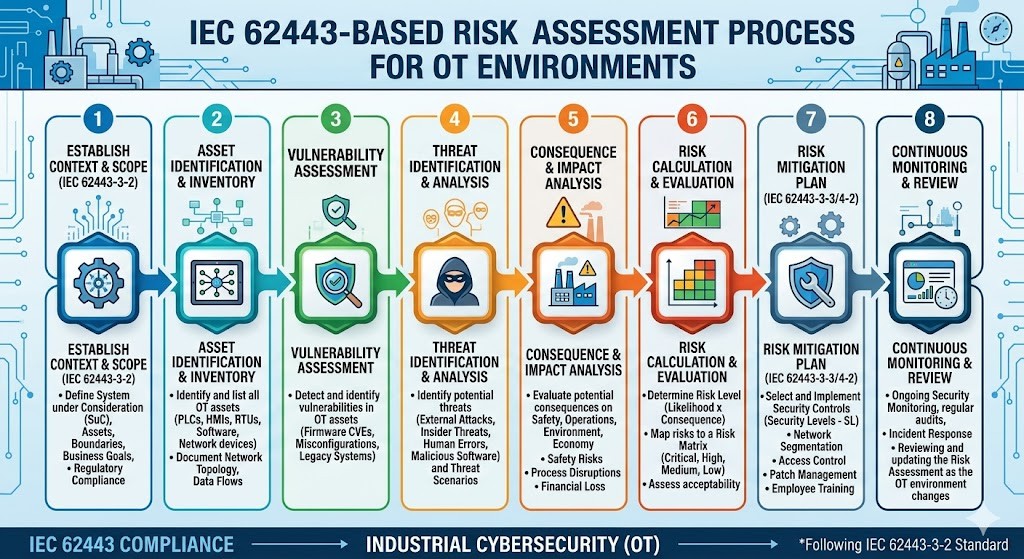
Una evaluación de brechas estándar alineada con la norma IEC 62443 para un sitio industrial mediano suele tardar de dos a cuatro semanas desde el inicio hasta el informe final. Ese cronograma está dominado no por el análisis de expertos, sino por la fricción del proceso: programar entrevistas, recopilar documentación, esperar a que respondan los propietarios de los activos, correlacionar manualmente la evidencia con los requisitos del marco de referencia y tener idas y venidas para aclarar el alcance. El análisis real que solo un experto puede realizar representa una fracción de ese tiempo.
La incómoda verdad: En la mayoría de las evaluaciones tradicionales, aproximadamente entre el 70% y el 80% del tiempo transcurrido se consume en la recopilación de documentos, la correlación de evidencias y el formato de informes, no en el juicio experto por el que realmente se está pagando.
La evidencia está dispersa de forma permanente
Los entornos industriales acumulan documentación de la misma forma que los ríos acumulan sedimentos. Los diagramas de red viven en el SharePoint de un equipo. Los registros de activos son mantenidos en hojas de cálculo por un ingeniero de planta al que puede que sea posible contactar este mes, o tal vez no. Los archivos de configuración están en la laptop de un consultor del proyecto de 2019. Las políticas están en el SGSI, que es administrado por un equipo diferente en un país diferente.
Cada evaluación comienza con la misma excavación arqueológica. Y cada equipo de evaluación construye un mapa ligeramente diferente del mismo terreno, porque nadie ha tenido la imagen completa reunida en un solo lugar hasta ahora.
Los resultados no son comparables de manera significativa
Este es quizás el fallo menos discutido pero más perjudicial de las evaluaciones tradicionales. Cuando diferentes evaluadores, o incluso el mismo evaluador en momentos diferentes, interpretan los requisitos del marco con diferentes niveles de rigurosidad, las puntuaciones resultantes no son comparables. Podría volver a evaluar un sitio seis meses después de haber remediado una brecha significativa y obtener una puntuación más baja que antes, no porque la seguridad haya retrocedido, sino porque el segundo evaluador aplicó una interpretación más estricta de los "procedimientos documentados".
Si su postura de seguridad puede mejorar 15 puntos simplemente cambiando de proveedor de evaluación en lugar de cambiar sus controles, su metodología de medición no sirve. Punto.
La brecha de experiencia es estructural, no incidental
Los evaluadores de seguridad de TO calificados son realmente escasos. La combinación de conocimientos de procesos industriales, experiencia en seguridad de ICS y fluidez en marcos de referencia que requiere una evaluación sólida toma años de desarrollo. Esto crea un cuello de botella con una escalabilidad deficiente: más sitios que evaluar, más ciclos de cumplimiento que ejecutar, pero sin un crecimiento proporcional en la capacidad humana calificada. El modelo actual no escala. Nunca lo hizo.
El cumplimiento en un punto específico en el tiempo crea una falsa sensación de seguridad
El problema más insidioso de las evaluaciones tradicionales es su temporalidad. Una evaluación completada es una instantánea de un momento que ya pasó. Los entornos de TO cambian continuamente: actualizaciones de firmware, conexiones de nuevos proveedores, desviaciones de configuración, cambios en la topología de la red después de un mantenimiento. Un hallazgo que se marcó como "resuelto" en marzo puede haber retrocedido silenciosamente en julio. Sin un mecanismo de evaluación continuo o fácilmente repetible, no hay forma de saberlo.
Presentamos OThello Assess: Cómo se ve realmente una evaluación de riesgos aumentada por IA
OThello Assess de Shieldworkz es una plataforma de evaluación de riesgos impulsada por IA creada específicamente para entornos de TO industriales. Su promesa principal es precisa y medible: comprimir un ciclo de evaluación completo alineado con la norma IEC 62443 a menos de 24 horas, con aproximadamente 85 minutos de tiempo humano total en el proceso, sin sacrificar el juicio experto que hace que una evaluación sea defendible.
Esto se logra a través de OneIQ, el motor de IA de la plataforma, que se encarga de la carga de trabajo analítica y de extracción de evidencia que domina los cronogramas de las evaluaciones tradicionales, permitiendo que su equipo aporte lo que solo ellos pueden proporcionar: conocimiento de su entorno, decisiones sobre la tolerancia al riesgo y el contexto operativo que ninguna IA puede replicar.
<24h: Ciclo completo de evaluación, desde la carga de documentos hasta el reporte listo para auditoría
~85 minutos: de tiempo humano total requerido en todo el proceso
Más de 7 normativas cubiertas: IEC 62443, NIS2, NERC CIP, OTCC, CENELEC TS 50701
Cómo funciona en la práctica: cinco pasos, tres de ellos suyos
1. Configuración del proyecto y carga de documentos
Nombre el sistema bajo evaluación, elija su estándar de cumplimiento y cargue su documentación. OneIQ comienza a realizar extracciones de inmediato: listas de activos, topología de red, controles existentes, datos de configuración; todo a partir de los documentos que ya posee.
~5 min de participación humana
2. Revise la evaluación de riesgos inicial
OneIQ construye un borrador completo de evaluación a partir de sus documentos: un registro de activos, amenazas y vulnerabilidades mapeadas, análisis de consecuencias, activos clave (Crown Jewels) identificados y un panorama inicial de brechas frente al estándar seleccionado. Usted revisa, confirma y corrige donde sea necesario.
~25 min de participación humana
3. Configure el marco de riesgo y confirme las zonas
Defina su matriz de riesgo. Confirme las zonas y conductos que OneIQ estructuró a partir de su documentación. Responda de 10 a 20 preguntas específicas de cada zona. Asigne los niveles de seguridad objetivo para cada zona. Aquí es donde su juicio operativo da forma a la metodología de evaluación.
~25 min de participación humana
4. Evalúe los controles y detecte las brechas importantes
OneIQ genera requisitos zona por zona. Usted evalúa sus controles existentes frente a ellos. La plataforma muestra el nivel de seguridad alcanzado frente al objetivo, con las brechas clasificadas por gravedad y asociadas a las remediaciones requeridas. Este es el trabajo sustancial, y toma 30 minutos, no tres semanas.
~30 min de participación humana · el paso de mayor valor
5. Reciba su informe listo para auditoría
Un resumen ejecutivo, el alcance del sistema, un mapa de calor de nivel de seguridad en todas las zonas, una lista de brechas por gravedad, controles recomendados y un plan de remediación; cada hallazgo citado con sus documentos de origen. Listo para su próxima auditoría antes de que su ciclo de evaluación anterior siquiera hubiera comenzado.
Generado automáticamente · <24h desde la carga
Vale la pena destacar el principio arquitectónico clave aquí: OThello no intenta reemplazar el juicio experto. Elimina el trabajo no especializado que siempre impedía que el juicio experto se aplicara de manera eficiente. Su equipo sigue tomando cada decisión de riesgo significativa. OneIQ simplemente elimina las semanas de trabajo preliminar que precedían a esas decisiones en el modelo antiguo.
OThello Assess frente al enfoque tradicional: Una comparación directa
El contraste entre la metodología de evaluación aumentada por IA y la tradicional es más evidente cuando se observan lado a lado.
Evaluación tradicional
De 2 a 4 semanas desde el inicio hasta el informe final
Búsqueda manual de evidencias en sistemas aislados
Variación en los resultados entre diferentes sitios y cronogramas
Intensiva en recursos y tiempo
La metodología varía según el evaluador y el proyecto
Los resultados no son comparables entre ciclos o sitios
Instantánea de un punto específico en el tiempo; sin detección de desviaciones
El tiempo de los expertos se consume en tareas administrativas
El informe llega semanas después de que las condiciones del sitio han cambiado
OThello Assess
Menos de 24 horas desde la carga de documentos hasta el informe
Cumplimiento de IEC 62443, NIST CSF, NIS2, OTCC y mandatos de cumplimiento regionales
La IA ingiere y mapea automáticamente toda la documentación
Análisis detallado de los hallazgos de la evaluación
Se aplica la misma metodología OneIQ en cada ocasión
Puntuaciones genuinamente comparables entre ciclos y sitios
Vuelva a evaluar después de la remediación; rastree desviaciones de forma continua
Escala en toda la presencia de TO sin un costo lineal
La participación experta se reserva para el juicio y las decisiones
Informe listo para auditoría con la fuente de cada hallazgo citada
La diferencia de rendimiento tan solo en el cronograma es notable. Pero la diferencia más importante a nivel estratégico es la comparabilidad. Cuando se aplica la misma metodología de manera consistente (misma interpretación del marco, misma lógica de extracción de evidencia, mismo modelo de puntuación), se obtiene algo que las evaluaciones tradicionales nunca han podido ofrecer: una señal genuinamente significativa de si su postura de seguridad está mejorando, empeorando o manteniéndose estable.
Cobertura multiestándar sin los costos indirectos de múltiples proyectos
Para las organizaciones que operan en múltiples jurisdicciones regulatorias (cada vez más común para empresas industriales con operaciones europeas, obligaciones de infraestructura crítica en EE. UU. y requisitos de cumplimiento en la región del Golfo), las evaluaciones tradicionales se multiplican en proporción a los estándares involucrados. Una evaluación por estándar, un cronograma por evaluación, un equipo de consultores por proyecto.
OThello Assess cubre cinco estándares en un único ciclo de evaluación:
IEC 62443, Directiva NIS2, NERC CIP, OTCC (Arabia Saudita), CENELEC TS 50701
Cobertura de cumplimiento multiestándar a partir de un único conjunto de evidencias, un solo proceso de carga y un solo ciclo de evaluación. Para las organizaciones que ejecutan programas de cumplimiento paralelos (especialmente aquellas que alinean la directiva NIS2 con un programa IEC 62443 existente), esto representa una ganancia sustancial de eficiencia operativa que se multiplica con cada ciclo de reevaluación.
El argumento a favor de la evaluación continua sobre el cumplimiento periódico
Una de las capacidades menos valoradas de OThello Assess es lo que sucede después de la primera evaluación. Las evaluaciones tradicionales generan un informe que va a parar a una hoja de cálculo de seguimiento de hallazgos y se revisa en el próximo ciclo anual. El espacio de tiempo entre la evaluación y la reevaluación es un punto ciego durante el cual las configuraciones se desvían, aparecen nuevos activos y se declaran compuestas las remediaciones sin una verificación independiente.
OThello cambia esta dinámica por completo. Debido a que un ciclo de evaluación toma menos de 24 horas y requiere solo 85 minutos de participación humana, la reevaluación después de la remediación se convierte en algo práctico en lugar de una mera aspiración. El flujo de trabajo se vuelve verdaderamente continuo:
Evaluación de línea base
Establezca su nivel de seguridad inicial en todas las zonas. Comprenda su situación actual, dónde están las brechas y qué debe cambiar primero.
Remediación
Aborde las brechas prioritarias. Actualice la documentación, implemente controles y cierre los hallazgos. Apóyese en el plan de remediación generado por IA de su informe de línea base.
Reevaluación
Ejecute OThello Assess nuevamente. Misma metodología, mismo marco de referencia. La diferencia entre su línea base y su puntuación actual es real, documentada y defendible, no el resultado de la interpretación de un evaluador diferente.
Seguimiento de desviaciones
OThello rastrea qué mejoró, qué empeoró y qué se mantuvo constante a través de los ciclos. Los entornos cambian: actualizaciones de firmware, conexiones de nuevos proveedores, cambios de configuración después del mantenimiento. La visibilidad continua significa que no habrá más puntos ciegos entre los proyectos anuales.
Esto transforma el cumplimiento de seguridad de TO de una obligación periódica a una capacidad operativa continua, que es, no por coincidencia, exactamente lo que los reguladores bajo la directiva NIS2 y los marcos de referencia como IEC 62443 esperan cada vez más de los operadores industriales.
Por qué las empresas deben hacer el cambio ahora
Los argumentos para adoptar la evaluación aumentada por IA no son puramente de eficiencia. Reflejan cambios estructurales en el entorno de amenazas y el panorama regulatorio que hacen que el modelo tradicional sea inadecuado para el panorama que enfrentamos en 2026 y más allá.
El ritmo de las amenazas ha cambiado
Los actores de amenazas que apuntan a TO se mueven más rápido que los ciclos de evaluación anuales. Los tiempos de permanencia de los adversarios en entornos industriales pueden superar los 12 meses. Una evaluación una vez al año no es vigilancia, es arqueología.
Los reguladores están elevando el estándar
NIS2, NERC CIP y los mandatos específicos del sector emergentes esperan cada vez más pruebas de mejora continua, no solo instantáneas periódicas de cumplimiento. La documentación que genera OThello (con cada descubrimiento citado con su fuente) es lo que los auditores quieren ver.
Los programas de múltiples sitios no escalan
Realizar evaluaciones tradicionales en 10, 20 o 50 sitios industriales es un desafío logístico que interrumpe la mayoría de los programas. La metodología consistente de OThello hace que la evaluación comparativa de seguridad de TO a nivel empresarial sea operativamente viable.
La capacidad experta es finita
No hay suficientes evaluadores de seguridad de TO calificados para satisfacer la demanda. Las plataformas aumentadas por IA como OThello no reemplazan a los expertos, sino que multiplican su capacidad al eliminar el trabajo que no requiere de su especialización.
También existe un argumento estratégico más amplio. Las organizaciones que cambian a un modelo de evaluación continuo y basado en datos obtienen algo intangible pero valioso: la capacidad de demostrar la efectividad del programa de seguridad a los líderes con base en evidencia en lugar de anécdotas. Cuando su CISO puede mostrar a una junta directiva que la postura de seguridad en todos los sitios industriales mejoró en una cantidad medible durante seis meses (con una metodología consistente, evidencia citada y un historial de remediación), la seguridad de TO se transforma de un centro de costos a una capacidad estratégica demostrable.
Una nota sobre lo que OThello Assess es y no es
Vale la pena ser precisos sobre la propuesta de valor. OThello Assess no sustituye al juicio humano en la seguridad de TO. La plataforma es explícita al respecto: tres de los cinco pasos de la evaluación pertenecen a su equipo. La filosofía de diseño es de complementación, no de automatización total. Su equipo aporta el contexto operativo, las decisiones de apetito de riesgo y el conocimiento del entorno que ninguna plataforma puede replicar. OneIQ aporta la escala analítica, la consistencia del marco y la extracción de evidencia que ningún equipo humano puede sostener en grandes programas de evaluación sin una inversión de recursos insostenible.
El resultado es una evaluación que combina la velocidad y consistencia de la IA con la legitimidad y la precisión contextual del aporte humano experto, generando un resultado que es tanto más eficiente como, posiblemente, más confiable que cualquiera de los dos enfoques por separado.
En resumen: Las evaluaciones de riesgos de TO tradicionales son lentas, costosas, inconsistentes y estáticas por diseño. El entorno de amenazas industriales y las expectativas regulatorias de 2026 exigen algo más rápido, más consistente y verdaderamente continuo. OThello Assess de Shieldworkz representa una respuesta creíble y bien diseñada a esa demanda, una que respeta la primacía del juicio experto al tiempo que elimina los costos indirectos del proceso que siempre han impedido que ese juicio se aplique a gran escala.
¿Listo para ejecutar su primera evaluación IEC 62443? OThello ofrece una primera evaluación sin costo para nuevos usuarios.
Recibe semanalmente
Recursos y Noticias
Vea cómo nuestras soluciones de seguridad de OT líderes en la industria abordan los desafíos de seguridad críticos
También te puede interesar

What the French supermarket cyberattack reveals about OT security
Prayukth K V

Inside the Albert Heijn cyber incident: Investigating the attack, the IT/OT exposure, and the risks to critical operations
Team Shieldworkz

50°C by cyberattack? Inside France’s supermarket refrigeration crisis
Prayukth K V

Automating IEC 62443 Compliance Assessments Without Losing Expert Control
Team Shieldworkz

Investigative cyber threat intelligence report: Daiichi Kosho supply-chain data exposure
Prayukth K V

How AI Is Changing IEC 62443 Assessments
Team Shieldworkz