
Equipo Shieldworkz
Asegurar la cadena de suministro industrial: evaluaciones de riesgo obligatorias bajo la Directiva NIS2
Para las organizaciones industriales, la cadena de suministro ya no es solo un tema de compras de back office. Es una parte activa y en expansión de su superficie de ataque.
Una sola cuenta de proveedor vulnerable, una actualización de software no revisada de un proveedor de confianza, o una conexión de servicio remoto mal gestionada pueden convertirse fácilmente en la puerta de entrada a la red de su planta, a sus sistemas instrumentados de seguridad o a su entorno central de producción. Precisamente por eso, la Directiva NIS2 pone en el centro la seguridad de la cadena de suministro y la gestión de riesgos de terceros.
Bajo la Directiva, se espera legalmente que las organizaciones de sectores críticos tomen "medidas apropiadas y proporcionales" para asegurar sus operaciones. Este requisito no termina en las paredes físicas de sus instalaciones. Se extiende a los proveedores, integradores, proveedores de servicios gestionados y socios tecnológicos que respaldan sus operaciones diarias. En la práctica, esto significa que necesita saber exactamente quién interactúa con su entorno industrial, a qué puede acceder, cómo se supervisan sus acciones y qué tan rápido puede contenerlos si sus sistemas se ven comprometidos.
Este blog traduce requisitos regulatorios complejos en un manual práctico enfocado en OT. Desglosaremos los riesgos que más importan, las evaluaciones específicas que debe realizar, la evidencia de auditoría que necesita recopilar y los controles prácticos que le ayudarán a reducir la exposición de terceros sin ralentizar las operaciones de planta.
Antes de seguir adelante, no olvide revisar nuestra entrada anterior del blog sobre “¿Qué podría significar una toma de control del IRGC para Handala?” aquí.
Descifrando NIS2 para la cadena de suministro industrial
¿Qué le está pidiendo realmente NIS2 que haga? En esencia, la directiva exige que la infraestructura crítica y las entidades esenciales construyan una forma repetible y documentada de identificar el riesgo de los proveedores, asignarle una puntuación, remediar brechas y demostrar que el entorno industrial sigue siendo resiliente, incluso cuando terceros fallan.
La Directiva NIS original abordaba estos conceptos, pero NIS2 cambia fundamentalmente las reglas del juego al introducir una estricta rendición de cuentas de la dirección. Ahora la alta dirección puede ser considerada personalmente responsable por negligencia grave en la gestión del riesgo de ciberseguridad. Esto eleva la seguridad de proveedores industriales de un problema puramente técnico de TI a una prioridad del nivel del consejo.
Para gerentes de planta, ingenieros de OT y CISO, el significado práctico es claro: debe poder demostrar que comprende su ecosistema de proveedores, que ha evaluado rigurosamente los riesgos que introduce a la tecnología operativa y que ha implementado controles acordes con su nivel de exposición.
Las cuatro preguntas que su evaluación debe responder
Para satisfacer el escrutinio regulatorio y proteger realmente su planta, su evaluación de la cadena de suministro NIS2 debe responder cuatro preguntas fundamentales:
¿Quiénes son nuestros proveedores críticos, proveedores de servicios, integradores y socios de mantenimiento?
¿Qué acceso específico, datos de planta o privilegios tecnológicos tienen?
¿Cuál es el impacto operativo y en seguridad si uno de estos socios se ve comprometido, deja de estar disponible o actúa de manera maliciosa?
¿Qué evidencia documentada tenemos de que estos riesgos se revisan, se califican y se reducen sistemáticamente con el tiempo?
Por qué la cadena de suministro industrial está bajo una presión sin precedentes
Los entornos industriales operan sobre una cadena de confianza muy larga y compleja. Los Fabricantes de Equipo Original (OEM) envían controladores lógicos programables (PLC) y firmware. Los integradores de sistemas configuran switches de red y establecen pasarelas de acceso remoto. Los proveedores de servicios gestionados supervisan alarmas desde centros de operación fuera del sitio. Los proveedores de software envían periódicamente parches a las interfaces hombre-máquina (HMI). Los contratistas de mantenimiento requieren credenciales temporales para dar servicio a celdas robóticas. Las plataformas en la nube extraen datos de historiadores para mantenimiento predictivo.
Cada eslabón de esa cadena puede introducir un riesgo crítico. Los actores de amenazas avanzadas lo saben. Rara vez intentan romper directamente su firewall corporativo, por muy fortificado que esté. En cambio, atacan a un proveedor más débil, roban sus credenciales, abusan de relaciones de confianza establecidas o comprometen un canal de actualización rutinario. Una vez dentro de la red del proveedor de confianza, se mueven lateralmente hacia su entorno de Seguridad OT a través de rutas legítimas y permitidas en listas blancas.
Riesgo de proveedores de TI vs. riesgo de proveedores de OT
El riesgo de la cadena de suministro en un entorno industrial es fundamentalmente distinto del riesgo ordinario de proveedores de TI. Una falla de seguridad de un proveedor en un sistema corporativo de TI podría resultar en una filtración de datos o una violación de privacidad. Una falla de seguridad de un proveedor en un sistema industrial puede detener una línea de ensamble, corromper datos críticos de lotes, interrumpir la instrumentación de seguridad o forzar un apagado manual de emergencia de procesos peligrosos.
Característica | Riesgo de proveedor de TI corporativa | Riesgo de proveedor de OT industrial |
Impacto principal | Pérdida de datos, filtraciones de privacidad, robo financiero. | Paro de producción, daños físicos, incidentes de seguridad. |
Acceso típico | Bases de datos en la nube, sistemas CRM, servidores de correo electrónico. | PLC, HMI, sistemas SCADA, estaciones de trabajo de ingeniería. |
Enfoque de control | Aplicación de parches estandarizada y automatizada, restablecimientos frecuentes de contraseñas. | Aplicación manual de parches ampliamente probada, controles compensatorios, límites físicos de seguridad. |
Vector de amenaza | Herramientas SaaS comprometidas, claves API robadas. | Actualizaciones de firmware comprometidas, acceso remoto por VPN abusado. |
Patrones de riesgo comunes en la seguridad de proveedores industriales
Cuando nuestros equipos auditan instalaciones industriales, detectamos de forma consistente los mismos patrones peligrosos de la cadena de suministro:
"Acceso remoto siempre activo": VPN de proveedor o conexiones de escritorio remoto que se dejan abiertas 24/7, rara vez auditadas y sin monitoreo.
Credenciales compartidas: Inicios de sesión genéricos (p. ej., "Vendor_Admin") usados por varios contratistas en diferentes equipos de servicio, lo que hace imposible la rendición de cuentas.
Actualizaciones no verificadas: Firmware, parches y archivos de configuración de PLC sin firma o mal controlados aplicados sin verificación secundaria.
Dispositivos no administrados: Laptops y tabletas de diagnóstico de los proveedores conectadas directamente a los switches de planta sin ser escaneadas en busca de malware.
Operaciones en la sombra: Mantenimiento subcontratado donde el gerente de planta ya no sabe exactamente quién tiene acceso a las máquinas, cuándo inician sesión o qué están modificando.
En el contexto de la Ciberseguridad Industrial, un proveedor no es solo un riesgo digital. La falla del proveedor rápidamente se convierte en un problema de disponibilidad, un peligro para la seguridad y una violación de cumplimiento, todo al mismo tiempo.
Un proceso práctico de evaluación de riesgos de la cadena de suministro NIS2
El objetivo de cumplir con la Directiva NIS2 no es generar montañas de papeleo. El objetivo es construir un proceso robusto de toma de decisiones que pueda repetir de manera eficiente para cada proveedor crítico. Aquí tiene un marco práctico de seis pasos diseñado específicamente para entornos OT.
Paso 1: Construya un inventario completo de proveedores
No puede proteger lo que no sabe que existe. Comience por listar cada proveedor, integrador, proveedor de mantenimiento, servicio en la nube y socio de soporte que toque su entorno OT. Vaya más allá de los proveedores de software obvios. Incluya contratistas de HVAC que tienen acceso remoto a los sistemas de administración de edificios, sistemas logísticos de terceros vinculados con el almacén y proveedores indirectos.
Paso 2: Clasifique cada relación por acceso e impacto
No todos los proveedores presentan el mismo riesgo. Agrupe a sus proveedores según lo que pueden alcanzar física o lógicamente. ¿Tienen acceso remoto? ¿Acceso de ingeniería? ¿Pueden modificar datos de producción? ¿Tocan sistemas instrumentados de seguridad (SIS)? ¿O no tienen acceso directo a ningún sistema? Una vez categorizados por acceso, mapee el impacto en el negocio. Pregunte al gerente de planta: si el acceso de este proveedor se ve comprometido y se utiliza para enviar comandos maliciosos, ¿cuánto nos cuesta por hora y está en riesgo la seguridad física de alguien?
Paso 3: Recopile evidencia, no solo promesas
No se base en el folleto de marketing de un proveedor. Pida pruebas contundentes. Solicite registros de acceso, documentación de su ciclo de vida de desarrollo seguro (SDLC), sus procedimientos específicos de aplicación de parches, políticas de manejo de vulnerabilidades, prueba de aplicación de Autenticación Multifactor (MFA), procesos de verificación de antecedentes de empleados y sus matrices de contacto para respuesta a incidentes.
Paso 4: Califique el riesgo usando un modelo simple y repetible
Los algoritmos de puntuación complejos rara vez son adoptados por equipos de ingeniería ocupados. Mantenga su modelo simple y práctico.
Riesgo bajo: acceso OT limitado + controles demostrados sólidos + recuperación operativa sencilla.
Riesgo medio: acceso OT parcial + supervisión moderada + impacto de producción moderado.
Riesgo alto: acceso de ingeniería privilegiado + visibilidad/evidencia deficiente + impacto operativo o en seguridad significativo.
Incorpore variables como qué tan fácil podría recuperarse si fallara su hardware específico, con qué frecuencia requieren acceso remoto y si dependen en gran medida de sus propios subcontratistas.
Paso 5: Corrija primero las brechas de mayor valor
No intente corregir todo al mismo tiempo. Comience con controles compensatorios que reduzcan de inmediato el "radio de impacto" de un proveedor comprometido. Elimine el acceso permanente, aplique MFA a todas las conexiones remotas, segmente sus servidores de salto de proveedores lejos de las zonas centrales de producción, verifique estrictamente todo el código y firmware antes del despliegue, y asegúrese de registrar cada acción privilegiada realizada por un tercero.
Paso 6: Reevalúe en un ciclo regular
Una evaluación es una instantánea en el tiempo. El panorama de amenazas cambia diariamente. Repita su evaluación de riesgos después de cualquier cambio arquitectónico importante, durante las renovaciones de contratos con proveedores, después de cualquier incidente de ciberseguridad (incluso los casi incidentes) y al menos una vez al año para todos los proveedores clasificados como "Riesgo Alto".
Qué incluir en su cuestionario de seguridad de proveedores industriales
Un cuestionario de proveedor bien diseñado es breve, muy específico y está directamente ligado a la exposición real de OT. Evite plantillas genéricas de cumplimiento de TI que pregunten sobre privacidad de datos corporativos; en su lugar, haga preguntas que ayuden a sus ingenieros a tomar decisiones de seguridad inmediatas.
La lista de verificación de seguridad de proveedores OT
Autenticación e identidad: ¿Cómo autentican a sus usuarios y cuentas de servicio cuando acceden a nuestro entorno industrial? ¿Exigen Autenticación Multifactor (MFA) para todo acceso remoto y actividad de ingeniería privilegiada?
Gestión de cambios: ¿Cómo se aprueban, firman digitalmente y prueban los cambios de firmware, software y configuración lógica antes de desplegarlos en nuestra planta?
Respuesta a incidentes: ¿En cuántas horas se comprometerán legalmente a notificarnos un incidente de seguridad dentro de su red que pueda afectar las operaciones de nuestra planta?
Riesgo de subcontratistas (N-ésima parte): ¿Cuáles de sus subcontratistas, freelancers o herramientas de terceros pueden acceder a los mismos sistemas o datos que le hemos confiado?
Aislamiento del entorno: Si proporciona analítica en la nube o servicios gestionados, ¿cómo separa lógicamente nuestros datos OT de los de sus demás clientes para evitar la contaminación cruzada?
Los mejores programas de gestión de proveedores van más allá del cuestionario. Dígales a sus proveedores que espera evidencia. Acepte diagramas de arquitectura, muestras de registros anonimizadas y políticas por escrito. Esto le da a su equipo de seguridad artefactos concretos para revisar, en lugar de depender de una simple casilla de "Sí/No".
Controles de seguridad OT de alto impacto para la gestión de riesgos de terceros
Una vez identificado el riesgo inherente, el siguiente paso en la gestión de riesgos de terceros es reducir su exposición. Los siguientes controles son muy eficaces en entornos industriales porque están diseñados para evitar que el mal día de un proveedor se convierta en el peor día de su planta.
1. Privilegio mínimo y acceso Just-In-Time (JIT)
Otorgue a los proveedores acceso solo a los sistemas específicos que tienen contratados para mantener, y únicamente durante las ventanas de mantenimiento aprobadas. Elimine el "acceso permanente". Si un integrador necesita solucionar problemas en una celda robótica, debe solicitar acceso, recibir una credencial con tiempo limitado (p. ej., activa durante 4 horas) y que ese acceso sea revocado automáticamente cuando cierre la ventana.
2. Identidad sólida y MFA
Aplique controles estrictos de identidad. Prohíba el uso de cuentas compartidas (como "Maintenance_Team_A"). Cada empleado individual del proveedor debe tener una identificación única y trazable. Implemente MFA para todas las conexiones externas a la red OT. Si por razones de seguridad se prohíben los teléfonos móviles en el piso de planta, utilice tokens de hardware físicos (como llaves FIDO2).
3. Segmentación estricta de red
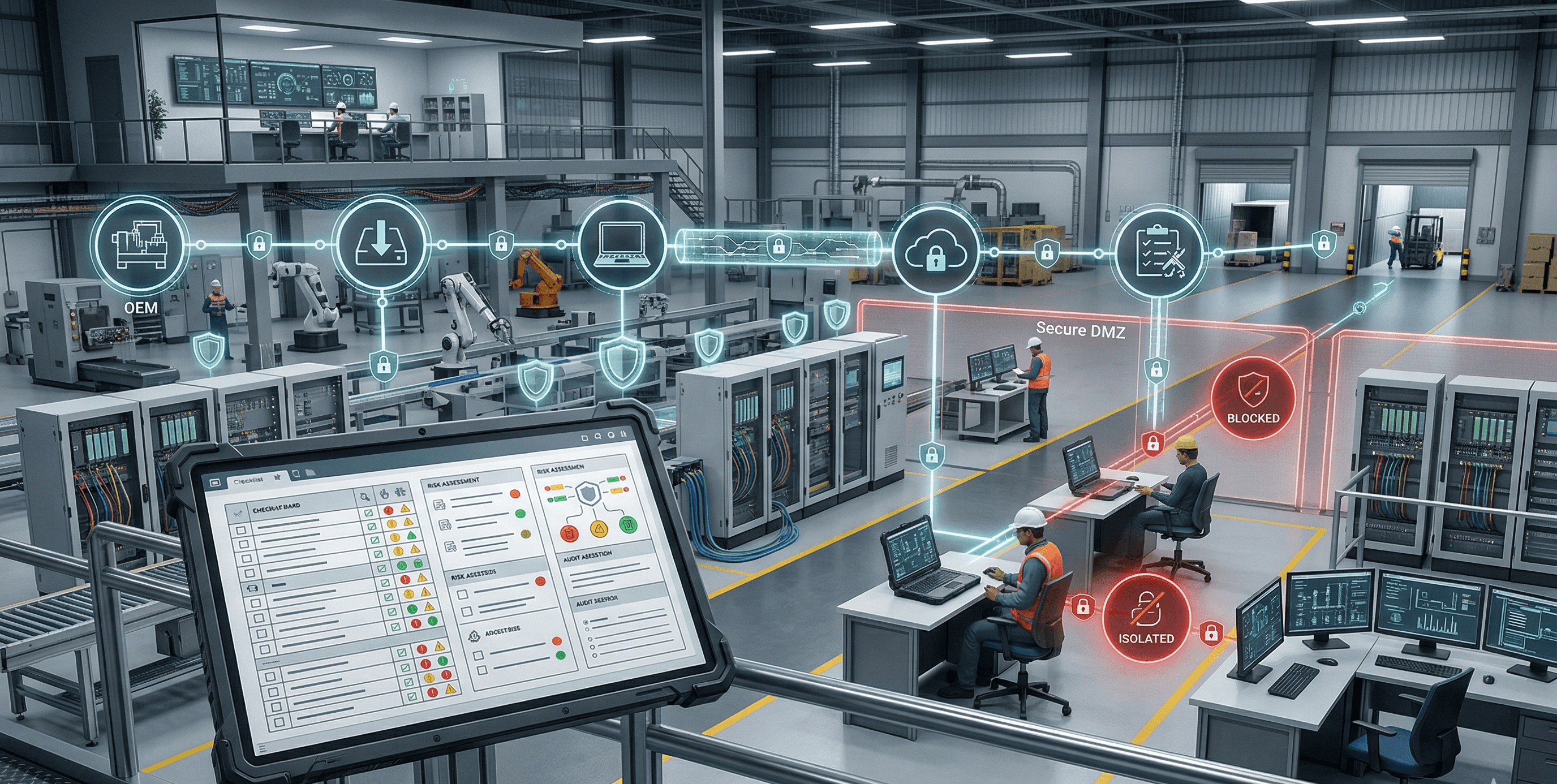
No permita que una VPN de proveedor llegue directamente a la red del piso de planta. Enrute todas las conexiones externas de proveedores a través de una DMZ segura. Exija que los proveedores inicien sesión en un servidor de salto dedicado o en un intermediario de Gestión de Acceso Privilegiado (PAM). Separe estas rutas de salto por completo de sus capas centrales de ingeniería, historiador y sistema de seguridad.
4. Monitoreo continuo de sesiones
Confíe, pero verifique. Registre las sesiones privilegiadas de proveedores. Si un proveedor está actualizando la lógica de PLC, debe contar con una grabación tipo video o un registro detallado de pulsaciones de esa sesión. Configure sus herramientas de monitoreo para generar una alerta si un proveedor intenta acceder a una dirección IP fuera de su zona de trabajo designada.
5. Manejo seguro de actualizaciones
Nunca aplique un parche de proveedor directamente a un sistema en producción sin verificación. Verifique las firmas digitales de todo firmware, parches y archivos de configuración. Pruebe las actualizaciones primero en un entorno de pruebas aislado u offline o en un solo activo no crítico. Asegúrese siempre de contar con un respaldo probado, fuera de línea, y con un plan de reversión claro antes de autorizar el cambio.
6. Visibilidad de activos y dependencias
Mantenga un mapa claro de qué procesos industriales dependen de qué proveedores. Si un proveedor importante de software anuncia una vulnerabilidad crítica, debe poder consultar su inventario de inmediato para saber exactamente qué HMI o servidores de su planta están ejecutando esa versión específica del software, lo que le permite priorizar el aislamiento y la aplicación de parches.
Construyendo su plan de ejecución de 30-60-90 días
La forma más rápida de perder impulso en una iniciativa de cumplimiento NIS2 es terminar una evaluación y luego dejar que la hoja de cálculo resultante acumule polvo. Para crear una resiliencia real, convierta sus hallazgos en un plan de ejecución priorizado y con plazos definidos.
Plazo | Objetivos clave | Tareas accionables |
Días 1 - 30 | Visibilidad y responsabilidad | Haga inventario de todos los proveedores críticos. Asigne un responsable interno de negocio a cada uno. Identifique exactamente qué proveedores poseen credenciales privilegiadas o acceso remoto a la red OT. |
Días 31 - 60 | Logros rápidos y triaje | Cierre las brechas más fáciles y de mayor riesgo. Deshabilite cuentas de proveedores obsoletas e inactivas. Aplique MFA en todas las puertas de enlace externas. Restrinja las VPN "siempre activas" a acceso solo bajo solicitud. |
Días 61 - 90 | Formalización e informes | Finalice su modelo de calificación de proveedores. Obtenga la aprobación ejecutiva para los plazos de remediación. Genere el primer informe para el consejo que demuestre la tendencia actual del riesgo y las vulnerabilidades mitigadas. |
Preguntas cruciales que hacer antes de aprobar a un nuevo proveedor
Antes de firmar un contrato o aprovisionar acceso a la red para un nuevo proveedor, deténgase y pregunte:
¿Necesitan acceso directo o indirecto a sistemas de producción activos o críticos para la seguridad?
¿Pueden sus ingenieros explicar claramente cómo aseguran sus propias herramientas de acceso remoto, canales de actualización de software y subcontratistas?
¿Pueden proporcionar prueba documentada de sus plazos de notificación de incidentes y de su planificación de recuperación ante desastres?
Y, de manera crucial: ¿una intrusión cibernética en este proveedor específico nos obligaría a aislar físicamente nuestra red, detener un proceso o pasar a operaciones manuales de emergencia?
Demostrando cumplimiento: evidencia para auditorías y para el consejo
Cumplir con NIS2 no se trata solo de ejecutar el trabajo técnico; también se trata de demostrar que el trabajo se gestiona de forma consistente. Los reguladores y auditores buscan evidencia de un proceso vivo y en funcionamiento, no un archivador estático creado la semana anterior a la auditoría.
Lista de verificación de evidencia de auditoría de NIS2
Asegúrese de que sus equipos estén archivando de forma segura los siguientes artefactos:
Un inventario de proveedores actualizado y mantenido de forma dinámica que detalle el responsable interno de negocio, el nivel de acceso del proveedor y su puntuación de criticidad.
Copias de las evaluaciones de riesgo completadas y de las reevaluaciones programadas para todos los proveedores críticos y de alto riesgo.
Registros y evidencias con marca de tiempo de aprobaciones de acceso de proveedores, revisiones periódicas de acceso y revocaciones de credenciales.
Planes de remediación contrafirmados que describan brechas de seguridad específicas, responsables asignados, fechas objetivo y estado final de cierre.
Rutas de notificación de incidentes documentadas y matrices de contactos de emergencia para cada proveedor crítico.
Resúmenes ejecutivos y minutas de reuniones que demuestren que la dirección está revisando activamente las tendencias de riesgo.
Informando al consejo
Al presentar ante la alta dirección o el consejo de administración, evite el tecnicismo profundo sobre protocolos PLC o reglas de firewall. Una actualización para el consejo altamente eficaz debe cubrir de forma concisa tres puntos:
Qué proveedores específicos presentan el mayor riesgo para nuestros ingresos y nuestra seguridad, y por qué.
Qué controles específicos se implementaron o mejoraron este trimestre para mitigar ese riesgo.
Qué vulnerabilidades críticas siguen abiertas, qué ejecutivo es el responsable de la remediación y la fecha exacta en que se resolverá.
Trampas comunes en la seguridad de proveedores industriales
A medida que madure su programa, tenga cuidado de evitar estos errores comunes de la industria:
Tratar a todos los proveedores por igual. No pierda tiempo enviando un cuestionario de ciberseguridad de 100 preguntas al proveedor que suministra el café de la sala de descanso. Clasifique a los proveedores estrictamente por acceso e impacto operativo, y enfoque sus recursos en el 20% superior.
Aceptar cuestionarios como prueba. Considerar un cuestionario completado como un control de seguridad sin verificar la evidencia subyacente es una receta para una falsa sensación de seguridad.
Olvidar el interruptor de apagado. Dejar abiertas las rutas de acceso remoto entre ventanas programadas de servicio es una de las principales causas de brechas OT. Cierre la puerta cuando el proveedor se vaya.
Olvidar la N-ésima parte. Permitir que sus integradores principales traigan subcontratistas que heredan acceso OT sin pasar por su proceso de revisión independiente crea enormes puntos ciegos.
Trabajar en silos. Separar el trabajo de cumplimiento de las operaciones diarias de la planta garantiza el fracaso. Compras, seguridad de TI e ingeniería de planta deben actuar como un equipo unificado.
Cómo puede ayudar Shieldworkz
Pasar de un proceso disperso y ad hoc de revisión de proveedores a un programa estructurado y conforme de seguridad de la cadena de suministro OT es un trabajo considerable. Shieldworkz se especializa en ayudar a las organizaciones industriales a navegar exactamente esta transición.
No solo le entregamos una lista genérica de verificación de cumplimiento. Trabajamos junto con sus equipos de ingeniería y seguridad para evaluar exactamente dónde el acceso de los proveedores entra física y lógicamente a su entorno. Identificamos las rutas de confianza de mayor riesgo y traducimos los complejos requisitos NIS2 en una hoja de ruta práctica de remediación por fases que respeta el tiempo de actividad de su producción.
Nuestras ofertas principales incluyen:
Evaluaciones de riesgo de cadena de suministro NIS2: Evaluaciones profundas de su ecosistema de proveedores adaptadas a entornos OT.
Revisiones de acceso de terceros OT: Revisiones de arquitectura para identificar y bloquear rutas de acceso remoto descontroladas.
Calificación de seguridad de proveedores industriales: Cuestionarios diseñados a la medida y servicios de verificación de evidencia para calificar con precisión a sus integradores y OEM.
Hojas de ruta de remediación: Planes de ingeniería paso a paso para implementar privilegio mínimo, segmentación y monitoreo para proveedores de alto riesgo.
Informes listos para el consejo: Métricas y paneles claros y accionables que satisfacen los requisitos de supervisión ejecutiva y alivian la carga de las auditorías regulatorias.
Resultado: Usted obtiene una visión transparente de su exposición a proveedores, establece un control hermético sobre el acceso de terceros y genera exactamente la evidencia que necesita para aprobar revisiones de cumplimiento, satisfacer a los auditores y actualizar con confianza a su equipo directivo.
La Directiva NIS2 impulsa fundamentalmente a las organizaciones industriales a tratar su cadena de suministro como un componente crítico de su postura general de ciberseguridad, en lugar de descartarla como un tema aparte de compras. Esta es la dirección correcta para la industria, ya que la historia demuestra repetidamente que los incidentes OT más dañinos a menudo comienzan con acceso de confianza abusado.
El enfoque ganador para asegurar la cadena de suministro industrial es metódico pero simple: conozca a sus proveedores, clasifique su nivel de acceso, verifique rigurosamente sus controles internos, elimine sin piedad la confianza innecesaria y el acceso permanente, y revise todo el ecosistema en un ciclo regular e implacable. Cuando ejecuta bien estos pasos, hace más que solo marcar una casilla de cumplimiento: reduce drásticamente su riesgo operativo y hace que su planta sea significativamente más difícil de comprometer.
Si su equipo actualmente está construyendo, auditando o actualizando su programa NIS2, Shieldworkz puede ayudarle a filtrar el ruido. Le ayudamos a evaluar con precisión el riesgo de los proveedores, a priorizar los controles técnicos que realmente importan en el piso de planta y a convertir el texto regulatorio en acción práctica y protectora.
¿Listo para asegurar su cadena de suministro y simplificar su proceso de cumplimiento? Solicite hoy una demostración con nuestros expertos en seguridad OT para ver exactamente cómo Shieldworkz ayuda a los equipos industriales a construir operaciones resilientes y conformes con NIS2. Aquí
Recursos adicionales
Un informe descargable sobre el incidente cibernético de Stryker aquí
Guías de remediación aquí
Lista de verificación para evaluación y selección de proveedores de soluciones de análisis de medios extraíbles aquí
Lista de verificación de evaluación de riesgos OT/ICS basada en IEC 62443 para el sector de fabricación de alimentos y bebidas aquí
Recibe semanalmente
Recursos y Noticias
Vea cómo nuestras soluciones de seguridad de OT líderes en la industria abordan los desafíos de seguridad críticos
También te puede interesar

What the French supermarket cyberattack reveals about OT security

Prayukth K V

Inside the Albert Heijn cyber incident: Investigating the attack, the IT/OT exposure, and the risks to critical operations
Team Shieldworkz

50°C by cyberattack? Inside France’s supermarket refrigeration crisis
Prayukth K V

Automating IEC 62443 Compliance Assessments Without Losing Expert Control
Team Shieldworkz

Investigative cyber threat intelligence report: Daiichi Kosho supply-chain data exposure
Prayukth K V

How AI Is Changing IEC 62443 Assessments
Team Shieldworkz