
Equipo Shieldworkz
Las operaciones industriales se basan en la confianza: confianza en las personas, en los procesos y, cada vez más, en las redes. Pero en el panorama actual de ciberamenazas, esa confianza puede convertirse en un arma. Los atacantes ya no solo se dirigen a los sistemas de TI; están explorando activamente los entornos de tecnología operativa (OT),
los sistemas que controlan las redes eléctricas, los gasoductos, las plantas de tratamiento de agua, las líneas de fabricación y la infraestructura crítica en todo el mundo.
Lo que está en juego no podría ser más importante. Un ciberataque exitoso en una red de OT no solo significa el robo de datos, puede significar daños físicos, paros de producción, incidentes de seguridad e incluso la pérdida de vidas humanas. Los modelos tradicionales de seguridad basados en el perímetro, construidos bajo la suposición de que "todo lo que está dentro de la red es seguro", simplemente no pueden resistir frente a los adversarios modernos y sofisticados.
Antes de continuar, no olvide consultar nuestra última publicación de blog sobre Acceso Remoto Seguro en OT: qué es y por qué es importante para la seguridad industrial aquí.
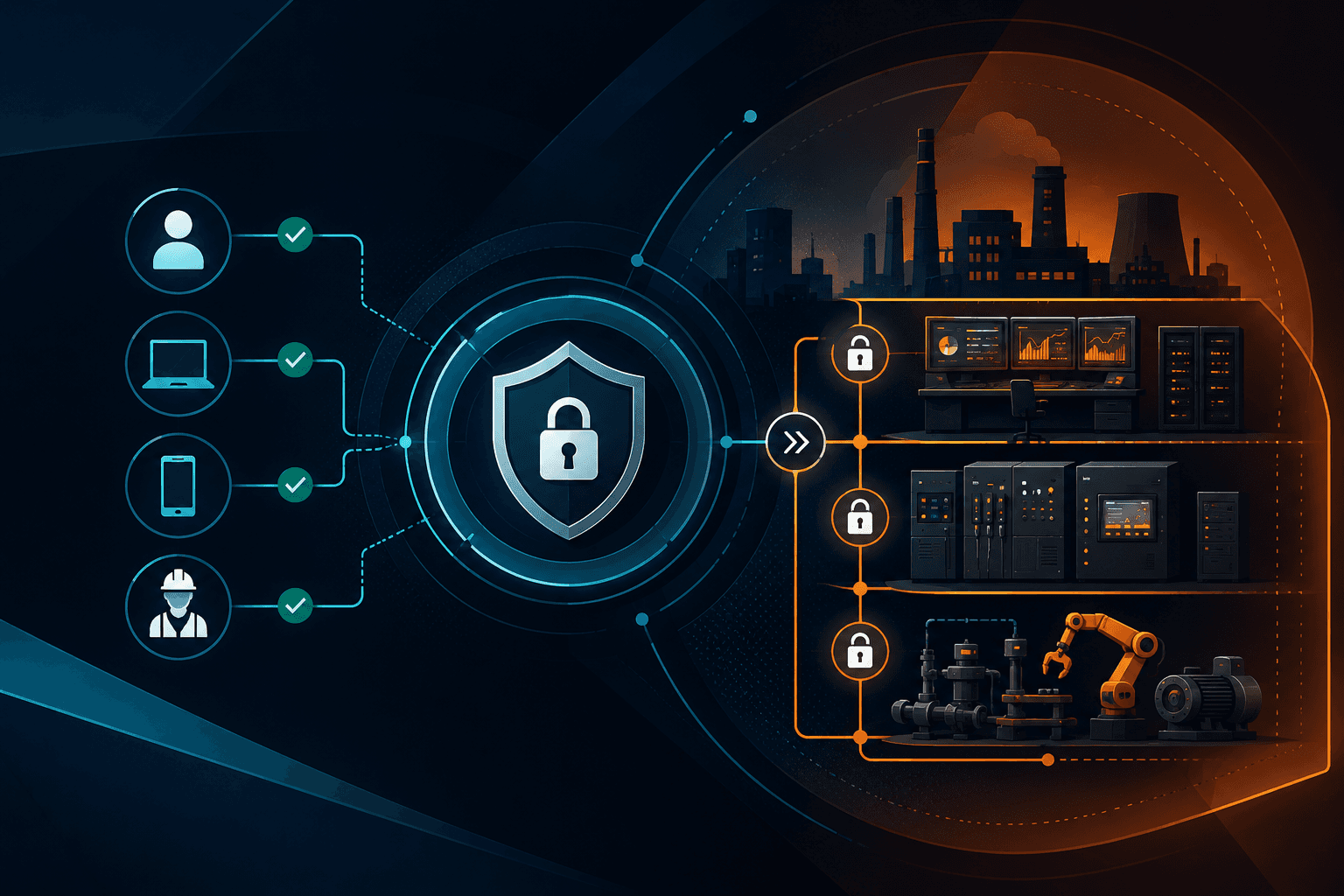
Esta es precisamente la razón por la que el Acceso a la Red de Confianza Cero (ZTNA) se está convirtiendo rápidamente en el modelo de seguridad de referencia para los entornos de OT e ICS. En lugar de asumir la confianza, Confianza Cero exige una verificación continua de cada usuario, dispositivo y conexión, cada vez que se realice.
¿Qué es la Confianza Cero? Comprensión de los aspectos fundamentales
Confianza Cero (Zero Trust) no es un producto que se instala, es una filosofía y arquitectura de seguridad construida alrededor de un único principio fundamental:
“Nunca confiar, siempre verificar”.
In un modelo de seguridad de red tradicional, una vez que un usuario o dispositivo está dentro del perímetro, ya sea a través de una VPN, una conexión física o una zona de confianza, generalmente se le otorga un acceso amplio. Esa confianza implícita es exactamente lo que explotan los atacantes.
Confianza Cero elimina por completo esta confianza implícita. En su lugar, aplica:
• Verificación de identidad continua para cada usuario y dispositivo
• Acceso con privilegios mínimos, otorgando solo los permisos requeridos para una tarea específica
• Microsegmentación de redes para mitigar el movimiento lateral
• Monitoreo e inspección en tiempo real de todo el tráfico, interno y externo
• Aplicación de políticas basadas en el contexto según el rol del usuario, el estado del dispositivo y la ubicación
Estos fundamentos de Confianza Cero no son nuevos para la TI empresarial. Pero aplicarlos a los entornos de OT (donde predominan los sistemas heredados, los requisitos de control en tiempo real y las presiones por mantener el tiempo de actividad) requiere un enfoque muy diferente.
Por qué los entornos de OT exigen un enfoque de seguridad diferente
Los entornos de OT, incluidos los Sistemas de Control Industrial (ICS), sistemas SCADA, PLC, DCS y dispositivos HMI, se diseñaron originalmente para la confiabilidad y el rendimiento, no para la ciberseguridad. Muchos de estos sistemas tienen décadas de antigüedad, funcionan con protocolos propietarios, con una capacidad limitada de actualización y cero tolerancia al tiempo de inactividad.
Lo que hace que la seguridad de OT sea un desafío único:
Desafío | Entorno de OT / ICS | Entorno de TI |
Antigüedad del sistema | De 10 a más de 30 años de antigüedad, hardware heredado | Actualizado regularmente, SO moderno |
Actualizaciones | Difíciles o imposibles; riesgo de interrupción del servicio | Ciclos de actualización de rutina |
Protocolos | Propietarios (Modbus, DNP3, PROFINET) | Estandarizados (TCP/IP, HTTP) |
Tolerancia al tiempo de inactividad | Cero, el tiempo de actividad es crítico | Posibilidad de ventanas de mantenimiento programadas |
Enfoque de seguridad | Disponibilidad y seguridad física primero | Confidencialidad e integridad primero |
Acceso remoto | A menudo sin monitorear o mediante VPN en red plana | MFA, PAM, controles de endpoints |
Estas diferencias inherentes significan que no se puede simplemente implementar una solución de ZTNA enfocada en TI y dar el trabajo por terminado. Confianza Cero adaptada a OT debe tener en cuenta las limitaciones operativas, sin interrumpir los procesos físicos que mantienen las luces encendidas, el agua fluyendo y las líneas de producción en marcha.
Aplicación del Acceso a la Red de Confianza Cero en entornos de OT
Implementar ZTNA en un entorno de OT es un proceso estratégico y por fases. No es un ejercicio de reemplazo total, es un fortalecimiento progresivo de la postura de seguridad en torno a los activos y flujos de trabajo más importantes.
1. Descubrimiento de activos y visibilidad de la red de OT
No se puede proteger lo que no se puede ver. El primer paso en cualquier implementación de Confianza Cero para OT es obtener visibilidad completa de cada dispositivo, protocolo y flujo de comunicación en su red industrial, desde PLC y RTU hasta estaciones de trabajo de ingeniería e historiadores.
Las herramientas de monitoreo pasivo de red diseñadas para entornos de OT pueden descubrir activos sin enviar consultas activas que podrían interrumpir el funcionamiento de dispositivos sensibles. Este inventario exhaustivo de activos constituye la base de cada política posterior de Confianza Cero.
2. Gestión de identidades y accesos para usuarios de OT
En la mayoría de los entornos de OT, el control de acceso es alarmantemente informal. Las credenciales compartidas, el acceso remoto permanente y las cuentas de proveedores que nunca caducan son habituales. Confianza Cero exige un gobierno de identidad estricto:
• Autenticación multifactor (MFA) para todo acceso remoto y privilegiado
• Control de acceso basado en roles (RBAC) vinculado a funciones laborales específicas
• Aprovisionamiento de acceso justo a tiempo (JIT) para terceros proveedores y contratistas
• Grabación de sesiones y registros de auditoría para todas las sesiones de acceso privilegiado
3. Microsegmentación de redes de OT
Uno de los controles de Confianza Cero con mayor impacto para los entornos de OT es la microsegmentación de la red. En lugar de una red plana donde un dispositivo comprometido puede alcanzar todo lo demás, la microsegmentación crea zonas aisladas basadas en la función, la criticidad y los patrones de comunicación.
Por ejemplo, un servidor historiador nunca debería necesitar comunicarse directamente con un PLC. Una computadora portátil de un proveedor nunca debería poder acceder a las estaciones de trabajo de ingeniería sin una autorización explícita. Estos límites lógicos, impuestos a través de firewalls, VLAN y perímetros definidos por software, reducen drásticamente el radio de impacto de cualquier intrusión exitosa.
4. Acceso remoto seguro para OT e ICS
El acceso remoto ha sido uno de los puntos de entrada más grandes para los ciberataques de OT. Las VPN tradicionales otorgan un acceso de red amplio; ZTNA reemplaza esto con conexiones basadas en sesiones, verificadas por identidad y a nivel de aplicación que otorgan acceso únicamente al activo o sistema específico necesario, y solo durante el tiempo requerido.
Esto es crítico para administrar el acceso de terceros proveedores a los sistemas de OT, un escenario responsable de muchas infracciones de OT de alto perfil, donde la supervisión tradicional es limitada y el acceso permanente persiste mucho tiempo después de que el trabajo ha concluido.
Los riesgos del mundo real al no implementar Confianza Cero en OT
La amenaza para los entornos de OT no es hipotética. Actores estatales, grupos de ransomware y organizaciones de hacktivistas han demostrado la capacidad y la voluntad de atacar sistemas industriales. Las consecuencias de una brecha en OT son fundamentalmente diferentes de las de una brecha en TI:
Categoría de riesgo | Ejemplo de vector de amenaza | Impacto potencial para el negocio |
Acceso remoto no autorizado | Atacante explota VPN abierta o credenciales compartidas | Compromiso total de la red de OT, suspensión de la producción |
Movimiento lateral | El malware se propaga de la TI a la OT a través de la red plana | El ransomware llega a los PLC, apagando las operaciones |
Riesgo de proveedores / terceros | Contratista conecta portátil comprometido a la red de OT | Inyección de malware en sistemas de control críticos |
Abuso de credenciales privilegiadas | Credenciales robadas de ingeniero utilizadas fuera de horario | Cambios de control no autorizados, anulación de sistemas de seguridad |
Conexiones no monitoreadas | Dispositivo no autorizado se conecta a red de OT no segmentada | Exfiltración de datos, acceso persistente de un actor de amenaza |
Cada uno de estos escenarios de ataque se vuelve dramáticamente más difícil de ejecutar en un entorno de OT con Confianza Cero correctamente implementado. El atacante ya no tiene libre movimiento una vez que rompe el perímetro, porque no existe un perímetro en el cual apoyarse.
Ruta de implementación de Confianza Cero para entornos de OT
La adopción exitosa de Confianza Cero en OT requiere una hoja de ruta estructurada y por etapas que respete las limitaciones operativas mientras fortalece progresivamente su postura de seguridad. Aquí presentamos un marco de trabajo práctico:
Fase | Área de enfoque | Acciones clave |
Fase 1 | Descubrir y establecer línea base | Descubrimiento pasivo de activos de OT, mapeo de protocolos, documentación de topología de red, priorización de riesgos |
Fase 2 | Segmentar y aislar | Segmentación basada en zonas, alineación con el Modelo Purdue, reglas de firewall, DMZ entre TI/OT |
Fase 3 | Autenticar y controlar | Aplicación de MFA, implementación de RBAC, gestión de accesos privilegiados, controles de acceso de proveedores |
Fase 4 | Monitorear y detectar | Monitoreo continuo de tráfico de OT, detección de anomalías, integración con SIEM/SOC, manuales de respuesta a incidentes |
Fase 5 | Responder y mejorar | Simulacros de respuesta a incidentes, refinamiento de políticas, integración de inteligencia de amenazas, evaluaciones periódicas de seguridad |
Prácticas recomendadas y prácticas para Confianza Cero en entornos industriales
Para los líderes de seguridad de OT e ingenieros de ICS que navegan por esta transición, estas son las prácticas clave que separan los despliegues exitosos de Confianza Cero de los que se quedan estancados:
• Comience con la visibilidad, no con la aplicación de políticas. Despliegue el monitoreo pasivo primero para entender su red de OT antes de aplicar cualquier política de acceso.
• Priorice las rutas de acceso de alto riesgo. Centre los primeros esfuerzos en el acceso remoto, las conexiones de proveedores y el tráfico en el límite entre TI/OT, donde el riesgo es mayor.
• Evite interrumpir operaciones en vivo. Utilice el monitoreo pasivo y pruebe las políticas en modo de solo lectura antes de aplicar controles de acceso en entornos de producción.
• Documente cada línea base de comunicación. Establezca el comportamiento normal de la red de OT para que las desviaciones, incluso las menores, activen alertas.
• Integre la visibilidad de OT con su SOC. Asegúrese de que su equipo de operaciones de seguridad cuente con herramientas adaptadas a OT para detectar y responder a las amenazas en entornos industriales.
• Planifique para dispositivos heredados. No todos los activos de OT pueden soportar agentes o autenticación moderna. Utilice la aplicación de políticas a nivel de red, como sensores en línea y gateways unidireccionales, para extender los controles de Confianza Cero a los sistemas heredados.
Cómo apoya Shieldworkz a las organizaciones en el camino hacia la seguridad OT con Confianza Cero
En Shieldworkz, comprendemos que las decisiones de ciberseguridad en los entornos de OT no son solo decisiones técnicas, sino también operativas, financieras y estratégicas. Cada control que implemente debe tener en cuenta el tiempo de actividad, la seguridad física, el cumplimiento y las realidades del personal de trabajo.
Nuestro equipo aporta una sólida experiencia práctica en seguridad de OT, protección de ICS y defensa de infraestructuras críticas. Trabajamos junto a sus equipos de ingeniería, operaciones y seguridad para diseñar y desplegar arquitecturas de Confianza Cero que fortalezcan su postura sin interrumpir lo que mantiene sus operaciones en marcha.
Lo que entrega Shieldworkz:
• Descubrimiento de activos de OT y visibilidad de red: Descubrimiento pasivo y no intrusivo de cada dispositivo, protocolo y flujo de datos en su red industrial.
• Diseño de arquitectura de Confianza Cero para OT/ICS: Estrategias de segmentación personalizadas, marcos de control de acceso y rutas de fortalecimiento de red adaptadas a su entorno operativo.
• Implementación de acceso remoto seguro: Reemplazo de VPN de red plana con accesos remotos basados en sesiones, de privilegios mínimos y verificados por identidad para sus equipos y proveedores.
• Monitoreo continuo de amenazas y detección de anomalías: Monitoreo adaptado a OT integrado con su Centro de Operaciones de Seguridad para detectar y responder a amenazas antes de que se conviertan en incidentes.
• Alineación con el cumplimiento normativo: Ayudar a las organizaciones a alinear las implementaciones de Confianza Cero con NERC CIP, NIST SP 800-82, IEC 62443 y otros marcos de la industria.
• Planificación de respuesta a incidentes específicos de OT: Construcción y prueba de manuales de respuesta a incidentes diseñados para las realidades operativas de los entornos industriales.
No creemos en un modelo de seguridad único para todos. Cada entorno industrial es único, y cada camino hacia la Confianza Cero es diferente. Shieldworkz le acompaña dondequiera que se encuentre, ya sea que esté comenzando a evaluar su riesgo de OT o que ya esté inmerso en una transformación de seguridad.
Conclusión: la Confianza Cero ya no es opcional para OT
La era de "confiar pero verificar" ha terminado en la seguridad de OT. La sofisticación y frecuencia de los ataques dirigidos a sistemas industriales han dejado claro que las organizaciones que operan bajo una confianza implícita lo hacen bajo un tiempo prestado.
El Acceso a la Red de Confianza Cero no es una solución mágica, pero es el marco de trabajo más pragmático y probado disponible para reducir el acceso no autorizado, limitar el movimiento lateral y dar a los equipos de seguridad de OT la visibilidad que necesitan para detectar y responder a las amenazas en tiempo real.
Para CISO, gerentes de plantas, líderes de seguridad de OT y operadores industriales: la pregunta ya no es si adoptar Confianza Cero, sino qué tan rápido y de manera qué tan inteligente se puede implementar, sin desconectar sus operaciones en el proceso.
Shieldworkz está aquí para ayudarle a lograrlo de manera correcta.
Reserve una consulta gratuita con nuestros expertos en seguridad de OT
¿Su entorno de OT o ICS está verdaderamente protegido contra las amenazas avanzadas de hoy?
Ya sea que esté evaluando su postura de seguridad actual, planeando un despliegue de Confianza Cero o respondiendo a una inquietud específica, nuestros especialistas en ciberseguridad industrial están listos para ayudarle.
Comuníquese con Shieldworkz hoy mismo y comience a asegurar lo que más importa.
Recursos adicionales
IEC 62443 - Guía práctica para la seguridad de OT/ICS e IIoT aquí
Guías de remediación aquí
Recibe semanalmente
Recursos y Noticias
Vea cómo nuestras soluciones de seguridad de OT líderes en la industria abordan los desafíos de seguridad críticos
También te puede interesar

Inside the Albert Heijn cyber incident: Investigating the attack, the IT/OT exposure, and the risks to critical operations
Team Shieldworkz

50°C by cyberattack? Inside France’s supermarket refrigeration crisis
Prayukth K V

Automating IEC 62443 Compliance Assessments Without Losing Expert Control
Team Shieldworkz

Investigative cyber threat intelligence report: Daiichi Kosho supply-chain data exposure
Prayukth K V

How AI Is Changing IEC 62443 Assessments
Team Shieldworkz

Deep investigative threat intelligence report: Alleged SafePay cyberattack on T-Systems
Team Shieldworkz