Equipo Shieldworkz
Una llamada de atención para el sector de las energías renovables
El sector de las energías renovables ha cruzado un umbral crítico. Durante años, los ingenieros de TO y los CISO del sector eólico y solar trataron la ciberseguridad como una preocupación secundaria, un problema para las empresas de servicios públicos y las centrales nucleares, no para los inversores en una azotea o las turbinas en un campo. Ese pensamiento ahora está peligrosamente obsoleto.
En lo que los investigadores de seguridad han clasificado como el primer ciberataque coordinado y a gran escala contra los recursos energéticos descentralizados (DER, por sus siglas en inglés), los actores de amenazas atacaron más de 30 parques eólicos y solares conectados a la red nacional de Polonia. El resultado no fue un apagón al estilo de Hollywood. Fue algo posiblemente peor: los operadores perdieron la visibilidad de su propia infraestructura mientras que malware oculto dañaba silenciosamente el hardware en docenas de sitios de forma simultánea.
Si usted administra un parque eólico, opera un activo de generación solar o ocupa el puesto de CISO en una empresa de energía, este ataque es su modelo de lo que viene a continuación. En esta publicación, detallamos exactamente qué sucedió, qué significa para la ciberseguridad de la red distribuida y, lo que es más importante, qué puede hacer ahora mismo para proteger su infraestructura.
Qué sucedió realmente: anatomía del ataque
El objetivo: ¿por qué la energía eólica y solar?
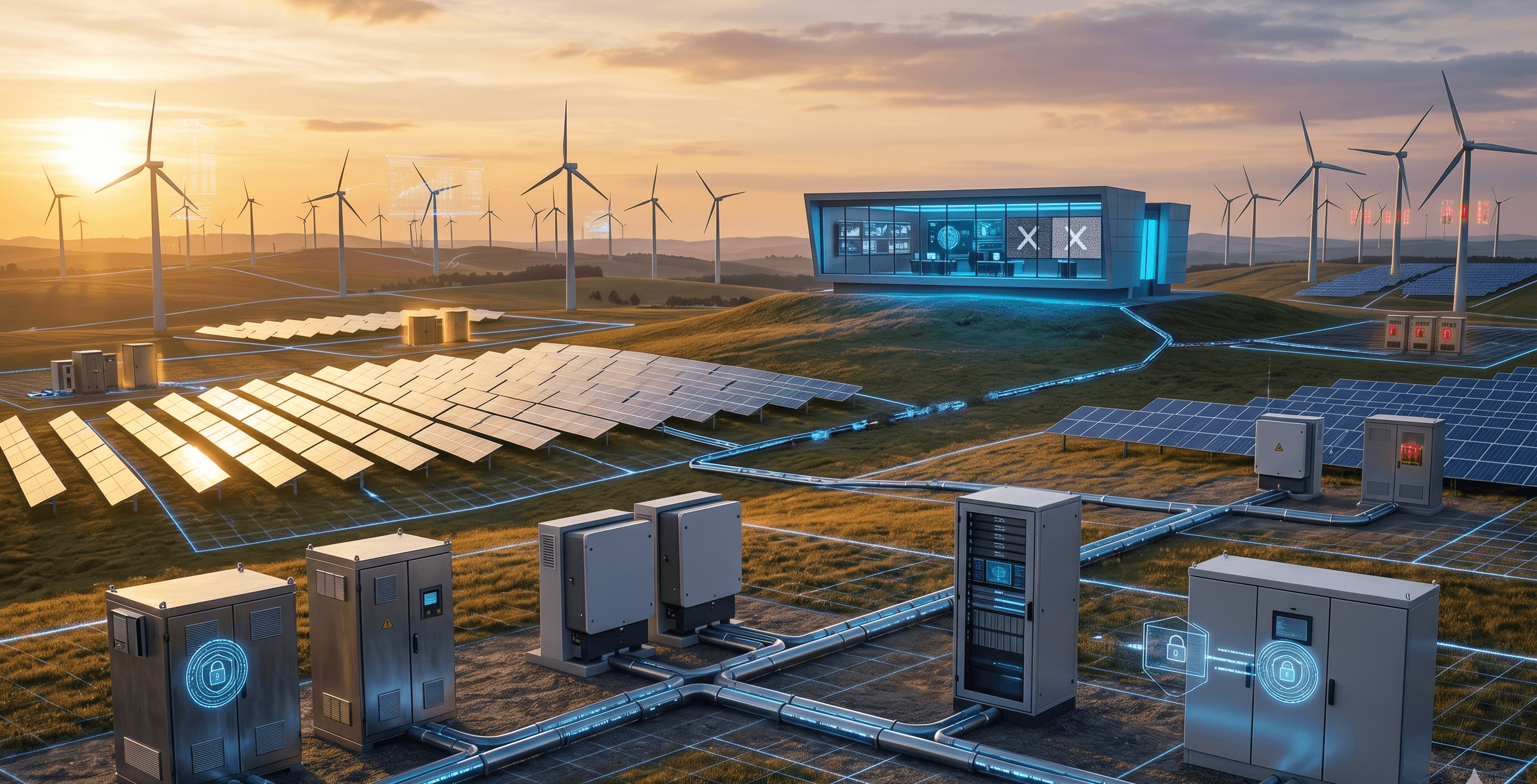
Los recursos energéticos distribuidos, como los parques eólicos y las instalaciones solares, son estructuralmente diferentes de una central tradicional de carbón o gas. En lugar de una instalación grande y fuertemente protegida, se tienen decenas, a veces cientos, de sitios dispersos geográficamente, cada uno de los cuales ejecuta dispositivos perimetrales como inversores, unidades de terminal remota (RTU) y controladores lógicos programables (PLC). Estos dispositivos se comunican con un sistema de gestión de distribución (DMS) central o una plataforma SCADA a través de una combinación de conexiones celulares, de fibra y de internet pública.
Esa arquitectura distribuida es tanto una característica de resiliencia de la red como el sueño de un atacante. Cada sitio remoto es un punto de entrada potencial. Cada firewall expuesto a internet es una superficie de ataque. E históricamente, los presupuestos de seguridad para estos sitios perimetrales han sido una fracción de lo que se gasta en las instalaciones de generación central.
El cronograma del ataque
Los actores de amenazas patrocinados por estados iniciaron la campaña identificando y explotando vulnerabilidades sin parchear en los firewalls perimetrales en múltiples sitios remotos. Una vez dentro, se movieron lateralmente a través de la red de TO (pivotando desde los sistemas de TI hacia los segmentos de TO) y desplegaron una variante de malware de borrado (wiper) personalizada que los investigadores llamaron DynoWiper. Este malware fue diseñado específicamente para corromper el firmware de los dispositivos industriales, dejándolos inoperativos.
Simultáneamente, los atacantes cortaron los canales de comunicación entre cada parque y el operador de la red. La generación de electricidad en muchos sitios continuó (las turbinas seguían girando, los paneles seguían produciendo), pero los operadores no tenían visibilidad de la producción, ni capacidad para emitir comandos de control, ni forma de realizar una parada ordenada. En términos de seguridad de TO, esto se denomina "pérdida de visión" (loss of view), y es uno de los estados más peligrosos en los que se puede encontrar un operador de red.
Vectores de ataque observados en el ciberataque coordinado a los DER
Vector de ataque | Activo objetivo | Impacto observado |
Explotación de firewall perimetral | RTUs, gateways SCADA | Pérdida de visión; comunicaciones cortadas con el operador de red |
Malware de borrado (DynoWiper) | Firmware en inversores y HMIs | Daño permanente al hardware; tiempo de inactividad prolongado |
Phishing / robo de credenciales | Portales de VPN y acceso remoto | Movimiento lateral hacia la red de TO |
Compromiso de la cadena de suministro | Actualizaciones de software para IEDs | Puerta trasera implantada en dispositivos operativos |
Acceso remoto inseguro | Cuentas de mantenimiento de proveedores | Ejecución de comandos no autorizados en dispositivos de campo |
Cinco lecciones críticas para gerentes de planta, ingenieros de TO y CISO
Lección 1: Proteger el perímetro, no solo el núcleo
La ciberseguridad industrial tradicional se centraba en proteger las joyas de la corona: la sala de control central, el historiador SCADA, el EMS. Pero cuando su infraestructura está distribuida en más de 30 sitios remotos, ese modelo deja desprotegida la mayor parte de sus activos.
Cada RTU, cada inversor, cada firewall perimetral es ahora un punto de entrada potencial para un adversario sofisticado. La ciberseguridad de la red distribuida requiere un modelo de seguridad distribuido, uno que extienda la visibilidad, la detección y la capacidad de respuesta hasta el nivel del dispositivo de campo.
Pasos prácticos que puede tomar hoy:
Realice un inventario completo de activos de TO en todos los sitios distribuidos: no puede proteger lo que no puede ver
Despliegue un monitoreo pasivo de red en cada sitio para detectar tráfico anómalo sin afectar las operaciones
Establezca una línea base de comunicaciones "conocidas y seguras" entre los dispositivos de campo y su plataforma SCADA; alerte sobre cualquier desviación
Lección 2: La convergencia TI/TO crea un riesgo bidireccional
In este ataque, la brecha inicial ocurrió en la red de TI, a través de un correo electrónico de phishing o un sistema vulnerable expuesto a internet. Desde allí, los atacantes pivotaron a través de un límite TI/TO mal segmentado y comenzaron a emitir comandos destructivos al equipo físico. Este no es un riesgo teórico; ahora es un patrón de ataque documentado en el mundo real.
Muchas empresas de energía todavía tratan la seguridad de TI y la seguridad de TO como dominios separados con equipos separados y presupuestos separados. Esa separación ya no es defendible. Cuando su red de TI se ve comprometida, sus turbinas eólicas y sus inversores solares están en riesgo.
Lo que necesita hacer:
Mapee todas las rutas de comunicación de TI a TO y aplique listas de permitidos estrictas en el límite
Implemente gateways de seguridad unidireccionales (diodos de datos) en segmentos críticos de TO
Asegúrese de que los analistas del SOC de TI tengan visibilidad de la telemetría de la red de TO, incluso si no pueden tomar medidas sin la participación del equipo de TO
Realice ejercicios teóricos (tabletop) conjuntos de TI/TO que simulen un escenario de movimiento lateral
Lección 3: El firmware es la última línea de defensa, y los atacantes lo saben
DynoWiper no atacó archivos de datos ni procesos operativos. Atacó el firmware, el software de bajo nivel integrado en inversores, RTU y paneles HMI. Una vez que el firmware se corrompe, el dispositivo normalmente no puede iniciar, no se puede recuperar de forma remota y puede requerir un reemplazo físico. En más de 30 sitios, esto se traduce en semanas de inactividad e importantes costos de reemplazo de hardware.
La integridad del firmware no es glamorosa, pero es un control fundamental. Esta es su lista de verificación para la protección del firmware:
Protección de la integridad del firmware
# | Elemento de acción |
1 | Mantenga respaldos de firmware fuera de línea e inmutables para cada modelo de dispositivo de TO en su flota |
2 | Almacene los respaldos en medios con aislamiento físico (air-gapped) y de una sola escritura, no en la misma red que los sistemas de producción |
3 | Documente la versión exacta del firmware, el hash del proveedor y la fecha de cada dispositivo de campo |
4 | Establezca una verificación automatizada de la integridad del firmware que alerte sobre cualquier cambio no autorizado |
5 | Preposicione un inventario mínimo de hardware de contingencia (al menos el 10% del recuento de dispositivos críticos) en un almacenamiento seguro |
6 | Incluya procedimientos de restauración de firmware en sus guías de respuesta a incidentes con pasos de recuperación detallados paso a paso |
7 | Pruebe la restauración del firmware anualmente en un entorno que no sea de producción, no solo de forma teórica |
8 | Exija la firma criptográfica de firmware a los proveedores para todas las adquisiciones futuras de dispositivos |
Lección 4: La segmentación de red y el Zero Trust no son opcionales
Los atacantes se movieron libremente a través de múltiples sitios separados geográficamente porque la red lo permitía. Las redes planas (donde un compromiso en el Sitio A puede llegar al Sitio B sin restricciones) son la norma en la infraestructura distribuida de energía renovable. Eso debe cambiar.
La arquitectura Zero Trust opera bajo un principio simple: no se confía en ningún dispositivo, usuario o sistema por defecto, independientemente de dónde se encuentre en la red. Cada conexión debe ser autenticada, autorizada y validada continuamente. Para la infraestructura de energía distribuida, esto significa:
Microsegmentar cada sitio remoto para que un compromiso no se propague automáticamente a los sitios adyacentes
Exigir autenticación multifactor (MFA) para todo acceso remoto, incluidas las cuentas de mantenimiento de los proveedores
Implementar el control de acceso basado en roles (RBAC) para que un proveedor que realiza el mantenimiento de un inversor no pueda acceder también a su historiador SCADA
Registrar y auditar todas las sesiones privilegiadas que involucren acceso remoto a sistemas de TO
Desplegar servidores de salto (bastion hosts) como el único punto de entrada controlado para cualquier acceso remoto a TO
Recuerde: los atacantes explotaron puntos de acceso remoto inseguros como mecanismo de propagación principal. Si su proveedor de mantenimiento puede conectarse directamente a un dispositivo de campo desde una computadora portátil personal sin MFA, usted tiene la misma vulnerabilidad.
Lección 5: La pérdida de visión es tan peligrosa como la pérdida de energía
Uno de los resultados menos valorados de este ataque fue que la generación no se detuvo, pero los operadores no podían ver ni controlar lo que estaba sucediendo. En las operaciones de la red, la "pérdida de visión" significa que no se puede equilibrar la oferta y la demanda, no se puede responder a las fallas y no se puede realizar una parada segura si es necesario. Ese es un riesgo para la estabilidad de la red, no solo un incidente de ciberseguridad.
Para protegerse contra ataques de pérdida de visión:
Implemente rutas de monitoreo fuera de banda que no compartan la misma red que sus comunicaciones SCADA principales
Despliegue inteligencia local en el extremo que pueda mantener una operación autónoma segura si se cortan las comunicaciones con el operador central
Establezca procedimientos de respaldo manuales para cada sitio crítico y capacite a los operadores para ejecutarlos bajo presión
Establezca límites de tiempo estrictos sobre cuánto tiempo puede operar un sitio sin visibilidad SCADA antes de activar un protocolo de parada de estado seguro
Construyendo una arquitectura de seguridad resiliente para recursos energéticos distribuidos
El marco de seguridad de TO de cinco capas para energías renovables
No existe un único control que prevenga todos los ataques. Lo que funciona es una estrategia de defensa en capas: múltiples controles superpuestos de modo que cuando una capa falla (y bajo un ataque sofisticado patrocinado por un estado, una fallará), la siguiente capa capture la amenaza antes de que ocurra un daño catastrófico.
Preparación de la arquitectura de seguridad de TO - Red distribuida
Capa | Elemento de acción |
Capa 1 - VISIBILIDAD | Inventario completo y actualizado continuamente de activos de TO en todos los sitios DER |
Capa 1 - VISIBILIDAD | Monitoreo pasivo de red desplegado en cada sitio remoto |
Capa 1 - VISIBILIDAD | Registro y alertas centralizados para eventos de TO, no solo eventos de TI |
Capa 2 - SEGMENTACIÓN | Límites de TI/TO aplicados con reglas de comunicación de lista de permitidos |
Capa 2 - SEGMENTACIÓN | Cada sitio remoto aislado para bloquear el movimiento lateral entre sitios |
Capa 2 - SEGMENTACIÓN | Acceso remoto Zero Trust con MFA para todas las sesiones de proveedores y empleados |
Capa 3 - INTEGRIDAD | Respaldos de firmware inmutables con procedimientos de recuperación probados |
Capa 3 - INTEGRIDAD | Aplicación de firmware firmado criptográficamente en todas las nuevas adquisiciones de dispositivos |
Capa 3 - INTEGRIDAD | Control de versiones de configuración para todos los dispositivos de TO (PLC, RTU, HMI) |
Capa 4 - RESPUESTA | Plan de respuesta a incidentes específico para TO (no solo un plan de respuesta de TI adaptado para TO) |
Capa 4 - RESPUESTA | Procedimientos de respaldo manuales para cada sitio crítico |
Capa 4 - RESPUESTA | Inventario de hardware preposicionado para una rápida recuperación en campo |
Capa 5 - CUMPLIMIENTO | Controles documentados asignados a NERC CIP, IEC 62443 o NIS2 según corresponda |
Capa 5 - CUMPLIMIENTO | Pruebas de penetración anuales centradas en TO y ejercicios de equipo rojo (red team) |
Capa 5 - CUMPLIMIENTO | Ejercicios teóricos conjuntos regulares con partes interesadas de TI, TO y ejecutivos |
Contexto regulatorio: lo que deben saber los operadores de red
El entorno regulatorio en torno a la ciberseguridad de las energías renovables se está endureciendo rápidamente. Ya sea que opere en América del Norte bajo los estándares NERC CIP, en Europa bajo la Directiva NIS2 o en una jurisdicción con regulaciones cibernéticas de energía emergentes, la expectativa es la misma: se requiere que demuestre que ha identificado sus activos críticos, evaluado sus riesgos cibernéticos e implementado los controles adecuados.
Lo que los reguladores buscan cada vez más en las revisiones posteriores a incidentes y en las auditorías de cumplimiento de los operadores de energía distribuida:
Un inventario actualizado de todos los activos de TO, incluidos los dispositivos perimetrales en sitios remotos
Evidencia de segmentación de red entre entornos de TI y TO
Procedimientos de respuesta a incidentes documentados y probados específicos para entornos de TO/ICS
Controles de gestión de acceso de proveedores y terceros con registros de auditoría
Procesos formales de gestión de riesgos de la cadena de suministro para la adquisición de hardware y software
El ataque a la red de Polonia ya está influyendo en la forma en que los reguladores y los operadores de red en toda Europa y América del Norte están revisando sus requisitos de seguridad para los operadores de DER. Ser proactivo ahora no es solo una práctica de seguridad inteligente; es la forma de mantenerse a la vanguardia de los requisitos de cumplimiento obligatorio.
Cómo le ayuda Shieldworkz a proteger su red distribuida
En Shieldworkz, nos especializamos exclusivamente en ciberseguridad de TO, ICS e IoT para entornos industriales, incluida la infraestructura de generación eólica y solar. Entendemos que no se pueden aplicar simplemente herramientas de seguridad de TI empresariales a sus inversores y RTU. Los entornos de TO tienen protocolos únicos, requisitos de disponibilidad únicos y riesgos únicos que exigen soluciones diseñadas a medida y experiencia industrial práctica.
Servicios de Shieldworkz asociados a las lecciones del ataque
Servicio de Shieldworkz | Qué hace | Amenaza que aborda |
Descubrimiento e inventario de activos de TO | Mapea continuamente cada IED, inversor, RTU y dispositivo perimetral en su red | Activos desconocidos como puntos ciegos |
Monitoreo pasivo de red de TO | Detecta comandos anómalos, movimiento lateral y tráfico no autorizado sin interrumpir las operaciones | Ataques de pérdida de visión, movimiento lateral |
Robustecimiento de seguridad perimetral | Robustece los firewalls, deshabilita los puertos no utilizados y aplica tráfico de lista de permitidos entre los sitios DER y los operadores | Explotación de firewalls perimetrales |
Gestión de integridad del firmware | Mantiene líneas base de firmware inmutables fuera de línea y alerta sobre cualquier cambio de firmware no autorizado | Malware de borrado como DynoWiper |
Acceso remoto Zero Trust | Aplica MFA, cuentas con privilegios mínimos y registro de sesiones para todo acceso de proveedores y remoto | Robo de credenciales, acceso remoto inseguro |
Retenedor de respuesta a incidentes | Guías de respuesta preacordadas, analistas de TO de guardia y soporte de notificación regulatoria | Todos los vectores de ataque (post-compromiso) |
Trabajamos directamente con los gerentes de planta y los ingenieros de TO a nivel de sitio, no solo con los CISO en las oficinas centrales. Entendemos los horarios de turnos, las ventanas de mantenimiento y las realidades operativas de administrar un activo de generación distribuida. Nuestras evaluaciones no son disruptivas, nuestro monitoreo es pasivo y nuestro equipo de respuesta a incidentes tiene experiencia práctica con los protocolos industriales que su equipo realmente utiliza.
Conclusión
Puntos clave
El primer ciberataque coordinado contra la infraestructura eólica y solar no fue un escenario hipotético de un informe de inteligencia de amenazas. Sucedió, causó daños reales al hardware y debería ser un detonante para que cada organización que opera recursos energéticos distribuidos reevalúe su postura de seguridad.
Aquí están las cinco cosas que debe extraer de este incidente:
Proteja el perímetro. Cada sitio remoto, inversor y RTU es un punto de entrada. Extienda su modelo de seguridad más allá de la sala de control.
Puentee la seguridad de TI y TO. Un compromiso de TI se convertirá en un incidente de TO si lo permite. Aplique una segmentación estricta y una visibilidad unificada.
Respalde su firmware, fuera de línea. El malware de borrado se dirige específicamente al firmware. Los respaldos inmutables y fuera de línea, junto con los planes de recuperación probados, no son negociables.
Despliegue acceso remoto Zero Trust. Cada conexión de proveedor, cada sesión remota, cada cuenta de mantenimiento debe estar autenticada, autorizada y auditada.
Planifique para la pérdida de visión. La visibilidad operativa es una función de seguridad, no solo una conveniencia. Construya monitoreo redundante y respaldos manuales.
No tiene que resolver esto solo. Shieldworkz cuenta con la experiencia en ciberseguridad industrial, las herramientas específicas para TO y la experiencia en respuesta a incidentes en el mundo real para ayudarlo a construir un programa de seguridad que coincida con el panorama de amenazas que enfrentan los operadores de energía distribuida hoy en día.
¿Listo para proteger su red distribuida? Solicite una evaluación de seguridad de TO de 30 minutos con nuestros expertos en ciberseguridad industrial.
Recursos adicionales:
Lista de verificación de diagnóstico de brechas de seguridad NERC CIP aquí
Evaluación de brechas de ciberseguridad de la Directiva NIS2 y lista de verificación de controles aquí
Lista de verificación de remediación NERC CIP utilizando NDR de seguridad de TO aquí
Guías de remediación aquí
Recibe semanalmente
Recursos y Noticias
Vea cómo nuestras soluciones de seguridad de OT líderes en la industria abordan los desafíos de seguridad críticos
También te puede interesar

What the French supermarket cyberattack reveals about OT security

Prayukth K V

Inside the Albert Heijn cyber incident: Investigating the attack, the IT/OT exposure, and the risks to critical operations
Team Shieldworkz

50°C by cyberattack? Inside France’s supermarket refrigeration crisis
Prayukth K V

Automating IEC 62443 Compliance Assessments Without Losing Expert Control
Team Shieldworkz

Investigative cyber threat intelligence report: Daiichi Kosho supply-chain data exposure
Prayukth K V

How AI Is Changing IEC 62443 Assessments
Team Shieldworkz