
Equipo Shieldworkz
Cuando un importante operador europeo de transmisión de energía descubrió un movimiento lateral no autorizado a través de su red operativa en 2023, la causa raíz se atribuyó a una verdad incómoda: el equipo de seguridad no tenía una visión consolidada del entorno industrial. Existían alertas, pero estaban dispersas en múltiples herramientas puntuales, cada una operando de forma aislada. Para cuando los analistas correlacionaron los eventos, la intrusión ya había persistido por más de seis semanas.
Este escenario no es un caso aislado. Refleja un problema estructural que las organizaciones industriales de todos los tamaños y sectores están enfrentando en este preciso momento: la ausencia de una visibilidad operativa unificada en los entornos de OT (tecnología operativa).
Antes de continuar leyendo el resto de este artículo, no olvide leer nuestra publicación de blog anterior sobre el análisis de la brecha de Foxconn: Nitrogen, robo de propiedad intelectual en manufactura y el nuevo riesgo en la cadena de suministro aquí.
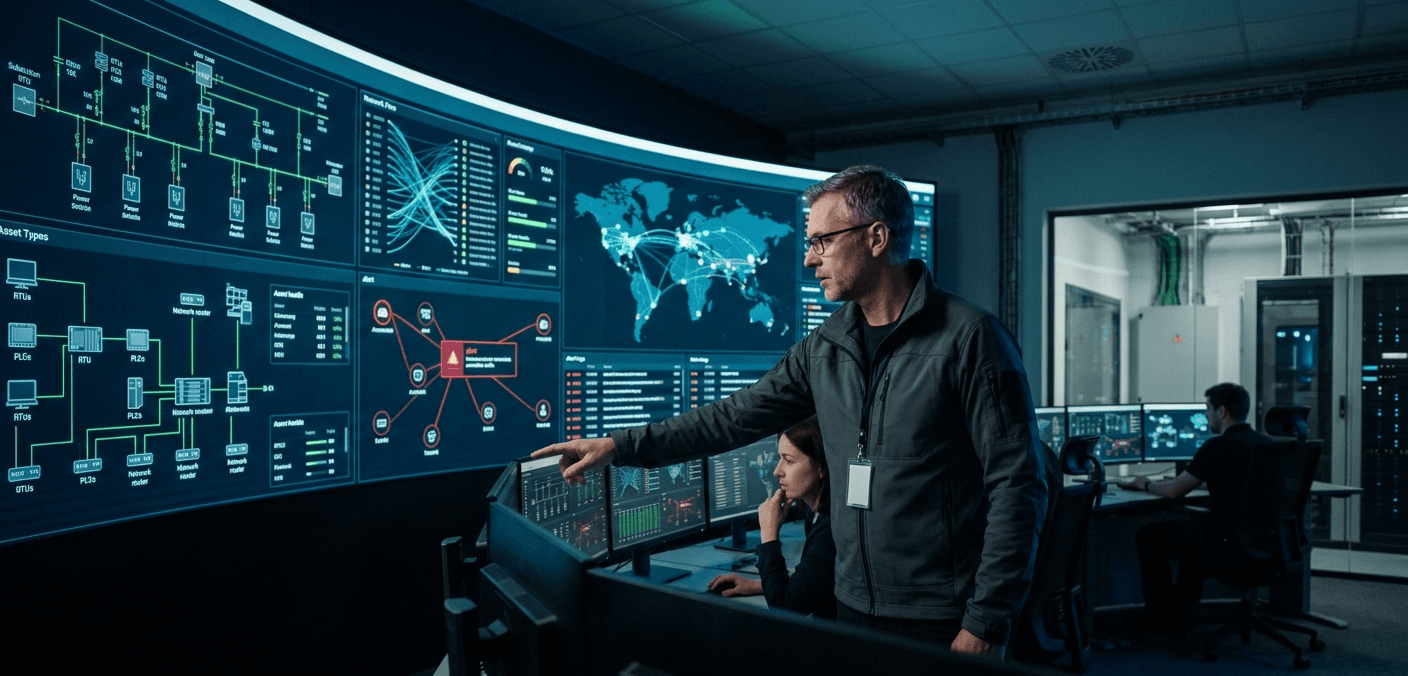
Una consola de gestión central para la seguridad de OT cambia fundamentalmente esta ecuación. Al unificar el descubrimiento de activos, el monitoreo de amenazas, el seguimiento del cumplimiento y la respuesta a incidentes en una sola interfaz operativa, brinda a los equipos de seguridad el conocimiento de la situación y el control que los conjuntos de herramientas fragmentados simplemente no pueden proporcionar.
Esta guía analiza cómo funcionan en la práctica las operaciones centralizadas de seguridad de OT, por qué son importantes para el liderazgo organizacional y qué se necesita para implementar una plataforma que realmente reduzca el riesgo en los entornos industriales.
El problema de la fragmentación en la seguridad de OT
La mayoría de las organizaciones industriales no diseñaron su postura de seguridad actual desde cero; evolucionó, a menudo de forma reactiva, a medida que se superponían nuevas herramientas sobre infraestructuras obsoletas. El resultado es un rompecabezas de agentes de endpoint, sondas de red, taps pasivos y sistemas de cumplimiento que rara vez se comunican entre sí.
Las consecuencias son medibles y graves:
• Los analistas de seguridad dedican más del 60% de su tiempo a correlacionar manualmente las alertas en plataformas desconectadas, en lugar de investigar amenazas reales.
• Los inventarios de activos están constantemente desactualizados, lo que genera puntos ciegos donde operan dispositivos no gestionados sin ningún tipo de supervisión.
• Las pruebas de cumplimiento se recopilan de forma manual antes de cada ciclo de auditoría, lo que consume cientos de horas de ingeniería al año.
• Los tiempos de respuesta a incidentes se extienden de horas a días cuando los equipos de respuesta deben navegar por múltiples herramientas para reconstruir las secuencias de eventos.
• La dirección ejecutiva recibe informes inconsistentes que no representan con precisión la postura de riesgo operativo.
Dato clave: Una encuesta de la industria realizada en 2023 a profesionales de seguridad de OT reveló que las organizaciones con herramientas de seguridad fragmentadas tardaron un promedio de 194 días en identificar una brecha en entornos de OT, en comparación con los 47 días de aquellas que operaban con plataformas de monitoreo unificadas. La diferencia en los costos operativos fue significativa en cada sector analizado. |
Qué hace realmente una consola de gestión central para la seguridad de OT
Una consola de gestión central no es simplemente un tablero que agrega datos de herramientas existentes. Una plataforma de seguridad de OT diseñada para este propósito integra fundamentalmente el descubrimiento, el monitoreo, el análisis y la respuesta en un único flujo de trabajo coordinado. Esta distinción es enormemente importante en la práctica.
Inteligencia de activos unificada
La base de cualquier operación eficaz de seguridad de OT es saber qué hay en la red. Una consola de gestión central realiza un descubrimiento continuo de activos con reconocimiento de protocolos en todos los entornos industriales, admitiendo la comunicación nativa con dispositivos de campo que utilizan Modbus, DNP3, PROFINET, EtherNet/IP, IEC 61850 y docenas de otros protocolos específicos de OT.
El registro de activos resultante es dinámico y siempre está actualizado. Captura no solo direcciones IP, sino también versiones de firmware, roles de dispositivos, patrones de comunicación, vulnerabilidades conocidas y contexto operativo. Cuando aparece un nuevo dispositivo o cuando uno existente cambia de comportamiento, la plataforma lo marca de inmediato.
Detección correlacionada de amenazas
Las alertas aisladas son ruido; la inteligencia de amenazas correlacionada es señal. Una consola de gestión central aplica líneas base de comportamiento y modelos de amenazas diseñados específicamente para entornos industriales, detectando anomalías como comandos no autorizados a PLCs, cambios anormales en la frecuencia de consulta, conexiones inesperadas a estaciones de trabajo de ingeniería y ataques a nivel de protocolo que las herramientas genéricas de seguridad de TI nunca reconocerían.
La plataforma muestra alertas priorizadas y ricas en contexto que reflejan la importancia operativa de cada amenaza, no solo su gravedad técnica. Una anomalía de red cerca de un sistema instrumentado de seguridad es fundamentalmente diferente de la misma anomalía en un segmento administrativo, y la consola la trata en consecuencia.
Cumplimiento e informes integrados
Las obligaciones regulatorias, ya sea NERC CIP para empresas eléctricas, IEC 62443 para automatización industrial, el Marco de Ciberseguridad del NIST o los requisitos emergentes de NIS2, exigen pruebas continuas de la eficacia de los controles de seguridad. Una plataforma centralizada automatiza la recopilación de pruebas, mapea los controles con los marcos regulatorios y genera informes listos para auditorías sin requerir esfuerzo manual antes de cada ciclo de revisión.
Operaciones de seguridad: Antes vs. Después de la centralización
La siguiente tabla ilustra el cambio operativo que conlleva el despliegue de una consola de gestión central en funciones clave de seguridad:
Desafío de seguridad | Sin consola centralizada | Con consola de gestión central |
Visibilidad de activos | Puntos ciegos en dispositivos de campo y PLCs | Inventario unificado en tiempo real de todos los activos de OT/ICS |
Detección de amenazas | Alertas en silos, alto nivel de falsos positivos | Inteligencia de amenazas correlacionada con alertas priorizadas |
Respuesta a incidentes | Escalamiento manual, fragmentado y lento | Flujos de trabajo automatizados con playbooks definidos |
Informes de cumplimiento | Recopilación de pruebas manual y tardada | Pistas de auditoría automatizadas y paneles de cumplimiento |
Segmentación de red | Límites de zona planos o mal definidos | Monitoreo y aplicación continua de zonas y conductos |
Gestión de parches | Ad hoc, riesgosa y disruptiva para la operación | Programación con puntuación de riesgo alineada a ventanas de producción |
Supervisión de múltiples sitios | Sin visión unificada entre las distintas plantas | Panel único para todas las instalaciones y regiones |
La arquitectura detrás de una seguridad de OT centralizada y eficaz
Comprender el funcionamiento arquitectónico de una consola de gestión central ayuda a los equipos de seguridad y operaciones a evaluar la viabilidad de la implementación y los requisitos de integración.
Recopilación de datos con enfoque pasivo prioritario
A diferencia de las herramientas de seguridad de TI que escanean activamente los activos, los entornos de OT requieren un enfoque primordialmente pasivo. Muchos dispositivos industriales heredados, en particular los PLCs y RTUs más antiguos, no pueden soportar el escaneo activo sin experimentar comportamientos inesperados o interrupciones en el servicio. Una consola de OT bien diseñada recopila datos principalmente a través de un monitoreo pasivo de la red, recurriendo a consultas activas solo cuando las capacidades del dispositivo lo permiten de forma segura.
Visibilidad de zonas y conductos
El Modelo de Referencia de Purdue y la norma IEC 62443 definen cómo deben segmentarse las redes industriales en zonas con conductos controlados entre ellas. Una consola de gestión central mapea continuamente los flujos de tráfico reales frente a estos límites definidos, identificando violaciones de políticas, comunicaciones no autorizadas entre zonas y patrones emergentes de movimiento lateral en tiempo real.
Integración con operaciones de seguridad corporativa
La seguridad de OT no existe de forma aislada. Una consola de gestión central conecta el entorno industrial con las operaciones de seguridad empresarial mediante la integración con plataformas SIEM, sistemas SOAR, flujos de trabajo de tickets y fuentes de inteligencia de amenazas. Esta integración permite a los analistas del SOC trabajar con datos de OT dentro de sus herramientas habituales, garantizando al mismo tiempo que el contexto industrial nunca se pierda en el proceso.
Supervisión de acceso remoto seguro
Los proveedores externos, los integradores de sistemas y el personal de soporte remoto representan una superficie de ataque significativa en los entornos industriales. Una plataforma centralizada proporciona acceso remoto basado en roles y con límite de tiempo, con grabación completa de sesiones y monitoreo de comportamiento, asegurando que cada conexión externa sea visible, controlada y auditable.
Resumen del impacto operativo y de negocio
La siguiente tabla mapea las capacidades principales de la plataforma con su valor operativo y de negocio directo:
Área de capacidad | Beneficio operativo | Impacto de negocio |
Registro centralizado de activos | Elimina los puntos ciegos de los dispositivos | Reduce la superficie de riesgo hasta en un 40% |
Monitoreo unificado de amenazas | Detección y correlación más veloces | Reducción significativa del tiempo medio de detección (MTTD) |
Motor de cumplimiento automatizado | Generación continua de pruebas | Reduce la preparación de auditorías de cumplimiento entre 60% y 70% |
Visibilidad de red entre zonas | Aplica los límites del modelo Purdue | Previene el movimiento lateral de amenazas |
Playbooks de incidentes integrados | Pasos de respuesta guiados en tiempo real | Disminuye drásticamente el tiempo medio de respuesta (MTTR) |
Control de acceso remoto seguro | Supervisión de proveedores y terceros | Elimina los puntos de entrada remota no controlados |
Incidentes de la industria que subrayan la urgencia
La justificación de negocio para contar con visibilidad centralizada de la seguridad de OT se refuerza con incidentes reales en diversos sectores industriales. Estos eventos no son escenarios hipotéticos del peor de los casos; son fallas operativas documentadas con consecuencias medibles.
Sector de tratamiento de aguas
En 2021, un actor no autorizado logró acceder a los sistemas operativos de una instalación de tratamiento de agua e intentó aumentar la concentración de hidróxido de sodio a niveles peligrosos. La intrusión fue detectada por un operador alerta, no por un sistema de seguridad. La ausencia de un monitoreo de comportamiento centralizado significó que el propio acceso pasó desapercibido hasta la intervención manual. Una detección de anomalías centralizada habría marcado automáticamente esta modificación inusual de los parámetros.
Manufactura y automotriz
Múltiples plantas de fabricación de automóviles han experimentado paros de producción directamente atribuibles a ransomware que ingresó a través de las redes de TI y se trasladó a los entornos de OT a través de conexiones mal segmentadas. En cada caso, la falta de visibilidad del tráfico entre zonas retrasó la detección hasta que los sistemas de producción ya estaban encriptados. Una consola de gestión central que monitoreara el tráfico en los límites de las zonas habría identificado el movimiento lateral antes de que alcanzara los activos críticos de producción.
Energía y servicios públicos
Los ataques a la cadena de suministro dirigidos a los mecanismos de actualización de software industrial han demostrado que incluso las comunicaciones de confianza pueden transportar cargas maliciosas. Sin un establecimiento de líneas base de comportamiento centralizado en todos los activos de OT, las organizaciones no pueden distinguir el tráfico normal de actualización de software de una actualización manipulada que introduce código no autorizado en los dispositivos de campo, una distinción que la detección de anomalías centralizada puede hacer basándose únicamente en la desviación del comportamiento habitual.
Consideración crítica: Cada incidente descrito anteriormente comparte un hilo común: una detección tardía provocada por la falta de una visibilidad operativa unificada. La consola de gestión central aborda esta brecha fundamental de manera directa, no mediante controles teóricos, sino mediante un monitoreo continuo y automatizado que no depende de los ciclos de revisión humana. |
Cómo evaluar una consola de gestión central para su entorno de OT
No todas las plataformas comercializadas como consolas de seguridad de OT están diseñadas específicamente para entornos industriales. Muchas son herramientas de seguridad de TI adaptadas con una delgada capa de nomenclatura específica de OT aplicada sobre arquitecturas que son fundamentalmente de TI. Los líderes que evalúen estas soluciones deben aplicar criterios rigurosos.
Criterio de evaluación | Por qué es importante |
Detección de activos con reconocimiento de protocolos | Los entornos industriales ejecutan Modbus, DNP3, PROFINET; la plataforma debe hablar estos protocolos de forma nativa |
Capacidad de monitoreo pasivo | El escaneo activo puede desestabilizar los dispositivos de OT heredados; un enfoque pasivo prioritario no es negociable |
Integración con herramientas SIEM/SOC | Conecta las operaciones de seguridad de OT e TI para una respuesta coordinada |
Controles de acceso basados en roles | Vistas personalizadas para ingenieros, operadores y ejecutivos que evitan la sobrecarga de información |
Escalabilidad entre sitios | La implementación en una sola planta debe escalarse sin problemas para operaciones corporativas de múltiples sitios |
Arquitectura neutral de proveedor | Evita la dependencia de un proveedor específico; la plataforma debe integrarse con las herramientas existentes |
Mapeo regulatorio integrado | Los controles preestablecidos para NERC CIP, IEC 62443 y NIS2 ahorran un esfuerzo significativo |
Cómo apoya Shieldworkz a las organizaciones
Shieldworkz ofrece capacidades de ciberseguridad industrial y de OT/ICS diseñadas específicamente para las realidades operativas de estos entornos, abarcando desde plantas de manufactura de un solo sitio hasta complejas operaciones de infraestructura crítica multirregionales.
A continuación se detalla cómo Shieldworkz apoya específicamente a las organizaciones en el despliegue y operación de la seguridad centralizada de OT:
• Descubrimiento de activos de OT pasivo y activo: Shieldworkz mapea cada dispositivo en la red industrial usando soporte nativo de protocolos de OT, construyendo un inventario de activos continuamente actualizado que refleja la realidad operativa en lugar de la documentación del trimestre pasado.
• Monitoreo y alertas unificadas de amenazas: Las reglas de detección diseñadas específicamente y alineadas con el marco MITRE ATT&CK para ICS exponen las amenazas propias de los entornos industriales, con priorización de alertas basadas en el impacto operativo en lugar de puntuaciones de gravedad genéricas.
• Automatización de cumplimiento en los principales marcos de referencia: El mapeo preconfigurado para NERC CIP, IEC 62443, NIST CSF y NIS2 permite recopilar pruebas de cumplimiento de forma continua y generar informes listos para la dirección sin requerir esfuerzo manual antes de cada ciclo de auditoría.
• Visibilidad de red en zonas y conductos: El monitoreo continuo de los flujos de tráfico en comparación con las zonas de seguridad definidas detecta violaciones de políticas, comunicaciones no autorizadas entre zonas y patrones de movimiento lateral anómalos en tiempo real.
• Orquestación de respuesta a incidentes: Playbooks de respuesta específicos para la industria guían a los analistas a través de flujos de trabajo estructurados de contención, investigación y recuperación, reduciendo los tiempos de respuesta y garantizando la consistencia ante eventos de seguridad.
• Gestión de acceso remoto seguro: Los controles de acceso basados en roles con grabación de sesiones proporcionan visibilidad completa y rendición de cuentas de cada conexión de soporte remoto y de terceros hacia el entorno de OT.
• Paneles ejecutivos y operativos: Las vistas orientadas al liderazgo traducen los datos técnicos de seguridad en métricas de riesgo relevantes para el negocio, facilitando la toma de decisiones informadas sin requerir un conocimiento técnico profundo.
• Visibilidad empresarial multisitio: Shieldworkz escala desde una sola instalación hasta implementaciones en toda la corporación, ofreciendo una visibilidad de seguridad consistente y aplicación de políticas en todas las ubicaciones industriales.
Capacidad de Shieldworkz | Qué entrega |
Descubrimiento e inventario de activos de OT | Descubrimiento activo y pasivo en todos los protocolos industriales |
Monitoreo unificado de amenazas | Alertas en tiempo real correlacionadas con fuentes de inteligencia de amenazas de OT |
Automatización del cumplimiento | NERC CIP, IEC 62443, NIST CSF, generación continua de pruebas e informes |
Análisis de segmentación de red | Visualización de zonas/conductos y detección de anomalías |
Orquestación de respuesta a incidentes | Playbooks específicos para OT y flujos de escalamiento preconfigurados |
Acceso remoto seguro | Acceso basado en roles con registro completo de sesiones y pista de auditoría |
Paneles ejecutivos | KPIs a nivel de negocio y métricas de riesgo operativo para el liderazgo |
El imperativo estratégico de la seguridad de OT centralizada
La era de gestionar la ciberseguridad industrial mediante herramientas aisladas y desconectadas está llegando a su fin, no solo por la presión regulatoria, sino porque el panorama de amenazas ha evolucionado hasta un punto en el que una visibilidad fragmentada ya no es operativamente aceptable.
Una consola de gestión central para la seguridad de OT no es un lujo que se añade a un programa de seguridad maduro. Para las organizaciones que operan infraestructuras críticas, sistemas de manufactura o cualquier entorno donde los eventos cibernéticos puedan tener consecuencias físicas, es un requisito operativo fundamental.
Las organizaciones que superarán con éxito la próxima ola de amenazas industriales sofisticadas son aquellas que están construyendo operaciones de seguridad unificadas e inteligentes ahora, antes de que un incidente las obligue a hacerlo. La inversión en seguridad de OT centralizada rinde frutos medibles: menores tiempos de respuesta, menor carga de cumplimiento, menos interrupciones imprevistas en la producción y una postura de seguridad indiscutiblemente más sólida en toda la empresa.
Shieldworkz existe para ayudar a las organizaciones a realizar esta transición con confianza, aportando una profunda experiencia en OT/ICS, metodologías de implementación probadas y un compromiso real con la continuidad operativa y la efectividad de la seguridad.
¿Su equipo de seguridad realmente tiene visibilidad completa del entorno de OT?
La mayoría de las organizaciones industriales descubren brechas críticas de visibilidad solo después de que ocurre un incidente. Una consulta con Shieldworkz le ayuda a entender exactamente dónde existen esas brechas en su entorno y qué se necesita para cerrarlas antes de que se conviertan en incidentes operativos.
Reserve una consulta gratuita con nuestros expertos en seguridad de OT
Nuestro equipo trabajará con usted para evaluar su postura de seguridad de OT actual, identificar oportunidades de centralización y trazar una ruta práctica alineada con sus prioridades operativas. Sin compromisos. Sin recomendaciones genéricas. Solo asesoría de expertos diseñada a la medida de su entorno industrial.
Recursos adicionales
Informe global sobre el panorama de amenazas a la ciberseguridad en OT aquí.
IEC 62443 - Guía práctica para la seguridad en OT/ICS e IIoT aquí
Guías de remediación aquí
Guía de inventario de activos de OT y gestión de dispositivos para mejorar la seguridad aquí
Kit de capacitación para concientización de operadores sobre la seguridad en ICS aquí
Lista de verificación para la gestión de riesgos cibernéticos aquí
Recibe semanalmente
Recursos y Noticias
Vea cómo nuestras soluciones de seguridad de OT líderes en la industria abordan los desafíos de seguridad críticos
También te puede interesar

What the French supermarket cyberattack reveals about OT security
Prayukth K V

Inside the Albert Heijn cyber incident: Investigating the attack, the IT/OT exposure, and the risks to critical operations
Team Shieldworkz

50°C by cyberattack? Inside France’s supermarket refrigeration crisis
Prayukth K V

Automating IEC 62443 Compliance Assessments Without Losing Expert Control
Team Shieldworkz

Investigative cyber threat intelligence report: Daiichi Kosho supply-chain data exposure
Prayukth K V

How AI Is Changing IEC 62443 Assessments
Team Shieldworkz