Prayukth K V
Objetivo: Incidente de ciberseguridad de Tata Electronics Private Limited (TEPL)
Actor de amenazas: World Leaks (anteriormente conocido como Hunters International Affiliation)
Fecha de análisis y actualización: 24 de junio de 2026
Resumen general
En junio de 2026, Tata Electronics Private Limited (TEPL), una importante filial de Tata Group y una pieza fundamental en la creciente cadena de suministro de semiconductores y electrónica de alta tecnología de la India, confirmó que fue blanco de un sofisticado ciberataque. El incidente, ejecutado por el grupo de amenazas de extorsión pura World Leaks, provocó la filtración y posterior publicación en la dark web de casi 630 gigabytes (GB) de datos. Los datos comprometidos incluyen más de 200,000 archivos corporativos y de clientes, que contienen especificaciones de ingeniería altamente confidenciales, estándares de calidad y esquemas patentados pertenecientes a los principales fabricantes de equipos originales (OEM) globales de TEPL, específicamente Apple Inc. y Tesla Inc.
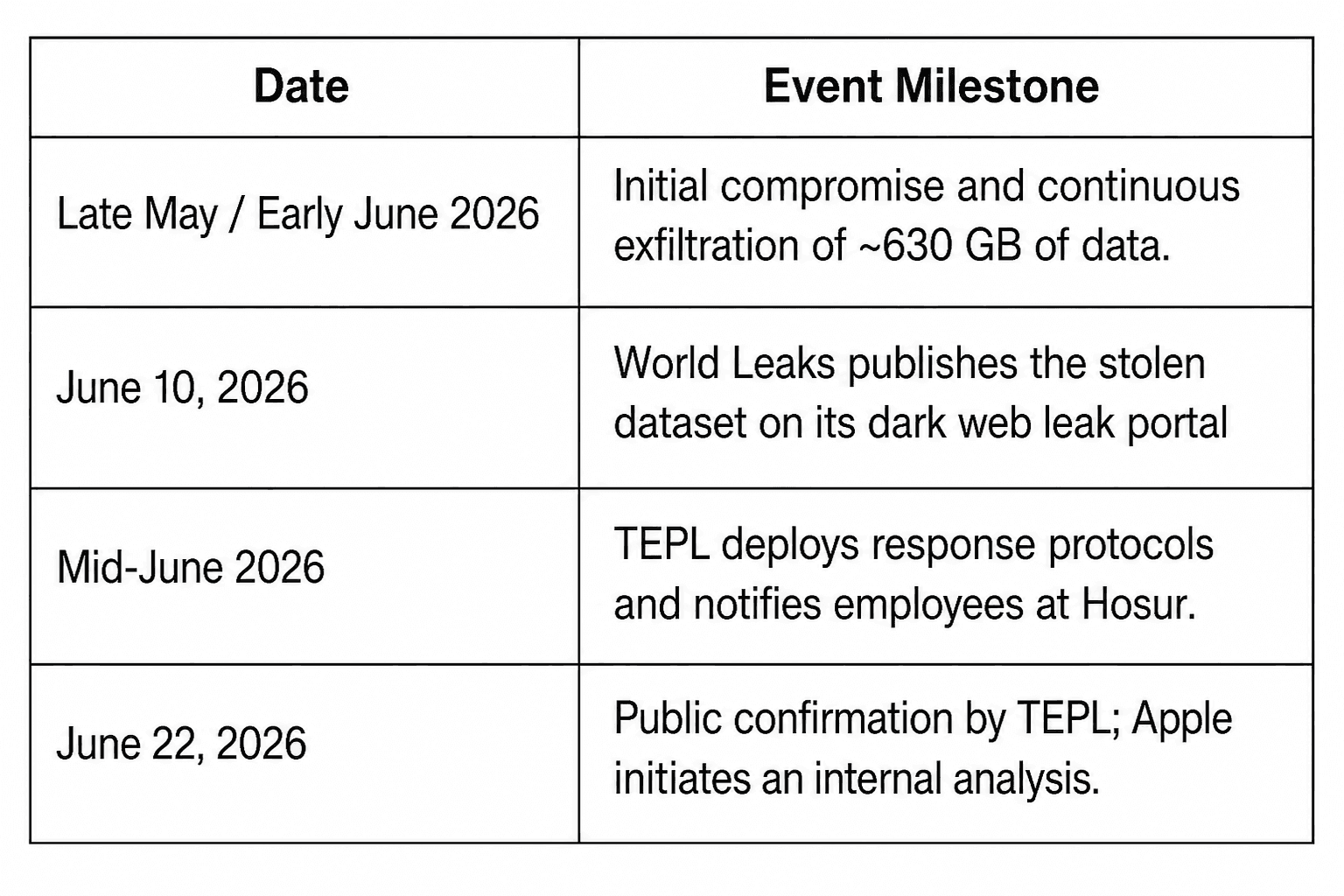
Línea de tiempo del incidente
Hallazgos clave
Modelo de extorsión de datos pura: El actor de amenazas no desplegó ningún ransomware disruptivo (encriptadores). En su lugar, ejecutó una campaña de filtración de datos, aprovechando la amenaza de la exposición pública para exigir un rescate.
Propiedad intelectual downstream expuesta: El análisis independiente de la filtración de más de 200,000 archivos verificó la exposición de carpetas etiquetadas como com.apple.factorydata, estándares de inspección de calidad de 52 páginas para placas de circuito de iPhone y archivos clasificados como dibujos de secretos comerciales pertenecientes al Proyecto Highland (Model 3) de Tesla.
Información de identificación personal (PII) corporativa comprometida: El conjunto de datos también contiene registros de eventos a largo plazo, comunicaciones internas de Outlook/SAP y algunas copias de pasaportes de empleados nacionales y extranjeros.
Resiliencia operativa: TEPL confirmó que la infraestructura operativa interna, las líneas de fabricación y las instalaciones de producción permanecieron plenamente funcionales durante y después del incidente.

Trascendencia del evento
Este incidente pone de manifiesto una vulnerabilidad en la seguridad de la cadena de suministro moderna. Los actores de amenazas están dejando de lado las redes corporativas protegidas de los OEM para explotar a los proveedores de fabricación de Nivel 1 y adquirir secretos comerciales de gran valor con una fricción operativa significativamente menor.
Descripción general del incidente
Línea de tiempo de descubrimiento y divulgación
El incidente cobró visibilidad pública tras una publicación en la dark web por parte de World Leaks, que se realizó el 10 de junio de 2026. TEPL reconoció que su equipo de seguridad de la información interna había identificado positivamente un "incidente de ciberseguridad en algunos de nuestros sistemas" unas semanas antes de la divulgación pública el 22 de junio de 2026.
Sistemas afectados
Según las muestras de datos analizadas por Shieldworkz, el compromiso parece haber tenido como objetivo elementos de la infraestructura de TI corporativa de TEPL. Los sistemas identificados como estructuralmente afectados o recolectados (confianza media) incluyen:
Pasarelas de correo electrónico corporativo: Como lo demuestran los archivos PST de Outlook y los buzones individuales que contienen correspondencia estratégica.
Módulos de planificación de recursos empresariales (ERP): Evidenciado por bases de datos asociadas con SAP. Esto indica acceso a datos de gestión de la cadena de suministro, adquisiciones o seguimiento de componentes.
Plataforma local de almacenamiento y uso compartido de archivos: Directorios que contienen flujos de trabajo de ingeniería localizados y manuales de control de calidad que parecen estar vinculados a las instalaciones de Hosur en Tamil Nadu, India.
Portal relacionado con la gestión de proveedores (confianza baja): Evidenciado por datos sobre compromisos específicos de proveedores.
Estado actual
TEPL ha activado por completo sus marcos de respuesta a incidentes (IR) e inoculado los nodos de red corporativos afectados. Si bien las operaciones comerciales continúan con normalidad en todas las divisiones, se informa que Apple está ejecutando un análisis forense aislado e independiente para medir los vectores de exposición de sus datos de fabricación patentados.
Incógnitas conocidas
Vector inicial: El mecanismo exacto del ingreso inicial a la red (credenciales comprometidas válidas, explotación de vulnerabilidades en dispositivos perimetrales o phishing) sigue sin confirmarse por parte de TEPL en este momento.
Profundidad de autenticidad: Aunque se han verificado muestras que coinciden con dimensiones de diseño válidas, la integridad estructural de los 200,000 archivos no se ha evaluado de forma exhaustiva.
Análisis del ataque
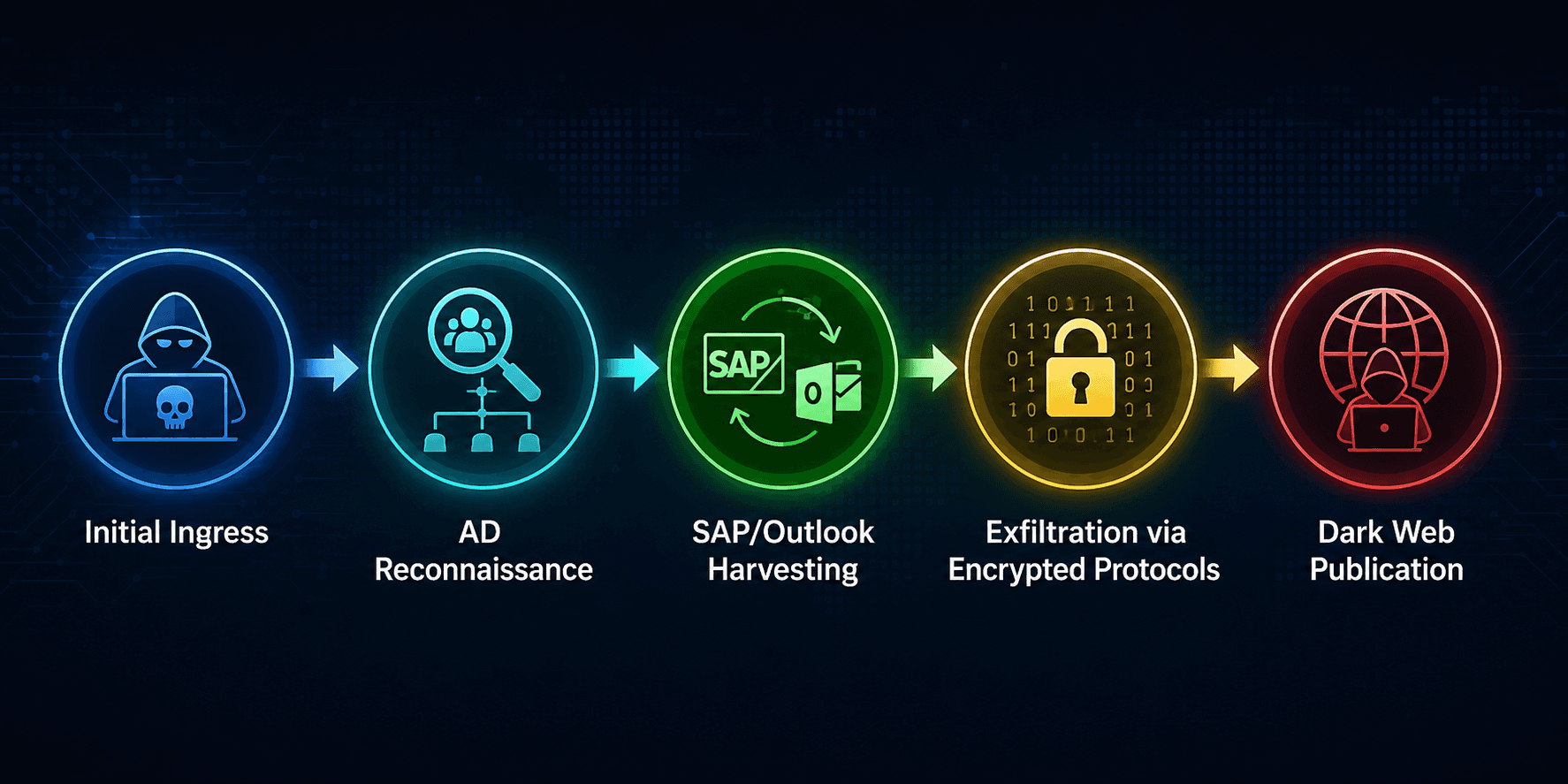
Acceso inicial y progresión
Evaluación analítica: Los indicadores de alta confianza apuntan a una campaña sostenida de spear-phishing dirigida contra el personal administrativo/de ingeniería de TEPL o a la explotación de dispositivos VPN/firewall corporativos externos sin parches.
Una vez dentro de la red corporativa, el actor de amenazas llevó a cabo un reconocimiento interno detallado utilizando utilidades de administración nativas como parte de un esfuerzo de Living off the Land (LotL). La presencia de extensos datos de SAP y registros de eventos de varios años sugiere que el actor estableció un acceso persistente dentro del entorno de Active Directory de TI durante varias semanas, mapeó y documentó los datos objetivo de interés y luego inició la filtración masiva.
Análisis de la estrategia de extorsión
World Leaks se basó completamente en una extorsión de una sola faceta (la amenaza de filtración de datos sin cifrado del sistema). A nivel básico, esta elección estratégica destaca un perfil operativo en evolución diseñado para maximizar el pánico corporativo sobre la responsabilidad por la propiedad intelectual (considerando las entidades upstream de alto perfil involucradas), al tiempo que evita las respuestas inmediatas y de alta visibilidad de las fuerzas del orden que a menudo desencadenan los ataques a infraestructuras críticas.
Análisis profundo del actor de amenazas: World Leaks
Antecedentes y evolución
World Leaks es un sindicato del cibercrimen que surgió a principios de 2025. El seguimiento de inteligencia de amenazas de Shieldworkz (TAID 3372) confirma que World Leaks es un cambio de marca funcional de la operación de ransomware Hunters International, que dio por terminada oficialmente su plataforma basada en cifradores en julio de 2025.
Modelo operativo y TTP
A diferencia de su predecesor, World Leaks ha abandonado por completo el desarrollo y mantenimiento de binarios de ransomware funcionales. Operan puramente bajo un arquetipo de Filtración como Servicio (EaaS).
Victimología: Altamente agnóstica respecto a la industria, pero con un fuerte sesgo hacia objetivos con gran densidad de activos y propiedad intelectual en los Estados Unidos, Europa, Canadá y, cada vez más, la India.
Alineación con MITRE ATT&CK:
T1566 (Phishing): Vector probable de acceso inicial.
T1005 (Datos del sistema local): Apuntando a directorios de ingeniería centralizados.
T1048 (Filtración a través de protocolo alternativo): Uso de mega.nz, rclone o canales SFTP personalizados para mover grandes volúmenes de datos.
Análisis técnico de sensibilidad de datos
El repositorio de datos de 630 GB representa una amenaza extrema para los perfiles de propiedad intelectual de los clientes downstream de TEPL.
Categoría de datos filtrados | Elementos técnicos identificados | Valor competitivo estratégico |
Datos de componentes de Apple | Estructuras de com.apple.factorydata, criterios de inspección de calidad de placas de circuito de 52 páginas. | Permite a competidores o falsificadores igualar puntos de referencia precisos de control de calidad del hardware de Apple. |
Ingeniería de Tesla | Dibujos para el "Proyecto Highland" (actualización del Model 3), planos del controlador del puerto de carga de América del Norte. | Acelera los esfuerzos de ingeniería inversa para los sistemas de propulsión y las interfaces de carga de vehículos eléctricos. |
PII corporativa | Pasaportes de ingenieros nacionales y extranjeros, conversaciones activas de Outlook. | Proporciona mapas de objetivos muy detallados para el espionaje corporativo y campañas de spear-phishing posteriores. |
Análisis de impacto empresarial
Confidenciality y Propiedad Intelectual (Impacto grave)
La exposición de diseños de hardware patentados podría tener repercusiones en las ventajas competitivas celosamente guardadas de Apple y Tesla. Incluso si la fabricación no se ve afectada, la pérdida de confidencialidad sobre futuras modificaciones o dimensiones de materiales específicos podría persistir.
Disponibilidad e integridad (Impacto insignificante)
Debido a que el grupo de amenazas eludió los mecanismos de cifrado del sistema, TEPL mantuvo el 100 por ciento de su disponibilidad operativa. Los sistemas de ejecución de fabricación (MES) y las líneas físicas de automatización de montaje no se vieron interrumpidos.
Cadena de suministro y cumplimiento normativo (Alto riesgo)
Bajo regulaciones como la Ley de Protección de Datos Personales Digitales (DPDP) de la India, la exposición de pasaportes de empleados y comunicaciones privadas conlleva importantes responsabilidades financieras y de cumplimiento. Además, esta brecha expone a TEPL a reclamaciones de responsabilidad contractual de terceros por parte de sus clientes principales por no salvaguardar los secretos comerciales downstream.
Análisis estratégico
La transición del ransomware a la extorsión de datos pura
El incidente de TEPL es un caso de estudio de libro de texto sobre la evolución estructural de la economía del cibercrimen. El cifrado de activos físicos presenta dos grandes desventajas para los cibercriminales modernos:
Defensa mejorada: La recuperación ante desastres moderna, los respaldos inmutables en la nube y los agentes de detección y respuesta de endpoints (EDR) hacen que la recuperación de sistemas a partir de copias de seguridad sea muy viable sin pagar un rescate.
Presión geopolítica: Detener las líneas de montaje físicas atrae la atención de las unidades de ciberseguridad militares y de inteligencia nacional (la respuesta posterior a Colonial Pipeline).
La extorsión de datos pura elude estas barreras defensivas. Los datos no se pueden "restaurar desde una copia de seguridad" para anular su exposición en la dark web. El punto de presión de la extorsión se traslada de la parálisis operativa a la degradación de la marca y las sanciones regulatorias.
Agregación de objetivos a través de proveedores de Nivel 1
Los fabricantes avanzados como TEPL se han convertido en los principales agregadores de secretos comerciales y geopolíticos. Para un atacante, intentar vulnerar las redes corporativas centrales de Apple o Tesla requiere navegar por infraestructuras defensivas de primer nivel. Por el contrario, apuntar a un socio proveedor de rápido crecimiento en un ecosistema de semiconductores en desarrollo a menudo rinde exactamente los mismos planos altamente clasificados pero con una resistencia defensiva significativamente menor.
Perspectiva de fabricación y seguridad de OT
Según informes verificados, el incidente parece estar estrictamente limitado al límite de TI corporativo de TEPL. Al momento de escribir este artículo, no hay evidencia de movimiento lateral hacia los Sistemas de Control Industrial (ICS) o las zonas desmilitarizadas (DMZ) de Tecnología Operativa (OT).
Sin embargo, la fabricación de productos electrónicos moderna requiere un alto grado de integración entre la capa de TI (como los sistemas SAP ERP que programan los lotes) y la capa de OT (como los sistemas de ejecución de fabricación que dirigen los brazos de montaje robóticos). Si las instancias de SAP comprometidas durante este ataque compartían credenciales o redes de doble conectividad no segmentadas con los motores de gestión del ciclo de vida del producto (PLM), podría existir una vía latente hacia la red de producción.
Lecciones aprendidas
Aislar el almacenamiento de propiedad intelectual de los clientes: Los datos proporcionados por clientes multinacionales deben estar aislados en entornos independientes de confianza cero, en lugar de estar alojados en recursos compartidos de archivos corporativos de uso general o unidades de ingeniería mapeadas localmente.
Auditar la interactividad de ERP: Las plataformas como SAP deben estar estructuralmente protegidas. No deben servir como un puente sin supervisión donde un compromiso de TI otorgue acceso completo a los diseños de productos o listas de componentes de proveedores.
Implementar el descubrimiento continuo de datos: Las organizaciones deben localizar y eliminar de manera proactiva el almacenamiento no cifrado de PII sensible de empleados, como las bases de datos de pasaportes escaneados.
Mapeo de MITRE ATT&CK
La siguiente matriz mapea las técnicas verificadas y altamente probables utilizadas por World Leaks durante la intrusión a TEPL:
Táctica | ID de técnica | Nombre de técnica | Contexto operativo |
Acceso inicial | T1190 | Explotación de aplicación de cara al público | Posible ingreso a través de dispositivos de red perimetrales sin parches. |
Descubrimiento | T1082 | Descubrimiento de información del sistema | Mapeo de directorios de SAP, Outlook y recursos compartidos de archivos de las instalaciones de Hosur. |
Filtración | T1048 | Filtración a través de protocolo alternativo | Transferencia de 630 GB de datos a través de herramientas comunes de almacenamiento externo en la nube. |
Impacto | T1657 | Robo financiero / Extorsión | Demanda de extorsión millonaria de una sola faceta respaldada por filtraciones de datos públicos. |
Recomendaciones defensivas
Inmediatas (0–30 días)
Restablecimiento obligatorio de credenciales: Realizar un restablecimiento absoluto en toda la empresa de todas las contraseñas de cuentas administrativas, de usuario y de servicio en las implementaciones de TI y SAP.
Parcheo de arquitectura perimetral: Auditar y aplicar todas las actualizaciones de seguridad pendientes a la infraestructura de red expuesta al público (VPN, firewalls, balanceadores de carga).
Retención de registros: Bloquear e aislar todos los registros de eventos de red, endpoints y Active Directory correspondientes a los últimos 180 días para preservar los datos forenses para las investigaciones en curso.
A mediano plazo (30–90 días)
Segmentación de red: Implementar una microsegmentación estricta que divida las redes de TI corporativas, los entornos SAP y las redes de las instalaciones físicas de fabricación (MES/OT).
Cifrado de datos en reposo: Aplicar protección criptográfica automatizada para todos los directorios que alojen esquemas de clientes o datos de identificación de empleados.
Estratégicas (>90 días)
Enclaves de clientes Zero-Trust: Desarrollar bóvedas de datos independientes con autenticación multifactor dedicadas específicamente a gestionar las especificaciones de clientes individuales (por ejemplo, específicas de Apple o de Tesla).
Monitoreo continuo de la cadena de suministro: Desplegar soluciones unificadas de Detección y Respuesta en Endpoints (EDR) junto con un SOC de Detección y Respuesta Gestionadas (MDR) las 24 horas, los 7 días de la semana, para identificar de inmediato la agregación anormal de datos y los intentos de filtración fuera de los límites establecidos.
Evaluación de inteligencia
Nivel de confianza: Alto (respaldado por una investigación profunda, confirmación corporativa pública, indicadores de la dark web y validación técnica de múltiples fuentes).
Realidades confirmadas: La filtración de datos ocurrió; se han publicado en la dark web aproximadamente 630 GB que contienen parámetros críticos de fabricación de OEM. Las líneas de fabricación física internas no se vieron afectadas.
Objetivos del actor: Beneficio financiero a través de la extorsión de la reputación corporativa.
Implicaciones más amplias: Esta brecha señala que la extorsión de datos pura dirigida a las cadenas de suministro probablemente seguirá siendo un vector preferido para los grupos de amenazas de alto nivel. La amenaza económica para los centros de fabricación avanzada radica ahora principalmente en el robo de propiedad intelectual más que en la interrupción temporal de las operaciones de las fábricas.
Para obtener más información sobre cómo proteger sus activos de OT, consulte nuestra solución OT NDR aquí.
Para programar una sesión informativa de inteligencia sobre ciberamenazas específicas de OT, escríbanos aquí.
Consulte una solución de monitoreo de medios para su infraestructura de OT.
Lectura adicional
Acceda a la sección de manuales regulatorios
Guías de remediación para solucionar problemas de seguridad
Recibe semanalmente
Recursos y Noticias
Vea cómo nuestras soluciones de seguridad de OT líderes en la industria abordan los desafíos de seguridad críticos
También te puede interesar

Fresenius medical care cyber incident: Investigating trusted access, third-party exposure and enterprise blast radius
Team Shieldworkz

OT Removable Media Security: Close the USB Risk Gap Before It Reaches Production
Team Shieldworkz
The Canva breach and the hidden risk of third-party trust
Prayukth K V

NERC CIP Compliance Assessment: Find Gaps Before Auditors Do
Team Shieldworkz

Beyond substitution: Strategic takeaways from India’s SCADA indigenisation
Team Shieldworkz

Investigative cyber threat research report: Colorado water utilities OT attacks
Prayukth K V