الأمن السيبراني للأنظمة السيبرانية الفيزيائية: المخاطر، الضوابط، وأفضل الممارسات


فريق شيلدوركز
تعتمد كل صالة مصنع حديثة، ومحطة معالجة مياه، ومصفاة تكرير، وشبكة طاقة الآن على شبكة كثيفة من أجهزة الاستشعار، وأجهزة التحكم، والبرمجيات التي تقرر بهدوء متى يفتح الصمام، ومتى يدور التوربين بشكل أسرع، ومتى يجب أن يتدخل نظام الإغلاق الآمن. وتُعرف هذه الأنظمة بالأنظمة السيبرانية الفيزيائية، أو CPS، وتوجد في النقطة الدقيقة التي يتحول فيها الأمر الرقمي إلى نتيجة مادية ملموسة. عندما يحدث خلل ما داخل بيئة تكنولوجيا المعلومات التقليدية (IT)، فإن النتيجة عادةً ما تكون فقدان البيانات، أو توقف العمل، أو عملية تنظيف مكلفة. ولكن عندما يحدث خلل ما داخل بيئة الأنظمة السيبرانية الفيزيائية (CPS)، فإن النتيجة قد تكون توقف خط الإنتاج، أو إغلاقاً غير مخطط له للمحطة، أو تسرباً كيميائياً، أو حدثاً يمس بالسلامة يعرض حياة الناس للخطر.
لفترة طويلة، ظلت البيئات الصناعية معزولة إلى حد كبير عن شبكات الشركات وشبكة الإنترنت العامة، ووفر هذا العزل طبقة حماية طبيعية. إلا أن هذا العزل قد انتهى الآن. فقد ربطت مستشعرات إنترنت الأشياء الصناعية (IIoT)، ومنصات المراقبة عن بُعد، والتحليلات السحابية، وأدوات الدعم عن بُعد الخاصة بالبائعين العمليات المادية بالشبكات الرقمية بطرق لم تكن تخطر على بال قبل عقد من الزمن. لقد حقق هذا التقارب قيمة تشغيلية حقيقية، بما في ذلك رؤية أفضل للأداء، والصيانة التنبؤية، واتخاذ القرارات بشكل أسرع، ولكنه فتح أيضاً باباً لنوع من المخاطر لم تكن معظم برامج أمن تكنولوجيا المعلومات التقليدية مهيأة للتعامل معه على الإطلاق.
تمت كتابة هذه المدونة للأشخاص الذين يتحملون هذه المخاطر يومياً، بما في ذلك قادة أمن التكنولوجيا التشغيلية (OT)، ومهندسو أنظمة التحكم الصناعية (ICS)، ومديرو المحطات، ومديرو أمن المعلومات (CISOs)، والمشغلون الذين يحافظون على تشغيل البنية التحتية الحيوية بأمان. وهي تشرح ما يعنيه الأمن السيبراني للأنظمة السيبرانية الفيزيائية فعلياً، وأين تكمن المخاطر الحقيقية، وشكل الإطار العملي لأمن هذه الأنظمة، وكيف يمكن للمؤسسات بناء القدرة على الصمود دون إبطاء العمليات التي تحافظ على استمرار أعمالها.
إن المخاطر التي تنطوي عليها هذه المسألة نادراً ما تكون مجردة. إذ يمكن لعملية إغلاق غير مخططة واحدة في مصنع تصنيع متوسط الحجم أن تكلف في يوم واحد أكثر بكثير من تكلفة استثمار عام كامل في الأمن الوقائي، وهذا الرقم لا يأخذ في الحسبان التدقيق الرقابي، أو ثقة العملاء، أو سلامة العاملين في صالة الإنتاج. وهذا هو السبب الدقيق وراء انتقال الأمن السيبراني للأنظمة السيبرانية الفيزيائية من كونه اهتماماً تقنياً متخصصاً إلى بند دائم على جدول أعمال مجلس الإدارة، يُناقش جنباً إلى جنب مع أداء السلامة، والامتثال البيئي، والموثوقية التشغيلية بدلاً من معاملته كمجرد بند منفصل في ميزانية التكنولوجيا.
ما هو أمن الأنظمة السيبرانية الفيزيائية (CPS)؟ فهم الأساسيات
المنظومة السيبرانية الفيزيائية هي أي نظام تتكامل فيه عمليات الحوسبة والشبكات بشكل وثيق مع عملية مادية ملموسة، بحيث تترجم القرارات المدفوعة بالبرمجيات مباشرة إلى إجراء ميكانيكي، أو استشعار، أو تحكم. وتُعد أجهزة التحكم المنطقي القابلة للبرمجة (PLCs)، ومنصات التحكم الإشرافي وتحصيل البيانات (SCADA)، وأنظمة التحكم الموزعة (DCS)، ووحدات الطرفية البعيدة (RTUs)، ومحطات الشبكة الذكية الفرعية، وأجهزة التحكم في أتمتة المباني، والأجهزة الطبية المتصلة، والروبوتات الصناعية كلها أمثلة على الأنظمة السيبرانية الفيزيائية (CPS). وما يجمع بينها هو حقيقة أن سطراً من الكود البرمجي، أو حزمة شبكة، أو أمراً تالفاً يمكن أن يحرك جسماً مادياً، أو يغير عملية كيميائية، أو يعدل حالة المعدات التي يعتمد عليها الناس.
هنا تحديداً يختلف أمن الأنظمة السيبرانية الفيزيائية (CPS) جوهرياً عن أمن تكنولوجيا المعلومات (IT) التقليدي. في بيئة تكنولوجيا المعلومات النموذجية، تكون الأولوية الموجهة هي السرية أولاً، ثم السلامة، ثم التوافر، لأن الأصل الأساسي المعرض للخطر هو المعلومات. أما في بيئة الأنظمة السيبرانية الفيزيائية (CPS)، فعادةً ما ينعكس هذا الترتيب؛ إذ يأتي التوافر والسلامة في المقام الأول عادةً، لأن نظام التحكم الذي يتوقف عن العمل بشكل غير متوقع يمكن أن يوقف الإنتاج، أو يتلف المعدات، أو يعرض حياة الناس للخطر. وتأتي السلامة (سلامة البيانات والنظام) في المرتبة التالية، حيث يمكن أن تكون قراءة مستشعر تم التلاعب بها أو نقطة ضبط متغيرة على نفس درجة خطورة الانقطاع. أما السرية، رغم أهميتها، فنادراً ما تكون الشاغل الرئيسي في صالة الإنتاج.
يُضاف إلى ذلك مجموعة من الحقائق التشغيلية التي لا تواجهها معظم برامج تكنولوجيا المعلومات أبداً: معدات ذات عمر خدمي يتراوح بين خمسة عشر وخمسة وعشرين عاماً، وقيود أداء في الوقت الفعلي لا تترك مجالاً لأي أداة أمنية لإدخال ولو بضع أجزاء من الثانية من زمن الاستجابة (اللاتنسي)، وفترات صيانة تُقاس بالأشهر بدلاً من الأيام، وبروتوكولات اتصال مثل Modbus وDNP3 وProfibus وBACnet تم تصميمها قبل عقود من الزمن بهدف تحقيق الموثوقية وليس للمصادقة أو التشفير. إن فهم هذه الاختلافات هو نقطة الانطلاق لأي برنامج جاد لأمن الأنظمة السيبرانية الفيزيائية (CPS).
الجانب | أمن تكنولوجيا المعلومات التقليدي (IT) | أمن الأنظمة السيبرانية الفيزيائية / التكنولوجيا التشغيلية (OT) |
الأولوية القصوى | السرية، ثم السلامة، ثم التوافر | التوافر والسلامة أولاً، ثم السلامة، ثم السرية |
دورة الحياة النموذجية للأصول | من ثلاث إلى خمس سنوات | من خمسة عشر إلى خمسة وعشرين عاماً |
وتيرة التحديث (الترقيع) | منتظمة، وغالباً ما تكون مؤتمتة | غير متكررة، ومجدولة حول فترات التوقف المخطط لها |
تحمل فترات التوقف | مقبول غالباً لإجراء التحديثات | نادراً ما يكون مقبولاً دون تخطيط مسبق |
البروتوكولات الشائعة | TCP/IP, HTTPS, REST APIs | Modbus, DNP3, Profibus, OPC، والبروتوكولات الخاصة بالشركات المصنعة |
عواقب الاختراق | خرق البيانات، خسارة مالية، ضرر بالسمعة | أضرار مادية، حادث سلامة، تأثير بيئي، خسارة في الإنتاج |
الجدول 1: كيف تتحول أولويات الأمن بين بيئات تكنولوجيا المعلومات والبيئات السيبرانية الفيزيائية / التكنولوجيا التشغيلية
لماذا تكتسب الأنظمة السيبرانية الفيزيائية أهمية قصوى الآن؟
تتضافر قوى متعددة في وقت واحد لتجعل من أمن الأنظمة السيبرانية الفيزيائية (CPS) حديثاً عاجلاً في قاعات مجالس الإدارة بدلاً من كونه مجرد اهتمام فني في المكاتب الخلفية. ويتسارع التقارب بين تكنولوجيا المعلومات والتكنولوجيا التشغيلية (IT-OT) باستمرار مع سعي المؤسسات لتحقيق مكاسب الكفاءة من العمليات القائمة على البيانات. كما دفعت ثقافة العمل عن بُعد بالوصول عن بُعد إلى عمق الشبكات الصناعية بشكل يتجاوز ما كانت تخطط له فرق الأمن في الأصل. وتعلمت مجموعات برامج الفدية أن الأهداف الصناعية تميل إلى الدفع بشكل أسرع، لأن الاضطراب التشغيلي يخلق ضغطاً فورياً ومرئياً لا تسببه أبداً جداول البيانات المتوقفة. كما أظهرت الجهات الفاعلة التابعة لدول اهتماماً مستمراً بالبنية التحتية الحيوية، وغالباً ما ركزت على التموضع طويل الأجل بدلاً من التعطيل الفوري. وفي الوقت نفسه، تزداد المتطلبات التنظيمية صرامة عبر مختلف القطاعات، بدءاً من معايير موثوقية الطاقة والكهرباء إلى المعايير الدولية للأمن الصناعي والتوجيهات الوطنية للبنية التحتية الحيوية، وكلها ترفع سقف التوقعات لما يجب أن يكون عليه "الأمن المعقول".
دروس من حوادث واقعية
لا يفتقر القطاع الصناعي إلى الأدلة الواقعية على ما يمكن أن يحدث من أخطاء. فقد أسفر هجوم منسق على شبكة طاقة أوروبية عن تلاعب عن بُعد بالقواطع داخل أنظمة إدارة التوزيع، مما أدى إلى قطع الكهرباء عن عدد كبير من المشتركين، واستُخدمت معه حملة مرافقة لتعطيل الخدمة الهاتفية لإبطاء استجابة شركة المرافق. وتم اكتشاف برمجيات خبيثة صُممت خصيصاً للتفاعل مع نظام السلامة المجهز لاحقاً داخل منشأة بتروكيماوية، مستهدفة طبقة الحماية المصممة خصيصاً لمنع الفشل الكارثي. وانتشر برنامج مسح بيانات متخفٍ في شكل برنامج فدية من خلال تحديث برمجيات مخترق وتسبب في إيقاف العمليات عبر شركات الشحن والخدمات اللوجستية والتصنيع في جميع أنحاء العالم، مما تسبب في خسائر بالمليارات على الرغم من أن التحكم الصناعي لم يكن هدفه المباشر على الإطلاق.
وفيما يخص العمليات اليومية بشكل أقرب، تعرضت منشأة لمعالجة المياه لمحاولة وصول غير مصرح بها عن بُعد، حيث قام متسلل برفع مستوى مادة كيميائية مستخدمة للتحكم في قلوية المياه لفترة وجيزة، وهي محاولة لم تُكتشف إلا لأن المشغل لاحظ بالصدفة حركة مؤشر الماوس من تلقاء نفسه. وقامت شركة تشغيل خطوط أنابيب وقود كبرى بإيقاف تشغيل خط الأنابيب الخاص بها كإجراء احترازي بعد أن ضربت برامج الفدية أنظمة أعمالها، مما يوضح كيف يمكن لحادث يقتصر تماماً على تكنولوجيا المعلومات أن يفرض إغلاقاً تشغيلياً كاملاً. كما اضطرت شركة إنتاج ألومنيوم عالمية إلى تحويل أجزاء كبيرة من إنتاجها إلى التشغيل اليدوي لأسابيع بعد تعرضها لهجوم برنامج فدية، وبتكلفة باهظة. لم تكن أي من هذه الحالات حوادث معزولة بالصدفة، بل يوضح كل منها نمطاً متكرراً: يستغل المهاجمون الارتباط بين الأنظمة الرقمية والنتائج المادية، وكانت المؤسسات الأكثر استعداداً هي تلك التي استثمرت بالفعل في الرؤية، وتجزئة الشبكة، وتخطيط الاستجابة قبل وقوع الحادث.
القطاع | ماذا حدث | تأثير الأعمال |
الطاقة / شبكة الكهرباء | تلاعب عن بُعد بالقواطع الكهربائية من خلال أنظمة إدارة توزيع مخترقة | انقطاع واسع النطاق للكهرباء لعدة ساعات أثر على مئات الآلاف من المشتركين |
البتروكيماويات | برمجيات خبيثة مصممة للتفاعل مع نظام السلامة المجهز | خطر حدوث فشل مادي كارثي، تم تلافيه بصعوبة |
التصنيع والخدمات اللوجستية العالمية | انتشار برمجيات مسح البيانات الخبيثة عبر تحديث برمجيات موثوق | خسائر بمليارات الدولارات، وتوقف العمليات لأسابيع |
التصنيع (المعادن) | أجبرت برامج الفدية على التحول إلى الإنتاج اليدوي | أسابيع من انخفاض الإنتاج وتكاليف استرداد باهظة |
مرافق المياه | وصول غير مصرح به عن بُعد إلى نظام التحكم في المعالجة | تم احتواؤه بواسطة مشغل يقظ قبل حدوث أي تأثير مادي |
الطاقة / توزيع الوقود | أدت برامج فدية على أنظمة تكنولوجيا المعلومات إلى إغلاق احترازي للتكنولوجيا التشغيلية | نقص في الوقود على المستوى الإقليمي واضطراب عام |
الجدول 2: لمحة سريعة عن أبرز حوادث الأنظمة السيبرانية الفيزيائية وأنظمة التحكم الصناعية
ناقلات الهجوم الشائعة في بيئات الأنظمة السيبرانية الفيزيائية (CPS)
• أدوات الوصول عن بُعد وتكوينات الشبكات الافتراضية الخاصة (VPN) التي لم يتم حصرها أو مراجعتها بالكامل مطلقاً
• البروتوكولات الصناعية القديمة التي تفتقر إلى المصادقة أو التشفير المدمج
• الوسائط القابلة للإزالة وأجهزة USB المستخدمة لتحديثات البرامج الثابتة أو التشخيص
• اتصالات الدعم عن بُعد التابعة لجهات خارجية والموردين المتروكة مفتوحة لفترة أطول من اللازم
• الشبكات المسطحة مع وجود فصل ضئيل أو معدوم بين تكنولوجيا المعلومات والتكنولوجيا التشغيلية
• محطات العمل الهندسية المخترقة المستخدمة لدفع منطق غير مصرح به إلى أجهزة التحكم
• التلاعب بالبرامج الثابتة وسلسلة التوريد الذي يحدث قبل وصول المعدات إلى الموقع
التأثير على الأعمال والسلامة
• فترات توقف غير مخططة وخسارة في الإنتاج
• حوادث السلامة والأضرار المحتملة التي قد تلحق بالأفراد
• الأضرار البيئية والتعرض للمساءلة القانونية والتنظيمية المصاحبة لها
• العقوبات التنظيمية والالتزامات الإلزامية بالإبلاغ عن الحوادث
• الإضرار بالسمعة لدى العملاء وشركات التأمين والمستثمرين
• ارتفاع أقساط التأمين السيبراني وشروط اكتتاب أكثر صرامة
سطح هجوم الأنظمة السيبرانية الفيزيائية: أين تكمن المخاطر فعلياً؟
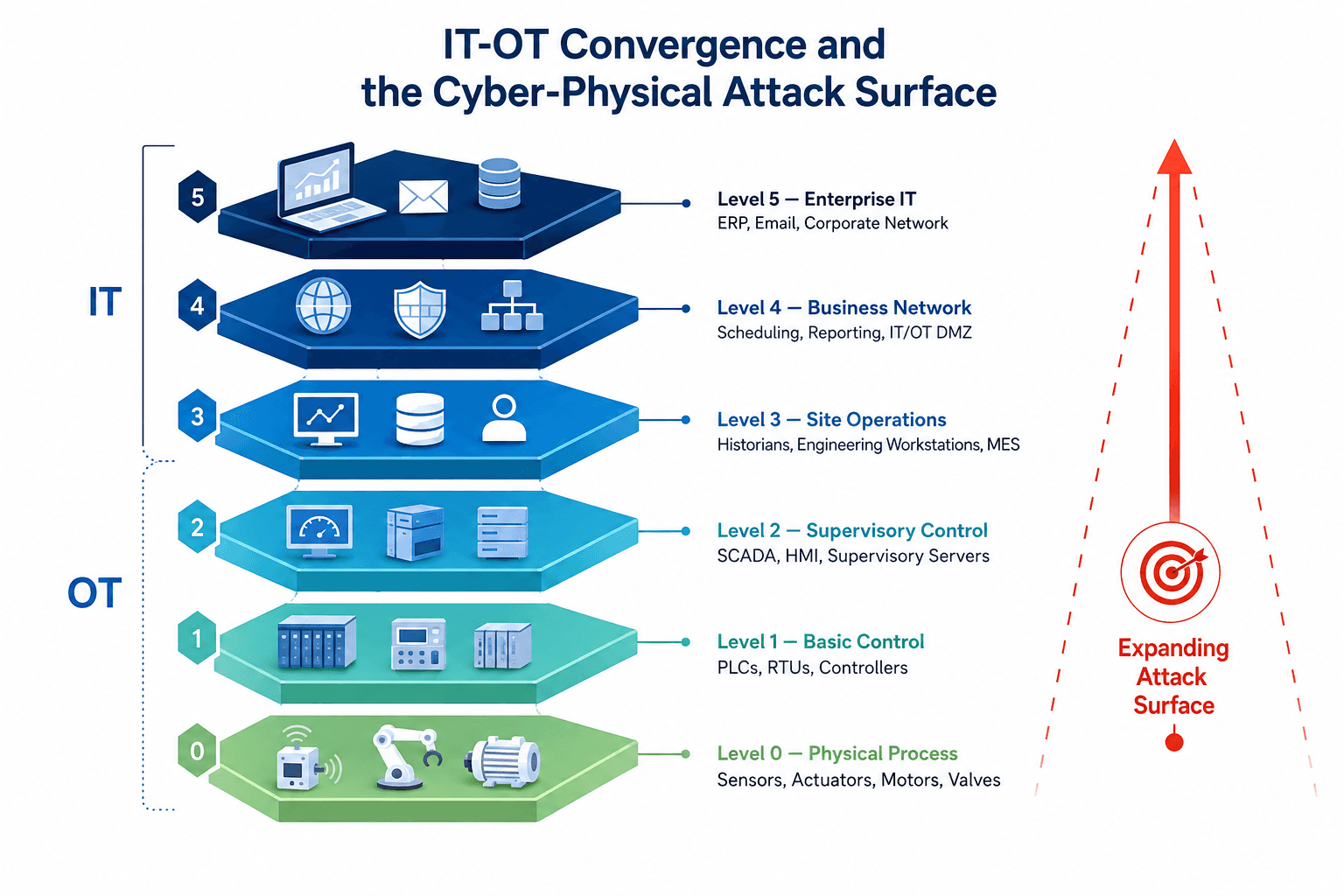
الشكل 1: التقارب بين تكنولوجيا المعلومات والتكنولوجيا التشغيلية يوسع سطح الهجوم مع اتصال الطبقات الرقمية والمادية
توصَف البيئات الصناعية تقليدياً في طبقات، بدءاً من أنظمة تكنولوجيا المعلومات الخاصة بالمؤسسات في الأعلى وصولاً إلى العملية المادية نفسها في الأسفل. يقع تخطيط موارد المؤسسات والبريد الإلكتروني في الطبقة العليا، وتقع أنظمة الأعمال والجدولة أسفلها مباشرةً، وتقع عمليات الموقع مثل مسجلات البيانات التاريخية ومحطات العمل الهندسية في المنتصف، وتقع أنظمة التحكم الإشرافي مثل SCADA وHMI أسفل ذلك، وتقع أجهزة التحكم الأساسية مثل PLCs وRTUs بالقرب من الأسفل، وتقع العملية المادية نفسها، بما في ذلك أجهزة الاستشعار والمحركات والمحركات والصمامات، في القاعدة. ويميل سطح الهجوم إلى التركيز بدقة حيث تلتقي هذه الطبقات، لا سيما حول الحدود بين أنظمة الأعمال وعمليات الموقع، لأن هذا هو المكان الذي تكون فيه السهولة والاتصال في أقوى حالاتهما وتكون فيه الضوابط الأمنية تاريخياً في أضعف حالاتها.
التقارب بين تكنولوجيا المعلومات والتكنولوجيا التشغيلية (IT-OT)
مع قيام المؤسسات بربط بيانات الإنتاج بأنظمة الأعمال لإعداد التقارير والتنبؤ والتحسين، تصبح الحدود بين تكنولوجيا المعلومات والتكنولوجيا التشغيلية منفذة. يمكن لجهاز كمبيوتر محمول مخترق في مكتب الشركة، دون وجود تجزئة مناسبة، أن يصبح جسراً للعبور إلى شبكة التحكم. التقارب ليس سيئاً بطبيعته، والفوائد التشغيلية حقيقية، ولكنه يتطلب بنية مدروسة ومخططاً لها بدلاً من أن تأتي بمحض الصدفة.
الأصول القديمة والقائمة (Brownfield)
تم تركيب جزء كبير من المعدات التي تدير العمليات الحيوية اليوم منذ عقود ولم يتم تصميمها مطلقاً مع وضع الأمن السيبراني في الاعتبار. إن استبدال أسطول كامل من أجهزة التحكم نادراً ما يكون واقعياً، مالياً وتشغيلياً على حد سواء، لذا تحتاج المؤسسات إلى ضوابط تعويضية، مثل الحماية والمراقبة على مستوى الشبكة، والتي تقلل المخاطر حول الأصول التي لا يمكن تغييرها مباشرة.
الاتصال عن بُعد ووصول الطرف الثالث
غالباً ما يحتاج الموردون ومدمجو الأنظمة ومزودو الصيانة عن بُعد إلى الوصول إلى المعدات الصناعية، وغالباً ما تكون نقطة الوصول هذه غير موثقة وغير مراقبة بشكل كافٍ. يمكن أن تظل بوابة العبور (Jump Box) التي تم إعدادها منذ سنوات لمشروع تكامل لمرة واحدة نشطة لفترة طويلة بعد انتهاء المشروع، مما يوسع سطح الهجوم بهدوء دون أن يتتبعها أحد بنشاط.
العنصر البشري والفجوات في القوى العاملة
يتم تدريب مهندسي التكنولوجيا التشغيلية (OT) على إعطاء الأولوية للسلامة وموثوقية العمليات، وليس بالضرورة الأمن السيبراني، بينما غالباً ما يكون موظفو أمن تكنولوجيا المعلومات (IT) غير ملمين بالقيود التشغيلية لبيئة الإنتاج الحية. وتُعد هذه الفجوة أحد أكثر التحديات استمراراً في أمن الأنظمة السيبرانية الفيزيائية (CPS)، ويتطلب سدها تدريباً متبادلاً مهيكلاً وتعاوناً حقيقياً بين فرق الهندسة والعمليات والأمن بدلاً من فرض السياسات الأمنية دون مراعاة السياق التشغيلي.
بناء إطار عمل قوي لأمن الأنظمة السيبرانية الفيزيائية (CPS)
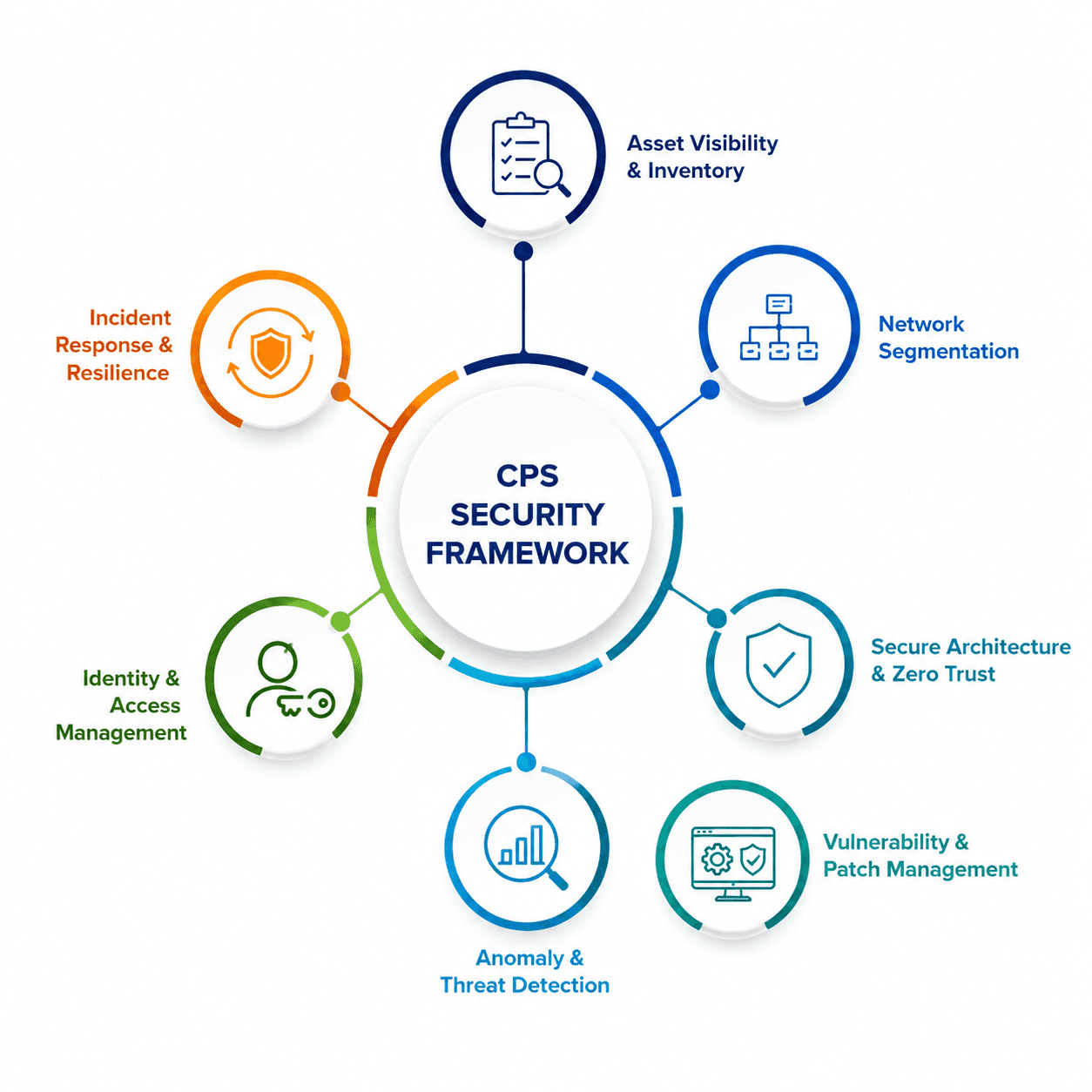
الشكل 2: الركائز الأساسية لإطار عمل عملي لأمن الأنظمة السيبرانية الفيزيائية
إن إطار عمل أمن الأنظمة السيبرانية الفيزيائية الموثوق لا يحاول فرض أدوات أمن تكنولوجيا المعلومات على صالة الإنتاج. بدلاً من ذلك، فإنه يوائم المبادئ الأمنية المعترف بها، بما في ذلك تلك الموجودة في معايير الأمن الصناعي الدولية، مع الحقائق التشغيلية لعملية مادية حية. وتشكل الركائز السبع التالية العمود الفقري لبرنامج قابل للتطبيق.
رؤية الأصول وحصرها
لا يمكنك حماية ما لا يمكنك رؤيته، وتفاجأ معظم المؤسسات الصناعية بعدد الأجهزة الموجودة على شبكات التحكم الخاصة بها والتي لم يتم توثيقها رسمياً قط. وتُفضل طرق الاكتشاف الخاملة، التي تستمع إلى حركة مرور الشبكة دون إرسال استعلامات إلى أجهزة التحكم الحساسة، عموماً على الفحص النشط في بيئات التكنولوجيا التشغيلية، نظراً لأن بعض الأجهزة القديمة يمكن أن تتصرف بشكل غير متوقع عند فحصها. ويسجل الحصر المفيد كلاً من الشركة المصنعة، والطراز، وإصدار البرنامج الثابت، وبروتوكول الاتصال، والأهمية التشغيلية لكل أصل.
تجزئة الشبكة وتقسيمها إلى مناطق

الشكل 3: نهج المناطق والممرات يفصل بين أنظمة المؤسسة، والعمليات، والتحكم، والسلامة
تقسم التجزئة الأصول إلى مجموعات في مناطق بناءً على الوظيفة والأهمية، وتتحكم في الممرات، أو نقاط الاتصال، فيما بينها. يفصل هيكل المناطق المصمم جيداً شبكة المؤسسة عن المنطقة المعزولة (DMZ)، والمنطقة المعزولة عن عمليات الموقع، وعمليات الموقع عن منطقة التحكم، ومنطقة التحكم عن أنظمة السلامة، مما يضمن أن الاختراق في منطقة واحدة لا ينتقل تلقائياً إلى المنطقة التالية.
البنية الآمنة ومبادئ الثقة الصفرية للتكنولوجيا التشغيلية (OT)
لا تعني الثقة الصفرية في سياق التكنولوجيا التشغيلية إعادة المصادقة المستمرة التي تقاطع العملية الجارية. بل تعني تطبيق الحد الأدنى من الامتيازات على الوصول الهندسي، وتوجيه الجلسات عن بُعد عبر خوادم عبور خاضعة للمراقبة، وفي المناطق الأكثر حساسية، استخدام صمامات البيانات أحادية الاتجاه (Data Diodes) بحيث يمكن للمعلومات التدفق للخارج لأغراض المراقبة دون السماح بمرور أي أمر في الاتجاه المعاكس.
إدارة الثغرات الأمنية والترقيع
لا يمكن معالجة العديد من ثغرات التكنولوجيا التشغيلية (OT) على الفور، حيث يتطلب الترقيع غالباً فترات توقف مجدولة قد لا تتوفر إلا بضع مرات في السنة. ويعطي البرنامج العملي الأولوية للثغرات الأمنية بناءً على إمكانية استغلالها الفعلية والتعرض التشغيلي، ويطبق ضوابط تعويضية مثل عزل الشبكة عندما لا يمكن نشر الرقعة على الفور، ويخطط لدورات الترقيع حول فترات الصيانة بدلاً من جداول إصدارات الموردين.
كشف الشذوذ والتهديدات
يعمل الكشف في البيئات الصناعية بشكل أفضل عندما يتم ضبطه وفقاً لبروتوكولات محددة وسلوك العمليات في المنشأة بدلاً من الاعتماد على توقيعات تكنولوجيا المعلومات العامة. ويسمح وضع خط أساس للسلوك التشغيلي الطبيعي لفرق الأمن باكتشاف الانحرافات الطفيفة، مثل تسلسل أوامر غير معتاد أو تغيير في نقطة الضبط خارج النطاق المحدد، قبل أن تترجم إلى نتيجة مادية.
إدارة الهوية والوصول
ما تزال عمليات تسجيل الدخول المشتركة شائعة في أنظمة التحكم القديمة، مما يجعل من المستحيل تقريباً تتبع من قام بإجراء معين. ويؤدي الانتقال نحو بيانات اعتماد فريدة، وتطبيق المصادقة متعددة العوامل حيثما كان ذلك ممكناً تشغيلياً، وإدارة الوصول المميز للموردين والمقاولين إلى سد إحدى الثغرات الأكثر استغلالاً في البيئات الصناعية.
الاستجابة للحوادث والقدرة على الصمود التشغيلي
تبدو خطة الاستجابة للحوادث المخصصة للتكنولوجيا التشغيلية (OT) مختلفة عن خطة تكنولوجيا المعلومات التقليدية، لأنها يجب أن تأخذ في الاعتبار إجراءات السلامة، والبدائل الاحتياطية للتشغيل اليدوي، والتنسيق الوثيق بين فرق الأمن والهندسة والعمليات. إن اختبار تلك الخطة بانتظام، بما في ذلك التمارين المكتبية (Tabletop) التي تشارك فيها كوادر المحطة، هو ما يحول الوثيقة إلى قدرة حقيقية عند وقوع حادث فعلي.
مواءمة الإطار مع المعايير المعترف بها
لا يلزم ابتكار أي من هذه الركائز السبع من الصفر. إذ تصف معايير الأمن الصناعي الدولية بالفعل التجزئة القائمة على المناطق، ومستويات الأمن المرتبطة بالمخاطر، وإدارة الثغرات الأمنية القائمة على دورة الحياة بالتفصيل، وتتوقع الأطر التنظيمية الوطنية لقطاعات الطاقة والمياه وغيرها من القطاعات الحيوية بشكل متزايد من المؤسسات إظهار هذا النوع من النهج المهيكل تماماً. وتحقق مواءمة البرنامج الداخلي مع المعايير المعترف بها أمرين في آن واحد: فهي تمنح فرق الهندسة والعمليات لغة مشتركة للعمل من خلالها، وتمنح القيادة طريقة دفاعية لتظهر للجهات التنظيمية وشركات التأمين ومجالس الإدارة أن الموقف الأمني للمؤسسة قد بُني على ممارسات راسخة بدلاً من الارتجال بعد وقوع الحدث.
ركيزة إطار العمل | الهدف الأساسي | النتيجة النموذجية |
رؤية الأصول وحصرها | تكوين صورة كاملة ودقيقة للأجهزة المتصلة | تقليل النقاط العمياء وتقييم المخاطر بشكل أسرع |
تجزئة الشبكة | احتواء الحوادث داخل مناطق محددة | الحد من الحركة الجانبية وتقليص نطاق التأثير |
البنية الآمنة | تطبيق الحد الأدنى من الامتيازات دون تعطيل العمليات | مسارات وصول محكومة ومراقبة |
إدارة الثغرات الأمنية | تحديد أولويات المخاطر وإدارتها بشكل واقعي | ثغرات أقل قابلة للاستغلال على الرغم من قيود الترقيع |
كشف الشذوذ | تحديد الانحرافات قبل حدوث تأثير مادي | إنذار مبكر واستجابة أسرع |
إدارة الهوية والوصول | ضمان المساءلة عن كل إجراء يتم اتخاذه | مسار تدقيق واضح وتقليل المخاطر الداخلية |
الاستجابة للحوادث والقدرة على الصمود | التعافي بسرعة وأمان من الاضطرابات | فترات توقف أقصر والحفاظ على هوامش الأمان |
الجدول 3: كيف تساهم كل ركيزة من ركائز إطار العمل في الموقف الأمني العام للأنظمة السيبرانية الفيزيائية (CPS)
توصيات عملية وأفضل الممارسات لأمن الأنظمة السيبرانية الفيزيائية (CPS)
لا يتطلب بناء أمن الأنظمة السيبرانية الفيزيائية حل كل شيء دفعة واحدة. وتميل المؤسسات التي تحقق التقدم الأسرع والأكثر استدامة إلى تسلسل جهودها، بدءاً من الرؤية وتحقيق المكاسب السريعة قبل الانتقال نحو التغيير الهيكلي الأعمق. وتؤدي محاولة تنفيذ كل ضابط أمني في وقت واحد، دون مراعاة لفترات الصيانة أو أهمية العمليات، إلى خلق احتكاك مع فرق العمليات ويمكن أن تعطل البرنامج قبل أن يحقق أي فائدة ملموسة. كما يمنح النهج المرحلي القيادة أدلة إثبات مبكرة ومرئية، مما يسهل تأمين الميزانية المستمرة والدعم للأعمال الهيكلية طويلة الأجل التي تلي ذلك.
الإطار الزمني | الإجراءات الموصى بها |
الـ 30 يوماً الأولى | قم بتشغيل الاكتشاف الخامل للأصول، ومراجعة وتوثيق كل نقطة وصول عن بُعد، وتعطيل اتصالات الموردين التي لم تعد هناك حاجة إليها، وتأكيد إجراءات النسخ الاحتياطي والاستعادة لأجهزة التحكم الحيوية. |
من 30 إلى 90 يوماً | نفذ تجزئة شبكة فعالة بين تكنولوجيا المعلومات والتكنولوجيا التشغيلية، وانشر مراقبة خاملة مضبوطة على البروتوكولات الصناعية، واجعل الوصول بامتيازات الحد الأدنى رسمياً للحسابات الهندسية. |
90 يوماً وما فوق | قم ببناء واختبار خطة استجابة للحوادث خاصة بالتكنولوجيا التشغيلية (OT)، ومواءمة البرنامج الأمني مع المعايير الصناعية المعترف بها، ووضع وتيرة مستمرة لإدارة الثغرات الأمنية، والاستثمار في التدريب المتبادل بين فرق أمن تكنولوجيا المعلومات وهندسة التكنولوجيا التشغيلية. |
الجدول 4: خارطة طريق مرحلية لتعزيز الأمن السيبراني للأنظمة السيبرانية الفيزيائية
تعامل مع أمن التكنولوجيا التشغيلية (OT) كمسؤولية مشتركة بين فرق الهندسة والعمليات والأمن بدلاً من اعتباره مبادرة تقنية بحتة
أعطِ الأولوية للضوابط التعويضية عندما لا يكون الترقيع المباشر ممكناً في غضون فترة صيانة مقبولة
اختر أدوات المراقبة والكشف التي تم بناؤها خصيصاً للبروتوكولات الصناعية وسلوك العمليات
وثّق كل مسار وصول عن بُعد، بما في ذلك اتصالات الموردين ومدمجي الأنظمة، وراجعها بجدول زمني منتظم
ابنِ خططاً للاستجابة للحوادث تأخذ في الاعتبار إجراءات السلامة والبدائل الاحتياطية للتشغيل اليدوي، وليس فقط استعادة البيانات
قِس التقدم بمؤشرات عملية، مثل تقليل الأصول غير المدارة وتحسين وقت الكشف، بدلاً من قوائم مراجعة الامتثال وحدها
كيف تدعم Shieldworkz المؤسسات؟
تعمل Shieldworkz جنباً إلى جنب مع المؤسسات الصناعية لسد الفجوة بين التفكير التقليدي لأمن تكنولوجيا المعلومات والواقع التشغيلي لصالة الإنتاج. ويبنى نهجنا على التعاون مع فرق الهندسة والعمليات، وليس بمعزل عنها، بحيث يمكن المضي قدماً نحو تحقيق أمن أقوى وإنتاج دون انقطاع معاً.
تقييمات رؤية الأصول التي تركز على التكنولوجيا التشغيلية وأنظمة التحكم الصناعية (OT/ICS) والتي ترسم خريطة لكل جهاز متصل في بيئتك
مراقبة خاملة وغير تدخلية مصممة لأنظمة التحكم الحساسة التي لا تتحمل الفحص النشط
توجيهات تجزئة الشبكة المبنية على مبادئ المناطق والممرات المعترف بها للبيئات الصناعية
تحديد أولويات الثغرات والمخاطر القائمة على السياق التشغيلي، وليس درجات الخطورة العامة
كشف التهديدات المضبوط على البروتوكولات الصناعية، مع التركيز على الإنذار المبكر قبل حدوث تأثير مادي
تخطيط الاستجابة للحوادث والتمارين المكتبية المصممة خصيصاً للتكنولوجيا التشغيلية والعمليات الحيوية للسلامة
دعم رسم خرائط الامتثال المتوافقة مع معايير الأمن السيبراني الصناعي المعترف بها والتوقعات التنظيمية
نموذج مشاركة تعاوني يحترم جداول الإنتاج ومتطلبات السلامة وسير العمل الهندسي
الخاتمة
لم يعد الأمن السيبراني للأنظمة السيبرانية الفيزيائية اهتماماً متخصصاً مقتصراً على حفنة من القطاعات عالية المخاطر. فأي مؤسسة تدير عمليات مادية متصلة، من مصانع التصنيع إلى المرافق إلى البنية التحتية الحيوية، تواجه الآن نفس التحدي الأساسي: حماية النقطة التي تلتقي فيها الأوامر الرقمية بالنتائج في العالم الحقيقي. والمؤسسات التي تدير هذه المخاطر جيداً ليست تلك التي تمتلك أكبر الميزانيات الأمنية، بل هي تلك التي تفهم أصولها، وتجزئ شبكاتها بعناية، وتكتشف الشذوذ مبكراً، وتخطط للحوادث قبل وقوعها، وكل ذلك مع احترام متطلبات السلامة والتشغيل التي تجعل أعمالها تسير في المقام الأول.
ولا يتطلب الوصول إلى هذه الغاية إصلاحاً شاملاً من اليوم الأول. بل يتطلب نظرة واضحة وموضوعية إلى وضع مؤسستك اليوم، وخارطة طريق عملية لسد الثغرات الأكثر إلحاحاً، وشريكاً يفهم الجانبين الهندسي والأمني للحوار.
احجز استشارة مجانية مع خبرائنا تحمل كل محطة وشبكة وخط إنتاج ملف المخاطر الخاص بها، ولا يوجد حل واحد يناسب الجميع لأمن الأنظمة السيبرانية الفيزيائية. إذا كنت تريد رؤية واضحة وعملية لوضع مؤسستك اليوم، فإن فريقنا مستعد لمراجعتها معك خطوة بخطوة. تحدث إلى أخصائي أمن التكنولوجيا التشغيلية (OT) من Shieldworkz واحصل على تقييم عملي وبدون التزام لمخاطر الأنظمة السيبرانية الفيزيائية لديك، احجز استشارتك المجانية اليوم. |
مصادر إضافية
دليل شامل لكشف الشبكة والاستجابة لها (NDR) في عام 2026 هنا
دفتر عمل حاسبة التعرض لمخاطر أمن التكنولوجيا التشغيلية (OT) هنا
تقرير قابل للتنزيل حول حادثة Stryker السيبرانية هنا
أدلة المعالجة والحلول هنا
أفضل ممارسات أمن التكنولوجيا التشغيلية (OT) وإرشادات تقييم المخاطر هنا
قائمة مرجعية لتقييم مخاطر التكنولوجيا التشغيلية وأنظمة التحكم الصناعية (OT/ICS) القائمة على معيار IEC 62443 لقطاع تصنيع الأغذية والمشروبات هنا
احصل على تحديثات أسبوعية
الموارد والأخبار
تعرف على كيفية معالجة حلولنا الرائدة في مجال أمن تكنولوجيا التشغيل (OT) للتحديات الأمنية الحيوية
قد تود أيضًا

Investigative cyber threat research report: Colorado water utilities OT attacks
Prayukth K V

CEA Cyber Incident Response Requirements: How Power Utilities Can Build a Practical Security Plan
Team Shieldworkz

IEC 62443 for Pharmaceutical Manufacturing: Secure Critical Production OT
Team Shieldworkz

Investigative cyber threat research report: Cyberattacks on U.S.-bound energy tankers
Team Shieldworkz

The OT Lull: What a 30-day decline in direct intrusion activity actually tells us
Prayukth K V

Inside the Revolut data disclosure incident
Prayukth K V