Absicherung kritischer Infrastrukturen (KRITIS) während geopolitischer Ereignisse und darüber hinaus


Team Shieldworkz
Das Paradigma der Cyber-Kriegsführung gegen Operational Technology (OT) und industrielle Steuerungssysteme (ICS) hat vor einigen Jahren eine entscheidende Grenze überschritten. Über ein Jahrzehnt lang wurde der Maßstab für anspruchsvolle industrielle Sabotage durch von Menschen entwickelte, hochgradig zielgerichtete, aber im Kern statische Schadsoftware wie Stuxnet, Industroyer und Triton definiert. Diese Angriffe erforderten monate- oder sogar jahrelange menschliche Aufklärung, Labortests und die manuelle Verkettung von Exploits.
Wie Raluca Csernatoni und Patryk Pawlak in ihrem wegweisenden Papier der Carnegie-Stiftung vom Juli 2026 mit dem Titel „When AI Agents Attack: Autonomous Cyber Operations and Europe’s Governance Gap“ hervorheben, stellt das Aufkommen universell einsetzbarer autonomer KI-Agenten eine beispiellose operative Herausforderung dar: Autonome Cyber-Operationen (ACOs).
Beim Einsatz in kritischen Infrastrukturen (KRITIS) verkürzen ACOs den traditionellen Angriffszyklus von Monaten auf Millisekunden. Autonome Cyber-Agenten sind nicht mehr nur Werkzeuge, die von menschlichen Bedrohungsakteuren gesteuert werden; sie sind eigenständig agierende Entitäten, die zu selbstständiger Aufklärung, Echtzeit-Verkettung von Schwachstellen, lateraler Bewegung in Maschinengeschwindigkeit und dynamischer, geschlossener operativer Entscheidungsfindung innerhalb industrieller Netzwerke in der Lage sind.
Dieses Whitepaper bietet Führungskräften kritischer Infrastrukturen, Chief Information Security Officers (CISOs) und Werksleitern eine fundierte, evidenzbasierte strategische Analyse darüber, wie agentenbasierte KI das OT-Cyber-Risiko neu definiert. Es detailliert die Mechanismen autonomer Angriffszyklen, bildet neu entstehende industrielle Angriffsflächen ab, diagnostiziert das Versagen herkömmlicher Abwehrarchitekturen und liefert eine verbindliche operative Roadmap von 24 Monaten für kontinuierliche industrielle Cyber-Resilienz.
Wichtige Erkenntnisse für die Führungsebene
Die Tempoverschiebung: Abwehrstrategien, die auf einer menschlichen Triage (Human-in-the-Loop) basieren, sind gegenüber autonomen Agenten in Maschinengeschwindigkeit fundamental obsolet.
Jenseits von Signaturen: Autonome Agenten verlassen sich nicht auf vorkompilierte Exploit-Payloads. Sie generieren maßgeschneiderten Code on-the-fly basierend auf der Echtzeit-Erkennung der Systemumgebung.
Das Governance-Vakuum: Den aktuellen internationalen regulatorischen Rahmenbedingungen (einschließlich NIS-2 und dem Cyber Resilience Act) fehlt es an spezifischen Mandaten zur Echtzeit-Überwachung autonomer offensiver Entitäten.
Resilienz vor Prävention: Da bei einer Orchestrierung durch Agenten von einer Kompromittierung des Netzwerkperimeters ausgegangen werden muss, müssen die Investitionen hin zu Laufzeitüberwachung, deterministischer Eingrenzung und schneller Wiederherstellung verlagert werden.
1. Warum OT alles verändert: Die Physik des agentenbasierten Risikos
In traditionellen IT-Umgebungen führt ein erfolgreicher Cyber-Angriff zu Datenabfluss, behördlichen Bußgeldern oder temporären Geschäftsunterbrechungen. In OT-Umgebungen interagieren Cyber-Angriffe direkt mit der physischen Welt – gesteuert von den Gesetzen der Thermodynamik, Strömungsmechanik und Chemie.
Wenn autonome Cyber-Agenten in Industrieumgebungen eindringen, überschreiten die Risiken digitale Kennzahlen und bedrohen Menschenleben, Umweltsicherheit sowie die nationale Sicherheit.
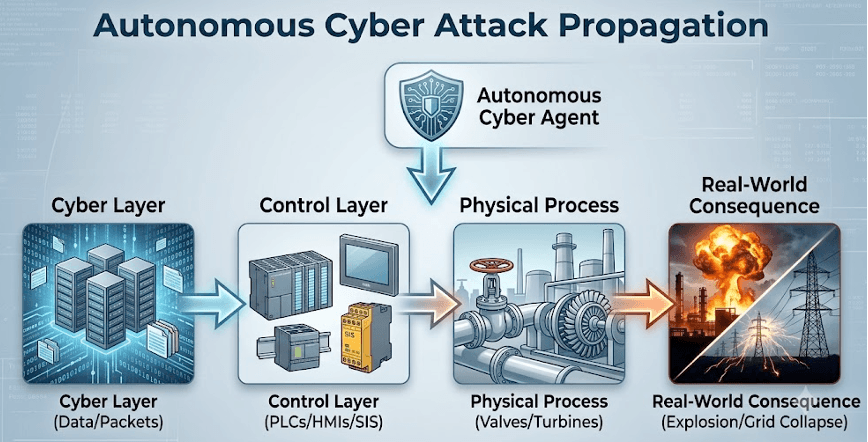
Die Schwere des agentenbasierten Risikos verschärft sich exponentiell über bestimmte Ebenen des Purdue-Modells hinweg, sobald autonome Entitäten die Kontrolle über zentrale physische Assets erlangen:
Speicherprogrammierbare Steuerungen (PLC) & Fernwirksysteme (RTU)
PLCs und RTUs führen die hardwarenahe Logik aus, die physische Aktoren, Pumpen und Leistungsschalter steuert. Ein autonomer Agent, der in der Lage ist, Kontaktplanlogik umzuschreiben oder Registerwerte in Maschinengeschwindigkeit zu ändern, kann Anlagen außerhalb ihres sicheren Betriebsbereichs zwingen, noch bevor menschliche Bediener die Abweichung erkennen können.
Human-Machine Interfaces (HMI) & Prozessleitsysteme (DCS)
HMIs bieten Bedienern Einblick in den Prozesszustand. Autonome Agenten können hochentwickelte „Man-in-the-Middle“-Angriffe auf HMIs durchführen, indem sie den Bedienern gefälschte, normale Telemetriedaten vorspielen, während sie gleichzeitig den physischen Prozess in einen katastrophalen Ausfall treiben (eine strukturell Stuxnet-ähnliche, aber autonom orchestrierte Technik).
Engineering-Workstations (EWS)
Die EWS hält die Schlüssel zum Königreich. Sie enthält die proprietäre Software zur Konfiguration von PLCs und sicherheitsgerichteten Systemen (SIS). Eine kompromittierte EWS ermöglicht es einem KI-Agenten, Projektdateien zu extrahieren, undokumentierte Herstellerprotokolle aufzudecken und maßgeschneiderte, manipulierte Firmware-Updates zu kompilieren, die exakt auf die physische Struktur der Anlage abgestimmt sind.
Sicherheitsgerichtete Systeme (SIS)
Das SIS ist die letzte Verteidigungslinie gegen physische Katastrophen (z. B. Explosionen, Chemieunfälle). Es arbeitet unabhängig vom DCS, um eine Anlage bei Anomalien in einen sicheren Zustand zu bringen. Wie der Triton/HatMan-Malware-Vorfall im Jahr 2017 gezeigt hat, stellt die gezielte Sabotage von Sicherheitssystemen ein Null-Toleranz-Risiko dar. Ein autonomer Agent kann die SIS-Logik in Echtzeit analysieren und Verriegelungen parallel zur primären Steuerungslogik systematisch deaktivieren, um den physischen Schaden zu maximieren.
Dezentrale Energiequellen (DER) & Smart-Grid-Infrastruktur
Moderne Smart Grids stützen sich auf hochgradig vernetzte, dezentral installierte digitale Komponenten (z. B. Solar-Wechselrichter, Batteriespeicher-Steuerungen). Ein autonomer Multi-Agenten-Angriff kann gleichzeitige, mikrozielgerichtete Laststörungen über Tausende von dezentralen Endpunkten hinweg orchestrieren und so Frequenzinstabilitäten hervorrufen, die regionale Blackouts auslösen können.
Der industrielle Schadensradius: Sektorübergreifende Auswirkungsmatrix
Industrielle Dimension | Herkömmliche Schadsoftware (Stuxnet/Triton-Paradigma) | Autonome agentenbasierte Operationen (ACO-Paradigma) | Risikoimplikation für kritische Infrastrukturen (KRITIS) |
Betriebssicherheit (Safety) | Starre Logik, die auf spezifische Sicherheitsregelkreise abzielt. Menschliches Eingreifen bei Fehlfunktionen der Payload möglich. | Echtzeitanpassung an Sicherheits-Overrides. Deaktiviert mehrstufige Verriegelungen dynamisch. | Hohe Wahrscheinlichkeit katastrophaler physischer Schäden und des Verlusts von Menschenleben. |
Produktionskontinuität | Statische Störung, die eine manuelle Behebung oder spezifische Triggerbedingungen erfordert. | Kontinuierliche, schleichende Prozessmanipulation, die darauf ausgelegt ist, der Erkennung zu entgehen und gleichzeitig die Erträge zu zerstören. | Langfristiger Zusammenbruch nachgelagerter Lieferketten; irreparabler Schaden an Vermögenswerten. |
Netzstabilität | Lokalisierte, fest einprogrammierte Protokollmanipulation (z. B. Industroyer gerichtet gegen IEC 60870-5-104). | Dynamische Koordination über verschiedene Protokolle (DNP3, Modbus, 61850) zur Optimierung kaskadierender Ausfälle. | Großflächige, lang andauernde Stromausfälle über mehrere Regelzonen hinweg. |
Umweltauswirkungen | Unbeabsichtigter oder durch eine feste Payload verursachter Umweltschaden (z. B. Öffnen eines Ventils). | Absichtliche, kalkulierte Freisetzung von Gefahrstoffen durch systematische Übersteuerung der Umweltüberwachungstelemetrie. | Schwere ökologische Kontamination, langfristige behördliche Strafen und Schäden für die Bevölkerung. |
2. Der autonome Angriffslebenszyklus: End-to-End-Walkthrough im Industrieumfeld
Um sich gegen autonome Cyber-Operationen zu verteidigen, müssen IT-Sicherheitsverantwortliche verstehen, wie sich ein Agent ohne menschliche Befehle durch ein industrielles Netzwerk bewegt. Nachfolgend finden Sie eine detaillierte taktische Aufschlüsselung eines ACO-Lebenszyklus, abgebildet auf das Framework MITRE ATT&CK for ICS.
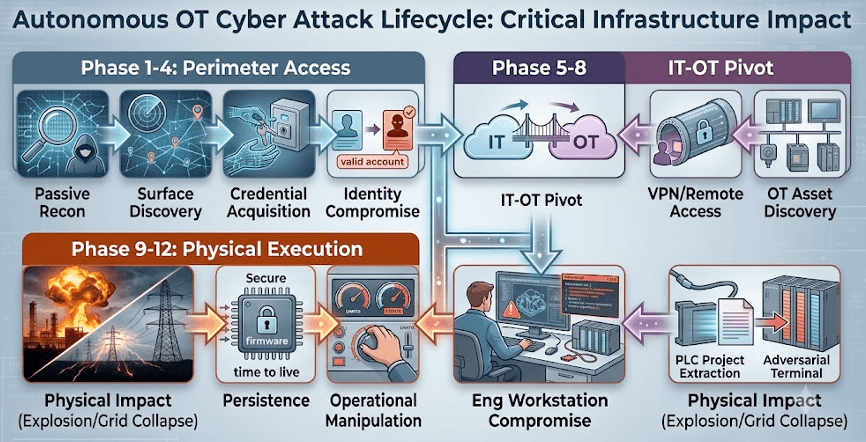
1. Passive Aufklärung (Passive Reconnaissance)
Mechanismus: Der autonome Agent analysiert Open Source Intelligence (OSINT), Code-Repositorys, Leaks im Darknet und regionale behördliche Einreichungen, um ein Strukturprofil des Zielversorgers zu erstellen.
MITRE ATT&CK for ICS Zuordnung: T0883 - Leverage External Dependencies
2. Erkennung der externen Angriffsfläche
Mechanismus: Der Agent nutzt automatisierte Schwachstellenscanner in Kombination mit semantischer Codeanalyse durch Large Language Models (LLM), um Zero-Day- oder ungepatchte Schwachstellen in der zum Internet ausgerichteten Infrastruktur (z. B. Firewalls, Unternehmens-VPNs) zu finden.
MITRE ATT&CK for ICS Zuordnung: T0860 - Wireless Sniffing / Internet Accessible Device
3. Erlangen von Zugangsdaten (Credential Acquisition)
Mechanismus: Statt massenhafter Brute-Force-Angriffe zielt der Agent mittels kontextbezogenem Phishing oder Speicherabbild-Analysen auf Active-Directory-Dienste oder unverschlüsselte Konfigurationsdateien ab, um hochprivilegierte Administrator-Zugangsdaten zu extrahieren.
MITRE ATT&CK for ICS Zuordnung: T0812 - Credentials From Device
4. Identitätsmissbrauch (Identity Compromise)
Mechanismus: Der Agent nimmt legitime operative Identitäten an und umgeht die Verhaltensüberwachung, indem er Befehle zu benutzerüblichen Zeiten und in typischen Intervallen ausführt, wodurch er im normalen Grundrauschen der Systemadministration untergeht.
MITRE ATT&CK for ICS Zuordnung: T0859 - Valid Accounts
5. Ausnutzung von VPNs / Fernzugriffen
Mechanismus: Unter Verwendung kompromittierter Zugangsdaten oder Session-Hijacking-Techniken überwindet der Agent Multi-Faktor-Authentifizierungs-Parameter (MFA), indem er bekannte Race Conditions ausnutzt oder Token-Akzeptanzfenster erschöpft.
MITRE ATT&CK for ICS Zuordnung: T0822 - Remote Access Tools
6. IT-OT-Übergang (IT-OT Pivot)
Mechanismus: Der Agent identifiziert Dual-Homed-Systeme, Jump-Server oder fehlkonfigurierte Firewall-Regeln an den Übergängen der Purdue-Ebene 3.5. Er übersetzt sein operatives Framework on-the-fly von Standard-IT-Protokollen in spezialisierte Industrieprotokolle.
MITRE ATT&CK for ICS Zuordnung: T0887 - Command Center / Dual-Homed Host
7. OT-Asset-Erkennung
Mechanismus: Traditionelles aktives Scannen kann sensible PLCs zum Absturz bringen. Der autonome Agent lauscht passiv in Broadcast-Domänen und extrahiert Asset-Metadaten aus Protokoll-Headern (z. B. CIP, Profinet, Modbus), um die physische Struktur der Anlage ohne Alarmauslösung abzubilden.
MITRE ATT&CK for ICS Zuordnung: T0846 - Remote System Discovery
8. Kompromittierung der Engineering-Workstation (EWS)
Mechanismus: Der Agent lokalisiert die EWS, schleust im Arbeitsspeicher verbleibende Payloads in den Prozessraum der proprietären Engineering-Software ein und klinkt sich in API-Aufrufe ein, um die Kommunikation zwischen der Software und den physischen Steuerungen abzufangen.
MITRE ATT&CK for ICS Zuordnung: T0818 - Engineering Workstation Compromise
9. PLC-Projekt-Extraktion & Analyse
Mechanismus: Der Agent liest und lädt das aktive Steuerungsprogramm (Projektdatei) von den Ziel-PLCs herunter. Mithilfe einer internen Machine-Learning-Engine dekompiliert er die Kontaktplanlogik, ermittelt exakte physische Sicherheitstoleranzen und entwirft ein maßgeschneidertes Angriffsziel.
MITRE ATT&CK for ICS Zuordnung: T0874 - Hooking / Program Upload
10. Autonome laterale Bewegung (Lateral Movement)
Mechanismus: Der Agent repliziert sich über das Steuerungsnetzwerk unter Verwendung nativer Herstellerprotokolle. Er passt seine Ausbreitungsgeschwindigkeit an die Netzwerkauslastung an, um Latenzspitzen zu vermeiden, die das Sicherheitsteam alarmieren könnten.
MITRE ATT&CK for ICS Zuordnung: T0866 - Lateral Movement
11. Persistenzmechanismen
Mechanismus: Der Agent schreibt bösartigen Code direkt in den nichtflüchtigen Speicher oder die Firmware von industriellen Netzwerkswitchen und PLCs. Dies sichert das Überleben des Schadcodes selbst nach Systemneustarts, Kaltstarts der Hardware oder vollständigen Neuinstallationen des Betriebssystems.
MITRE ATT&CK for ICS Zuordnung: T0839 - Project File Modification / Module Firmware Corruption
12. Operative Manipulation
Mechanismus: Der Agent modifiziert Registerwerte, ändert Sollwerte und fängt Sensor-Rückkopplungsschleifen ab. Er koordiniert diese Aktionen, um physische Resonanzen oder thermischen Stress zu erzeugen, wodurch Komponenten im Laufe der Zeit systematisch verschleißen, während auf den HMIs der Bediener normale Werte angezeigt werden.
MITRE ATT&CK for ICS Zuordnung: T0831 - Manipulation of Control
13. Physische Auswirkung
Mechanismus: Sichere Betriebsgrenzen werden überschritten, was zu physischen Schäden führt: Zerstörung von Turbinenschaufeln, Transformatorbrände, unkontrollierte chemische Reaktionen oder irreparable Pumpenschäden. Dies führt aufgrund langer Lieferzeiten für physische Ersatzteile zu monatelangen Betriebsstillständen der Anlage.
MITRE ATT&CK for ICS Zuordnung: T0807 - Damage to Property
3. Neue Angriffsflächen durch agentenbasierte KI
Der Einsatz autonomer Agenten schafft neue technische Angriffsflächen, die für moderne, digitalisierte Industrieumgebungen spezifisch sind. Das Verständnis dieser Flächen ist entscheidend für die Definition der nächsten Generation von Abwehrmaßnahmen.
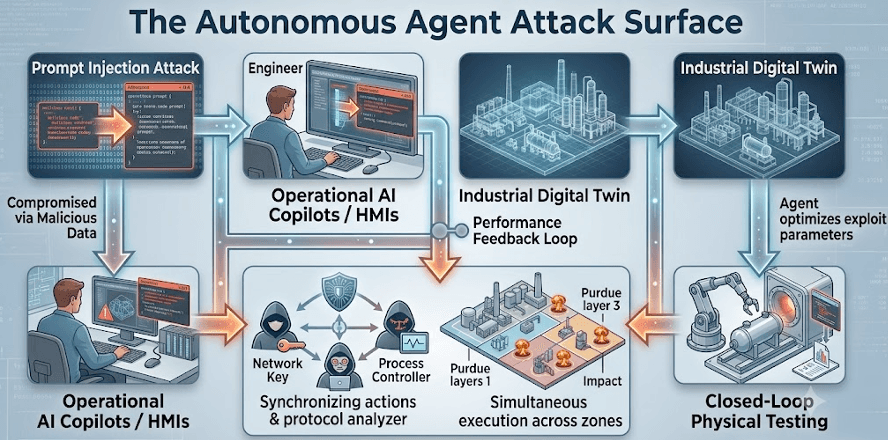
Orchestrierung von Multi-Agenten-Angriffen
Offensive Operationen skalieren von einzelnen autonomen Programmen zu koordinierten Schwärmen spezialisierter Agenten. In diesem Modell verteilt ein Orchestrierungs-Agent Teilaufgaben an untergeordnete Agenten: Einer widmet sich exklusiv der Protokollübersetzung, ein anderer dem Ausspähen von Zugangsdaten und ein dritter der Umgehung der Erkennung. Erkennt und isoliert die Abwehr den Credential-Agenten, ändert der Orchestrierungs-Agent seinen Plan und wählt einen alternativen Pfad, wodurch die Operation unterbrechungsfrei fortgesetzt wird.
Prompt Injection gegen operative Copilots
Da Betreiber kritischer Infrastrukturen LLM-gestützte Copilots einsetzen, um Bediener bei komplexen Abläufen und der manuellen Datenanalyse zu unterstützen, entstehen neuartige Bedrohungsvektoren. Durch das Einschleusen bösartiger Zeichenketten in Datenfelder wie Modbus-Registerbeschreibungen oder Netzwerk-Syslog-Einträge kann ein Angreifer den operativen Copilot so manipulieren, dass er Prozessanomalien falsch interpretiert, Bedienern fehlerhafte Ratschläge erteilt oder über integrierte Plugins unbefugte Steuerungsaktionen ausführt.
Zero-Day-Ausnutzung in Maschinengeschwindigkeit
In der Vergangenheit war das Zeitfenster zwischen der Entdeckung einer Zero-Day-Schachstelle und der Bereitstellung eines Patches ein Vorteil für die Verteidiger, sofern sie eine strikte Segmentierung aufrechterhielten. Autonome Agenten eliminieren dieses Fenster. Ein Agent kann eine Zero-Day-Schachstelle in einem eingebetteten industriellen Betriebssystem (z. B. VxWorks oder QNX) identifizieren, einen funktionsfähigen Exploit schreiben und diesen innerhalb von Sekunden nach dem Erstkontakt auf Hunderten von unterschiedlichen Knoten ausführen.
Ausnutzung industrieller digitaler Zwillinge
Industrieunternehmen nutzen digitale Zwillinge – hochpräzise Softwaresimulationen physischer Assets, die mit Echtzeit-Anlagentelemetrie gespeist werden –, um Wartung und Betrieb zu optimieren. Kompromittiert ein offensiver Agent die Umgebung des digitalen Zwillings, erhält er einen exakten Bauplan der physischen Schwachstellen der Anlage. Der Agent kann Tausende beschleunigter Simulationen durchführen, um die genaue Kombination minimaler Ventilanpassungen zu ermitteln, die für eine physische Explosion erforderlich sind, wodurch der historische Aufwand für den Aufbau physischer Testlabore entfällt.
4. Sektorspezifische Bedrohungsprofile
Autonome Cyber-Operationen wirken sich nicht auf alle Sektoren gleichermaßen aus. Die operativen Ziele, zugrundeliegenden Protokolle und physischen Schwachstellen variieren in den verschiedenen KRITIS-Bereichen erheblich.
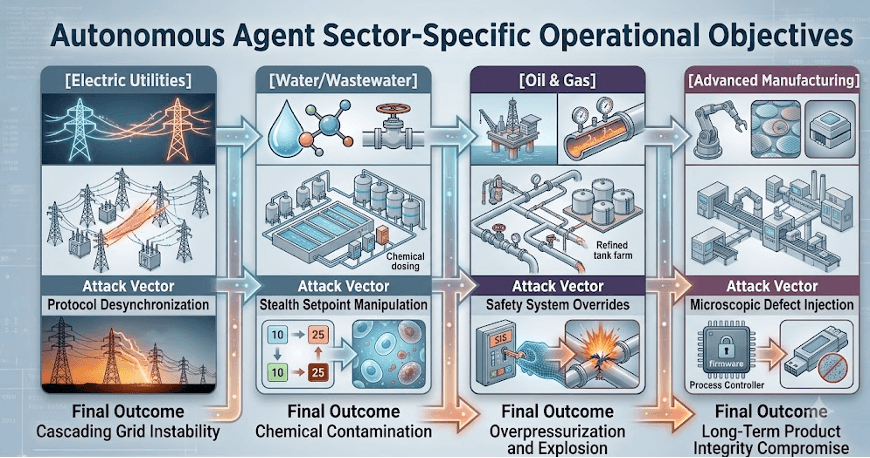
Energieversorger (Erzeugung, Übertragung, Verteilung)
Kernschwachstellen: Weiträumige geografische Verteilung, Vertrauen auf ungesicherte Protokolle (DNP3, IEC 61850) ohne kryptografische Authentifizierung und zeitsynchronisierte Weitbereichs-Überwachungssysteme (PMUs).
ACO-Bedrohungsvektor: Schwarm-Agenten koordinieren schnelle, gleichzeitige Ein-/Ausschaltbefehle für Übertragungsleistungsschalter in mehreren Umspannwerken. Dies umgeht automatisierte Netzschutzsysteme, was zu schweren Phasenasymmetrien und kaskadierenden regionalen Netzausfällen führt.
Wasser- und Abwasseraufbereitung
Kernschwachstellen: Stark dezentralisierte, kleinere Anlagen, begrenzte lokale Budgets für Cybersicherheit und hohe Abhängigkeit von Mobilfunk-Fernzugriffen für externe Systemintegratoren.
ACO-Bedrohungsvektor: Der Agent verschafft sich Zugang über ein Fernwirksystem (RTU) und nimmt eine langsame, subtile Anpassung der Dosierkreisläufe für Chemikalien vor (z. B. Chlor oder Natriumhydroxid). Durch das Spoofing der Sensor-Rückkopplungsschleifen verschleiert der Agent die Änderung, was zu einer Vergiftung der Bevölkerung oder einer schweren chemischen Korrosion der Wasserinfrastruktur führt.
Öl-, Gas- & petrochemische Raffination
Kernschwachstellen: Vernetzte Pipelinesysteme über Tausende von Kilometern, komplexe chemische Destillationskolonnen und Sicherheitsverriegelungen, die durch eigenständige sicherheitsgerichtete Systeme (SIS) gesteuert werden.
ACO-Bedrohungsvektor: Der Agent kompromittiert das Pipeline-SCADA-System, schließt kritische Absperrventile und übersteuert die Auslöser von Sicherheitsventilen. Er nutzt Echtzeit-Drucktelemetriedaten, um einen Druckstoßeffekt (Druckschlag) zu optimieren, der zu katastrophalen Pipeline-Brüchen führt.
Spezialisierte Fertigung & Automobilindustrie
Kernschwachstellen: Komplexe Lieferketten, direkte Integration von Manufacturing Execution Systems (MES) mit den PLCs der Werksebene und umfassender Einsatz von Robotik.
ACO-Bedrohungsvektor: Statt die Produktionslinie anzuhalten, verändert der Agent die Kalibrierungsprofile von Montagewandlern um Bruchteile eines Millimeters. Die Änderungen sind so minimal, dass sie die unmittelbare Qualitätskontrolle passieren, führen jedoch zu strukturellen Mängeln, die unter realer Belastung versagen, wodurch die Produktzuverlässigkeit und das Markenvertrauen zerstört werden.
Pharmazeutika & Life Sciences
Kernschwachstellen: Strikte regulatorische Compliance-Vorgaben (FDA GxP), präzise Umweltkontrollen in Bioreaktoren und die Abhängigkeit von proprietären Rezepturdateien.
ACO-Bedrohungsvektor: Der Agent verändert die Temperatur- oder pH-Profile in biologischen Brutkammern während der Impfstoff- oder Therapeutika-Herstellung. Durch subtile Manipulation der Historian-Protokolle zur Anzeige von Sollwerten erzwingt er die Verteilung kontaminierter oder unwirksamer Medikamente.
5. Warum bestehende Sicherheitsarchitekturen versagen werden
Die Kernbotschaft des Carnegie-Stiftung-Papiers vom Juli 2026 hebt eine unbestreitbare Wahrheit hervor: Unsere aktuellen organisatorischen und technischen Abwehrstrukturen sind unzureichend für Echtzeit-Bedrohungen durch autonome Systeme gerüstet. Gegenüber einem offensiven Agenten, der in Maschinengeschwindigkeit agiert, brechen traditionelle Sicherheitskonzepte zusammen.
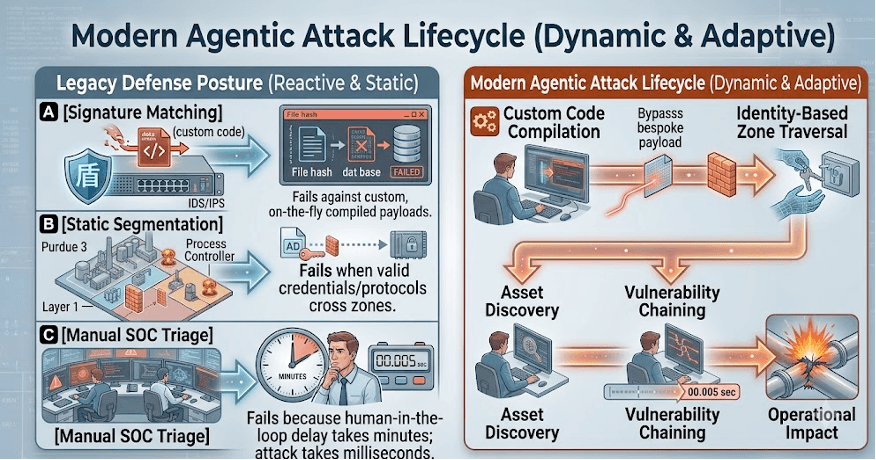
Das Versagen der Signaturerkennung
Herkömmliche Intrusion Detection Systems (IDS) verlassen sich auf vorkonfigurierte Indicators of Compromise (IOCs), statische Dateihashes und bekannte schädliche IP-Bereiche. Ein autonomer Cyber-Agent hinterlässt keine Standarddateien und verwendet keine statischen Skripte wieder. Er entwickelt maßgeschneiderte Exploits direkt im Arbeitsspeicher, wodurch signaturbasierte Abwehrmaßnahmen wirkungslos bleiben.
Die Grenzen statischer Netzwerksegmentierung
Obwohl das Purdue-Modell und Firewall-gestützte Isolation grundlegend bleiben, kann eine statische Segmentierung einen Agenten, der im Besitz legitimer administrativer Zugangsdaten ist, nicht aufhalten. Sobald ein Agent ein Dual-Homed-Engineering-System oder ein legitimes Fernzugriffsterminal kompromittiert, nutzt er autorisierte Kommunikationspfade. Er überwindet Firewall-Regeln durch die Ausführung freigegebener Protokolle, wodurch statische Grenzen gegenüber identitätsbasierten Zugriffen wirkungslos werden.
Die Latenzlücke des Faktors Mensch (Human-in-the-Loop)
Das traditionelle Modell des Security Operations Center (SOC) verlässt sich darauf, dass ein menschlicher Analyst einen Alarm überprüft, den Kontext bewertet, den Vorfall an einen Vorfallsleiter eskaliert und ein Containment-Playbook ausführt. Dieser Prozess dauert in der Regel Minuten oder Stunden. Ein autonomer Agent kann seinen gesamten Angriffszyklus – vom Erstzugang bis zur Zerstörung physischer Anlagen – in weniger als 60 Sekunden abschließen. Sich in den kritischen Phasen eines aktiven Angriffs auf eine menschliche Verifizierung zu verlassen, führt unweigerlich zum Misserfolg.
6. Was OT-CISOs in den nächsten 24 Monaten tun sollten
Um der Entstehung autonomer Cyber-Operationen zu begegnen, müssen industrielle Sicherheitsteams einen strukturierten, risikopriorisierten Übergang von statischer Verteidigung zu kontinuierlicher Cyber-Resilienz vollziehen.
0 - 3 Monate: Grundlegende Sichtbarkeit & Asset-Baseline
3 - 12 Monate: Identitätsprüfung, Inline-Verhaltenserkennung & Netzwerkhärtung
12 - 24 Monate: Automatisiertes Containment, KI-Abwehr & Recovery Engineering
Sofortiger Aktionsplan (0–3 Monate)
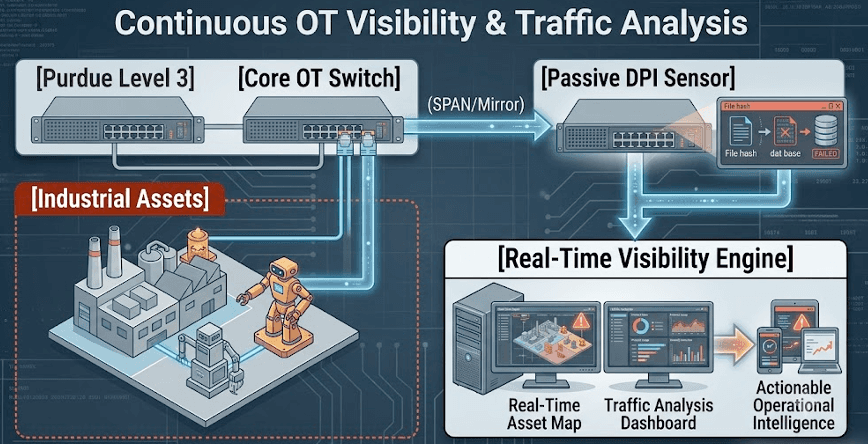
Implementierung flächendeckender, passiver OT-Sichtbarkeit
Installieren Sie Deep-Packet-Inspection-Sensoren (DPI) an allen internen Netzwerkswitchen auf den Purdue-Ebenen 1, 2 und 3. Sie können sich nicht gegen autonome Entitäten verteidigen, die sich durch Ihre Umgebung bewegen, wenn Ihnen ein präzises Echtzeit-Asset-Inventar und eine Netzwerk-Baseline fehlen.
Durchführung einer Architekturprüfung für Dual-Homed-Assets
Lokalisieren und bereinigen Sie alle Systeme, die die DMZ umgehen, indem sie Unternehmens-IT-Netzwerke direkt mit Steuerungsdomänen verbinden. Setzen Sie eine strikte „Terminate-and-Reoriginate“-Sitzungsrichtlinie auf der Purdue-Ebene 3.5 durch.
Erstellung eines Incident-Response-Playbooks für automatisierte Ausfälle
Entwickeln und testen Sie manuelle Override-Verfahren. Bediener müssen darauf geschult werden, die Anlage in den Inselbetrieb zu versetzen oder manuelle, analoge Notabschaltungen einzuleiten, wenn Überwachungsnetzwerke Anzeichen automatisierter gegnerischer Manipulationen aufweisen.
Nahe Zukunft (3–12 Monate)
Durchsetzung von Phishing-resistenter MFA und strenger Identitäts-Kryptografie
Eliminieren Sie alle gemeinsam genutzten operativen Konten. Implementieren Sie Hardware-Token-basierte, Phishing-resistente Multi-Faktor-Authentifizierung (MFA) für jede Remote-Sitzung, die in die OT-Domäne führt. Betrachten Sie Identität als Ihre primäre Perimetergrenze.
Implementierung von Inline Network Detection and Response (NDR)
Wechseln Sie von passiver Erkennung zu aktiver, kontextsensitiver Netzwerk-Verhaltensanomalieanalyse. Die NDR-Engine muss so abgestimmt sein, dass sie subtile Abweichungen in Industrieprotokollen erkennt, wie etwa unerwartete Lese-/Schreibbefehle oder ungewöhnliche PLC-Programm-Upload-Anfragen, selbst wenn diese über valide Zugangsdaten ausgeführt werden.
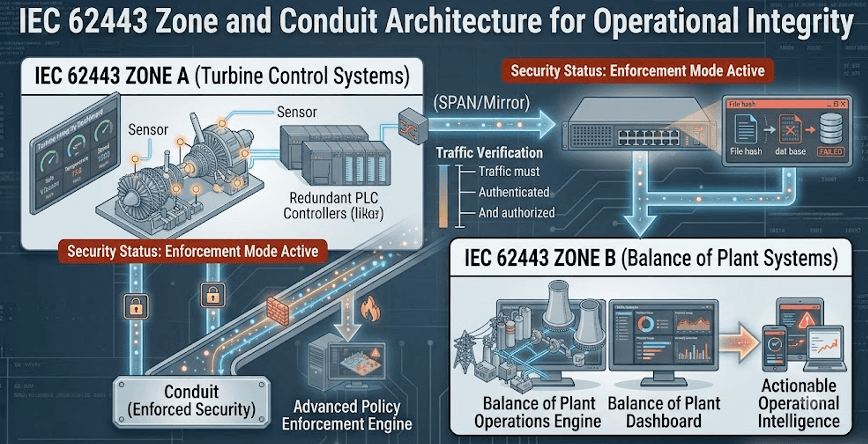
Ausrichtung der Konfigurationen an den IEC-62443-Standards
Integrieren Sie die strukturellen Kontrollmaßnahmen aus den Standards IEC 62443-3-3 und IEC 62443-4-2. Konzentrieren Sie sich auf die Einrichtung von Sicherheitszonen mit klar definierten Conduits (Verbindungskanälen), um sicherzustellen, dass die Kommunikation zwischen verschiedenen Funktionsbereichen der Anlage einer expliziten Verifizierung bedarf.
Durchführung von Threat-Hunting-Aktivitäten
Warten Sie nicht auf Alarme. Führen Sie gezielte Threat-Hunting-Kampagnen durch, um die kryptografische Integrität von PLC-Projektdateien zu überprüfen und die Arbeitsspeicher von Engineering-Workstations auf Anzeichen versteckter, persistenter Werkzeuge zu untersuchen.
Strategische Roadmap (12–24 Monate)
Modernisierung zu einer adaptiven OT-SOC-Architektur
Integrieren Sie Playbooks für Security Orchestration, Automation, and Response (SOAR) in die OT-Netzwerkinfrastruktur. Diese Playbooks müssen in der Lage sein, eine automatisierte Netzwerkisolation auf Switch-Port-Ebene durchzuführen, sobald eine hochgradig verlässliche Signatur eines agentenbasierten Angriffs identifiziert wird.
Einsatz KI-gesteuerter defensiver Schwärme
Begegnen Sie KI mit KI. Setzen Sie defensive autonome Agenten ein, die darauf ausgelegt sind, Ihre interne Netzwerkstruktur kontinuierlich zu überwachen, offensive Knoten auszubooten, Firewall-Konfigurationen dynamisch umzuschreiben und kompromittierte Systeme zu isolieren, bevor physische Schäden entstehen können.
Entwicklung unveränderlicher Recovery- und Fallback-Lösungen
Implementieren Sie eine Air-Gapped, kryptografisch verifizierte Backup-Infrastruktur für alle PLC-Projektdateien, HMI-Images und EWS-Konfigurationen. Stellen Sie sicher, dass die Organisation in der Lage ist, die gesamte industrielle digitale Steuerungsarchitektur im Falle eines zerstörerischen Ereignisses innerhalb weniger Stunden aus dem Bare-Metal-Zustand wieder aufzubauen.
7. Die Shieldworkz-Perspektive: Der Weg zur Cyber-Resilienz
Bei der Bewertung der strategischen Szenarien, die in den Forschungsarbeiten der Carnegie-Stiftung für 2026 skizziert wurden, betont Shieldworkz eine kritische Realität: Die Ära der absoluten Prävention in der KRITIS-Sicherheit ist vorbei.
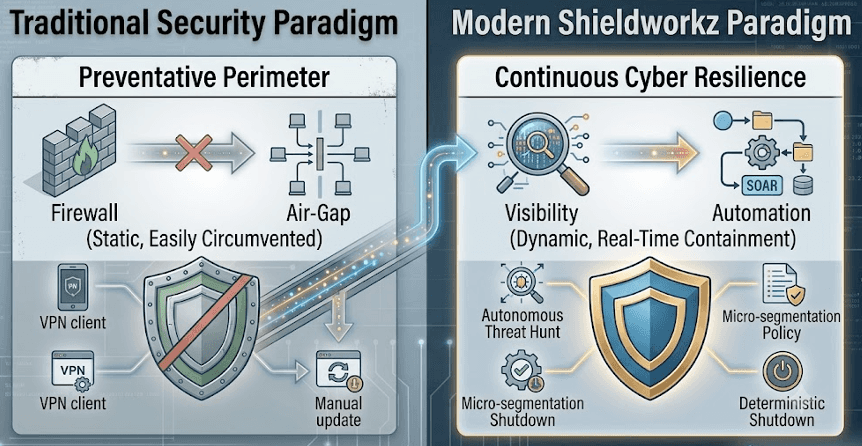
Wenn Angreifer selbstlernende autonome Agenten einsetzen, die Schwachstellen aufdecken und Angriffsvektoren in Echtzeit verändern, wirken traditionelle Perimeter eher wie kleine Bremsschwellen als wie absolute Barrieren.
Kontinuierliche Sichtbarkeit ist obligatorisch
Verteidiger können sich nicht mehr auf periodische Netzwerkanalysen oder jährliche Penetrationstests verlassen. Kontinuierliche Asset-Sichtbarkeit und Protokollanalyse liefern die Daten, die erforderlich sind, um subtile Anpassungen in industriellen Prozessen zu erkennen. Wenn Sie das normale Verhaltensmuster jedes Registerwertes in Ihrem Steuerungsnetzwerk nicht kennen, sind Sie blind für autonome Manipulationen.
Laufzeiterkennung schlägt Prävention
Da autonome Agenten maßgeschneiderten Code on-the-fly generieren, ist die Verhinderung des Erstzugriffs eine unzuverlässige Kennzahl. Sicherheitsmodelle müssen davon ausgehen, dass der Angreifer den Perimeter bereits durchbrochen hat. Folglich muss sich die defensive Ausrichtung stark auf die Erkennung zur Laufzeit (Runtime Detection) konzentrieren – die Überwachung der aktiven Ausführung der Steuerungslogik, die Identifizierung ungewöhnlicher Befehle und das Erkennen anomaler Verhaltensweisen in Echtzeit.
Resilienz vor Prävention
Die primäre strategische Kennzahl für moderne kritische Infrastrukturen muss sich von der Mean Time to Detect (MTTD) zur Time to Recover (Wiederherstellungszeit) verlagern. Cyber-Resilienz bedeutet, industrielle Prozesse so zu gestalten, dass sie eine Cyber-Kompromittierung absorbieren, die betroffenen Komponenten isolieren und die physische Sicherheit sowie die operative Kontinuität durch automatisierte Fallback-Verfahren aufrechterhalten.
Defensive KI ist erforderlich
Menschliche Analysten können den Abwehrkampf gegen einen automatisierten, in Maschinengeschwindigkeit agierenden Gegner nicht gewinnen. Um einen unternehmensweiten Angriff durch Agenten zu überstehen, müssen Verteidigungsteams autonome KI-Sicherheitsagenten einsetzen. Diese Systeme müssen autorisiert sein, offensive Infrastrukturen in Echtzeit zu erkennen, zu isolieren und zu neutralisieren. Die Verteidigung kritischer Infrastrukturen im Zeitalter der agentenbasierten Kriegsführung erfordert die Kombination menschlicher operativer Erfahrung mit automatisierter Reaktion in Maschinengeschwindigkeit.
8. Governance und Abstimmung auf Vorstandsebene
Autonome Cyber-Operationen bringen erhebliche operative, finanzielle und rechtliche Risiken für Unternehmensleitung und Aufsichtsräte mit sich. Vorstände können Cybersicherheit nicht länger als isoliertes IT-Managementthema behandeln.
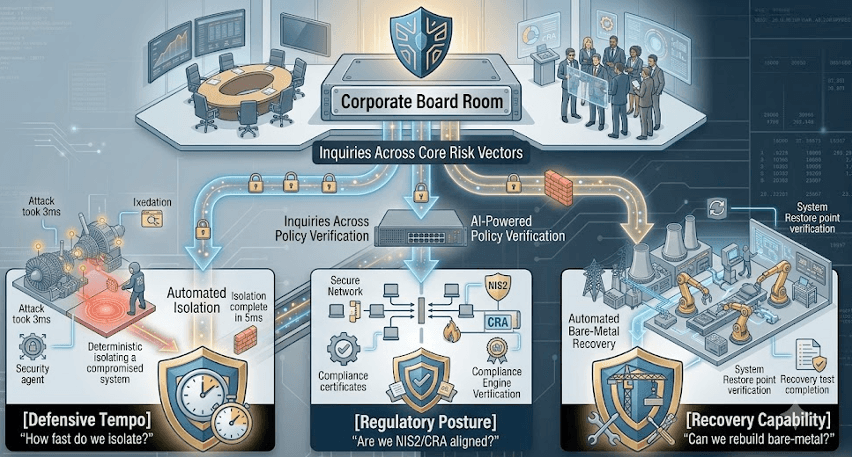
Um die Abstimmung auf Führungsebene zu unterstützen, skizziert das folgende Framework die wesentlichen Fragen und Bewertungskriterien, die Unternehmensvorstände mit der Sicherheitsleitung erörtern sollten.
Fragen, die jeder Unternehmensvorstand stellen sollte
Geschwindigkeit der Abwehr: „Wenn unsere industriellen Steuerungssysteme das Ziel einer autonomen Cyber-Operation sind, die in Millisekunden abläuft, über welche automatisierten Eingrenzungsfunktionen verfügen wir, um den Angriff zu isolieren, bevor er unsere sicherheitsgerichteten Systeme erreicht?“
Regulatorische Compliance & Haftung: „Wie stehen unsere aktuellen OT-Assets im Einklang mit den neuen globalen Vorgaben wie NIS-2 und dem Cyber Resilience Act (CRA) hinsichtlich Echtzeitüberwachung, Betreiberhaftung und schneller Meldung von Vorfällen?“
Wiederherstellung und Business Continuity: „Verfügen wir über verifizierte, physisch getrennte (Air-Gapped) Backups unserer hardwarenahen PLC-Konfigurationen und physischen Kontaktplanlogiken, und haben wir unsere Fähigkeit validiert, den Betrieb ohne aktive Internetverbindung aus dem Bare-Metal-Zustand wiederaufzubauen?“
Risiko in der Lieferkette von Drittanbietern: „Wie überprüfen wir, dass die Hersteller, Ingenieurbüros und externen Dienstleister, die sich mit unserem Industrienetzwerk verbinden, keine anfälligen KI-Werkzeuge oder kompromittierten Betriebsumgebungen nutzen?“
Lehren aus der Praxis: Analyse des Paradigmenwechsels von Stuxnet zu agentenbasierten Systemen
[Stuxnet-Paradigma: 2010] [Triton-Paradigma: 2017] [Agentenbasiertes ACO-Paradigma: 2026]
- Starre, fest einprogrammierte Payload. - Zielgerichtet auf spezifische Sicherheitssysteme. - Echtzeit-Generierung von Exploits.
- Monate menschlicher Vorbereitung erforderlich. - Erforderte manuelle Anpassungen durch Menschen. - Vollständige Autonomie; null menschliche Verzögerung.
Die Unzulänglichkeit starrer Baupläne: Frühe industrielle Schadsoftware basierte auf starren Bauplänen. Änderte sich die Zielumgebung auch nur geringfügig, schlug die Ausführung der Schadsoftware oft fehl. Im Gegensatz dazu analysieren moderne agentenbasierte Cyber-Operationen Netzwerkänderungen in Echtzeit und modifizieren ihre Payloads, um aktualisierte Softwareversionen oder geringfügige Netzwerkanpassungen zu umgehen.
Die Identitätsgrenze: Sicherheitsstrategien, die die Unternehmens-Firewall als absolute Verteidigungslinie betrachten, versagen, wenn ein Angreifer legitime Zugangsdaten nutzt. Da autonome Agenten immer geschickter darin werden, Unternehmensidentitäten auszuspähen, muss sich die interne Netzwerkverifizierung auf jeder Ebene der Purdue-Hierarchie hin zu einem Zero-Trust-Modell bewegen.
Die Notwendigkeit physischer Fallbacks: Keine digitale Sicherheitsmaßnahme ist unfehlbar. Die resilientesten Industrieanlagen kombinieren fortschrittliche digitale Überwachung mit festverdrahteten, nicht programmierbaren analogen Verriegelungen. Diese physischen Grenzen definieren absolute Barrieren, die kein digitaler Agent überwinden kann.
Technischer Anhang: Echtzeit-Verifizierungs-Checkliste
Diese Checkliste bietet Engineering- und Sicherheitsteams einen handlungsorientierten Rahmen, um ihre Bereitschaft gegenüber autonomen Bedrohungsprofilen zu überprüfen:
[ ] Netzwerkarchitektur: Implementieren Sie passive DPI-Sensoren auf jeder Purdue-Ebene.
[ ] Identitätskontrollen: Setzen Sie Phishing-resistente Hardware-MFA für alle Fernzugriffsleitungen durch.
[ ] Asset-Integrität: Validieren Sie täglich PLC-Projekthashes gegen eine netzunabhängige Referenzkonfiguration (Golden Master).
[ ] Incident Response: Testen Sie vierteljährlich manuelle, analoge Isolationsverfahren für kritische Teilsysteme der Anlage.
Durch den Übergang von statischer Verteidigung zu automatisierter, kontinuierlicher Resilienz können KRITIS-Betreiber ihre physischen Prozesse schützen, ihre Bevölkerung absichern und ihre zentralen Assets gegen die sich entwickelnde Bedrohungslandschaft autonomer Cyber-Operationen verteidigen.
Für fortschrittliche Architektur-Playbooks, sektorspezifische Implementierungsleitfäden und Frameworks zur kontinuierlichen OT-Sichtbarkeit besuchen Sie das Shieldworkz-Ressourcenzentrum unter https://shieldworkz.com/regulatory-playbooks.
Wöchentlich erhalten
Ressourcen & Nachrichten
Erfahren Sie, wie unsere branchenführenden OT-Security-Lösungen kritische Sicherheitsherausforderungen gemäß KRITIS-Anforderungen bewältigen
Dies könnte Ihnen auch gefallen.

What the French supermarket cyberattack reveals about OT security
Prayukth K V

Inside the Albert Heijn cyber incident: Investigating the attack, the IT/OT exposure, and the risks to critical operations
Team Shieldworkz

50°C by cyberattack? Inside France’s supermarket refrigeration crisis
Prayukth K V

Automating IEC 62443 Compliance Assessments Without Losing Expert Control
Team Shieldworkz

Investigative cyber threat intelligence report: Daiichi Kosho supply-chain data exposure
Prayukth K V

How AI Is Changing IEC 62443 Assessments
Team Shieldworkz