

Prayukth K V
Today's blogpost examines the June 2026 cyber extortion campaign targeting Novo Nordisk. It also assesses the implications for pharmaceutical R&D, AI intellectual property, regulatory compliance, and OT security. While some of the technical details remain based on threat actor claims rather than independent verification, the incident illustrates how modern pharmaceutical organizations are increasingly targeted for proprietary AI assets rather than operational disruption.
Strategic implications and why this incident matters
The incident represents an essential paradigm shift in cyber warfare targeted at pharmaceutical companies. It moves beyond the perimeters of traditional ransomware encryption or patient identity theft toward the systematic expropriation of core algorithmic intellectual property (IP). This covers proprietary Artificial Intelligence (AI) models, machine learning training datasets, and content rich screening images that are used in drug discovery.
While Novo Nordisk has stated that its core business and manufacturing operations remain unaffected, the long-term risk profile associated with this incident cannot be brushed aside. Degradation of competitive advantage, Good Manufacturing Practice (GMP) data integrity validation, and extensive regulatory exposure under the European Union’s NIS2 Directive and GDPR are just some of the implications that I could think of while writing this article. At present, there is no evidence that validated GMP systems were compromised. However, if future investigations identify unauthorized access to validated GxP environments, additional regulatory validation activities may be required.
Loss of data connected to AI models presents a whole new set of challenges that will have to be dealt with separately.
Key business and risk impacts
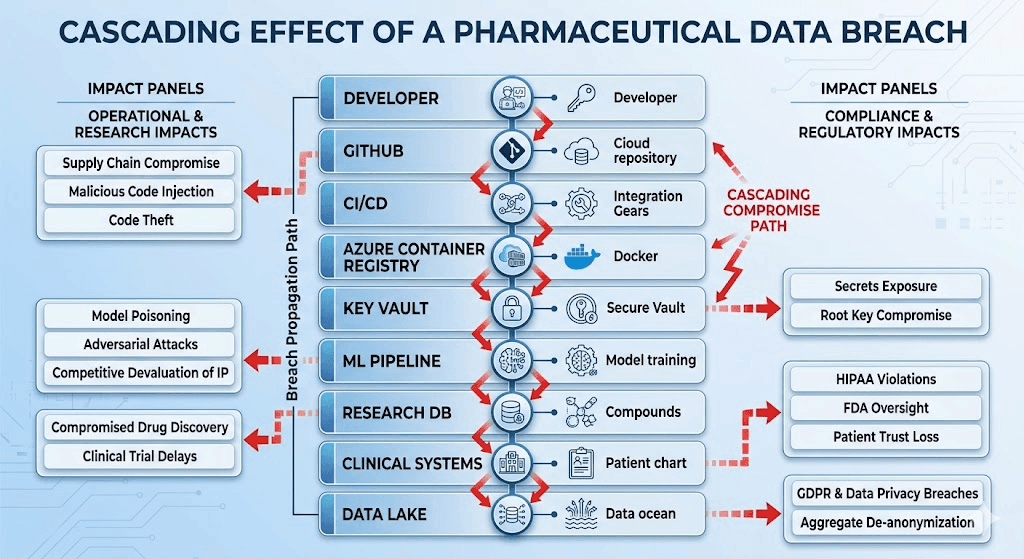
Algorithmic disruption: Threat actor claims include the theft of 30 "trained" AI models and nearly half a terabyte of proprietary microscopy data. If verified, this could potentially compromise R&D equity.
Data integrity concerns: The integrity of clinical trial records within the breach scope must be rigorously audited. Unauthorized access introduces the possibility of subtle data manipulation through data poisoning, potentially invalidating research endpoints if audit trails are broken. (There is no evidence of data exfiltration at this point. Nevertheless, investigators should verify that electronic records retain complete integrity and auditability.)
Regulatory penalties: The exposure of un-pseudonymized Healthcare Professional (HCP) registries and pseudonymized clinical trial metadata could trigger multi-jurisdictional notification mandates.
Timeline
The chronology below attempts to reconstructs the lifecycle of the compromise based on official disclosures from Novo Nordisk and dark web forensic collections from FulcrumSec.
March 2026 (Shieldworkz Assessment)
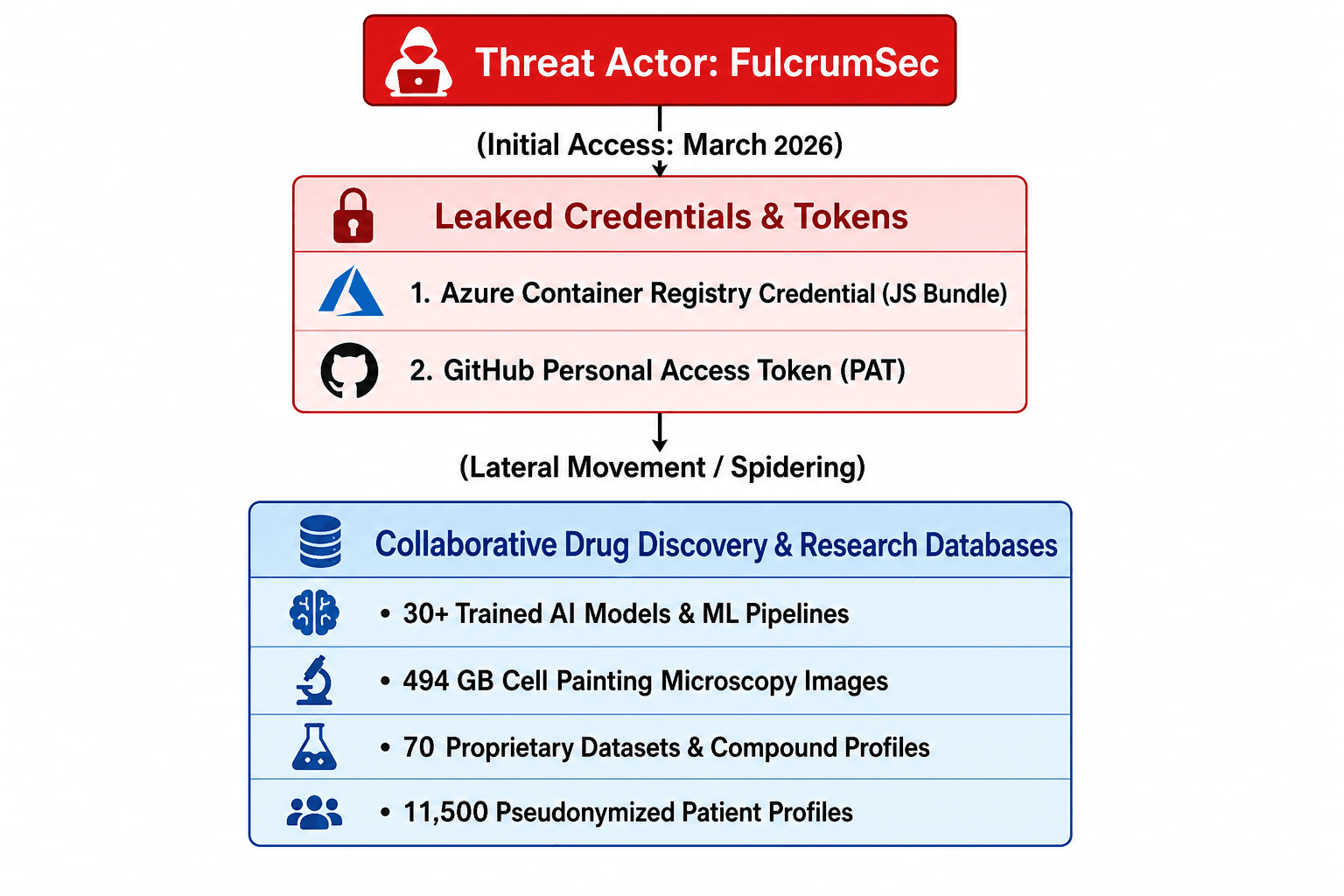
Initial Intrusion: Based on claims published by FulcrumSec, the threat actors gained initial access to Novo Nordisk's cloud and code infrastructure. The actors assert they spent over two months inside the network executing continuous, low-and-slow data exfiltration. If the threat actor's timeline is accurate, a two-month dwell time would have provided sufficient opportunity for reconnaissance, privilege escalation, repository enumeration and staged data collection. However, these activities have not been independently confirmed.
June 11, 2026 (Confirmed)
Discovery and containment: Novo Nordisk identifies the unauthorized IT access. The company activates its incident response protocol, engages external cybersecurity forensics firms, and alerts data protection authorities. The response is quick and accurate preventing any further breach.
Defensive deactivation: As a containment measure, the company takes a limited number of internal IT systems offline.
Public disclosure I: Novo Nordisk releases an official corporate statement confirming the IT breach and acknowledging that non-public, personal data was copied externally.
June 12, 2026 (Confirmed)
Trial Participant Alert: BioSpace and major pharmaceutical outlets publish advisories detailing that Novo Nordisk has begun urging clinical trial participants to remain vigilant, confirming that de-identified clinical trial data could have been exposed.
June 15, 2026 (Confirmed)
Patient/HCP Segmentation Detail: Novo Nordisk revises and updates its incident disclosure, drawing a hard boundary between the types of data exfiltrated: pseudonymized data for clinical trial patients versus fully unmaskable identity data for healthcare providers.
June 16, 2026 (Threat actor claim)
Extortion Escalation: FulcrumSec updates its dark web leak portal announcing the Novo Nordisk intrusion.
Ransom terms defiance: FulcrumSec screenshots of internal system logins, clinical file directories, and AI architecture samples. It goes on to add that the leak was initiated as Novo Nordisk refused to pay a $25 million ransom.
Monetization shift: FulcrumSec announces it is actively pursuing "private sales" of the proprietary drug compounds and AI models to third-party buyers. But they also claim that they will temporarily withhold the raw patient and employee datasets from open-source dumping.
June 17, 2026 (Confirmed)
Novo Nordisk acknowledgment: The company releases a follow-up statement confirming awareness of the online data publication claims, stating that main operational platforms remain stable and coordination with regulatory agencies is in progress.
Organization profile and threat landscape
Novo Nordisk is a leading global healthcare company, commanding a massive market capitalization.
High-value target vector
The company occupies a critical position in the global pharmaceutical supply chain. It operates hyper-automated, highly regulated manufacturing plants across the globe. It relies heavily on computerized Industrial Control Systems (ICS) and Operational Technology (OT) networks for batch processing and active pharmaceutical ingredient (API) synthesis.
AI-driven digital transformation
Concurrently, the organization has modernized its drug discovery pipeline by embedding deep learning, generative AI, and high-throughput automated microscopy into its laboratories. This digital evolution leverages automated cloud infrastructure, collaborative databases, and centralized ML repositories to accelerate target identification and optimize clinical trial designs.
This convergence of high market capitalization, globally dominant commercial products, and highly consolidated, cutting-edge AI intellectual property transforms the company into an attractive target for both financially motivated cybercriminals and nation-state economic espionage actors.
Incident overview
To maintain analytical rigor, this analysis separates confirmed telemetry from unverified threat actor assertions.
Component | Confirmed facts (Novo Nordisk disclosures) | Threat actor allegations (FulcrumSec claims) |
System Compromise Scope | Limited number of internal IT systems; main operating platforms and manufacturing lines remained online. | Continuous lateral movement spanning over 60 days; full access to private code repositories and internal research databases. |
Total Data Volume | Confirmed external copying of non-public, personal data. | 1.3 Terabytes (TB) of total exfiltrated data. |
Patient / Trial Impact | Data from some clinical trials exfiltrated. Explicitly pseudonymized (no direct names). Exposed fields: Year of birth, sex, biomarker metrics, patient IDs, lifestyle factors, immunogenicity data. | Stolen data includes comprehensive clinical history files for approximately 11,500 patients. |
HCP / Employee Impact | Un-pseudonymized data exposed. Includes: Names, registration numbers, emails, phone numbers, WhatsApp details, and clinic locations. | Complete corporate directory details, including thousands of employee profiles and internal communications. |
Intellectual Property | Non-public data copied. (Specific IP categories not detailed by corporate statements). | 30 trained AI models, 70 distinct datasets, 494 GB of cell painting microscopy images, and molecular blueprints for tens of thousands of experimental compounds. |
Technical analysis and attack lifecycle
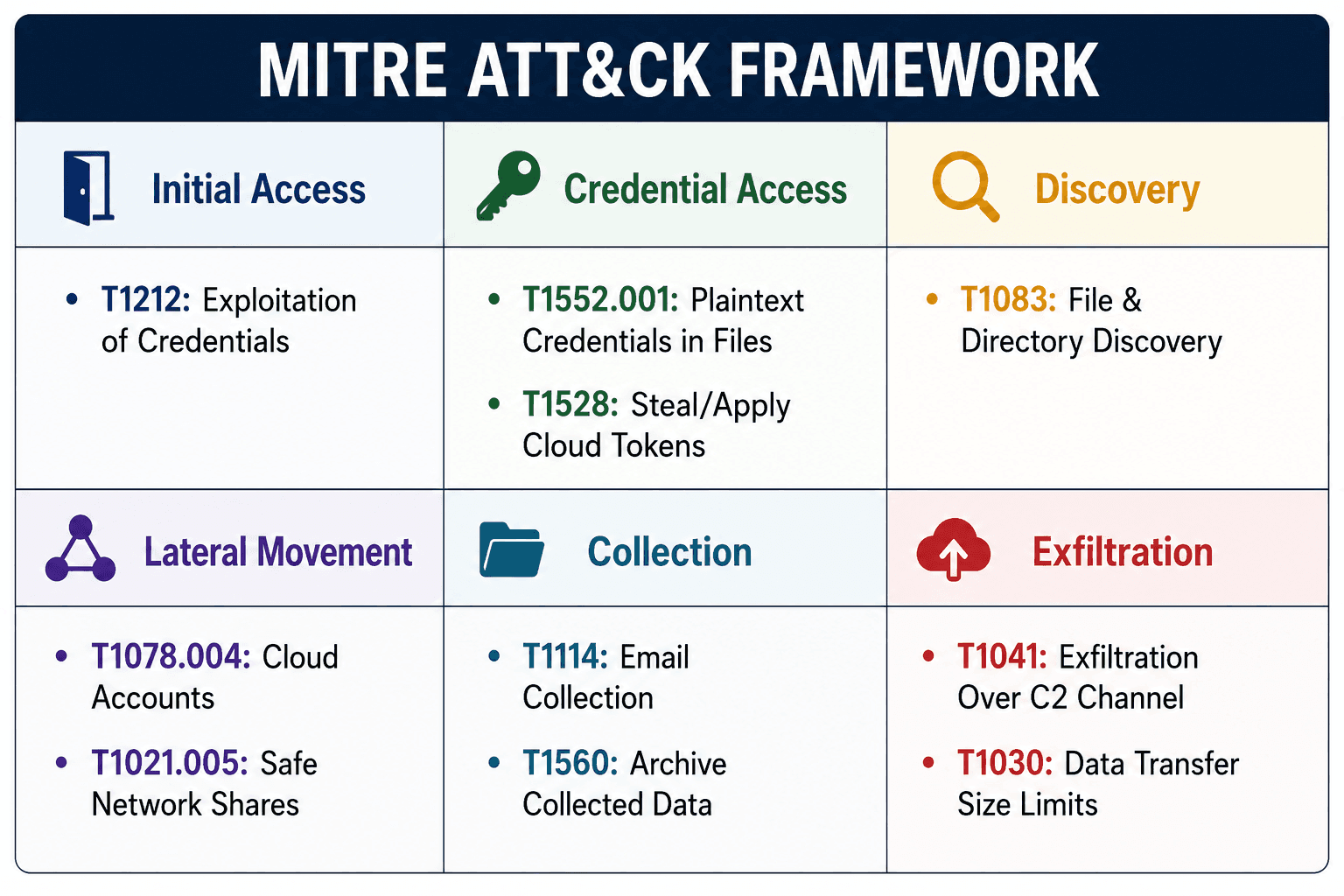
As per Shieldworkz analysis of the incident, the intrusion did not rely on any complex zero-day exploitation. But instead, the threat actor identified architecture flaws, privilege-related hygiene issues and was able to stay hidden on the network by switching across privileges and accounts. Scanning was done either during times of heaving network usage or during specific windows where anomalies of usage and data transfer went unnoticed. FulcrumSec has shown such capabilities in the past.
Initial access vector
The threat actors could have entered the network through an information stealer infection leading to the actors acquiring a personal access token:
Lateral Movement and Credential Harvesting
The compromised token provided initial read access to hundreds of private software repositories that contained many sensitive information including
Cloud infrastructure API tokens
Production database connection strings
High-privilege service account passwords
The actor harvested these data and used it to further attacks
Exfiltration
Data exfiltration was carried out over an extended period using low-bandwidth, encrypted channels and strategic timing to evade standard User and Entity Behavior Analytics (UEBA) thresholds, culminating in the extraction of the 1.3 TB payload.
Analysis of stolen data
The exfiltrated data categories present distinct utilities and values across different threat actor classes:
Pseudonymized clinical trial and biomarker datasets
The data: Randomized patient alpha-numeric IDs matched with longitudinal birth years, biometric baselines, immunogenicity responses, and lifestyle profiles (BMI, smoking history).
Value to nation-states/competitors: Highly valuable for fast-following generic drug manufacturers and foreign state-backed bio-pharma entities. Accessing clean, structured trial telemetry allows competitors to map drug efficacy profiles and structural safety boundaries without incurring the multi-billion-dollar costs of running independent clinical trials.
Value to cybercriminals: Though pseudonymized, this data provides the precise data building blocks required to execute re-identification attacks by cross-referencing public voter rolls, credit bureau leaks, and commercial data brokers.
Healthcare Professional (HCP) registries
The Data: Real names, medical license registration numbers, direct cell phone numbers, WhatsApp addresses, and operational office locations.
Value to Cybercriminals: A premier asset for highly targeted social engineering and phishing. Actors can impersonate Novo Nordisk procurement agents, clinical trial administrators, or regulatory bodies to deploy ransomware or steal further access credentials across thousands of external medical facilities.
AI asset theft and strategic espionage
The explicit targeting of AI assets represents a critical aspect of this breach. In modern drug discovery, AI models are not merely peripheral tools; they constitute the primary intellectual property engine of the enterprise.
What the "AI Assets" include
Based on forensic samples posted to FulcrumSec's portal, the stolen data encompasses:
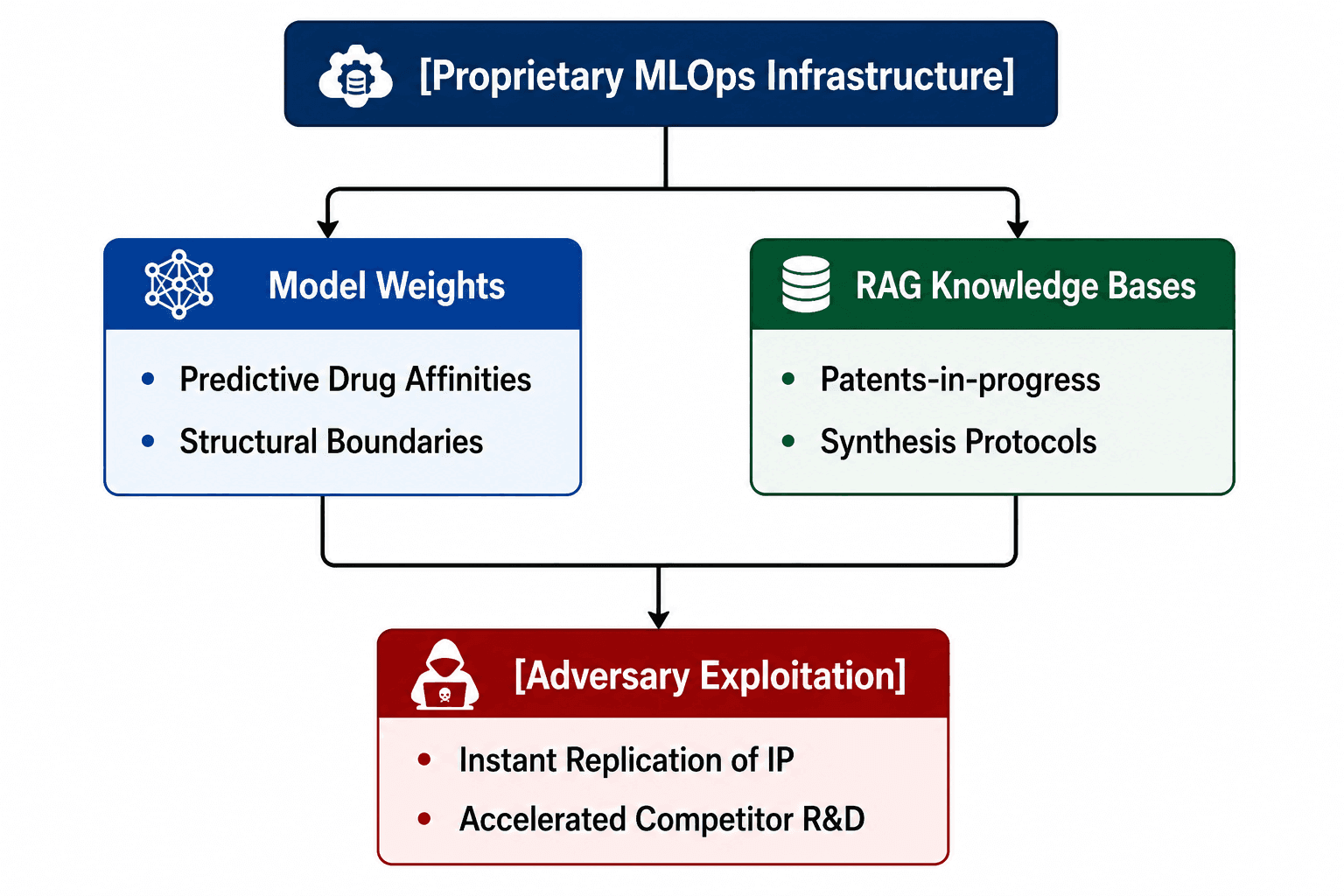
Model weights and architectures: The finalized parameters of deep learning networks trained to predict molecular binding affinities and pharmacokinetic properties. Stealing finalized weights allows an adversary to run the model locally, effectively acquiring the predictive power of the model instantly.
494 GB of Cell Painting Microscopy images: This dataset represents the fundamental ground-truth training material used for high-content phenotypic screening.
MLOps Pipelines and RAG databases: The structured Retrieval-Augmented Generation (RAG) pipelines that connect underlying Large Language Models (LLMs) to Novo Nordisk’s proprietary internal knowledge bases, patents-in-progress, and synthesis protocols.
Strategic espionage target valuation
Developing a successful, commercially viable therapeutic requires an average of 10–12 years and billions in capital, with a historical clinical failure rate exceeding 90%. AI models trained on proprietary biological data compress this timeline down to months by predicting failures before they enter the physical lab.
For a hostile nation-state or predatory competitor, acquiring these fine-tuned models allows them to leapfrog decades of foundational bio-informatics research. This shifts cybercrime away from simple operational disruption toward high-stakes economic warfare.
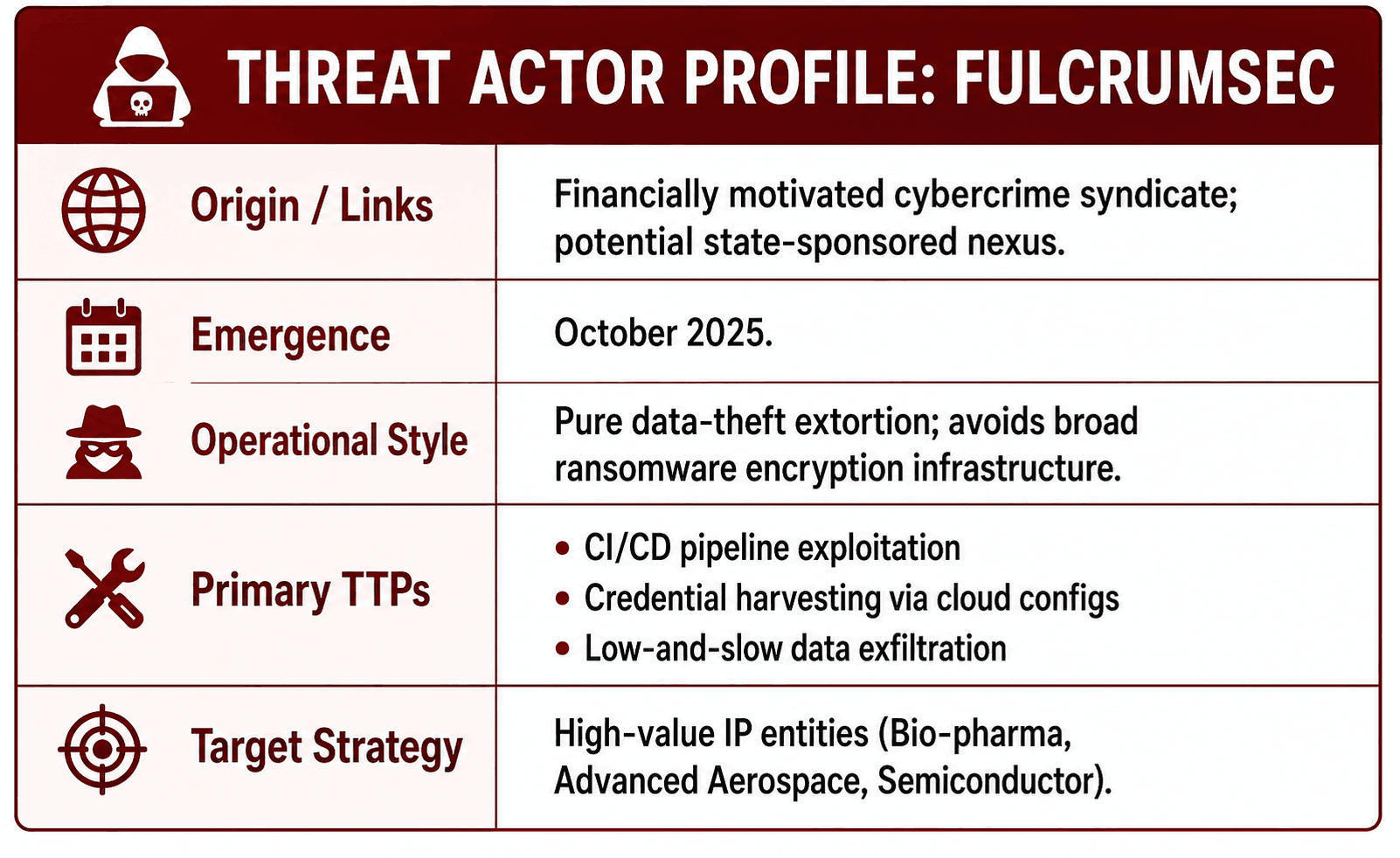
Threat actor assessment: FulcrumSec
Operational assessment
Historically, groups like FulcrumSec operate under a hybrid threat structure. While they claim to be purely independent, financially motivated actors, they frequently function as brokers.
When a multi-million dollar corporate extortion attempt fails—as occurred with Novo Nordisk's refusal to pay—the group pivots to a secondary monetization structure: auctioning off granular data packets on closed dark web forums. Historically, stolen pharmaceutical IP has attracted interest from sophisticated actors including foreign intelligence services and strategic competitors.
Root Cause Analysis
While the full forensic report from external incident response firms is not yet public, an evaluation of the available technical data points to several fundamental structural failures:
Inadequate code-level secrets ingestion (DevSecOps failure)
The primary catalyst was the lack of automated secrets detection within the development lifecycle. Standard static application security testing (SAST) and pre-commit hooks should have flagged the plain-text Azure registry credentials and the GitHub PAT before code was pushed to production or client-facing JavaScript bundles.
Over-privileged Identity Architecture (IAM deficiencies)
The leaked GitHub Personal Access Token possessed broad, non-segmented read permissions across hundreds of unrelated repositories. A strict application of least-privilege principles would have restricted tokens to specific, isolated repositories, preventing a single leak from exposing the entire corporate codebase.
Lack of cross-domain network segmentation
Once database connection strings were extracted from the code repositories, the threat actors faced minimal network-level resistance. The ability to pivot from an asset harvested in a developer space directly into core clinical and AI research databases indicates a lack of robust zero-trust network segmentation between development environments and production research networks.
Potential business and regulatory impact
Clinical trial validity and data integrity
The overarching risk to Novo Nordisk does not stem from data loss alone, but from data integrity degradation. Under FDA 21 CFR Part 11 and EU GMP Annex 11, electronic records for pharmaceutical validation must remain uncorrupted and verifiable.
If threat actors possessed deep write or modification access to research databases, regulators may require extensive validation audits to prove that trial data was not subtly altered. Any disruption that breaks the clear chain of custody or audit trail continuity could delay regulatory submissions for new drugs.
Regulatory liabilities
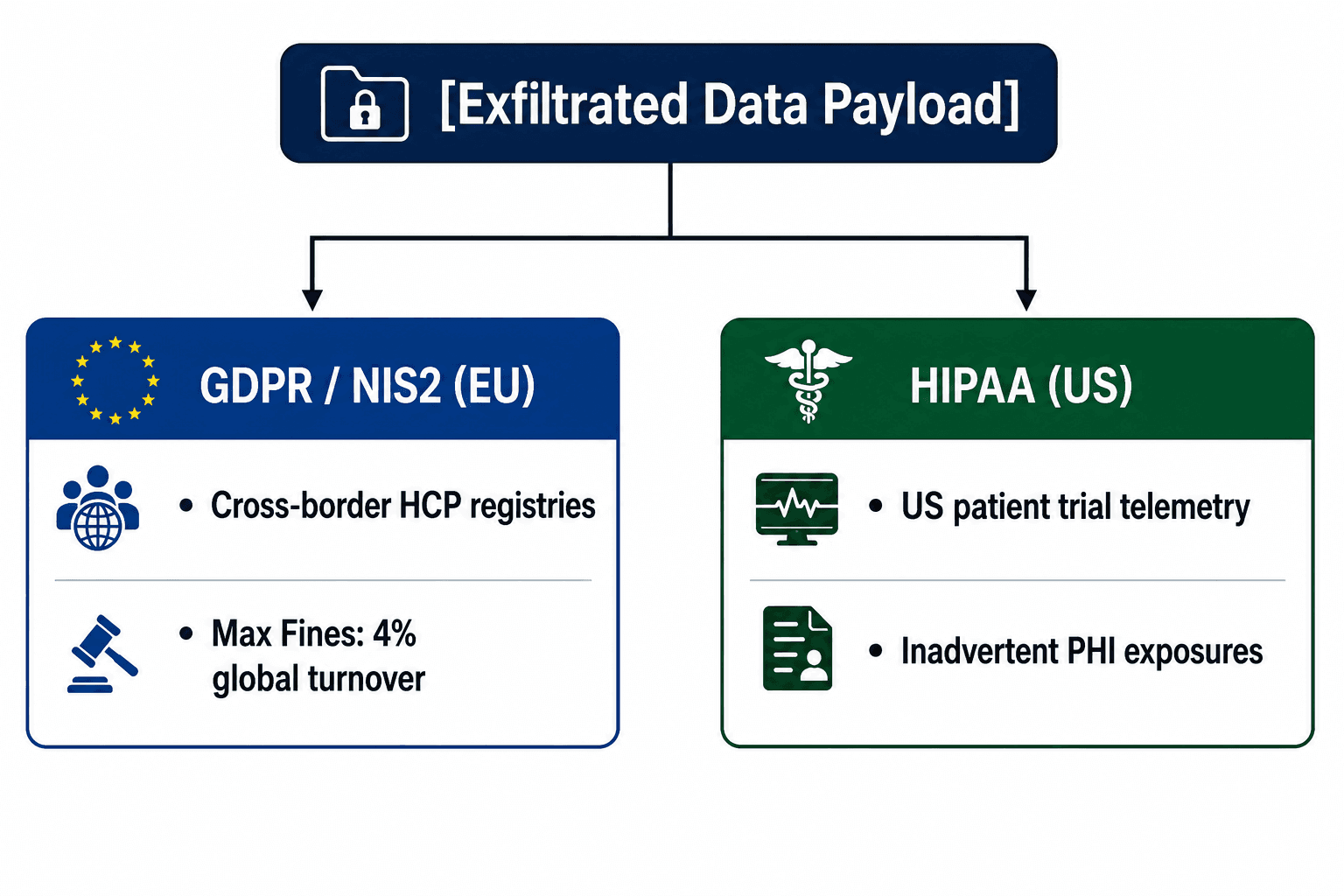
GDPR and NIS2 (Europe): Because the exfiltrated HCP registry contains fully identifiable details of EU medical professionals, Novo Nordisk faces stringent scrutiny from the Danish Data Protection Authority. Under NIS2, executive management can be held personally liable for systemic cybersecurity negligence. Maximum GDPR fines can reach up to 4% of global annual turnover.
HIPAA (United States): If any of the clinical trial data streams originated from US-based testing sites and contained un-scrubbed HIPAA-protected health information (PHI) within the metadata, the breach falls within the enforcement domain of the HHS Office for Civil Rights.
Defensive lessons and actionable framework
Pharmaceutical and clinical research entities must immediately adjust their defensive posture to mitigate the attack vectors demonstrated in this incident.
For executive leadership and CISOs
Re-classify AI assets as crown jewels: Update corporate data classification policies to explicitly categorize ML model weights, training configurations, and pipeline code at the same security tier as active product patents.
Establish Cross-Functional Governance: Form an AI Security Governance Committee uniting security, data science, and legal compliance teams to oversee MLOps environments.
For IAM and cloud security teams
Eliminate persistent long-lived tokens: Mandate the deprecation of long-lived GitHub PATs. Enforce the use of short-lived, identity-bound, and scoped access tokens (e.g., GitHub Apps or OpenID Connect for cloud authentication).
Enforce conditional access for DevOps: Restrict access to code repositories and cloud container registries using strict conditional access policies, requiring managed-device verification and specific geographic IP constraints.
For Data science and AI security teams
Secure the MLOps Pipeline: Treat model registries (e.g., MLflow, Hugging Face Enterprise) with the same security controls applied to production databases. Implement cryptographic signing for approved model weights.
Implement Differential Privacy and Watermarking: Embed unique fingerprinting or watermarking into proprietary model weights and high-value image datasets to enable global tracking and verification if data is exfiltrated and published.
For SOC and detection engineering teams
Deploy Secrets-Scrutiny Tooling: Implement continuous scanning across all public and private code repositories (using tools like GitGuardian or GitHub Advanced Security) to intercept committed secrets in real time.
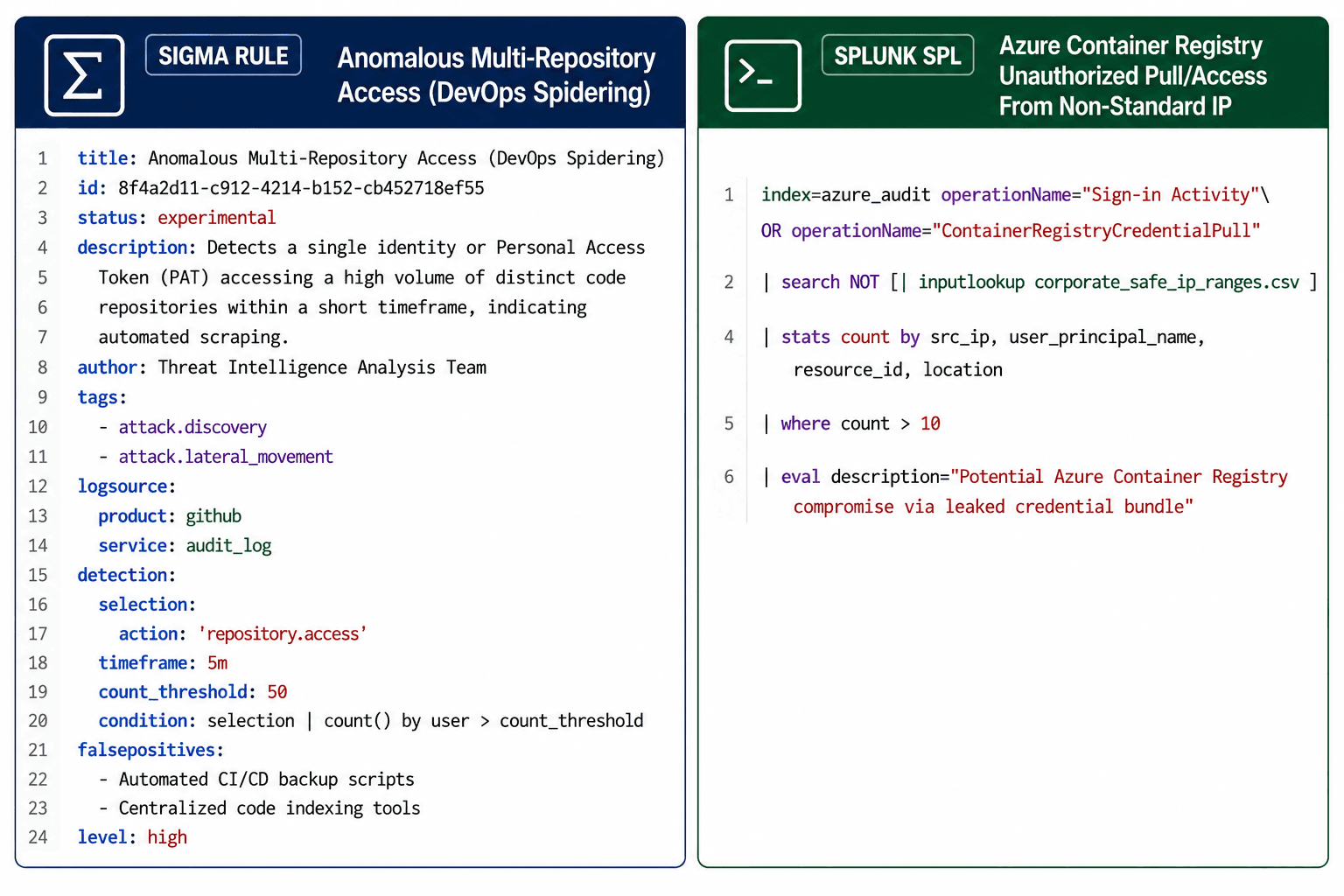
Construct Spidering Detection Models: Engineer SIEM and UEBA alerts focused on anomalous programmatic credential usage, specifically targeting service accounts or user identities that query multiple distinct code and data repositories within a compressed timeframe.
Indicators of Compromise (IOCs) and detection signatures
Note: The following IOCs are compiled from verified public researcher tracking of known FulcrumSec infrastructure active during the May/June 2026 campaign window.
Verified malicious IP infrastructure
185.220.101[.]5 (Exfiltration egress point / Tor exit node)
93.115.26[.]144 (Command and Control / Repo scraping origin)
45.227.254[.]12 (FulcrumSec dark web proxy gateway)
Targeted Cloud/DevOps Telemetry Elements
User-Agent String: Mozilla/5.0 (Compatible; GitScraper/2.4; +hx://fulcrumsec[.]info)
Identified Registry Script Hash (SHA-256):e3b0c44298fc1c149afbf4c8996fb92427ae41e4649b934ca495991b7852b855 (Sample malicious artifact associated with automated container credential testing).
Detection opportunities
Strategic takeaways for the pharmaceutical sector
This cyber incident highlights a key lesson for security leaders: in the era of AI-driven drug discovery, protecting the perimeter is no longer sufficient; you must secure the code, the credentials, and the data layers natively.
As biopharma organizations increasingly rely on algorithmic models to build their future product pipelines, these assets replace traditional intellectual property blueprints. Security strategies must transition immediately to an identity-first, zero-trust framework where development pipelines receive the same rigorous monitoring, defensive isolation, and compliance auditing as production manufacturing environments.
Learn more about our Cyber-physical system protection solution
More on our Media scanning solution
Book an intelligence briefing
Additional reading
Secure your pharmaceutical operations – ICS Compliance and Best Practices Guide
https://shieldworkz.com/regulatory-playbooks/secure-your-pharmaceutical-operations-ics-compliance-and-best-practices-guide
A practical guide to ICS asset inventory and visibility in the pharma sector
https://shieldworkz.com/blogs/a-practical-guide-to-ics-asset-inventory-and-visibility-in-the-pharma-sector
Why our pharma IP could Be at risk
https://shieldworkz.com/blogs/why-your-pharma-ip-could-be-at-risk-in-the-factory
Why your pharma IP could be at risk in the factory (German)
https://shieldworkz.com/de/blogs/why-your-pharma-ip-could-be-at-risk-in-the-factory
Pharmaceutical OT asset discovery and inventory
https://shieldworkz.com/use-cases/pharmaceutical-ot-asset-discovery-and-inventory
Get Weekly
Resources & News
See How Our Industry-Leading OT Security Solutions Address Critical Security Challenges
You may also like

IEC 62443 for Pharmaceutical Manufacturing: Secure Critical Production OT
Team Shieldworkz

Investigative cyber threat research report: Cyberattacks on U.S.-bound energy tankers
Team Shieldworkz

The OT Lull: What a 30-day decline in direct intrusion activity actually tells us
Prayukth K V

Inside the Revolut data disclosure incident
Prayukth K V

NERC CIP Compliance Software: 9 Capabilities Utilities Should Compare
Team Shieldworkz

Investigative Cyber Threat Research Report: Alleged Cyberattack and U.S. Investigation of VLCC VL Prosperity
Prayukth K V