Equipo Shieldworkz
La semana pasada, Boston Scientific Corporation detectó un incidente de ciberseguridad mayor que desencadenó una interrupción de la red en toda la empresa y afectó gravemente sus operaciones comerciales globales. Posteriormente, la empresa presentó una declaración mediante el Formulario 8-K ante la Comisión de Bolsa y Valores de EE. UU. (SEC) el 26 de agosto de 2026 compartiendo los detalles del incidente.
Categorización de hechos y evaluación
Hechos Confirmados
Detección: Detectado el 25 de agosto de 2026.
Sistemas comprometidos: Interrupción generalizada de la red que causó graves afectaciones operativas en los sistemas operativos de TI y las aplicaciones comerciales, deteniendo específicamente el procesamiento y la distribución/envío global de pedidos de clientes.
Participación en la respuesta al incidente: Se activaron los protocolos de respuesta a incidentes; se contrataron firmas externas de análisis forense de ciberseguridad y contención.
Informes regulatorios: Formulario 8-K presentado ante la SEC el 26 de agosto de 2026.
Reacción del mercado: Las acciones de BSX cayeron aproximadamente un 3.5% en las operaciones previas a la apertura del mercado inmediatamente después de la declaración.
Evaluación: Alta confianza
Patrón de intrusión de ransomware operativo / extorsión de datos: El repentino aislamiento forzado de la TI central, la parálisis operativa del procesamiento de pedidos, el alcance global y la contratación de expertos en respuesta a incidentes se alinean con un ataque de ransomware de doble extorsión dirigido a la infraestructura empresarial (por ejemplo, Active Directory, almacenamiento virtual).
Crisis ascendente en la cadena de suministro de atención médica: Incluso si las plantas de fabricación siguen funcionando físicamente, la imposibilidad de procesar, validar, dirigir o enviar el inventario genera un cuello de botella inmediato en la cadena de suministro de atención médica para los hospitales que dependen de entregas justo a tiempo de dispositivos críticos (por ejemplo, marcapasos, stents, catéteres).
Escenarios potenciales
Exfiltración de datos: Los grupos de extorsión que operan contra los sectores de MedTech y manufactura en 2026 exfiltran de manera rutinaria datos sensibles (propiedad intelectual, registros de empleados/pacientes, contratos comerciales) días o semanas antes de implementar cargas útiles de interrupción.
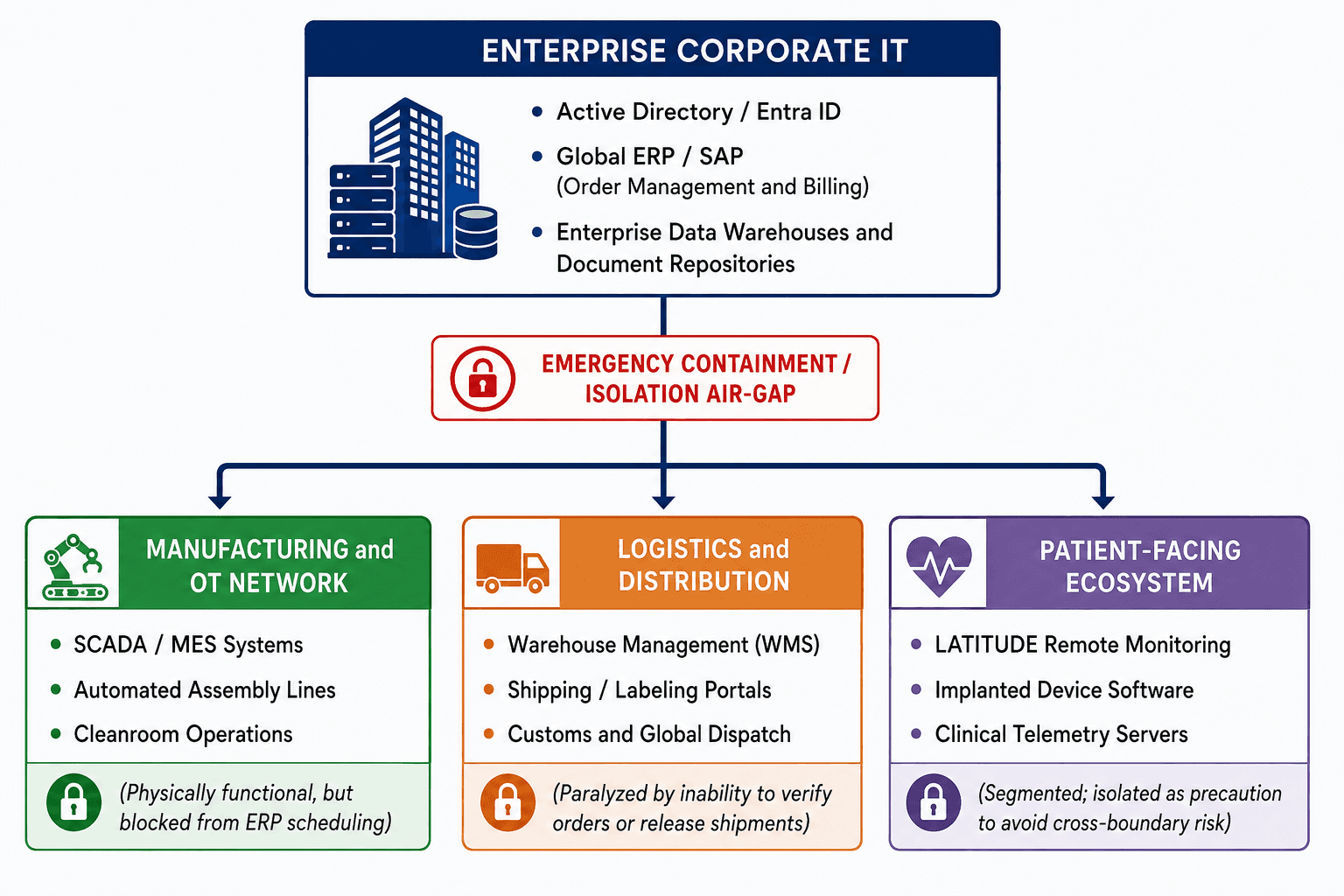
Aislamiento preventivo de plataformas de monitoreo externo: Los informes indican que se aconsejó a los clientes clínicos desconectarse de la red de manejo remoto de pacientes LATITUDE por extrema precaución para evitar la contaminación cruzada lateral entre las redes empresariales y los endpoints de los hospitales.
Aún desconocido
Vector de acceso inicial: Mecanismo de entrada específico (como phishing, explotación de VPN, compromiso de identidad).
Atribución: Ningún actor de amenazas o grupo de ransomware ha reclamado públicamente la autoría hasta el 31 de agosto de 2026.
Cronograma de restauración: Boston Scientific no ha especificado un tiempo estimado de recuperación total.
Cronograma del incidente
Fecha / Hora | Descripción del Evento | Origen | Nivel de Confianza |
Antes del 25 de agosto de 2026 | Intrusión inicial y tiempo de permanencia El actor de la amenaza obtiene acceso inicial no autorizado, realiza reconocimiento y escala privilegios. | Inferencia de Inteligencia de Amenazas | POSIBLE |
25 de agosto de 2026 | Detección de actividad anómala El monitoreo de seguridad señala un comportamiento anómalo; comienza la interrupción de la red de TI de la empresa. | Declaración / Formulario SEC 8-K de Boston Scientific | HECHO CONFIRMADO |
25 de agosto de 2026 | Contención y activación de respuesta a incidentes (IR) Se activan los protocolos de IR. Las aplicaciones comerciales clave y los portales se desconectan para aislar las redes. Se contrata a una firma externa de IR. | Declaración Corporativa | HECHO CONFIRMADO |
26 de agosto de 2026 | Declaración regulatoria y aviso público Se presenta el Formulario 8-K ante la SEC; se emite una declaración pública señalando la interrupción operativa y de envíos a nivel global. Las acciones caen un 3.5%. | Presentación ante la SEC / Medios de Prensa | HECHO CONFIRMADO |
27 de agosto de 2026 | Aviso clínico y al cliente Surgen informes sobre recomendaciones clínicas respecto a las comprobaciones de seguridad de la conexión a la red LATITUDE y soluciones manuales para la cola de pedidos. | Informes Clínicos y del Sector | EVALUACIÓN DE ALTA CONFIANZA |
28–31 de agosto de 2026 | Restauración e investigación en curso Continúa la investigación forense; no se ha confirmado un tiempo estimado de restauración pública ni adjudicación del ataque. | Actualizaciones del Portal Oficial | HECHO CONFIRMADO |
Nota: Se desconoce la fecha exacta y el mecanismo de acceso inicial.
¿Qué sucedió?
Dependencias técnicas del sistema y desglose de la arquitectura
Análisis Técnico: Interrupción Local vs. en la Nube
La empresa reveló que la actividad no autorizada afectó cierta infraestructura de TI local y aplicaciones comerciales, mientras que los sistemas en la nube no se vieron afectados en gran medida.
Lo que esto nos dice:
Aislamiento de la infraestructura: El actor de la amenaza estableció principalmente persistencia y ejecutó actividades maliciosas dentro de entornos de Active Directory locales, hipervisores locales o clústeres de servidores físicos.
Resiliencia de la nube: Los controles de límite de identidad híbridos (por ejemplo, acceso condicional, salvaguardas de autenticación federada) evitaron o retrasaron con éxito el compromiso total del tenant en la nube.
Lo que esto no nos dice:
Inmunidad operativa: Incluso si las aplicaciones SaaS alojadas en la nube (por ejemplo, Salesforce, Workday) no se ven comprometidas, a menudo dependen de conectores de datos híbridos para enviar datos a bases de datos ERP locales. Si la base de datos local se aísla o se cifra, el proceso comercial de extremo a extremo se interrumpe.
Ausencia de robo de datos: Los atacantes dentro de los sistemas locales con frecuencia exfiltran datos almacenados en repositorios de sincronización híbridos o dispositivos de respaldo locales antes de que ocurra la interrupción.
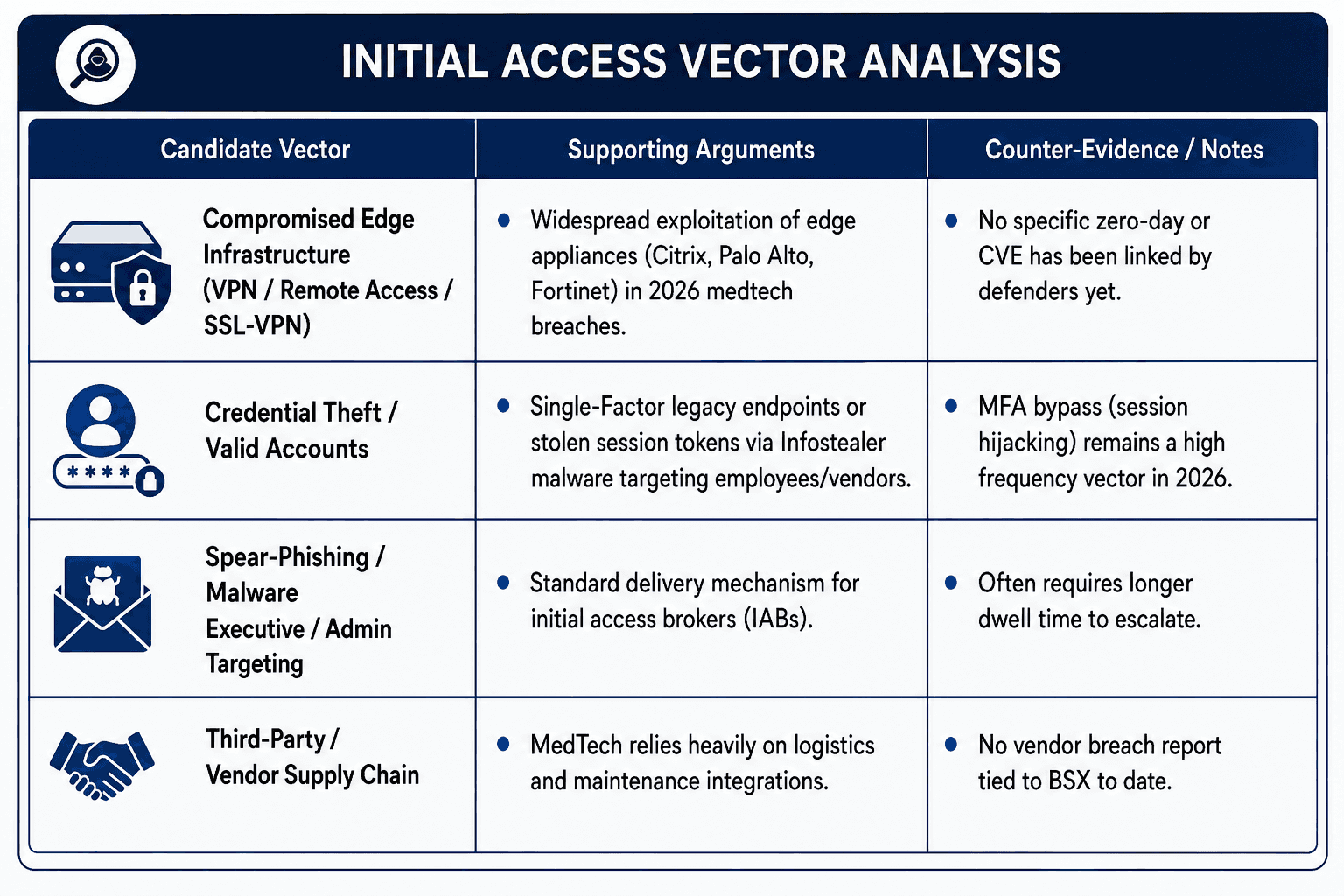
Vector de ataque y acceso inicial
Vector de acceso inicial: aún no se ha establecido públicamente.
Atribución del actor de la amenaza
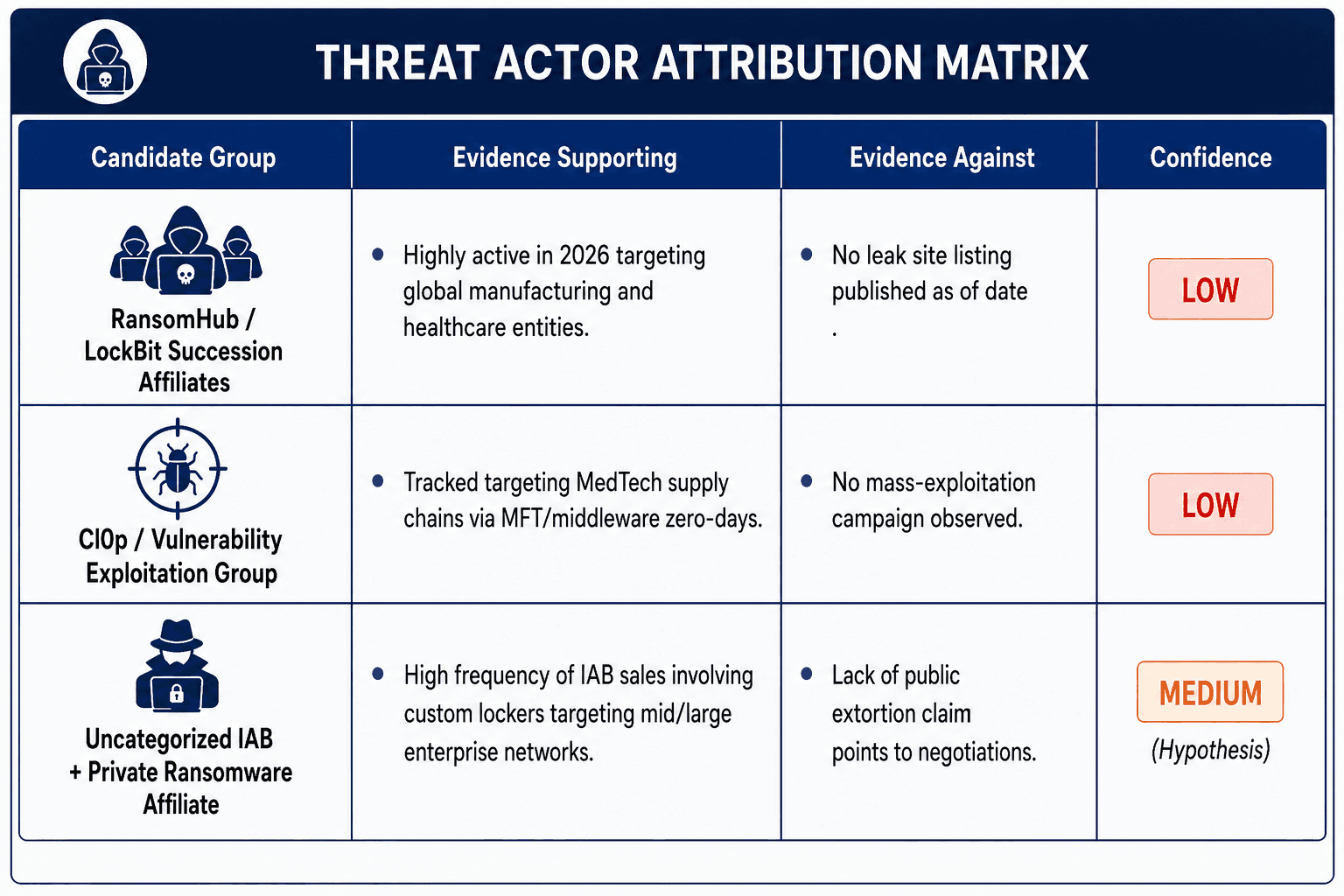
Estado de atribución: DESCONOCIDO / NO RECLAMADO.
¿Fue esto un ransomware?

Clasificación: EVALUACIÓN DE ALTA CONFIANZA — INTRUSIÓN DE EXTORSIÓN / RANSOMWARE OPERATIVO.
Aunque Boston Scientific ha utilizado terminología regulatoria estándar ("incidente de ciberseguridad que causó la interrupción de la red"), las firmas operativas reflejan fielmente el cibercrimen impulsado por la extorsión:
Impacto comercial y operativo
Impacto Operativo Directo
Procesamiento y cumplimiento de pedidos: La parálisis del ERP empresarial detuvo la confirmación de pedidos, la asignación de inventario y las operaciones de despacho a nivel global.
Cuello de botella logístico: Los almacenes no pudieron procesar temporalmente las solicitudes de selección y empaque ni imprimir etiquetas de cumplimiento normativo para la distribución regulada.
Impacto Clínico y de Atención Médica Derivado
Cadenas de suministro de hospitales: Los hospitales operan con modelos de inventario ajustados para suministros quirúrgicos especializados (por ejemplo, catéteres cardíacos, stents, cables de marcapasos). Las detenciones en el procesamiento de pedidos generan fricciones inmediatas para los procedimientos de intervención electivos y no urgentes programados.
Transferencia de riesgo clínico: Incluso sin manipulación de dispositivos, deshabilitar la cadena de entrega convierte un incidente de TI en una limitación crítica de la cadena de suministro de atención médica.
Dimensión de seguridad del paciente y dispositivos médicos
Diferencias entre seguridad y suministro
Seguridad del hardware implantado: Los dispositivos cardíacos (marcapasos, DAI) utilizan controles de seguridad a nivel de hardware, intercambios criptográficos y protocolos de RF/Bluetooth de corto alcance que requieren proximidad física para su programación directa.
Acoplamiento de la infraestructura empresarial: El riesgo en la tecnología médica moderna radica en la dependencia del ecosistema. Si las redes empresariales se ven comprometidas, las empresas aíslan las interfaces clínicas (como LATITUDE) para evitar riesgos, lo que puede interrumpir temporalmente la transmisión de datos de telemetría.
Análisis del patrón de ataque
El incidente de Boston Scientific de agosto de 2026 sigue un patrón claro de ataques dirigidos a importantes fabricantes de dispositivos médicos, incluidos Medtronic, Abbott y Stryker a principios de 2026.
Análisis del modelo de amenazas: Objetivos del sector de tecnología médica (MedTech)
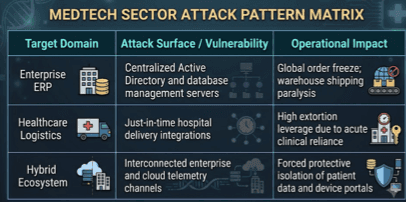
Los grupos de ransomware se dirigen a los fabricantes de dispositivos médicos porque el tiempo de inactividad operativo genera de inmediato una fuerte presión para pagar. La dependencia de los hospitales de inventarios justo a tiempo significa que las interrupciones en los envíos pueden retrasar las cirugías, lo que amplifica la urgencia.
Mapeo MITRE ATT&CK
Todas las técnicas mapeadas representan una evaluación analítica basada en las firmas observadas en el incidente.
Táctica | ID de la Técnica | Nombre de la Técnica | Evidencia / Inferencia | Confianza | Estado |
Acceso Inicial | T1190 | Explotación de aplicación expuesta a internet | Hipótesis de explotación de dispositivo perimetral o punto de acceso de acceso remoto. | Bajo | Inferido |
Ejecución | T1059 | Intérprete de comandos y scripting | Implementación de scripts de automatización para paralizar los servicios del sistema. | Medio | Inferido |
Escalación de Privilegios | T1078 | Cuentas válidas | Compromiso de credenciales de Administrador de Dominio que lleva al control de la infraestructura central. | Alto | Inferido |
Evasión de Defensas | T1562.001 | Deteriorar defensas: Deshabilitar herramientas | Desactivación de la seguridad/registro de endpoints para permitir una interrupción generalizada. | Medio | Inferido |
Impacto | T1486 | Datos cifrados para causar impacto | Interrupción generalizada que afecta al ERP, las operaciones comerciales y los envíos. | Alto | Inferido |
Reconstrucción del ciclo de vida del ataque
[ ACCESO INICIAL ] (Inferido: Explotación perimetral / Compromiso de credenciales)
↓
[ ESCALACIÓN DE PRIVILEGIOS ] (Inferido: Administrador de Dominio / Usurpación de identidad)
↓
[ MOVIMIENTO LATERAL ] (Inferido: Movimiento este-oeste a través de Active Directory)
↓
[ IMPACTO / INHABILITACIÓN DEL SISTEMA ] (Confirmado: Interrupción de TI local y ERP)
↓
[ AISLAMIENTO y RESPUESTA ] (Confirmado: Sistemas fuera de línea; participación de IR; presentación del Formulario SEC 8-K)
↓
[ RECUPERACIÓN y RECONSTRUCCIÓN ] (En curso: Verificación del sistema y restauración gradual de pedidos)
Evaluación de detección y respuesta
Velocidad de detección: La rápida detección el 25 de agosto permitió el aislamiento inmediato de redes clave, evitando una posible propagación lateral a entornos en la nube.
Estrategia de contención: La decisión de desconectar los portales comerciales y los sistemas de envío representa una postura de contención agresiva diseñada para proteger los límites más amplios de la red.
Cumplimiento regulatorio: La divulgación a través del Formulario 8-K dentro de las 24 horas se alinea con los estándares de informes de la SEC.
Recuperación y resiliencia
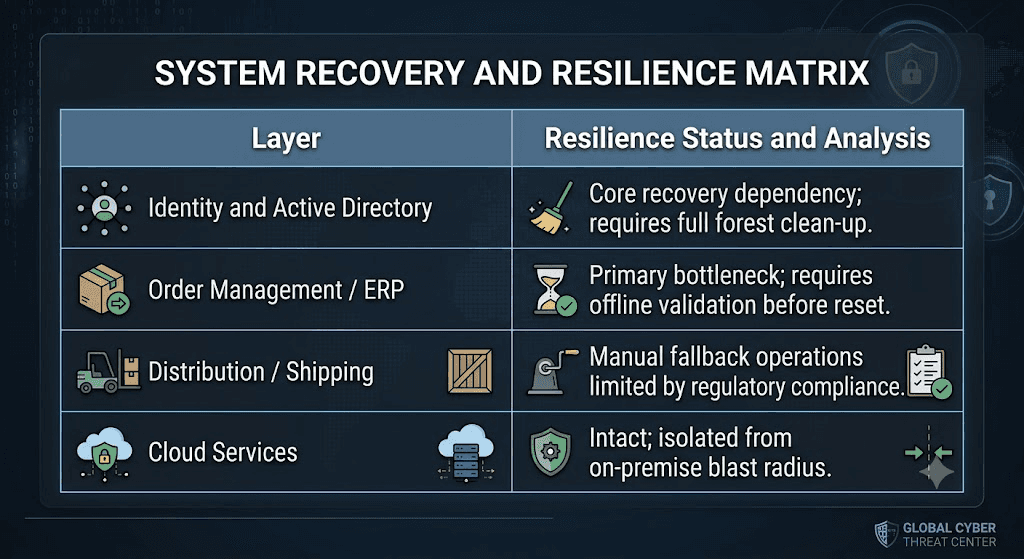
Impacto financiero y estratégico
Impacto en la capitalización de mercado: Las acciones cayeron aproximadamente un 3.5% inmediatamente después de la declaración.
Exposición de ingresos: Ocurre junto con un programa de reestructuración más amplio y objetivos de crecimiento de ingresos orgánicos revisados (reducidos al 5–6% a finales de julio de 2026).
Costos a largo plazo: El remedio del incidente, los honorarios legales, los compromisos forenses y las posibles pérdidas por cancelación de pedidos contribuyen al impacto financiero general.
Lecciones aprendidas
Arquitectura de identidad y acceso
Aislamiento de identidad: La infraestructura administrativa debe estar segmentada del Active Directory empresarial para limitar el movimiento lateral.
Resiliencia operativa
Procesamiento de pedidos fuera de banda: Las empresas de MedTech necesitan procedimientos de cumplimiento manuales o nativos de la nube aislados para que los envíos puedan continuar durante las interrupciones de TI centrales.
Segmentación de red
Aislamiento clínico y de OT: Un aislamiento lógico estricto entre los sistemas ERP de la empresa, las redes de fabricación y las plataformas de telemetría de los pacientes evita interrupciones entre dominios.
Recomendaciones estratégicas
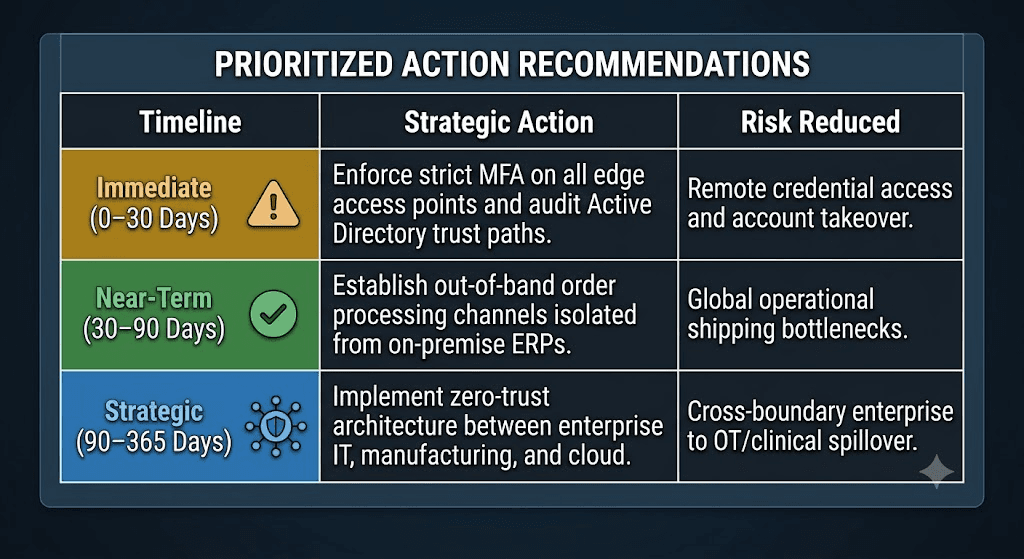
Indicadores de compromiso y oportunidades de detección
Estado: Boston Scientific ni las agencias de investigación han publicado IOC públicos confiables (hashes, direcciones IP o nombres de dominio) hasta el 31 de agosto de 2026.
Evaluación general
Naturaleza primaria del incidente: Se trató fundamentalmente de un incidente de seguridad de TI empresarial que escaló hasta convertirse en una interrupción de la continuidad comercial global y de la cadena de suministro de atención médica.
Integridad de la seguridad de los dispositivos: Los dispositivos médicos y los sistemas de telemetría de los pacientes permanecieron aislados de compromisos directos, manteniendo intacta la seguridad del paciente.
Dinámica de extorsión: Los ciberataques modernos contra MedTech se dirigen a la disponibilidad de los procesos comerciales, específicamente al procesamiento y envío de pedidos, para maximizar el impacto operativo.
Vulnerabilidad de la cadena de suministro: La alta dependencia de entornos ERP centralizados genera puntos únicos de falla operativa en las redes logísticas internacionales.
Imperativo estratégico: La estrategia de seguridad de MedTech debe enfocarse en separar los flujos de trabajo operativos clave de envío y de atención al paciente de los entornos generales de TI corporativos de la empresa.
Obtenga más información sobre la plataforma de seguridad OT de Shieldworkz
Descargue un informe sobre el incidente cibernético en Manchester Airports Group
Descargue un informe sobre el incidente en una instalación de generación de energía del Reino Unido
Recibe semanalmente
Recursos y Noticias
Vea cómo nuestras soluciones de seguridad de OT líderes en la industria abordan los desafíos de seguridad críticos
También te puede interesar

What the French supermarket cyberattack reveals about OT security
Prayukth K V

Inside the Albert Heijn cyber incident: Investigating the attack, the IT/OT exposure, and the risks to critical operations
Team Shieldworkz

50°C by cyberattack? Inside France’s supermarket refrigeration crisis
Prayukth K V

Automating IEC 62443 Compliance Assessments Without Losing Expert Control
Team Shieldworkz

Investigative cyber threat intelligence report: Daiichi Kosho supply-chain data exposure
Prayukth K V

How AI Is Changing IEC 62443 Assessments
Team Shieldworkz