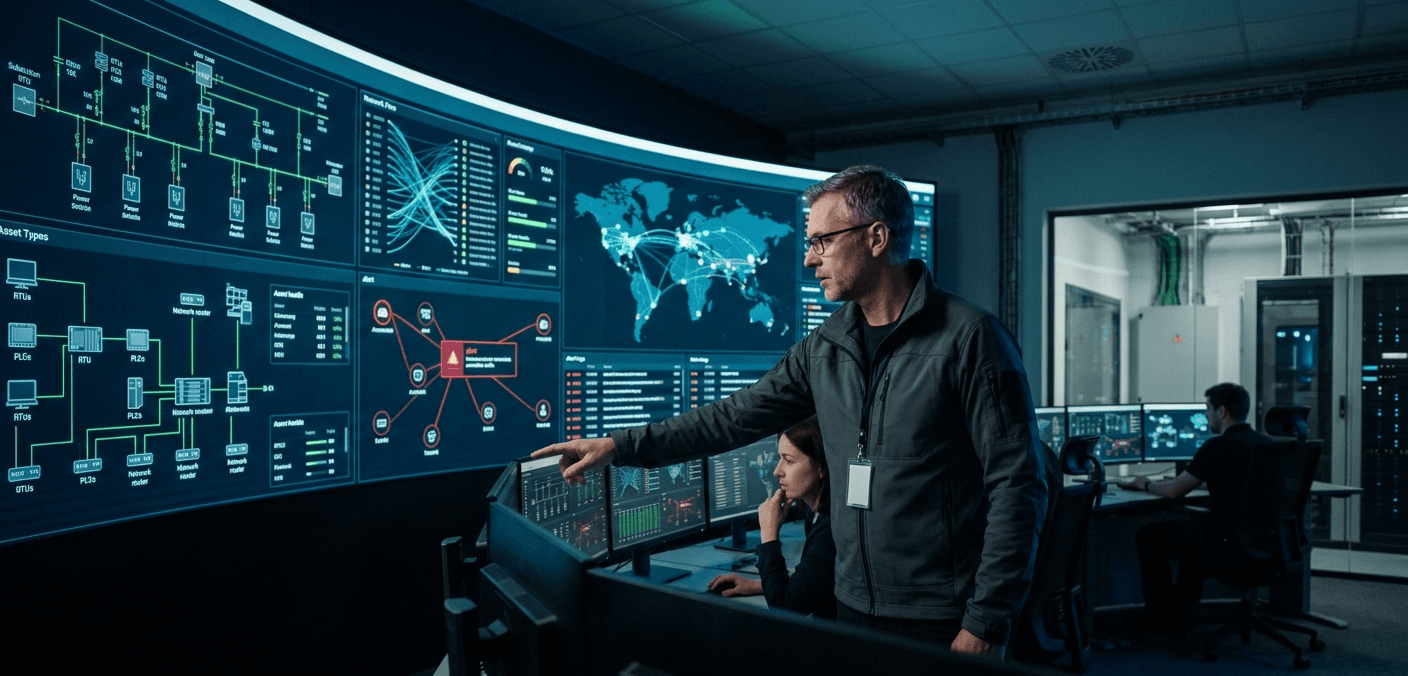
Wie eine zentrale Managementkonsole den OT-Sicherheitsbetrieb vereinfacht

Team Shieldworkz
Als ein großer europäischer Übertragungsnetzbetreiber im Jahr 2023 unautorisierte laterale Bewegungen in seinem operativen Netzwerk feststellte, führte die Ursachenanalyse zu einer unangenehmen Wahrheit: Das Sicherheitsteam hatte keine konsolidierte Sicht auf die industrielle Umgebung. Warnmeldungen waren vorhanden, jedoch über mehrere Einzellösungen verstreut, die jeweils isoliert agierten. Als die Analysten die Ereignisse schließlich korrelierten, hielt das Eindringen bereits seit über sechs Wochen an.
Dieses Szenario ist kein Einzelfall. Es spiegelt ein strukturelles Problem wider, mit dem sich Industrieunternehmen jeder Größe und Branche derzeit konfrontiert sehen: das Fehlen einer einheitlichen operativen Transparenz in OT-Umgebungen.
Bevor Sie den Rest dieses Artikels lesen, vergessen Sie nicht, unseren vorherigen Blogbeitrag über den Foxconn-Sicherheitsvorfall: Stickstoff, Diebstahl von geistigem Eigentum in der Fertigung und das neue Lieferkettenrisiko hier zu lesen.
Eine zentrale Management-Konsole für OT-Sicherheit ändert diese Ausgangslage grundlegend. Durch die Zusammenführung von Asset-Erkennung, Bedrohungsüberwachung, Compliance-Verfolgung und Incident Response in einer einzigen operativen Benutzeroberfläche bietet sie Sicherheitsteams das Lagebewusstsein und die Kontrolle, die fragmentierte Toolsets schlichtweg nicht leisten können.
Dieser Leitfaden zeigt auf, wie zentralisierte OT-Sicherheitskontrollen in der Praxis funktionieren, warum sie für die Unternehmensführung von entscheidender Bedeutung sind und was erforderlich ist, um eine Plattform zu implementieren, die Risiken in industriellen Umgebungen effektiv minimiert.
Das Fragmentierungsproblem in der OT-Sicherheit
Die meisten Industrieunternehmen haben ihr aktuelles Sicherheitskonzept nicht von Grund auf neu entworfen. Es hat sich historisch entwickelt – oft reaktiv –, indem neue Tools über alternde Infrastrukturen gestülpt wurden. Das Ergebnis ist ein Flickenteppich aus Endpoint-Agents, Netzwerksonden, passiven Taps und Compliance-Systemen, die selten miteinander kommunizieren.
Die Folgen sind messbar und schwerwiegend:
• Sicherheitsanalysten verbringen bis zu 60 % ihrer Zeit mit der manuellen Korrelation von Warnmeldungen über unzusammenhängende Plattformen hinweg, anstatt tatsächliche Bedrohungen zu untersuchen.
• Die Asset-Inventare sind permanent veraltet. Dadurch entstehen blinde Flecken, in denen unmanaged Devices ohne jegliche Kontrolle betrieben werden.
• Compliance-Nachweise werden vor jedem Audit-Zyklus mühsam manuell zusammengetragen, was jährlich hunderte von Ingenieurstunden in Anspruch nimmt.
• Die Reaktionszeiten bei Sicherheitsvorfällen verlängern sich von Stunden auf Tage, wenn die Einsatzkräfte mehrere Tools nutzen müssen, um die Ereignissequenzen zu rekonstruieren.
• Die Geschäftsführung erhält inkonsistente Berichte, die das tatsächliche operative Risikoprofil nicht präzise abbilden.
Zentraler KPI: Eine Branchenumfrage unter OT-Sicherheitsexperten aus dem Jahr 2023 ergab, dass Unternehmen mit fragmentierten Toolsets im Durchschnitt 194 Tage benötigten, um eine Kompromittierung in OT-Umgebungen zu identifizieren. Demgegenüber standen 47 Tage bei Unternehmen, die mit einer einheitlichen Monitoring-Plattform arbeiteten. Der Unterschied bei den operativen Kosten war in jedem analysierten Sektor signifikant. |
Was eine zentrale Management-Konsole für OT-Sicherheit tatsächlich leistet
Eine zentrale Management-Konsole ist nicht nur ein Dashboard, das Daten aus bestehenden Tools aggregiert. Eine dediziert für den OT-Bereich entwickelte Sicherheitsplattform integriert Asset-Erkennung, Monitoring, Analyse und Reaktion grundlegend in einen einzigen, koordinierten Workflow. Dieser Unterschied ist in der Praxis von enormer Bedeutung.
Einheitliche Asset Intelligence
Das Fundament jeder effektiven OT-Sicherheitsmaßnahme ist die genaue Kenntnis darüber, welche Assets sich im Netzwerk befinden. Eine zentrale Management-Konsole führt eine kontinuierliche, protokollsensitive Asset-Erkennung in industriellen Umgebungen durch und unterstützt die native Kommunikation mit Feldgeräten, die Modbus, DNP3, PROFINET, EtherNet/IP, IEC 61850 und Dutzende anderer OT-spezifischer Protokolle nutzen.
Das resultierende Asset-Register ist dynamisch und stets aktuell. Es erfasst nicht nur IP-Adressen, sondern auch Firmware-Versionen, Geräterollen, Kommunikationsmuster, bekannte Schwachstellen und den operativen Kontext. Sobald ein neues Gerät im Netz erscheint oder eine bestehende Komponente ihr Verhalten ändert, schlägt die Plattform sofort Alarm.
Korrelierte Erkennung von Bedrohungen
Isolierte Warnmeldungen erzeugen Rauschen. Erst korrelierte Bedrohungsdaten liefern ein klares Signal. Eine zentrale Management-Konsole wendet Verhaltens-Baselines und Bedrohungsmodelle an, die speziell für industrielle Umgebungen konzipiert sind. Dadurch erkennt sie Anomalien wie nicht autorisierte Befehle an Steuerungen (PLC), kritische Änderungen der Polling-Frequenz, unerwartete Verbindungen von Engineering Workstations sowie Angriffe auf Protokollebene, die generische IT-Sicherheitstools niemals identifizieren würden.
Die Plattform liefert priorisierte, kontextreiche Warnmeldungen, die die operative Bedeutung jeder Bedrohung widerspiegeln – nicht nur deren rein technischen Schweregrad. Eine Netzwerkanomalie im Bereich eines sicherheitsgerichteten Systems (SIS) unterscheidet sich fundamental von derselben Anomalie in einem administrativen Segment, was von der Konsole entsprechend berücksichtigt wird.
Integrierte Compliance und Berichterstattung
Regulatorische Vorgaben – seien es NERC CIP für die Energiewirtschaft, die IEC 62443 für die industrielle Automatisierung, das NIST Cybersecurity Framework oder die Anforderungen aus dem IT-Sicherheitsgesetz und NIS2 für KRITIS-Betreiber – fordern den kontinuierlichen Nachweis der Wirksamkeit von Sicherheitsmaßnahmen. Eine zentralisierte Plattform automatisiert die Erhebung dieser Nachweise, ordnet die Kontrollen den regulatorischen Frameworks zu und erstellt prüfbereite Berichte, ohne dass vor jedem Audit-Zyklus manueller Aufwand anfällt.
Sicherheitsbetrieb: Vor und nach der Zentralisierung
Die folgende Tabelle veranschaulicht den operativen Wandel, der mit dem Einsatz einer zentralen Management-Konsole in den verschiedenen Sicherheitsfunktionen einhergeht:
Herausforderung | Ohne zentrale Konsole | Mit zentraler Management-Konsole |
Sichtbarkeit der Assets | Blinde Flecken bei Feldgeräten und Steuerungen (PLC) | Einheitliches Echtzeit-Inventar aller OT-/ICS-Assets |
Erkennung von Bedrohungen | Siloartige Warnmeldungen, hohes Rauschen durch Fehlalarme | Korrelierte Bedrohungsdaten mit priorisierten Warnmeldungen |
Incident Response | Manuelle, fragmentierte und langsame Eskalation | Automatisierte Workflows mit vordefinierten Playbooks |
Compliance-Berichte | Zeitaufwendige, manuelle Nachweiserbringung | Automatisierte Audit-Trails und Compliance-Dashboards |
Netzwerksegmentierung | Flache oder unzureichend dokumentierte Zonengrenzen | Kontinuierliche Überwachung und Durchsetzung von Zonen und Conduits |
Patch-Management | Ad-hoc, risikoreich und betriebsstörend | Risikobasierte Zeitplanung, abgestimmt auf Wartungsfenster |
Standortübergreifende Kontrolle | Keine konsolidierte Sicht über verschiedene Werke hinweg | Zentrales Gesamtbild („Single Pane of Glass“) über alle Standorte |
Die Architektur hinter einer effektiven, zentralisierten OT-Sicherheit
Das Verständnis der architektonischen Funktionsweise einer zentralen Management-Konsole hilft Sicherheits- und Betriebsteams, die Machbarkeit der Implementierung und die Integrationsanforderungen präzise zu bewerten.
Passives Monitoring als Standard
Im Gegensatz zu IT-Sicherheitstools, die Assets aktiv scannen, erfordern OT-Umgebungen einen primär passiven Ansatz. Viele ältere Industriesysteme, insbesondere Legacy-Steuerungen (PLC) und RTUs, können aktive Scans nicht verarbeiten, ohne dass es zu unerwartetem Verhalten oder Betriebsausfällen kommt. Eine professionell konzipierte OT-Konsole sammelt Daten daher in erster Linie über passives Netzwerkmonitoring und führt aktive Abfragen nur dort durch, wo das Gerät dies nachweislich sicher unterstützt.
Transparenz für Zonen und Conduits
Das Purdue-Referenzmodell und die IEC 62443 definieren, wie industrielle Netzwerke in Zonen mit kontrollierten Verbindungen (Conduits) zu segmentieren sind. Eine zentrale Management-Konsole gleicht die tatsächlichen Datenströme kontinuierlich mit diesen definierten Grenzen ab. Richtlinienverstöße, unbefugte zonenübergreifende Kommunikation und Muster lateraler Bewegung werden so in Echtzeit identifiziert.
Integration in das Enterprise Security Operations Center (SOC)
OT-Sicherheit existiert nicht im luftleeren Raum. Eine zentrale Management-Konsole verbindet die industrielle Fertigungsebene mit der übergeordneten IT-Sicherheit, indem sie sich nahtlos in SIEM-Plattformen, SOAR-Systeme, Ticketing-Workflows und Bedrohungsdaten-Feeds integrieren lässt. Dadurch können SOC-Analysten mit hochspezifischen OT-Daten in ihren gewohnten Tools arbeiten, während der industrielle Kontext voll erhalten bleibt.
Überwachung von sicherem Fernzugriff (Secure Remote Access)
Drittanbieter, Systemintegratoren und externe Wartungstechniker stellen in industriellen Umgebungen eine erhebliche Angriffsfläche dar. Eine zentralisierte Plattform bietet rollenbasierten, zeitlich begrenzten Fernzugriff mit vollständiger Sitzungsaufzeichnung und Verhaltensüberwachung. Damit ist gewährleistet, dass jede Verbindung von außen transparent, kontrolliert und lückenlos nachvollziehbar ist.
Zusammenfassung der operativen und geschäftlichen Vorteile
Die folgende Tabelle stellt die Kernfunktionen der Plattform ihrem direkten operativen und geschäftlichen Nutzen gegenüber:
Bereich | Operativer Nutzen | Geschäftlicher Mehrwert |
Zentrales Asset-Register | Eliminiert blinde Flecken bei Netzwerkteilnehmern | Minimiert die Risiko-Angriffsfläche um bis zu 40 % |
Einheitliches Bedrohungsmonitoring | Schnellere Erkennung und Korrelation | Reduziert die mittlere Zeit bis zur Erkennung (MTTD) signifikant |
Automatisierte Compliance-Engine | Kontinuierliche Ermittlung von Nachweisen | Reduziert den Vorbereitungsaufwand für Audits um 60–70 % |
Zonenübergreifende Netzwerktransparenz | Erzwingt die Einhaltung der Purdue-Modell-Grenzen | Verhindert die laterale Ausbreitung von Bedrohungen |
Integrierte Incident-Playbooks | Strukturierte Echtzeit-Schritte zur Eindämmung | Verkürzt die mittlere Reaktionszeit (MTTR) drastisch |
Sichere Fernzugriffskontrolle | Lückenlose Überwachung von Dienstleistern und Dritten | Eliminiert unkontrollierte externe Zugangspunkte |
Sicherheitsvorfälle aus der Praxis, die den Handlungsbedarf unterstreichen
Die Notwendigkeit einer zentralisierten OT-Sicherheitsstruktur wird durch reale Vorfälle in verschiedenen Industriesektoren belegt. Diese Ereignisse sind keine theoretischen Worst-Case-Szenarien, sondern dokumentierte Betriebsausfälle mit messbaren wirtschaftlichen Folgen.
Wasser- und Abwasserwirtschaft
Im Jahr 2021 verschaffte sich ein unbefugter Akteur Zugriff auf die Steuerungssysteme eines Wasserwerks und versuchte, die Konzentration von Natriumhydroxid auf ein gefährliches Niveau anzuheben. Der Manipulationsversuch wurde durch einen aufmerksamen Operator entdeckt, nicht durch ein IT-Sicherheitssystem. Da kein zentralisiertes Verhaltensmonitoring installiert war, blieb der unbefugte Zugriff bis zur manuellen Intervention unbemerkt. Eine Anomalieerkennung hätte diese untypische Sollwertänderung vollautomatisch gemeldet.
Verarbeitendes Gewerbe und Automobilindustrie
Mehrere Automobilwerke mussten bereits Produktionsstopps hinnehmen, weil Ransomware über IT-Netzwerke eindrang und sich über unzureichend segmentierte Schnittstellen in die OT-Infrastruktur ausbreitete. In allen Fällen verzögerte das Fehlen einer zonenübergreifenden Überwachung des Datenverkehrs die Erkennung so lange, bis produktionskritische Systeme bereits verschlüsselt waren. Eine zentrale Management-Konsole zur Überwachung der Datenflüsse an den Zonengrenzen hätte die Seitwärtsbewegung gestoppt, bevor sie die Fertigungsbänder erreichte.
Energie- und Versorgungswirtschaft
Angriffe auf die Lieferkette, die auf Update-Mechanismen von Industriesoftware abzielen, zeigen deutlich, dass auch vertrauenswürdige Kommunikationskanäle Schadcode transportieren können. Ohne ein zentralisiertes Verhaltensprofiling der OT-Assets können Betreiber eine reguläre Aktualisierung nicht von einem manipulierten Update unterscheiden, das unautorisierten Code auf Feldgeräte überträgt – eine Unterscheidung, die eine zentrale Anomalieerkennung rein anhand von Verhaltensabweichungen treffen kann.
Kritischer Aspekt: Alle oben beschriebenen Vorfälle weisen eine gemeinsame Schwachstelle auf: eine verzögerte Erkennung aufgrund mangelnder operativer Transparenz. Eine zentrale Management-Konsole schließt diese fundamentale Lücke direkt – nicht durch rein theoretische Vorgaben, sondern durch kontinuierliche, automatisierte Überwachung unabhängig von menschlichen Kontrollzyklen. |
So evaluieren Sie eine zentrale Management-Konsole für Ihre OT-Umgebung
Nicht jede Plattform, die als OT-Sicherheitskonsole vermarktet wird, wurde tatsächlich für industrielle Umgebungen konzipiert. Viele Lösungen sind lediglich modifizierte IT-Werkzeuge, die mit einer dünnen Schicht OT-Nomenklatur versehen wurden, im Kern jedoch auf einer IT-Architektur basieren. Entscheidungsträger sollten bei der Bewertung strenge Kriterien anlegen.
Evaluierungskriterium | Relevanz für die Praxis |
Protokollsensitive Asset-Erkennung | Industrielle Netzwerke nutzen Modbus, DNP3, PROFINET; die Plattform muss diese nativ interpretieren |
Passives Monitoring | Aktive Scans können ältere OT-Geräte stören; ein passiver Ansatz ist unabdingbar |
Integration in SIEM-/SOC-Tools | Verbindet die OT- und IT-Sicherheitswelten für eine koordinierte Reaktion |
Rollenbasierte Zugriffskontrolle | Unterschiedliche Sichten für Ingenieure, Operatoren und Management verhindern Informationsüberlastung |
Standortübergreifende Skalierbarkeit | Der Rollout an einem einzelnen Standort muss sich nahtlos auf die gesamte globale Organisation übertragen lassen |
Herstellerunabhängige Architektur | Vermeidung von Vendor Lock-in; die Plattform muss sich in bestehende Toollandschaften integrieren |
Integrierte regulatorische Zuordnungen | Vordefinierte Zuweisungen für NERC CIP, IEC 62443 und NIS2 reduzieren den Audit-Aufwand drastisch |
Wie Shieldworkz Ihr Unternehmen unterstützt
Shieldworkz bietet speziell entwickelte OT/ICS-Cybersecurity-Funktionalitäten, die exakt auf die operativen Realitäten industrieller Umgebungen abgestimmt sind – von einzelnen Fertigungsstätten bis hin zu komplexen, weltweit verteilten kritischen Infrastrukturen.
So unterstützt Shieldworkz Sie konkret bei der Einführung und dem Betrieb einer zentralisierten OT-Sicherheitslösung:
• Passive und aktive OT-Asset-Erkennung: Shieldworkz erfasst jedes Gerät im industriellen Netzwerk über native OT-Protokolle und erstellt ein kontinuierlich aktualisiertes Asset-Inventar, welches die reale Netzwerktopologie statt veralteter Dokumentationen abbildet.
• Einheitliches Bedrohungsmonitoring und Alarmierung: Speziell entwickelte Erkennungsregeln, die auf das MITRE ATT&CK for ICS Framework abgestimmt sind, machen Bedrohungen in industriellen Umgebungen sichtbar. Die Priorisierung von Warnmeldungen erfolgt dabei basierend auf den operativen Auswirkungen und nicht nach generischen IT-Schweregraden.
• Compliance-Automatisierung für gängige Standards: Vordefinierte Mappings für NERC CIP, IEC 62443, NIST CSF und NIS2 ermöglichen die automatisierte Erfassung von Compliance-Nachweisen und die Erstellung von Berichten auf Führungsebene, ganz ohne manuellen Aufwand vor Audits.
• Netzwerktransparenz für Zonen und Conduits: Die kontinuierliche Überwachung von Datenflüssen im Vergleich zu den definierten Sicherheitszonen deckt Richtlinienverstöße, unbefugte zonenübergreifende Kommunikation und anomale laterale Bewegungen in Echtzeit auf.
• Orchestrierung der Incident Response: Auf die Industrie abgestimmte Bedrohungs-Playbooks führen Analysten durch strukturierte Prozesse zur Eindämmung, Untersuchung und Behebung von Vorfällen. Dies verkürzt die Reaktionszeiten und sichert ein konsistentes Vorgehen.
• Sicheres Remote-Access-Management: Rollenbasierte Zugriffsberechtigungen inklusive vollständiger Sitzungsaufzeichnung sorgen für lückenlose Transparenz und Revisionssicherheit bei allen Wartungszugriffen durch Dritte oder das eigene Engineering-Personal.
• Operationalisierte Dashboards für die Geschäftsführung: Management-Sichten übersetzen komplexe technische Sicherheitsdaten in geschäftsrelevante Risikokennzahlen (KPIs) und ermöglichen so fundierte Entscheidungen auf Unternehmensebene.
• Standortübergreifende Enterprise-Sichtbarkeit: Shieldworkz skaliert problemlos von einer einzelnen Anlage bis hin zu globalen Unternehmensinfrastrukturen und bietet eine konsistente Überwachung und Durchsetzung von Sicherheitsrichtlinien an allen Industriestandorten.
Shieldworkz Feature | Ihre Vorteile |
OT-Asset-Erkennung & Inventarisierung | Passive und aktive Erkennung über alle industriellen Protokolle hinweg |
Einheitliches Bedrohungsmonitoring | Echtzeit-Warnmeldungen, korreliert mit industriellen Bedrohungsdaten |
Automatisierte Compliance-Prozesse | Laufende Nachweiserbringung und Berichte für NERC CIP, IEC 62443 und NIST CSF |
Netzwerksegmentierungs-Analytik | Visualisierung von Zonen/Conduits und zuverlässige Anomalieerkennung |
Incident-Response-Orchestrierung | Vorgefertigte, OT-spezifische Playbooks und strukturierte Eskalationspfade |
Sicherer Fernzugriff (Secure Remote Access) | Rollenbasierter Zugriff mit lückenloser Erfassung aller Sitzungsdaten |
Management-Dashboards | Geschäftsrelevante KPIs und operative Kennzahlen für die Unternehmensführung |
Die strategische Notwendigkeit einer zentralisierten OT-Sicherheit
Die Ära, in der Cyber-Risiken in der Industrie durch isolierte Insellösungen verwaltet werden konnten, neigt sich dem Ende zu. Dies liegt nicht nur am wachsenden regulatorischen Druck, sondern an einer Bedrohungslage, in der fragmentierte Sichtbarkeit ein untragbares betriebliches Risiko darstellt.
Eine zentrale Management-Konsole für OT-Sicherheit ist kein optionales Zusatzfeature für bereits ausgereifte Security-Programme. Für Unternehmen, die kritische Infrastrukturen, komplexe Fertigungsanlagen oder Systeme betreiben, bei denen Cybervorfälle unmittelbare physische Auswirkungen haben können, ist sie eine grundlegende operative Notwendigkeit.
Unternehmen, die die kommenden Wellen hochentwickelter Angriffe auf die Industrie erfolgreich abwehren, sind jene, die bereits heute – noch vor dem Eintritt eines kritischen Vorfalles – eine einheitliche, intelligente Sicherheitsarchitektur aufbauen. Die Investition in eine zentralisierte OT-Sicherheitslösung amortisiert sich direkt durch signifikant verkürzte Reaktionszeiten, geringeren Compliance-Aufwand, weniger ungeplante Produktionsstillstände und ein nachweisbar höheres Sicherheitsniveau für das gesamte Unternehmen.
Shieldworkz unterstützt Sie partnerschaftlich bei dieser Transformation – mit ausgewiesener OT/ICS-Expertise, praxisbewährten Implementierungsmethoden und dem klaren Fokus auf die Aufrechterhaltung Ihrer Betriebskontinuität bei gleichzeitiger Maximierung der Sicherheit.
Verfügt Ihr Sicherheitsteam wirklich über die nötige Sichtbarkeit in Ihrer OT-Umgebung?
Die meisten Industrieunternehmen bemerken kritische Transparenzlücken erst nach einem Sicherheitsvorfall. Eine strategische Beratung durch Shieldworkz hilft Ihnen zu verstehen, wo diese Lücken in Ihrer Infrastruktur liegen und wie Sie diese schließen können, bevor sie zu einem realen Betriebsstillstand führen.
Buchen Sie eine kostenfreie Erstberatung mit unseren OT-Sicherheitsexperten
Unser Team analysiert gemeinsam mit Ihnen Ihren aktuellen OT-Sicherheitsstatus, identifiziert Potenziale für eine Zentralisierung und erstellt eine praxisnahe Roadmap, die an Ihren operativen Prioritäten ausgerichtet ist. Unverbindlich. Praxisnah. Maßgeschneidert für Ihre industrielle Umgebung.
Zusätzliche Ressourcen
Globaler Bedrohungsbericht zur OT-Cybersecurity hier.
IEC 62443 - Praktischer Leitfaden für OT/ICS- & IIoT-Sicherheit hier
Leitfäden zur Risikobehebung hier
Leitfaden für OT-Asset-Inventarisierung und Gerätemanagement zur Erhöhung der Sicherheit hier
ICS-Sicherheits-Schulungskit für Anlagenbediener hier
Checkliste für das Cyber-Risikomanagement hier
Wöchentlich erhalten
Ressourcen & Nachrichten
Erfahren Sie, wie unsere branchenführenden OT-Security-Lösungen kritische Sicherheitsherausforderungen gemäß KRITIS-Anforderungen bewältigen
Dies könnte Ihnen auch gefallen.

What the French supermarket cyberattack reveals about OT security
Prayukth K V

Inside the Albert Heijn cyber incident: Investigating the attack, the IT/OT exposure, and the risks to critical operations
Team Shieldworkz

50°C by cyberattack? Inside France’s supermarket refrigeration crisis
Prayukth K V

Automating IEC 62443 Compliance Assessments Without Losing Expert Control
Team Shieldworkz

Investigative cyber threat intelligence report: Daiichi Kosho supply-chain data exposure
Prayukth K V

How AI Is Changing IEC 62443 Assessments
Team Shieldworkz