بنية أمن الأنظمة السيبرانية الفيزيائية (CPS): بناء استراتيجية الدفاع العميق


فريق شيلدوركز
تقف الأنظمة السيبرانية المادية (CPS) الآن في صميم كل عملية صناعية تقريباً، بدءاً من توليد الطاقة ومعالجة المياه إلى تصنيع الأدوية وخطوط تجميع السيارات. تمزج هذه الأنظمة بين الآلات المادية والتحكم الرقمي، مما يعني أن الفشل الأمني لم يعد مقتصراً على غرفة الخوادم، بل يمكن أن يؤدي إلى إيقاف خط الإنتاج، أو الإضرار بجودة المنتج، أو تعريض حياة الأشخاص والبيئة للخطر. وقد دفع هذا الواقع ببنية أمن الأنظمة السيبرانية المادية من مجرد فكرة تقنية لاحقة إلى أولوية على طاولة مجلس الإدارة.
توضح هذه المدونة كيف تبدو البنية المرنة للدفاع الشامل والعميق في البيئات الصناعية المتصلة، ولماذا تكتسب الحماية متعددة الطبقات أهمية تفوق أي عنصر تحكم فردي، وكيف يمكن لقادة الأمن تطبيق هذه المبادئ دون تعطيل العمليات التي لم تكن مصممة في الأصل مع وضع الأمن السيبراني في الحسبان.
لماذا تكتسب بنية أمن الأنظمة السيبرانية المادية (CPS) أهمية قصوى الآن؟
على مدى عقود، اعتمدت البيئات الصناعية على العزل باعتباره خط الدفاع الأساسي؛ حيث كانت شبكات التحكم منفصلة مادياً عن تكنولوجيا المعلومات الخاصة بالشركات، وكان هذا الفصل، الذي يُطلق عليه غالباً "الفجوة الهوائية" (Air Gap)، يُعامل كحماية كافية في حد ذاته. إلا أن هذا الافتراض لم يعد قائماً اليوم، فالعمليات الحديثة تعتمد على المستشعرات المتصلة، والتشخيص عن بُعد، والتحليلات القائمة على الحوسبة السحابية، ووصول الموردين لأعمال الصيانة، وكلها عوامل تخلق مسارات اتصال بين شبكة المؤسسة وموقع المصنع.
ومع نمو هذا الترابط، اتسعت مساحة الهجوم أيضاً؛ فكل أداة وصول عن بُعد، وكل نظام أرشفة بيانات (Historian) يسحب البيانات من وحدة التحكم، وكل تكامل مع طرف ثالث يضيف نقطة دخول محتملة. وبات بإمكان اختراق واحد مدروس وموجه بعناية أن ينتقل الآن من صندوق بريد إلكتروني وارد إلى وحدة تحكم منطقي قابلة للبرمجة (PLC) في غضون ساعات، بل ودقائق في بعض الأحيان.
مساحة الهجوم الآخذة في الاتساع للبيئات الصناعية المتصلة
لقد حقق التقارب بين تكنولوجيا المعلومات والتكنولوجيا التشغيلية (IT/OT) قيمة تشغيلية حقيقية تمثلت في: الصيانة التنبؤية، ومراقبة أوضح لسلاسل التوريد، وسرعة اتخاذ القرار. ولكن هذا التقارب يعني أيضاً أن الثغرات الأمنية التي كانت تقتصر في السابق على شبكة الأعمال يمكنها الآن الوصول إلى طبقة التحكم. لم يعد المهاجمون بحاجة إلى خبرة عميقة في أنظمة التحكم الصناعية (ICS) لإحداث اضطراب؛ إذ لا يتطلب الأمر منهم في كثير من الأحيان سوى موطئ قدم في تكنولوجيا المعلومات والصبر للتحرك أفقياً نحو الأصول التشغيلية.
لقد أظهرت مجموعات برامج الفدية نمطاً واضحاً في استهداف المؤسسات الصناعية على وجه التحديد لأن تكلفة فترات التوقف عن العمل تفرض ضغوطاً هائلة للدفع بسرعة. إن إيقاف خط إنتاج، أو تجميد مصفاة تكرير، أو إخراج عملية معالجة مياه عن الخدمة يحمل عواقب تتجاوز بكثير مجرد خرق البيانات التقليدي، وهذا هو السبب الدقيق وراء تحول بيئات الأنظمة السيبرانية المادية (CPS) إلى هدف مفضل.
دروس مستفادة من الواقع الفعلي للدروس السيبرانية الصناعية
يقدم تاريخ الأمن السيبراني الصناعي العديد من اللحظات الإرشادية التي تواصل صياغة كيفية تصميم المهندسين المعماريين لاستراتيجيات الدفاع الشامل والعميق اليوم. هذه الحوادث موثقة على نطاق واسع في جميع أنحاء الصناعة وتوفر دروساً تنطبق على ما هو أبعد بكثير من القطاعات التي نشأت فيها.
نمط الحادثة | ماذا حدث | الدرس المستفاد من البنية الهندسية |
اختراق محطة عمل هندسية يؤدي إلى أضرار مادية | برمجية خبيثة مصممة خصيصاً للتلاعب بوحدات التحكم الصناعية قامت بتغيير سلوك العملية التشغيلية أثناء إرسال قراءات طبيعية للمشغلين، مما تسبب في أضرار مادية للمعدات. | يعد رصد سلامة العمليات والتحقق من الصحة على مستوى وحدة التحكم أمراً ضرورياً؛ ولا يمكن الوثوق بشاشات العرض الخاصة بالمشغلين وحدها كطبقة تحقق وحيدة. |
استهداف نظام الأدوات والسلامة (SIS) | تمكن المهاجمون من الوصول إلى وحدات تحكم السلامة في منشأة بتروكيماويات، وهي الأنظمة المصممة خصيصاً لمنع الفشل الكارثي، وحاولوا إعادة برمجة منطق عملها. | تحتاج أنظمة السلامة إلى منطقة أمنية معزولة خاصة بها، منفصلة عن شبكات التحكم القياسية، مع تحكم صارم في التغيير وعدم وجود وصول روتيني عن بُعد. |
تعطيل منسق لشبكة الكهرباء | جمع هجوم متعدد المراحل على أنظمة توزيع الطاقة بين إساءة استخدام الوصول عن بُعد، وسرقة أوراق الاعتماد، وأوامر البرامج الثابتة الخبيثة للتسبب في انقطاع التيار الكهربائي في المنطقة. | يحد التقسيم بين الوصول عن بُعد، وطبقات الإشراف على نظام الإسكادا (SCADA)، والأجهزة الميدانية من مدى انتشار التسلل بمجرد الحصول على الوصول الأولي. |
اختراق تكنولوجيا المعلومات يجبر على إغلاق التكنولوجيا التشغيلية (OT) | أدى هجوم برامج فدية على أنظمة تكنولوجيا المعلومات في شركة لتشغيل خطوط أنابيب الوقود إلى قيام الشركة بإغلاق الأنظمة التشغيلية كإجراء احترازي، مما أدى إلى تعطيل إمدادات الوقود في منطقة واسعة. | حتى عندما لا يتم اختراق التكنولوجيا التشغيلية بشكل مباشر، فإن ضعف التقسيم بين تكنولوجيا المعلومات والتكنولوجيا التشغيلية يفرض إغلاقات دفاعية؛ وتعمل ضوابط الحدود القوية على حماية كل من الأمن واستمرارية الأعمال. |
الحوادث السيبرانية الصناعية الموثقة ومبادئ البنية الهندسية التي تعززها.
إن الخيط المشترك بين هذه الأحداث ليس التطور التكنولوجي لمجرد التطور، بل هو غياب الضوابط وعناصر التحكم متعددة الطبقات التي كانت ستبطئ المهاجم، أو تطلق تنبيهاً، أو تحصر الضرر في منطقة أصغر. إن الدفاع الشامل والعميق موجود على وجه التحديد لسد هذه الثغرات.
المخاطر والتحديات الرئيسية في البيئات الصناعية
يختلف تصميم البنية الأمنية للأنظمة السيبرانية المادية بشكل جذري عن تصميمها لبيئة تكنولوجيا المعلومات الخاصة بالشركات. هناك العديد من الحقائق التشغيلية التي تصوغ، وتحد في كثير من الأحيان من الخيارات المتاحة لمهندسي الأمن.
الأنظمة القديمة ودورات الحياة الطويلة للمعدات
تم بناء المعدات الصناعية لتعمل لمدة عشرين أو ثلاثين عاماً، وهي فترة أطول بكثير من دورات تحديث أجهزة تكنولوجيا المعلومات المعتادة. والعديد من وحدات التحكم، وواجهات الإنسان والآلة (HMIs)، وأنظمة أرشفة البيانات المستخدمة بنشاط اليوم لم يتم تصميمها مطلقاً مع وضع المصادقة أو التشفير أو تصحيح الثغرات في الاعتبار. ونادراً ما يكون استبدالها بالكامل أمراً واقعياً، لذا يجب أن تعوض البنية الهندسية ذلك من خلال ضوابط حماية محيطة بدلاً من الاعتماد على الجهاز نفسه للدفاع ضد التهديدات الحديثة.
التقارب بين تكنولوجيا المعلومات والتكنولوجيا التشغيلية والوصول عن بُعد
أصبح الوصول عن بُعد أمراً ضرورياً لدعم الموردين، والتغييرات الهندسية، والمراقبة عبر المواقع الموزعة، لا سيما للمؤسسات التي تدير منشآت متعددة أو مواقع غير مأهولة. ومع ذلك، فإن كل جلسة عمل عن بُعد تمثل أيضاً مسار هجوم محتمل إذا لم يتم التحكم فيها بدقة، وتقييدها بزمن محدد، ومراقبتها بشكل مستمر.
متطلبات السلامة وقيود التوافر والتشغيل
يمكن لضوابط الأمن في بيئة المكاتب عادةً حظر إجراء مشبوه دون عواقب تذكر. أما في المصنع، فإن حظر أمر مشروع أو تأخيره في اللحظة الخاطئة يمكن أن يتسبب في حادث يتعلق بالسلامة أو توقف غير مخطط له للعمليات. ويجب دائماً تقييم قرارات البنية الهندسية مقابل سلامة العمليات ومتطلبات وقت التشغيل، وليس فقط بناءً على الفوائد الأمنية النظرية.
اتصالات الطرف الثالث وسلسلة التوريد
يتطلب موردو المعدات ومدمجو الأنظمة ومقدمو الخدمات المدارة بشكل متكرر الوصول إلى الأنظمة الصناعية لتقديم الدعم والتحديثات. وتعمل كل علاقة من هذه العلاقات على توسيع مساحة الهجوم الفعلية للمؤسسة إلى ما وراء جدرانها الخاصة، وقد أظهرت اختراقات سلاسل التوريد بشكل متكرر أن الثقة الممنوحة للمورد يمكن استغلالها من قبل المهاجمين الذين يستهدفون أنظمة هذا المورد نفسه.
ماذا يعني الدفاع الشامل والعميق حقاً للأنظمة السيبرانية المادية (CPS)
الدفاع الشامل والعميق ليس منتجاً واحداً أو قائمة مراجعة يتم استيفاؤها، بل هو فلسفة هندسية مبنية على افتراض أن أي عنصر تحكم فردي يمكن أن يفشل أو يتم تجاوزه، وبالتالي يجب أن تكون الحماية متعددة الطبقات بحيث لا تؤدي أي نقطة فشل فردية إلى كشف البيئة بأكملها. بالنسبة للأنظمة السيبرانية المادية، يعني ذلك دمج تصميم الشبكة، وإدارة الوصول، وحماية الأجهزة الطرفية، والمراقبة، والتخطيط للاستجابة في هيكل منسق ومتكامل بدلاً من مجموعة من الأدوات المنفصلة.
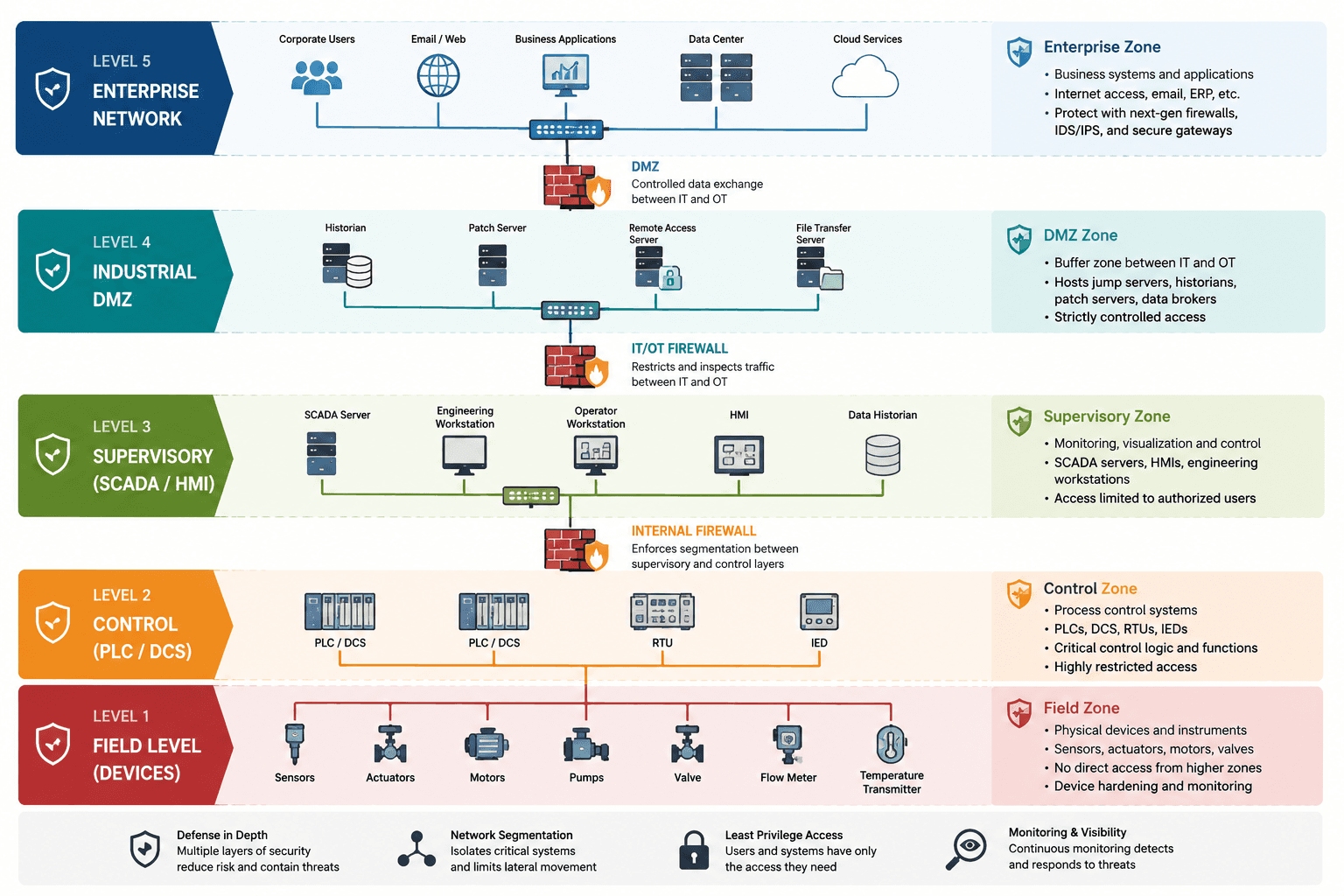
نموذج الحماية متعدد الطبقات
الطبقة | الهدف | عناصر التحكم النموذجية |
المحيط والشبكة | فصل تكنولوجيا المعلومات في المؤسسة عن الشبكات الصناعية والتحكم في الحركة غير المصرح بها بينهما. | جدران الحماية، المناطق المعزولة (DMZs)، تقسيم الشبكة، البوابات أحادية الاتجاه |
المناطق والقنوات | تجميع الأصول حسب الوظيفة والأهمية، والتحكم الصارم في المسارات بين المجموعات. | التقسيم القائم على نموذج بوردو (Purdue Model)، وفصل الشبكات المحلية الافتراضية (VLAN)، وقواعد الوصول على مستوى القنوات |
الهوية والوصول | ضمان أن الأشخاص والأنظمة المصرح لهم فقط هم من يمكنهم الوصول إلى الأصول الحساسة، مع منح الحد الأدنى من الصلاحيات المطلوبة. | الوصول القائم على الأدوار، والمصادقة متعددة العوامل، وإدارة الوصول المميز |
الأجهزة الطرفية والآلات | حماية وحدات التحكم الفردية ومحطات العمل والأجهزة الميدانية من الاختراق أو التلاعب. | القوائم البيضاء للتطبيقات، وتقوية الأجهزة، والقواعد الأساسية للتكوين الآمن |
المراقبة والكشف | تحديد السلوك غير الطبيعي في وقت مبكر قبل أن يتفاقم إلى اضطراب في العمليات. | كشف التجاوزات المتوافق مع التكنولوجيا التشغيلية (OT)، ومنصات رؤية الأصول، وتسجيل السجلات المركزي |
الاستجابة والتعافي | احتواء الحوادث بسرعة واستعادة العمليات الآمنة بأقل فترة توقف ممكنة. | خطط عمل الاستجابة للحوادث، وإجراءات النسخ الاحتياطي والتعافي، والتمارين المحاكية |
توصيات عملية وأفضل الممارسات
إن بناء هذا النوع من البنية الهندسية هو عملية تدريجية، وليس مشروعاً واحداً له تاريخ انتهاء محدد. تمنح الممارسات التالية قادة الأمن نقطة انطلاق عملية، مرتبة حسب المجالات التي تميل إلى تحقيق أكبر قدر من الحد من المخاطر أولاً.
تقسيم الشبكة وإنشاء المناطق
يظل تقسيم الشبكة هو عنصر التحكم الهندسي الأكثر فعالية والمتاح للأنظمة السيبرانية المادية. إن تقسيم البيئة إلى مناطق بناءً على الوظيفة والأهمية، والتحكم الصارم في القنوات التي تربط بينها، يحد من مدى حركة المتسلل حتى بعد الحصول على الوصول الأولي.
فصل تكنولوجيا المعلومات الخاصة بالمؤسسة، وأنظمة الإشراف على التكنولوجيا التشغيلية، وأنظمة السلامة إلى مناطق شبكة متميزة.
تطبيق مبدأ أن حركة المرور بين المناطق يجب أن تكون مسموحاً بها صراحةً، وليس مجرد عدم رفضها.
معاملة أنظمة السلامة والأدوات كمنطقة محمية خاصة بها دون أي اتصال روتيني عن بُعد.
إعادة تقييم تقسيم المناطق كلما تم إدخال معدات جديدة، أو موردين جدد، أو اتصالات عن بُعد جديدة.
الهوية والتحكم في الوصول
غالباً ما تكون إدارة الوصول أضعف في البيئات الصناعية مقارنة بتكنولوجيا المعلومات، ويرجع ذلك إلى حد كبير إلى أن الحسابات المشتركة وبيانات الاعتماد الافتراضية كانت شائعة تاريخياً في بيئة المصنع. إن تعزيز هذه الطبقة يسد واحدة من أكثر الثغرات استغلالاً في الحوادث الحقيقية.
إلغاء بيانات الاعتماد المشتركة والافتراضية على أجهزة وواجهات أنظمة التحكم.
تطبيق مبدأ امتياز الحد الأدنى من الصلاحيات بحيث لا يصل المشغلون والمهندسون والموردون إلا إلى ما تتطلبه أدوارهم الوظيفية فقط.
اشتراط المصادقة متعددة العوامل لأي وصول عن بُعد أو وصول مميز إلى بيئات التكنولوجيا التشغيلية (OT).
تقييد جميع جلسات الوصول عن بُعد للموردين والأطراف الخارجية بزمن محدد وتسجيلها، مع تسجيل الجلسات بالصوت والصورة حيثما أمكن ذلك.
حماية الأجهزة والآلات الطرفية
غالباً ما لا تتناسب أدوات مكافحة الفيروسات التقليدية مع الأجهزة الصناعية القديمة، إما بسبب قيود الموارد أو قيود دعم الموردين. ويميل إدراج التطبيقات في القائمة البيضاء وتقوية التكوينات إلى أن يكون أكثر عملية وفعالية لهذه البيئات.
استخدام القوائم البيضاء للتطبيقات في محطات العمل الهندسية وواجهات الإنسان والآلة عندما يكون استخدام مضاد الفيروسات غير عملي.
تقوية تكوينات الأجهزة عن طريق تعطيل المنافذ والخدمات والبروتوكولات غير المستخدمة.
الاحتفاظ بجدول جرد دقيق ومحدث باستمرار لكل الأصول المتصلة.
تأمين منافذ USB ومسارات الوسائط القابلة للإزالة مادياً في الأنظمة الحيوية.
المراقبة والكشف وتحليل التجاوزات
الرؤية هي الأساس الذي تعتمد عليه كل طبقة أخرى؛ فلا يمكن للمؤسسة الكشف عما لا تراه، ولا تزال العديد من البيئات الصناعية تفتقر إلى الرؤية الكاملة لحركة المرور الأفقية (الشرق والغرب) بين أجهزة التحكم. وتعمل المراقبة المتوافقة مع التكنولوجيا التشغيلية، والمصممة لفهم البروتوكولات الصناعية وسلوك العمليات الطبيعي، على رصد الانحرافات الطفيفة قبل وقت طويل من تحولها إلى حوادث كاملة الأثر.
نشر المراقبة السلبية التي تفهم البروتوكولات الصناعية دون تعطيل العمليات الجارية في الوقت الفعلي.
وضع قواعد سلوكية أساسية لنشاط العمليات الطبيعي للإبلاغ عن الانحرافات الهامة.
مركزية السجلات من تكنولوجيا المعلومات والتكنولوجيا التشغيلية في عرض مشترك لتسريع عملية الربط والتحقيق.
مراجعة التنبيهات في سياق تشغيلي، نظراً لأن التنبيه الإيجابي الكاذب في التكنولوجيا التشغيلية يمكن أن يحمل تداعيات حقيقية على السلامة.
الوصول الآمن عن بُعد
غالباً ما يكون الوصول عن بُعد هو أسرع مسار يمكن للمهاجم اتخاذه للوصول إلى بيئة التحكم، وهو أيضاً أحد أسهل الطبقات التي يمكن تأمينها بشكل صحيح باستخدام البنية الهندسية والانضباط المناسبين.
توجيه جميع جلسات العمل عن بُعد عبر بوابة وصول مخصصة وخاضعة للمراقبة بدلاً من الاتصالات المباشرة.
منح حق الوصول على أساس كل جلسة وكل غرض، بدلاً من الاتصال الدائم والمفتوح باستمرار.
طلب سير عمل الموافقة لطلبات وصول الموردين، مع ميزة انتهاء الصلاحية التلقائي.
تسجيل ومراجعة كل جلسة عمل عن بُعد بحثاً عن أي أوامر أو أوقات غير معتادة.
إدارة الثغرات الأمنية وتحديث التصحيحات
ينطوي تطبيق التصحيحات في بيئات التكنولوجيا التشغيلية على مخاطر تشغيلية نادراً ما تواجهها فرق تكنولوجيا المعلومات، حيث يمكن أن يؤدي تطبيق التحديث في الوقت الخاطئ إلى إيقاف العملية التشغيلية. ويتيح النهج المنظم القائم على المخاطر للمؤسسات إدارة التعرض للمخاطر دون إحداث فترات توقف غير ضرورية عن العمل.
تحديد أولويات الثغرات الأمنية بناءً على إمكانية الاستغلال وأهمية الأصل المتأثر، وليس فقط درجات الخطورة.
استخدام ضوابط تعويضية، مثل التقسيم أو تقييد الوصول، عندما يتطلب تطبيق التصحيحات الانتظار لحين توفر نافذة التوقف المخطط لها للعمليات.
اختبار التصحيحات في بيئة مماثلة قبل تطبيقها على أنظمة التحكم في الإنتاج الفعلي.
الاحتفاظ بجدول زمني موثق لتطبيق التصحيحات بالتوافق مع نوافذ الصيانة ودورات مراجعة السلامة.
الاستعداد للاستجابة للحوادث
حتى البيئة ذات البنية الهندسية المصممة جيداً قد تتعرض لحادث، وغالباً ما تحدد سرعة كشف المؤسسة للحادث واحتوائه ما إذا كانت النتيجة مجرد اضطراب طفيف أو حدث تشغيلي كبير.
بناء خطط عمل للاستجابة للحوادث خاصة بسيناريوهات التكنولوجيا التشغيلية (OT)، وعدم الاكتفاء بتعديل خطط تكنولوجيا المعلومات.
إجراء تمارين محاكاة منتظمة تشمل كلاً من فرق الأمن وفرق العمليات.
تحديد أدوار واضحة للأشخاص المخولين باتخاذ قرارات الإغلاق أو العزل أثناء الحادث النشط.
الاحتفاظ بنسخ احتياطية تم اختبارها وغير متصلة بالإنترنت للتكوينات الهامة ومنطق التحكم.
كيف تدعم Shieldworkz المؤسسات؟
تعمل Shieldworkz جنباً إلى جنب مع المؤسسات الصناعية لتصميم وتنفيذ وتطوير بنية أمن الأنظمة السيبرانية المادية (CPS) دون تعطيل العمليات التي تهدف هذه البنية إلى حمايتها. إن نهجنا يرتكز على الواقع التشغيلي أولاً، والنظرية الأمنية ثانياً، لأن عنصر التحكم الذي لا يمكنه الصمود في بيئة إنتاج فعلية لا يعتبر عنصر تحكم على الإطلاق.
رؤية شاملة للأصول وتقييم المخاطر للتكنولوجيا التشغيلية (OT) وأنظمة التحكم الصناعية (ICS) عبر كل بيئة متصلة.
تصميم عملي لتقسيم الشبكة قائم على المخاطر ومخصص للبنية التحتية والقيود الحالية.
بنية هندسية آمنة للوصول عن بُعد توازن بين احتياجات الموردين والقوى العاملة والتحكم الصارم.
مراقبة متوافقة مع التكنولوجيا التشغيلية وكشف التجاوزات المبني على البروتوكولات والعمليات الصناعية الحقيقية.
برامج إدارة الثغرات الأمنية المتوافقة مع نوافذ الصيانة ومتطلبات السلامة.
تخطيط الاستجابة للحوادث وتمارين المحاكاة المصممة خصيصاً للبيئات الصناعية.
دعم استشاري مستمر لمساعدة فرق الأمن والعمليات على تطوير بنيتها الأمنية بمرور الوقت.
الخاتمة
ستصبح الأنظمة السيبرانية المادية أكثر ترابطاً واتصالاً مع مواصلة المؤسسات الصناعية الاستثمار في الأتمتة، والعمليات عن بُعد، واتخاذ القرارات القائمة على البيانات. هذا المسار يجعل من بنية الدفاع الشامل والعميق ضرورة تشغيلية وليس مجرد ترقية اختيارية. والمؤسسات التي تتعامل مع البنية الأمنية كقرار تصميم أساسي، بدلاً من كونها فكرة لاحقة مضافة، هي الأكثر استعداداً للحفاظ على سير عملياتها بأمان وموثوقية ومرونة ضد التهديدات الآخذة في التطور باستمرار.
لا تهدف البنية الأمنية القوية للأنظمة السيبرانية المادية إلى القضاء على كل المخاطر، بل تهدف إلى بناء مقاومة كافية متعددة الطبقات تجعل مسار المهاجم للوصول إلى أصولك الأكثر أهمية طويلاً وصعباً وواضحاً بما يكفي لكشفه وإيقافه قبل حدوث ضرر حقيقي.
احجز استشارة مجانية مع خبرائنا
تحمل كل بيئة صناعية تاريخها الخاص من المعدات القديمة، والقيود التشغيلية، واحتياجات الاتصال، مما يعني أن كل بنية أمنية يجب أن تُبنى حول هذه التفاصيل المحددة بدلاً من استخدام نموذج عام. إذا كنت ترغب في الحصول على وجهة نظر خبيرة حول وضع بنيتك الحالية وأين تكمن التحسينات ذات الأثر الأكبر، فإن فريقنا في Shieldworkz مستعد لمناقشة ذلك معك دون أي التزام.
حدد موعد استشارتك المجانية واتخذ الخطوة التالية نحو بنية أمنية مرنة للأنظمة السيبرانية المادية (CPS).
مصادر إضافية
دليل شامل للكشف عن الشبكة والاستجابة لها (NDR) في عام 2026 هنا
دفتر عمل حاسبة التعرض لمخاطر أمن التكنولوجيا التشغيلية (OT) هنا
تقرير قابل للتنزيل حول حادثة Stryker السيبرانية هنا
أدلة المعالجة هنا
أفضل ممارسات أمن التكنولوجيا التشغيلية وإرشادات تقييم المخاطر هنا
قائمة مرجعية لتقييم مخاطر OT/ICS المستندة إلى معيار IEC 62443 لقطاع تصنيع الأغذية والمشروبات هنا
احصل على تحديثات أسبوعية
الموارد والأخبار
تعرف على كيفية معالجة حلولنا الرائدة في مجال أمن تكنولوجيا التشغيل (OT) للتحديات الأمنية الحيوية
قد تود أيضًا

NERC CIP Asset Inventory Management: Closing Visibility Gaps Across OT Networks
Team Shieldworkz

SBI data exposure: Evidence, attack scenarios and downstream fraud risk
Prayukth K V

Automate OT Security Assessments Without Losing Expert Control
Team Shieldworkz

Investigating pro-Russian cyber campaigns against France’s maritime and critical infrastructure
Prayukth K V

What the French supermarket cyberattack reveals about OT security
Prayukth K V

Inside the Albert Heijn cyber incident: Investigating the attack, the IT/OT exposure, and the risks to critical operations
Team Shieldworkz