أمن كشف الشبكة والاستجابة لها (NDR): ما الذي يكتشفه وتغفله الأدوات التقليدية غالباً

فريق شيلدوركز
يتم بناء معظم برامج الأمن الصناعي حول ثلاثي مألوف: جدران الحماية عند المحيط، وحماية الأجهزة الطرفية على الآلات التي يمكنها تشغيل وكيل (Agent)، ونظام إدارة معلومات الأمن والأحداث (SIEM) الذي يجمع سجلات الأحداث معاً في نهاية المسار. إنه أساس منطقي، وظل لسنوات يُعامل على أنه "كافٍ للغاية". ومع ذلك، فقد أظهرت حادثة تلو الأخرى في مصانع التصنيع والمرافق ومنشآت المعالجة النمط نفسه: كان المهاجم موجوداً بالفعل داخل الشبكة لعدة أيام، وأحياناً لأسابيع، قبل أن يلاحظ أي شخص أي شيء غير عادي. ولم يتم إنشاء التنبيهات المهمة أبداً، لأنه لم يكن هناك أي شيء في مجموعة الأدوات يراقب فعلياً المحادثات التي تحدث بين الأجهزة.
هذه هي البقعة العمياء التي تم بناء تقنية كشف وتحديد مخاطر الشبكة والاستجابة لها (NDR) لمعالجتها وسد فجوتها. وبدلاً من الاعتماد على وكيل مثبت على كل أصل أو قاعدة مكتوبة لتوقيع معروف، تراقب تقنية NDR حركة المرور الخام التي تتحرك عبر الشبكة وتتعلم كيف تبدو الاتصالات الطبيعية لكل جهاز وبروتوكول واتصال. وعندما ينحرف شيء ما - مثل تواصل مفاجئ لمؤرخ البيانات (Historian) مع عنوان IP خارجي، أو تلقي جهاز التحكم المنطقي القابل للبرمجة (PLC) أوامر من محطة عمل لم يتواصل معها من قبل - فإن تقنية NDR تكتشف ذلك في الوقت الفعلي، حتى لو لم يكن هذا الجهاز قادراً على تشغيل وكيل أمني في المقام الأول.
بالنسبة لقادة أمن التكنولوجيا التشغيلية (OT)، ومهندسي أنظمة التحكم الصناعي (ICS)، ومديري أمن المعلومات (CISOs) المسؤولين عن البنية التحتية الحيوية، فإن الفهم الدقيق لما تكتشفه تقنية NDR - ولماذا تفوتها الأدوات التقليدية باستمرار - لم يعد مجرد تمرين أكاديمي. بل هو الفرق بين كشف الاختراق أثناء مرحلة الاستطلاع واكتشافه بعد تعطل الإنتاج بالفعل.
ما هي تقنية كشف واستجابة الشبكة (NDR)، ولماذا تكتسب أهمية بالغة في بيئات التكنولوجيا التشغيلية (OT)؟
تُعد تقنية كشف واستجابة الشبكة (NDR) نهجاً أمنياً يراقب باستمرار حركة مرور الشبكة - سواء داخل المنشأة أو بين المناطق - لتحديد الأنشطة الضارة أو غير المصرح بها أو غير الطبيعية ببساطة. وهي تعمل عادةً عن طريق التقاط حركة المرور بشكل سلبي (Passive) من خلال محاكاة منافذ المحول (Switch Port Mirroring) أو نقاط توصيل الشبكة (Network Taps)، بحيث لا تلمس أو تتداخل أبداً مع أنظمة التحكم التي تحميها. وهذا الخيار التصميمي الوحيد هو ما يجعلها قابلة للتطبيق في البيئات التي لا يكون فيها وقت التوقف عن العمل خياراً مقبولاً، وحيث يبلغ عمر العديد من الأجهزة عقوداً من الزمن وتفتقر للتحديثات البرمجية وتكون غير قادرة على دعم أي نوع من الوكلاء البرمجيين.
في سياق التكنولوجيا التشغيلية (OT)، يكتسب هذا الأمر أهمية هائلة. فجهاز التحكم المنطقي القابل للبرمجة (PLC) الذي يعمل ببرنامج ثابت مملوك للشركة المصنعة يعود لأوائل العقد الأول من القرن الحادي والعشرين لا يمكنه استضافة برنامج مكافحة الفيروسات. ولا يمكن مقاطعة نظام أدوات السلامة في وحدة البتروكيماويات لإجراء فحص أمني. ومع ذلك، فإن هذه هي بالضبط الأصول التي يرغب المهاجم في الوصول إليها، لأنها تتحكم في العمليات الفيزيائية - الضغط، ودرجة الحرارة، والتدفق، وتوزيع الطاقة - والتي تترجم مباشرة إلى مخاطر على السلامة والإنتاج. تمنح تقنية NDR فرق الأمن رؤية واضحة حول كيفية تواصل هذه الأصول دون الحاجة إلى إجراء أي تغيير على الأجهزة نفسها.
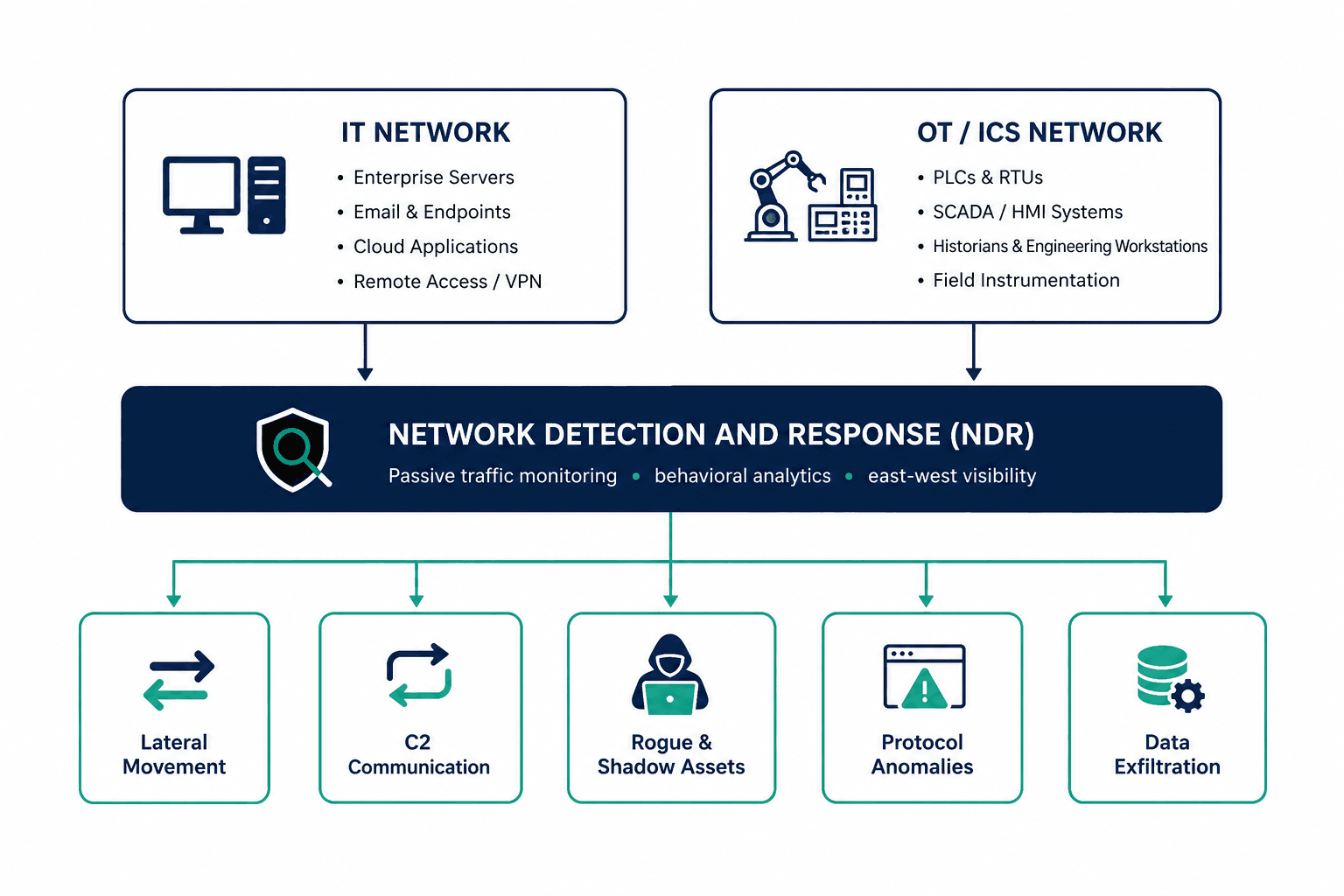
تتوزع تقنية NDR عبر قطاعات شبكات تكنولوجيا المعلومات (IT) والتكنولوجيا التشغيلية (OT)، لتكشف عن الأنشطة التي لا يمكن للأدوات القائمة على الوكلاء وأدوات المحيط الوصول إليها.
لماذا تقصر الأدوات الأمنية التقليدية في البيئات الصناعية
تلعب جدران الحماية، وحماية الأجهزة الطرفية، ومنصات SIEM دوراً أساسياً، ولكن تم تصميم كل منها مع وضع نوع محدد من الرؤية في الاعتبار، ولم يتم بناء أي منها للإجابة على السؤال الأكثر أهمية في التكنولوجيا التشغيلية (OT): ما الذي يحدث بين الأجهزة الموجودة بالفعل داخل الشبكة؟
جدران الحماية لا ترى سوى ما يعبر الحدود
يفحص جدار الحماية حركة المرور التي تمر عبر نقطة اختناق محددة، مثل الحدود بين شبكة تكنولوجيا المعلومات (IT) والمنطقة منزوعة السلاح للتكنولوجيا التشغيلية (OT DMZ). وبمجرد دخول المهاجم داخل تلك الحدود - من خلال كمبيوتر محمول مخترق لمورد، أو بريد إلكتروني تصيدي وصل إلى محطة عمل هندسية، أو أداة وصول عن بعد تم تكوينها بشكل خاطئ - لا يتبقى لجدار الحماية أي شيء ليفحصه. فالحركة بين جهازين يقعان على نفس قطاع التكنولوجيا التشغيلية ببساطة لا تصل إليه أبداً.
لا يمكن لأدوات الأجهزة الطرفية حماية ما لا يمكنه تشغيل وكيل أمني
تُعد حلول الكشف والاستجابة للأجهزة الطرفية (EDR) فعالة للغاية على أصول تكنولوجيا المعلومات مثل أجهزة الكمبيوتر المحمولة والخوادم ومحطات العمل التي يمكنها دعم وكيل خفيف الوزن. والمشكلة هي أن غالبية أصول التكنولوجيا التشغيلية (OT) - مثل أجهزة PLC، ووحدات RTU، والمستشعرات، والمشغلات، وواجهات HMI القديمة - لم يتم تصميمها مطلقاً لتشغيل مثل هذا الوكيل. وقد وجدت التقييمات الصناعية لبيئات التكنولوجيا التشغيلية مراراً وتكراراً أن حصة كبيرة من الأجهزة على مستوى الحقل تقع في هذه الفئة غير المدارة، مما يعني أن أدوات الأجهزة الطرفية ليس لها وجود هناك على الإطلاق.
تعتمد أنظمة SIEM كلياً على جودة السجلات التي تتلقاها
تقوم منصة SIEM بربط وتحليل السجلات، لكنها تعتمد بالكامل على توليد تلك السجلات وتمريرها في المقام الأول. وتنتج العديد من أجهزة التكنولوجيا التشغيلية حداً أدنى من السجلات، وحتى عند وجود السجلات، فإن نقلها خارج المعدات القديمة يمكن أن يشكل في حد ذاته خطراً أو قد لا يكون ممكناً من الناحية الفنية ببساطة. وإذا لم يتم تسجيل النشاط مطلقاً، فلن يكون لدى نظام SIEM ما يربطه، وبالتالي تظل الحادثة غير مرئية حتى تظهر عواقبها في مكان آخر.
ما تكتشفه تقنية NDR فعلياً وتفوته الأدوات الأخرى
هذه هي القيمة الأساسية للمراقبة على مستوى الشبكة - فهي لا تعتمد على وكيل، أو توقيع، أو سجل ممرر. بل تراقب حركة المرور نفسها، مما يعني أنها تستطيع إظهار فئات من الأنشطة التي تظل غير مرئية لبقية مجموعة الأدوات الأمنية.
الكشف القائم على السلوك والشذوذ
بدلاً من مطابقة حركة المرور بقائمة من التواقيع السيئة المعروفة، تقوم تقنية NDR ببناء خط أساس سلوكي لكل أصل على الشبكة - ما هي الأجهزة التي يتحدث إليها عادةً، وما هي البروتوكولات التي يستخدمها، وفي أي أوقات من اليوم يحدث النشاط، وكمية البيانات التي تتحرك عادةً. وعندما يخرق جهاز ما هذا النمط، حتى لو كان ذلك بطريقة لم يسبق رؤيتها من قبل ولا تطابق أي توقيع برامج ضارة معروف، يتم وضع علامة على هذا الشذوذ. وهذه هي الطريقة التي تلتقط بها تقنية NDR التهديدات الجديدة أو المصممة خصيصاً لتفادي الكشف القائم على التواقيع.
الحركة الجانبية بين الأصول
بمجرد دخولهم الشبكة، نادراً ما يبقى المهاجمون على النظام الذي اخترقوه أولاً. بل يتحركون جانبياً، ويفحصون الأجهزة الأخرى، ويجمعون بيانات الاعتماد، ويعملون للوصول إلى أهداف ذات قيمة أعلى مثل محطات العمل الهندسية أو أنظمة السلامة. وتحدث هذه الحركة الجانبية بالكامل داخل الشبكة الداخلية، مما يجعلها غير مرئية لجدار حماية المحيط وغير قابلة للكشف بواسطة أداة أجهزة طرفية لا تملك وكيلاً على الأنظمة التي يتم فحصها. تراقب تقنية NDR هذه الاتصالات الأفقية (الشرق-الغرب) مباشرة، وهو ما يمثل في الغالب الطريقة الأسرع لالتقاط الاختراق قبل أن يصل إلى أي شيء حيوي.
اتصالات القيادة والسيطرة (C2)
تعتمد معظم الاختراقات المتطورة على قيام جهاز مخترق "بالاتصال بالمنزل" بشكل دوري بخادم خارجي لتلقي مزيد من التعليمات. وغالباً ما يتم تمويه حركة مرور هذه الإشارات عمداً لتبدو وكأنها نشاط ويب طبيعي، أو يتم تشفيرها، أو تباعد فتراتها لتجنب إطلاق تنبيهات بسيطة قائمة على الحجم. وتحلل تقنية NDR أنماط الاتصال - التوقيت، وسمعة الوجهة، وتكرار الاتصال، وهيكل حركة المرور - لتحديد هذا السلوك حتى عندما تكون الحمولة نفسها مخفية.
رؤية الأصول وأجهزة التكنولوجيا التشغيلية غير المصرح بها (Shadow OT)
من الشائع أن تكتشف المنشآت، بمجرد تشغيل المراقبة الفعلية للشبكة، أن لديها أجهزة متصلة أكثر بكثير مما يظهره جرد الأصول لديها. فالمعدات التي يقوم المقاولون بتثبيتها، وأجهزة الكمبيوتر المحمولة المؤقتة للتشخيص، ونقاط الوصول عن بعد المنسية غالباً ما توجد بالكامل خارج السجلات الموثقة. وتحدد تقنية NDR بشكل سلبي كل جهاز يولد حركة مرور على الشبكة، مما يمنح فرق الأمن والعمليات جرداً دقيقاً ومحدثاً باستمرار للأصول - وهو أمر يصعب للغاية الحفاظ عليه من خلال عمليات التدقيق اليدوية وحدها.
حالات الشذوذ على مستوى البروتوكول في حركة مرور أنظمة ICS و SCADA
تم تصميم البروتوكولات الصناعية مثل Modbus و DNP3 و OPC-UA و EtherNet/IP منذ عقود مضت مع إعطاء الأولوية للوظائف وليس للأمن. ويفتقر العديد منها إلى المصادقة بالكامل، مما يعني أنه يمكن إصدار أمر يبدو صالحاً من قِبل أي شخص قادر على الوصول إلى الشبكة. ويمكن لمنصات NDR المصممة خصيصاً للتكنولوجيا التشغيلية (OT) تحليل هذه البروتوكولات على مستوى عميق، والتعرف على الحالات التي يكون فيها الأمر صالحاً من الناحية الهيكلية ولكنه خاطئ في سياق العمل - على سبيل المثال، إرسال أمر كتابة (Write) إلى وحدة تحكم من جهاز لم يسبق له إصدار أوامر كتابة من قبل، أو رمز وظيفة ليس له سبب مشروع للظهور على ذلك القطاع من الشبكة.
سلوك حركة المرور المشفرة والبطيئة والمتخفية (Low-and-Slow)
لا يمكن قراءة كل تهديد بشكل مباشر، لا سيما مع اعتماد المزيد من موردي التكنولوجيا التشغيلية على قنوات اتصال مشفرة. ولا تحتاج تقنية NDR إلى فك تشفير حركة المرور لتكون مفيدة - بل لا يزال بإمكانها تحليل البيانات الوصفية للاتصال، وأنماط التوقيت، وتوزيع حجم الحزم، ومدة الجلسة لوضع علامة على السلوكيات المتوافقة مع تسريب البيانات أو نشاط القيادة والسيطرة، حتى عندما يظل المحتوى نفسه غامضاً.
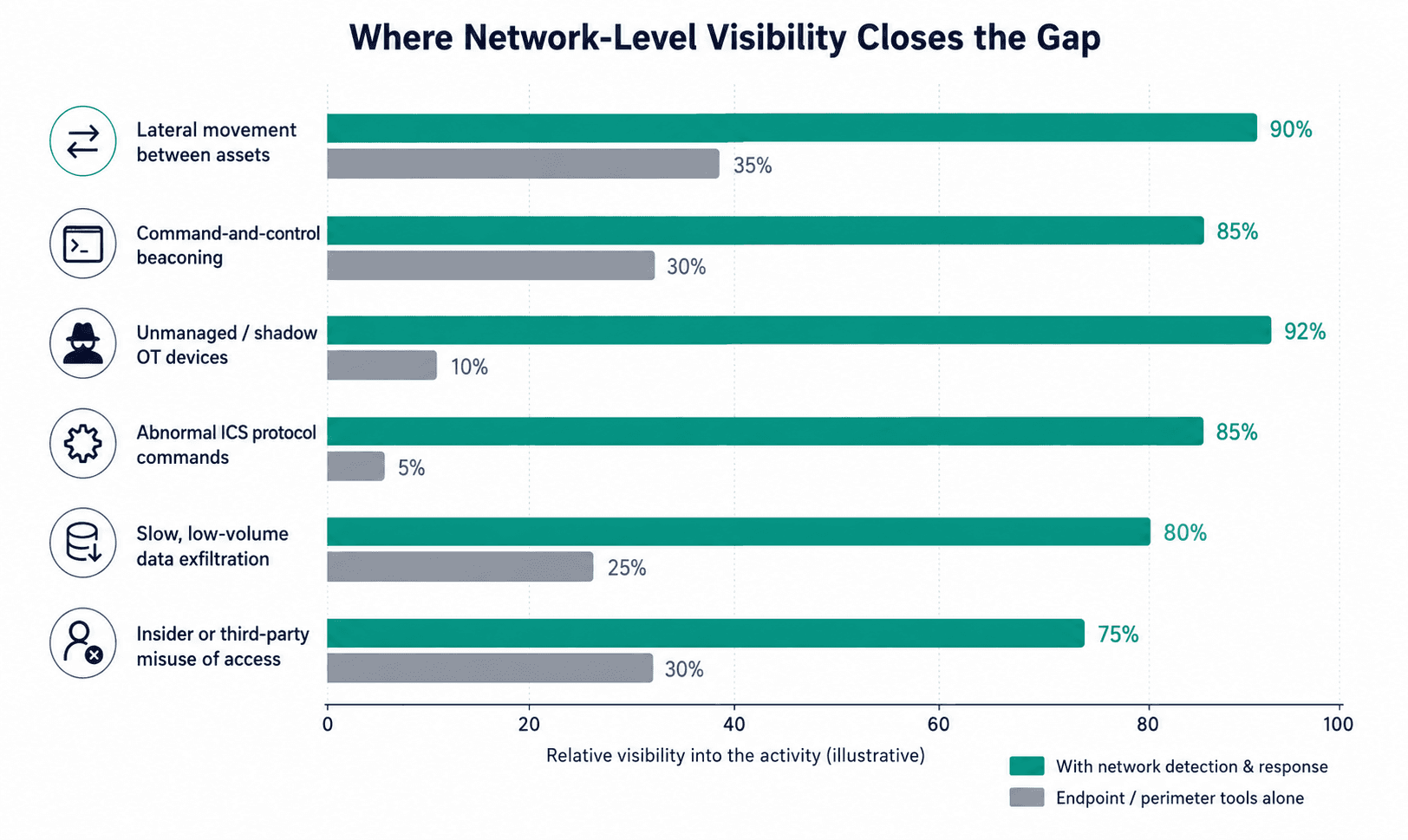
مقارنة توضيحية لتغطية الكشف: تسد المراقبة على مستوى الشبكة باستمرار الفجوات التي تتركها الأدوات القائمة على الوكلاء والأدوات المحيطية فقط مفتوحة.
أمثلة من العالم الحقيقي في الصناعة: عندما تحولت البقعة العمياء إلى اختراق مدمر
تشترك العديد من الحوادث السيبرانية الصناعية الأكثر تأثيراً في العقد الماضي في خيط مشترك - وهو أن حركة المهاجم داخل الشبكة مرت دون أن يلاحظها أحد لفترة طويلة لأنه لم يكن هناك ما يراقب حركة المرور الداخلية بنشاط.
شبكة الكهرباء في أوكرانيا، 2015 و 2016
تمكن المهاجمون من الوصول إلى شبكات المرافق قبل أشهر من حدوث التعطيل الفعلي، مستغلين ذلك الوقت لدراسة البيئة، ورسم خرائط لأنظمة التحكم، وتحديد كيفية التلاعب بالقواطع الكهربائية. وشملت مرحلة الاستطلاع نشاطاً مستمراً للشبكة الداخلية - وهو بالضبط نوع الحركة الجانبية والاتصالات غير العادية التي تم تصميم المراقبة على مستوى الشبكة لإظهارها وكشفها. وكان انقطاع التيار الكهربائي النهائي الذي ترك مئات الآلاف من العملاء دون كهرباء هو المرحلة الأخيرة من الاختراق الذي كان يتطور بهدوء لفترة طويلة.
هجوم على نظام السلامة في منشأة بتروكيماويات، 2017
أظهر هجوم استهدف نظام أدوات السلامة في مصنع للبتروكيماويات المدى الذي يمكن أن يصل إليه المتسللون بمجرد دخولهم شبكة التكنولوجيا التشغيلية (OT) - في هذه الحالة، محاولة إعادة برمجة أجهزة تحكم السلامة التي وجدت خصيصاً لمنع الفشل الكارثي. وتطلب مسار الاختراق وصولاً ممتداً إلى شبكة التكنولوجيا التشغيلية ومراحل متعددة من الاستطلاع الداخلي قبل لمس أجهزة تحكم السلامة على الإطلاق، وهو مثال آخر على حملة داخلية بطيئة الحركة لم تكن الدفاعات المحيطية التقليدية في موقع يسمح بكشفها.
مشغل خط أنابيب وقود رئيسي، 2021
نشأ حدث برامج فدية أدى إلى تعطيل توزيع الوقود عبر منطقة واسعة من الولايات المتحدة من وثيقة اعتماد وصول عن بعد مخترقة واحدة. وبمجرد دخولهم، تمكن المهاجمون من التحرك عبر الشبكة نحو أنظمة الأعمال مما أجبر في النهاية على الإغلاق التشغيلي الكامل كإجراء احترازي. وعنى غياب المراقبة الداخلية متعددة الطبقات أن الاختراق لم يتم التعرف عليه إلا بمجرد أن أصبح نشاط برامج الفدية علنياً، وهو وقت متأخر بكثير عن النقطة التي كانت فيها أنماط حركة المرور الداخلية غير العادية قابلة للكشف.
هذه الأمثلة ليست حالات شاذة. بل تعكس نمطاً ثابتاً عبر الحوادث الأمنية السيبرانية الصناعية: يتم اكتساب الموطئ الفني بسرعة، ولكن النتيجة الضارة لا تحدث إلا بعد فترة أطول بكثير من الحركة الداخلية غير المكتشفة. وتلك النافذة الزمنية - التي تُقاس غالباً بالأسابيع - هي بالضبط المكان الذي يوفر فيه الكشف على مستوى الشبكة أول فرصة واقعية للتدخل.
مخاطر وتحديات العمل بدون رؤية واضحة على مستوى الشبكة
وقت بقاء ممتد للمهاجمين: بدون مراقبة حركة المرور، يمكن للمتسللين العمل داخل شبكات التكنولوجيا التشغيلية لأسابيع أو أشهر قبل كشفهم، مما يمنحهم الوقت لرسم خرائط الأنظمة، وتصعيد صلاحيات الوصول، والتحضير للتعطيل.
أصول غير مصرح بها (Shadow Assets) غير مكتشفة: تخلّق الأجهزة المتصلة خارج عمليات التحكم الرسمية في التغيير نقاط دخول لا تظهر أبداً في المراجعات الأمنية لأنه لا يوجد أحد يراقبها.
شعور زائف بالأمان من الأدوات التي تركز على تكنولوجيا المعلومات (IT): قد تفترض الإدارة وجود تغطية أمنية لمجرد نشر جدران الحماية وأدوات الأجهزة الطرفية، دون إدراك أن هذه الأدوات تملك رؤية ضئيلة أو معدومة لحركة المرور الخاصة بالتكنولوجيا التشغيلية (OT).
استجابة متأخرة للحوادث: عندما يتم اكتشاف الاختراق أخيراً من خلال عواقبه - مثل التوقف عن العمل، أو حادثة سلامة، أو رسالة فدية - يفتقر المستجيبون إلى بيانات حركة المرور التاريخية اللازمة لإعادة بناء كيفية تحرك المهاجم، مما يؤدي إلى إبطاء الاحتواء والتعافي.
التعرض للمساءلة التنظيمية والتأمينية: مع نضوج أطر العمل مثل NERC CIP و IEC 62443 ومختلف توجيهات البنية التحتية الحيوية الوطنية، يُنظر بشكل متزايد إلى غياب مراقبة الشبكة القابلة للإثبات على أنه فجوة في الامتثال وقابلية التأمين، وليس مجرد فجوة فنية.
توصيات عملية لنشر تقنية NDR في بيئات التكنولوجيا التشغيلية (OT)
يتطلب إدخال المراقبة على مستوى الشبكة في بيئة تشغيلية نهجاً مختلفاً عن عمليات النشر النموذجية لأمن تكنولوجيا المعلومات (IT). ويعكس التسلسل التالي كيف اقتربت برامج أمن التكنولوجيا التشغيلية المدارة جيداً من ذلك بنجاح.
المرحلة | منطقة التركيز | لماذا يهم ذلك |
1. الاكتشاف السلبي | نشر أجهزة الاستشعار على منافذ SPAN/TAP، وليس بشكل متداخل (inline) | عدم وجود أي تعطيل لعمليات التكنولوجيا التشغيلية/أنظمة التحكم الصناعي الحية |
2. خط أساس الأصول | بناء جرد كامل للأجهزة المتصلة والمتواصلة | لا يمكنك حماية ما لا يمكنك رؤيته |
3. تحديد الخط السلوكي الأساسي | تعلم أنماط حركة المرور الطبيعية على مدار أسبوعين إلى 4 أسابيع | يقلل من الإيجابيات الكاذبة قبل بدء إصدار التنبيهات |
4. الضبط المتوافق مع البروتوكولات | تمكين الفحص العميق لبروتوكولات Modbus و DNP3 و OPC و EtherNet/IP | تخطئ قواعد تكنولوجيا المعلومات العامة في كشف إساءة الاستخدام الخاصة بأنظمة التحكم الصناعي (ICS) |
5. التكامل والدمج | ربط تنبيهات تقنية NDR بمسارات عمل نظام SIEM/مركز العمليات الأمنية (SOC) | يخلق جدولاً زمنياً موحداً للتحقيق في الحوادث |
6. المراجعة المستمرة | إعادة تقييم خطوط الأساس بعد التغييرات، وعمليات الصيانة، والترقيات | يحافظ على دقة الكشف مع تطور البيئة التشغيلية |
ابدأ بالمراقبة السلبية، وليس الفحص النشط
يمكن لأدوات الفحص النشط التي تفحص الأجهزة أن تتسبب في تعطل معدات التكنولوجيا التشغيلية الحساسة التي لم يتم بناؤها مطلقاً للتعامل مع حركة مرور الشبكة غير المتوقعة. وتراقب المراقبة السلبية من خلال نقاط TAP أو منافذ SPAN حركة المرور دون إرسال حزمة بيانات واحدة إلى الأجهزة الجاري مراقبتها، ولهذا السبب أصبحت المعيار المقبول للرؤية الآمنة في بيئات التكنولوجيا التشغيلية.
أعط الأولوية للوعي بالبروتوكولات على الكشف العام
ستواجه أداة المراقبة المصممة في المقام الأول لحركة مرور تكنولوجيا المعلومات (IT) صعوبة في فهم بروتوكولات Modbus أو DNP3 أو البروتوكولات المملوكة للموردين. ابحث عن قدرة كشف تم بناؤها خصيصاً لتحليل هذه البروتوكولات وفهم كيف تبدو سلسلة الأوامر المشروعة فعلياً على نوع معين من وحدات التحكم.
تعامل مع ضبط التنبيهات كعملية مستمرة
ستظهر الأسابيع الأولى بعد النشر حجماً كبيراً من السلوكيات "الجديدة" لمجرد أن خط الأساس لا يزال قيد التشكيل. وتتعامل المنشآت التي ترى أسرع عائد من تقنية NDR مع فترة الضبط هذه كاستثمار، حيث تعمل مع فريق الأمن أو الموفر لديها للتمييز بين الاختلافات التشغيلية الحقيقية والمخاطر الفعلية.
كيف تدعم Shieldworkz المؤسسات
تعمل Shieldworkz مع المشغلين الصناعيين، والمرافق، والمصنعين لتصميم وتنفيذ رؤية واضحة على مستوى الشبكة تتناسب مع واقع بيئات الإنتاج الحية - وليس قالب أمان تكنولوجيا معلومات عام يتم تطبيقه على التكنولوجيا التشغيلية. تم بناء نهجنا حول التحديات المحددة التي تأتي مع الأصول القديمة، والعمليات الحرجة للسلامة، ومتطلبات عدم التوقف عن العمل.
اكتشاف عميق للأصول عبر شبكات تكنولوجيا المعلومات والتكنولوجيا التشغيلية، بما في ذلك الأجهزة القديمة وغير المدارة التي تفوتها عمليات الجرد التقليدية
طرق نشر سلبية وغير دخيلة مصممة لحماية استمرارية الإنتاج وعمليات السلامة
تحليلات سلوكية واعية بالبروتوكولات تم ضبطها خصيصاً لأنماط اتصالات أنظمة التحكم الصناعي (ICS) وأنظمة SCADA
دعم التكامل الذي يربط التنبيهات على مستوى الشبكة بمسارات عمل مركز العمليات الأمنية (SOC) ونظام SIEM والاستجابة للحوادث الحالية
ضبط مستمر لخط الأساس والتحقق من التهديدات من قِبل محللين يفهمون العمليات الصناعية، وليس فقط حركة مرور تكنولوجيا المعلومات العامة
إرشادات تتماشى مع أطر العمل المعترف بها، بما في ذلك IEC 62443، لدعم كل من النضج الأمني والجاهزية التنظيمية
الهدف واضح ومباشر: منح قادة العمليات والأمن صورة واضحة ومحدثة باستمرار لما يحدث بالفعل في بيئتهم، بحيث تستند القرارات إلى رؤية واقعية بدلاً من الافتراضات.
خاتمة
تظل جدران الحماية وأدوات الأجهزة الطرفية ومنصات SIEM أجزاءً ضرورية من برنامج أمني متعدد الطبقات، ولكن لم يتم تصميم أي منها للإجابة على السؤال الأكثر أهمية داخل بيئة التكنولوجيا التشغيلية (OT): ما الذي يحدث فعلياً بين الأجهزة الموجودة بالفعل على الشبكة؟ هذه هي الفجوة التي تسدها تقنية NDR. فمن خلال مراقبة حركة المرور مباشرة، دون الحاجة إلى وكيل أو توقيع أو سجل ممرر، فإنها تكشف عن الحركة الجانبية، وأنشطة القيادة والسيطرة، والأصول غير المصرح بها، وإساءة الاستخدام على مستوى البروتوكول قبل وقت طويل من تحول تلك الأنشطة إلى توقف عن العمل، أو حادثة سلامة، أو عنوان رئيسي في الأخبار.
بالنسبة لقادة أمن التكنولوجيا التشغيلية وصناع القرار الصناعيين، فإن الفائدة العملية بسيطة: الرؤية المصممة لتكنولوجيا المعلومات (IT) ليست هي نفسها المصممة للتكنولوجيا التشغيلية (OT)، وتكلفة هذه الفجوة تميل إلى الظهور في أسوأ لحظة ممكنة. ولا يتطلب سد هذه الفجوة استبدال الأدوات الحالية، بل يتطلب إضافة الطبقة الوحيدة التي كانت مفقودة.
احجز استشارة مجانية مع خبرائنا
إذا كان فريقك يعمل على دراسة كيفية ملاءمة تقنية كشف واستجابة الشبكة مع مجموعتك الأمنية الحالية، فإن أخصائيي أمن التكنولوجيا التشغيلية لدينا في Shieldworkz يسعدهم مراجعة بيئتك معك - دون أي التزام، فقط نظرة فاحصة على وضع الرؤية لديك اليوم وما ينطوي عليه سد الفجوة. حدد موعداً للاستشارة المجانية واحصل على توصيات عملية ومخصصة لمنشأتك.
مصادر إضافية:
دليل شامل لتقنية كشف واستجابة الشبكة (NDR) في عام 2026 هنا
قائمة مراجعة جاهزية مراقبة أمن الشبكة الداخلية NERC CIP-015 لمرافق الكهرباء هنا
الدليل التأسيسي لمركز العمليات الأمنية للتكنولوجيا التشغيلية (OT SOC) هنا
خدمة مركز العمليات الأمنية المدارة (Managed SOC) هنا
تقرير استخبارات التهديدات السيبرانية للتكنولوجيا التشغيلية - الشرق الأوسط هنا
توجيه NIS2 وتحقيق الامتثال له من خلال معيار IEC 62443 هنا
ما هي الوسائط القابلة للإزالة؟ المخاطر والسياسات والحلول الأمنية للتكنولوجيا التشغيلية الصناعية هنا
نموذج سياسة الوسائط القابلة للإزالة المجاني لفرق التكنولوجيا التشغيلية وتكنولوجيا المعلومات هنا
احصل على تحديثات أسبوعية
الموارد والأخبار
تعرف على كيفية معالجة حلولنا الرائدة في مجال أمن تكنولوجيا التشغيل (OT) للتحديات الأمنية الحيوية
قد تود أيضًا

NERC CIP Asset Inventory Management: Closing Visibility Gaps Across OT Networks
Team Shieldworkz

SBI data exposure: Evidence, attack scenarios and downstream fraud risk
Prayukth K V

Automate OT Security Assessments Without Losing Expert Control
Team Shieldworkz

Investigating pro-Russian cyber campaigns against France’s maritime and critical infrastructure
Prayukth K V

What the French supermarket cyberattack reveals about OT security
Prayukth K V

Inside the Albert Heijn cyber incident: Investigating the attack, the IT/OT exposure, and the risks to critical operations
Team Shieldworkz