
Team Shieldworkz
Cyber incidents in OT/ICS environments are no longer an IT concern; they halt production lines, compromise worker safety, and cost millions per hour. This Blog answers the questions your board is already asking: How fast can we detect a breach? Are we protected against AI-powered adversaries? Is our threat detection strategy ready for 2026?
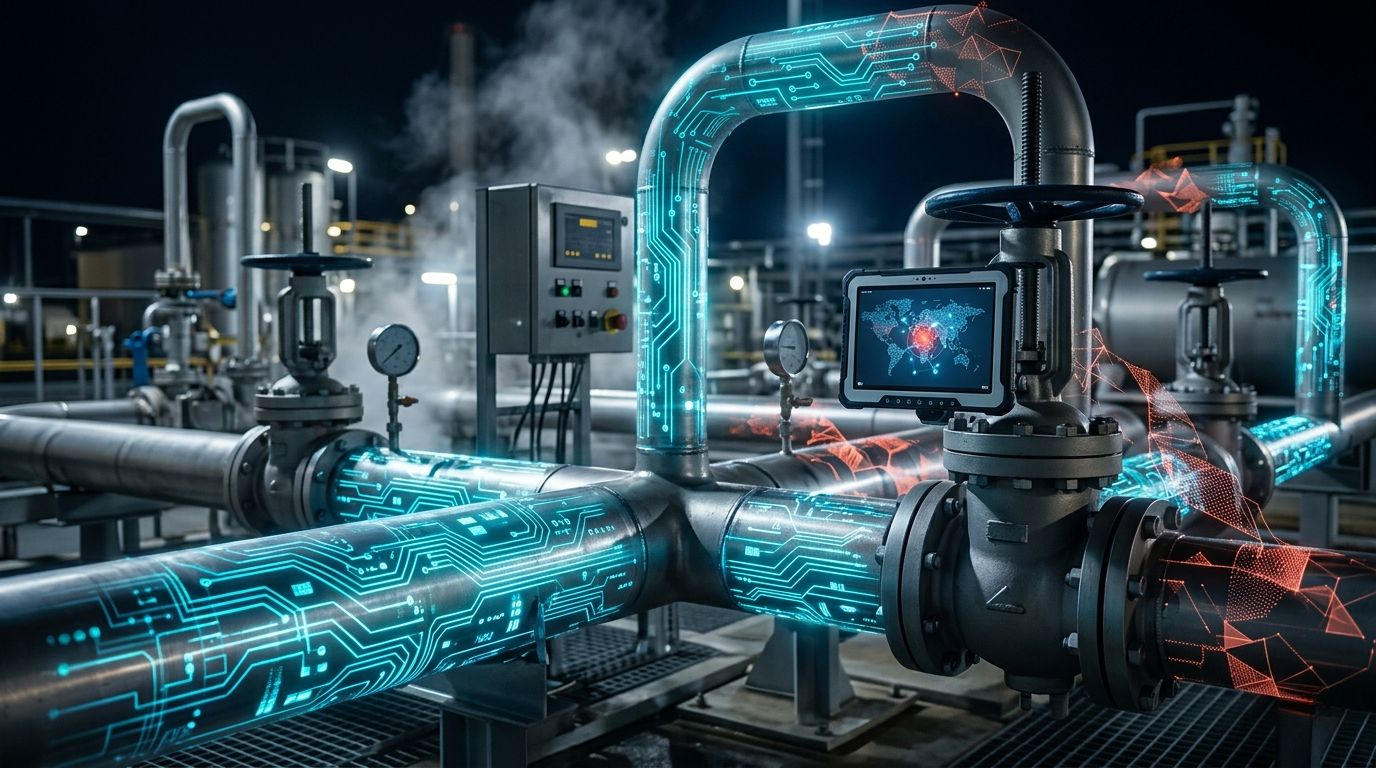
A natural gas pipeline's control system receives an anomalous command at 2:47 AM. Traditional signature-based tools see nothing unusual. Within eleven minutes, flow rates are manipulated, safety interlocks are bypassed, and operators are locked out of their SCADA dashboards. By the time a human analyst flags the alert, the attack has already progressed to its second stage.
This is not a hypothetical. Incidents like these have occurred across energy grids, water treatment facilities, and manufacturing plants over the past three years. What makes 2026 fundamentally different is that attackers are now deploying their own machine learning tools to evade detection, adapt to defensive measures in real time, and move laterally through OT networks with a precision that human-only defenses simply cannot match.
Before we move forward, don’t forget to check out our previous blog post on What the Lithuania data breach reveals about modern hybrid threats here.
The answer to this evolved threat is not more analysts staring at more dashboards. The answer is AI-powered threat detection, intelligent, automated, and purpose-built for the complex realities of industrial environments.
1. What AI-Powered Threat Detection Actually Means for Industrial Operations
AI threat detection is not a single tool or a buzzword upgrade to legacy security platforms. It is a fundamental rethinking of how threats are identified, correlated, and responded to across interconnected IT and OT environments.
In an industrial context, AI-powered threat detection uses machine learning, behavioral analytics, and deep packet inspection to continuously analyze network traffic, process telemetry, and endpoint behavior, learning what normal looks like so it can immediately surface what is abnormal.
Core Capabilities That Set AI Detection Apart
• Behavioral baseline modeling: Continuously learns the unique communication patterns of PLCs, RTUs, HMIs, and engineering workstations to flag deviations that rules-based tools miss entirely.
• Anomaly detection in real time: Identifies subtle indicators of compromise, unauthorised protocol commands, unusual data polling intervals, unexpected device connections, as they happen, not hours later.
• Threat correlation across domains: Links low-confidence signals across IT and OT layers to identify multi-stage attacks that span both environments.
• False positive reduction: Trained models filter benign maintenance activities from genuine threats, reducing alert fatigue that plagues security operations teams.
• Predictive risk scoring: Assigns dynamic risk scores to assets based on observed behavior, vulnerability state, and network exposure, enabling proactive prioritization.
2. The Real-World Gap: Why Traditional Detection Fails in OT Environments
Industrial environments were not designed with cybersecurity in mind. Many PLCs and SCADA systems run on decades-old protocols, Modbus, DNP3, EtherNet/IP, that have no built-in authentication, encryption, or anomaly reporting capability. Patching cycles span months or years. Air gaps, once considered sufficient protection, have largely dissolved as organizations embraced remote access, cloud connectivity, and digital transformation.
This leaves a detection gap that conventional IT security tools cannot close. Endpoint agents cannot be deployed on legacy embedded controllers. Signature-based intrusion detection cannot recognize novel attack patterns. SIEMs without OT-specific context generate thousands of irrelevant alerts, burying the genuine threats.
Traditional Detection | AI-Powered Detection |
Rule-based, requires known attack signatures | Behavioral, detects unknown and novel threats |
High false positive rates in OT environments | Contextual filtering reduces noise significantly |
Slow correlation across IT/OT boundaries | Real-time cross-domain threat correlation |
Reactive, alerts after damage is done | Predictive, flags anomalies before impact |
Requires constant manual rule tuning | Self-learning models adapt automatically |
Limited visibility into OT-specific protocols | Deep protocol inspection for industrial standards |
Alert fatigue from volume without context | Risk-prioritized alerts with full attack context |
3. Industry Incidents That Redefined Detection Urgency
Understanding what has actually happened in the field underscores why passive or delayed detection is no longer acceptable.
Energy Sector, Eastern European Grid Attack
In a widely studied incident, adversaries spent over six months conducting reconnaissance within an energy provider's corporate network before pivoting into operational systems. The dwell time ,the period between initial compromise and discovery, exceeded 180 days. AI models trained on historical OT traffic patterns have demonstrated the capability to reduce average dwell time in similar environments to under 72 hours by detecting lateral movement during the reconnaissance phase.
Water Treatment, pH Manipulation Attempt
A treatment facility experienced an unauthorized remote access session where an operator account was used to increase chemical dosing levels to dangerous concentrations. The attacker's behavior , accessing control systems at an unusual hour, modifying setpoints outside normal operating ranges, was precisely the type of behavioral anomaly that AI detection systems are designed to surface immediately.
Manufacturing, Ransomware Propagation via Engineering Workstation
A Tier 1 automotive supplier suffered a ransomware incident that originated from a compromised engineering workstation used to push firmware updates to production line controllers. Initial access dwell time was 34 days. Post-incident analysis revealed that network scanning behavior from the workstation began within 12 hours of initial compromise, behavior that AI-based network anomaly detection would have flagged as a high-confidence indicator of active threat activity.
4. AI Detection Across the Industrial Attack Surface: A Strategic View
The industrial attack surface in 2026 extends far beyond the plant floor. A comprehensive AI-powered detection strategy must cover:
Attack Surface Layer | Key Threats | AI Detection Capability |
OT Network (Level 0–2) | Unauthorized commands, process manipulation, PLC firmware modification | Protocol-level behavioral analysis, command whitelisting deviation |
IT/OT Integration Points | Lateral movement, credential theft, supply chain compromise | Cross-domain event correlation, identity anomaly detection |
Remote Access Infrastructure | Unauthorized VPN sessions, session hijacking, and credential stuffing | Session behavior analytics, geo-velocity checks |
Engineering Workstations | Malware delivery, firmware tampering, config exfiltration | File integrity monitoring, process behavior baselining |
Cloud & SCADA Interfaces | API abuse, data exfiltration, and configuration drift | API traffic anomaly detection, configuration change alerting |
Vendor & Third-Party Access | Supply chain implants, trusted-partner exploitation | Third-party session monitoring, access pattern deviation |
5. Key AI Detection Strategies for 2026, What Industrial Security Leaders Must Prioritize
5.1 Establish Continuous OT-Specific Behavioral Baselines
Before AI detection delivers meaningful results, organizations must invest in establishing clean behavioral baselines across their OT assets. This involves passive network monitoring during stable operational periods to document normal communication patterns, protocol behaviors, and inter-device relationships. Without accurate baselines, even the most sophisticated AI models generate noise rather than signal.
5.2 Integrate AI Detection with Operational Context
An anomaly in a pharmaceutical manufacturing line has very different risk implications than the same anomaly in a discrete parts assembly environment. Effective AI threat detection must be contextualized with operational data, production schedules, maintenance windows, and planned engineering access, to ensure that security alerts are both technically accurate and operationally meaningful.
5.3 Deploy Detection Across the IT/OT Convergence Layer
The most dangerous attacks in 2026 traverse both domains. A compromised corporate email account is a stepping stone to an OT engineering workstation. AI detection deployed only within the OT network will miss the early-stage indicators that originate in IT infrastructure. Unified visibility across both environments, correlated and analyzed together, is the only architecture that closes this gap.
5.4 Automate Response Playbooks for High-Confidence Threats
Human response times are measured in minutes. Attack progression is measured in seconds. For high-confidence threat indicators, such as unauthorized firmware write attempts to a production PLC, automated response actions such as session termination, network isolation, and immediate SOC escalation must execute without waiting for human approval.
5.5 Continuously Validate Detection Performance
AI models degrade when operational environments change. New assets, network reconfigurations, process modifications, and software updates all create drift between the model's understanding of normal and the current operational reality. Continuous validation through adversarial simulation and detection tuning is not optional ,it is a maintenance requirement for any AI-powered security program.
A natural gas pipeline's control system receives an anomalous command at 2:47 AM. Traditional signature-based tools see nothing unusual. Within eleven minutes, flow rates are manipulated, safety interlocks are bypassed, and operators are locked out of their SCADA dashboards. By the time a human analyst flags the alert, the attack has already progressed to its second stage.
This is not a hypothetical. Incidents like these have occurred across energy grids, water treatment facilities, and manufacturing plants over the past three years. What makes 2026 fundamentally different is that attackers are now deploying their own machine learning tools to evade detection, adapt to defensive measures in real time, and move laterally through OT networks with a precision that human-only defenses simply cannot match.
The answer to this evolved threat is not more analysts staring at more dashboards. The answer is AI-powered threat detection, intelligent, automated, and purpose-built for the complex realities of industrial environments.
6. Measuring What Matters, AI Detection KPIs for Industrial Security Programs
Leadership teams need more than technical confidence in their AI detection capabilities. They need measurable outcomes that translate into board-level reporting and investment justification.
KPI | Why It Matters | Industry Benchmark (2026) |
Mean Time to Detect (MTTD) | Measures how quickly threats are identified after initial compromise | Target: under 24 hours for high-severity OT threats |
False Positive Rate | Indicates operational noise and analyst fatigue risk | Best-in-class: below 5% in tuned OT environments |
Dwell Time Reduction | Quantifies improvement over legacy detection approach | AI-assisted programs show 60–80% dwell time reduction |
Alert-to-Incident Escalation Rate | Measures quality and actionability of generated alerts | Target: above 85% relevant escalations |
Asset Coverage Rate | Percentage of OT assets with active visibility and monitoring | Target: 100% of critical assets; 90%+ overall |
Response Automation Rate | Percentage of high-confidence threats triggering automated action | Leading programs achieve 40–60% automated response |
7. How Shieldworkz Supports Organizations in Deploying AI Threat Detection
Shieldworkz works exclusively at the intersection of OT, ICS, and critical infrastructure security. Our approach is not to overlay generic enterprise security tools onto industrial environments ,it is to build detection capabilities that are purpose-designed for the unique constraints, protocols, and risk profiles of operational technology.
Here is how Shieldworkz supports your organization at every stage of the AI detection journey:
• OT-Specific Threat Detection Architecture Design: We assess your existing network topology, asset inventory, and security visibility gaps, then design AI detection architectures that align with IEC 62443 and NIST CSF frameworks for industrial environments.
• Passive Network Monitoring & Behavioral Baseline Development: Our team deploys non-intrusive monitoring sensors across your OT network to establish accurate behavioral baselines for all critical assets ,without disrupting live operations.
• IT/OT Convergence Visibility: We implement unified threat detection coverage across both IT and OT domains, ensuring that cross-boundary attacks are detected from their earliest indicators, not after they reach operational systems.
• AI Model Tuning for Industrial Protocols: Our detection models are trained and tuned for OT-specific protocols including Modbus, DNP3, EtherNet/IP and IEC 61850, eliminating the false positive flood that generic AI tools produce in industrial settings.
• Automated Response Integration: We design and implement response playbooks integrated with your SCADA, DCS, and safety systems, enabling automated containment actions for high-confidence threats while preserving operational continuity.
• Continuous Detection Validation & Threat Hunting: Shieldworkz provides ongoing adversarial simulation, detection gap analysis, and proactive threat hunting to ensure your AI detection capability evolves alongside the threat landscape.
• Regulatory Alignment & Reporting: We align detection programs with NERC CIP, IEC 62443, ISA/IEC standards, and industry-specific compliance requirements, providing leadership with audit-ready reporting and evidence packages.
• 24/7 SOC Support for OT Environments: Our security operations team provides continuous monitoring and expert triage for industrial environments, ensuring that high-severity alerts receive immediate expert attention at any hour.
Conclusion: Intelligent Detection Is No Longer Optional ,It Is Operational Survival
The industrial cybersecurity landscape in 2026 is defined by one unavoidable reality: the adversaries targeting your operational systems are faster, more sophisticated, and better resourced than ever before. They are using automation, machine learning, and deep knowledge of industrial protocols to conduct attacks that legacy security tools cannot detect in time to prevent serious harm.
AI-powered threat detection is not a technology upgrade. It is a strategic capability that determines whether your organization detects the next intrusion attempt in minutes, or discovers a breach only after production halts, safety systems fail, or regulators begin an investigation.
Industrial leaders who act now will build detection programs that give their organizations a genuine defensive advantage. Those who delay will inherit the consequences of attacks they never saw coming.
Ready to Strengthen Your OT Detection Capabilities?
Our industrial cybersecurity experts are ready to assess your current detection posture,
identify critical gaps, and design an AI-powered strategy tailored to your operational environment.
Book a Free Consultation with Our Experts
No obligation. No generic pitch. A focused conversation about your specific environment
Additional resources
IEC 62443 - Practical guide for OT/ICS & IIoT security here
Remediation Guides here
Guide to OT Asset Inventory and Device Management for Improved Security here
ICS Security Awareness Training Kit for Operators here
Cyber Risk Management Checklist here
Get Weekly
Resources & News
See How Our Industry-Leading OT Security Solutions Address Critical Security Challenges
You may also like

What the French supermarket cyberattack reveals about OT security
Prayukth K V

Inside the Albert Heijn cyber incident: Investigating the attack, the IT/OT exposure, and the risks to critical operations
Team Shieldworkz

50°C by cyberattack? Inside France’s supermarket refrigeration crisis
Prayukth K V

Automating IEC 62443 Compliance Assessments Without Losing Expert Control
Team Shieldworkz

Investigative cyber threat intelligence report: Daiichi Kosho supply-chain data exposure
Prayukth K V

How AI Is Changing IEC 62443 Assessments
Team Shieldworkz