Remediation Guide
OT Cybersecurity Remediation Checklist
Venice San Marco Flood Control Breach
Turning a High-Profile OT Breach into a Practical Security Program
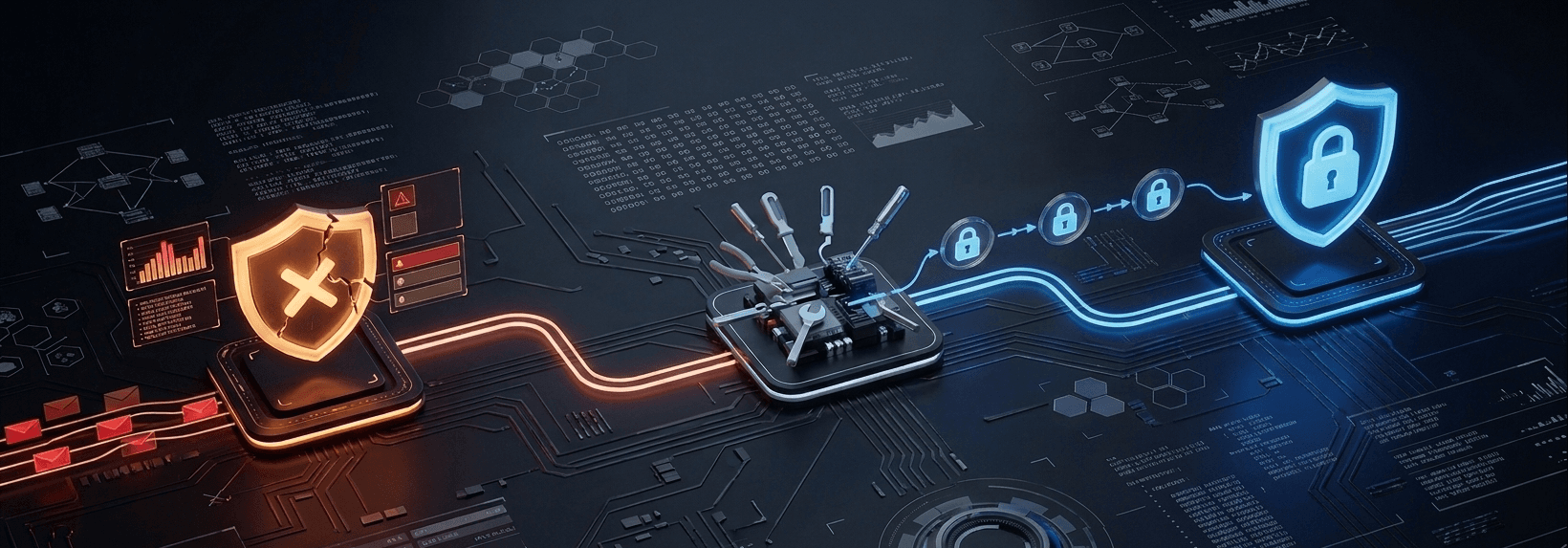
The Venice San Marco flood control breach scenario in this guide is a reminder that OT cybersecurity failures are rarely about a single weakness. They are usually the result of several familiar gaps lining up at the same time: exposed control interfaces, weak authentication, poor segmentation, limited monitoring, and incomplete incident response. The guide uses that incident pattern to show how those weaknesses can be translated into a structured remediation plan for critical infrastructure teams.
For OT leaders, this matters because flood control, water systems, transportation, energy, and other infrastructure environments are not protected by policy alone. They need a defensible architecture, clear identity controls, monitored access paths, tested recovery, and an operating model that treats cybersecurity as part of daily operations rather than an afterthought. The checklist in the file is built around IEC 62443 principles and organized into practical domains that are easy to assign, track, and evidence.
Why this Remediation Guide matters
The strongest lesson from the Venice case is that attackers do not need exotic techniques when exposed HMI or SCADA interfaces are left reachable, segmented networks are absent, and persistent threat detection is weak. The guide calls out exactly those issues and turns them into a remediation framework that security and operations teams can use together.
This is not a generic cybersecurity checklist. It is built for environments where availability, safety, and public trust are directly tied to control-system integrity. That makes it especially relevant for water authorities, municipal infrastructure operators, utilities, and other OT-heavy organizations that must keep services running while improving security posture.
Why It Is Important to Download This Remediation Guide
Strong cybersecurity is not just about deploying tools-it requires clarity, prioritization, and accountability.
Provides a structured approach to transform scattered security gaps into a clear remediation roadmap
Helps identify which systems are secure, partially secure, or critically exposed
Enables risk-based prioritization so high-impact vulnerabilities are addressed first
Aligns technical controls with business risk, making leadership decisions more informed
Simplifies audit preparation through documented controls and traceable actions
Supports incident reporting readiness, including early warning and response timelines
Strengthens coordination between IT, OT, and executive teams
For organizations managing critical infrastructure, this approach ensures cybersecurity becomes measurable, visible, and continuously improved-not just a compliance checkbox.
Key Takeaways from the Remediation Guide
A strong OT security program is not built on a single tool. It is built on disciplined control of access, traffic, configuration, recovery, and people. The Venice guide reflects that reality by organizing remediation into eight security domains and pairing each with priority levels and a residual risk register.
Network segmentation is foundational. A defensible OT DMZ, internal zoning, and elimination of direct internet exposure are treated as the first line of defense.
Identity and authentication must be strict. Default credentials, weak passwords, and unmanaged privileged access create long dwell times and silent control over systems.
Remote access needs hard boundaries. Every vendor or operator connection should pass through a controlled gateway with MFA, session logging, and time-bound access.
Asset visibility is non-negotiable. You cannot secure what you cannot see, which is why inventory and configuration management sit near the center of the checklist.
Monitoring must detect behavior, not just alarms. The guide emphasizes OT-aware SIEM, network detection, integrity monitoring, and threat intelligence so long-term compromise does not go unnoticed.
Recovery must be tested. Backups, restore procedures, recovery plans, and incident playbooks are only valuable when they are proven in advance.
Governance and culture keep controls alive. Policies, accountability, awareness, and review cycles prevent gaps from reappearing after the initial cleanup.
How Shieldworkz Supports Your OT Security Program
Shieldworkz helps industrial organizations move from incident-driven awareness to sustained remediation. The guide itself frames Shieldworkz as part of a broader OT security practice that supports compliance, visibility, and operational resilience.
OT asset discovery and visibility to help build a reliable inventory across control systems and connected assets.
Network segmentation support to help design and validate safer IT/OT boundaries.
Remote access hardening to reduce exposure from vendor, contractor, and maintenance pathways.
Monitoring and detection planning so unusual behavior, unauthorized access, and configuration drift are easier to spot.
Backup, recovery, and incident response readiness to help teams recover without improvising under pressure.
Governance and risk tracking so residual risk, ownership, and remediation progress are visible to leadership.
Why This Approach Works for Decision Makers
This guide is valuable because it does not stop at “what went wrong.” It shows how to move from a breach narrative to a practical roadmap that can be implemented in phases. That makes it useful for CISOs, OT managers, infrastructure leaders, and executives who need a clear plan without losing operational continuity.
It also respects the reality of legacy OT. Some systems will not be fully patchable, some access patterns will require compensating controls, and some improvements will need to be sequenced over months. The document does not ignore those constraints; it builds around them.
Take the Next Step Toward Resilient OT Security
The Venice San Marco scenario is a warning, but it is also a blueprint. It shows where OT environments usually fail and what a better response looks like: better segmentation, stronger access control, real monitoring, tested recovery, and leadership ownership. That is the kind of security posture Shieldworkz helps organizations build.
Fill the form to download the Remediation Guide and book free consultation with our experts.
Download your copy today!
Get our free OT Cybersecurity Remediation Checklist: Venice San Marco Flood Control Breach and Control Checklist and make sure you’re covering every critical control in your industrial network