Network Intrusion Detection System (NIDS)
Network Intrusion Detection System (NIDS)
Network Intrusion Detection System (NIDS)
Network Intrusion Detection System (NIDS)
The Industrial Cybersecurity Layer Your OT Environment Can't Afford to Skip
In operational technology environments, a single undetected intrusion can shut down a production line, compromise a safety instrumented system, or - in the worst cases - put lives at risk. Unlike enterprise IT networks, OT and ICS networks were never designed with modern cyber threats in mind. They were built for uptime, reliability, and deterministic communication - not adversarial traffic analysis. That's exactly why a Network Intrusion Detection System purpose-built for industrial environments isn't just a "nice to have." It's a foundational layer of defense that every plant operator, facility manager, and OT security team needs to understand and implement correctly.
At Shieldworkz, we work exclusively within OT, ICS, and Industrial IoT environments. We understand the protocols, the constraints, the legacy systems, and the stakes. This page explains what NIDS is, how it works specifically within industrial networks, and why getting the right solution deployed correctly is critical to protecting your operations.
OT Security, or operational technology security, is the practice of protecting critical infrastructure and industrial systems from cyber threats. These systems, which include everything from power grids and water treatment facilities to manufacturing plants and transportation networks, are the backbone of modern society. Unlike traditional IT systems, OT systems are designed to control physical processes and often operate in real-time, making them both unique and highly vulnerable to cyberattacks.
What Is a Network Intrusion Detection System (NIDS)?
A Network Intrusion Detection System (NIDS) is a security monitoring solution that continuously inspects network traffic - every packet flowing across your network - and analyzes that traffic for indicators of malicious activity, unauthorized access, policy violations, or anomalous behavior.
Unlike endpoint security tools that protect individual machines or host-based intrusion detection systems (HIDS) that monitor a single device's activity logs and file integrity, NIDS operates at the network layer. It sees the full picture: lateral movement, data exfiltration attempts, rogue devices, command-and-control communications, and even slow, low-and-slow reconnaissance campaigns that evade traditional perimeter defenses. NIDS performs three core functions continuously:
Traffic Monitoring - Inspecting all inbound, outbound, and lateral data packets traversing the network in real time
Threat Analysis - Comparing packet content and behavior against known attack signatures, established baselines, and behavioral rules
Alerting - Generating prioritized alerts that empower your security team to investigate and respond before a threat escalates
It is important to understand that NIDS is a passive detection tool. It monitors and alerts - it does not block traffic. Active blocking is the role of a Network Intrusion Prevention System (NIPS/IPS). Both serve distinct and complementary functions in a defense-in-depth strategy.


What Is a Network Intrusion Detection System (NIDS)?
A Network Intrusion Detection System (NIDS) is a security monitoring solution that continuously inspects network traffic - every packet flowing across your network - and analyzes that traffic for indicators of malicious activity, unauthorized access, policy violations, or anomalous behavior.
Unlike endpoint security tools that protect individual machines or host-based intrusion detection systems (HIDS) that monitor a single device's activity logs and file integrity, NIDS operates at the network layer. It sees the full picture: lateral movement, data exfiltration attempts, rogue devices, command-and-control communications, and even slow, low-and-slow reconnaissance campaigns that evade traditional perimeter defenses. NIDS performs three core functions continuously:
Traffic Monitoring - Inspecting all inbound, outbound, and lateral data packets traversing the network in real time
Threat Analysis - Comparing packet content and behavior against known attack signatures, established baselines, and behavioral rules
Alerting - Generating prioritized alerts that empower your security team to investigate and respond before a threat escalates
It is important to understand that NIDS is a passive detection tool. It monitors and alerts - it does not block traffic. Active blocking is the role of a Network Intrusion Prevention System (NIPS/IPS). Both serve distinct and complementary functions in a defense-in-depth strategy.
Why NIDS Is Critical in OT/ICS Environments - And Why Generic IT Deployments Fall Short
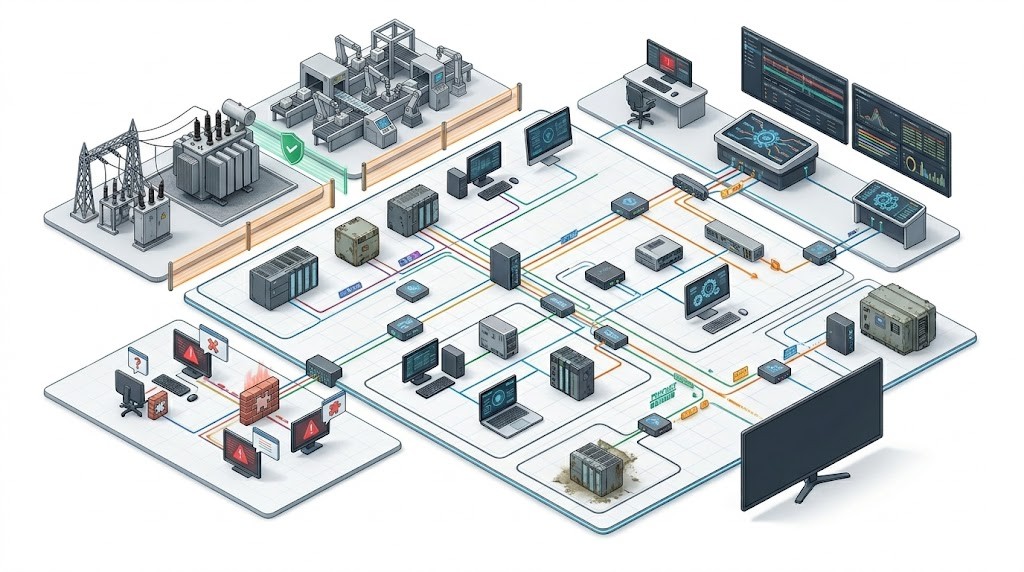
Most NIDS solutions available in the market are designed for traditional IT environments: corporate networks, data centers, and cloud workloads. When organizations attempt to deploy these tools in OT/ICS environments - where Modbus, DNP3, EtherNet/IP, PROFINET, and other industrial protocols are the lingua franca - they quickly discover the limitations. Industrial networks have characteristics that demand a purpose-built approach:
Legacy devices with no patching capability - Many PLCs, RTUs, and DCS controllers run firmware from 10 to 20 years ago. They cannot host agents. Network-level detection is often the only viable monitoring layer.
Unidirectional and segmented traffic patterns - OT networks follow highly predictable communication patterns. Deviations from those patterns are high-fidelity indicators of compromise.
Zero tolerance for disruption - In a manufacturing plant or power substation, a misconfigured detection rule that causes network interference can translate directly to production loss or, in worst cases, physical harm. Detection must be passive and non-disruptive.
Protocol complexity - Industrial protocols carry engineering commands, sensor readings, and control signals. A NIDS without OT protocol deep-packet inspection capability cannot interpret this traffic meaningfully.
This is why organizations protecting critical infrastructure require NIDS solutions that are purpose-engineered for the OT/ICS landscape - not repurposed IT tools.
Why NIDS Is Critical in OT/ICS Environments - And Why Generic IT Deployments Fall Short
Most NIDS solutions available in the market are designed for traditional IT environments: corporate networks, data centers, and cloud workloads. When organizations attempt to deploy these tools in OT/ICS environments - where Modbus, DNP3, EtherNet/IP, PROFINET, and other industrial protocols are the lingua franca - they quickly discover the limitations. Industrial networks have characteristics that demand a purpose-built approach:
Legacy devices with no patching capability - Many PLCs, RTUs, and DCS controllers run firmware from 10 to 20 years ago. They cannot host agents. Network-level detection is often the only viable monitoring layer.
Unidirectional and segmented traffic patterns - OT networks follow highly predictable communication patterns. Deviations from those patterns are high-fidelity indicators of compromise.
Zero tolerance for disruption - In a manufacturing plant or power substation, a misconfigured detection rule that causes network interference can translate directly to production loss or, in worst cases, physical harm. Detection must be passive and non-disruptive.
Protocol complexity - Industrial protocols carry engineering commands, sensor readings, and control signals. A NIDS without OT protocol deep-packet inspection capability cannot interpret this traffic meaningfully.
This is why organizations protecting critical infrastructure require NIDS solutions that are purpose-engineered for the OT/ICS landscape - not repurposed IT tools.
The Three Types of NIDS Detection Methods - And What They Mean for Your Security Team
Understanding how NIDS detects threats is essential for evaluating any solution. There are three primary detection methodologies:
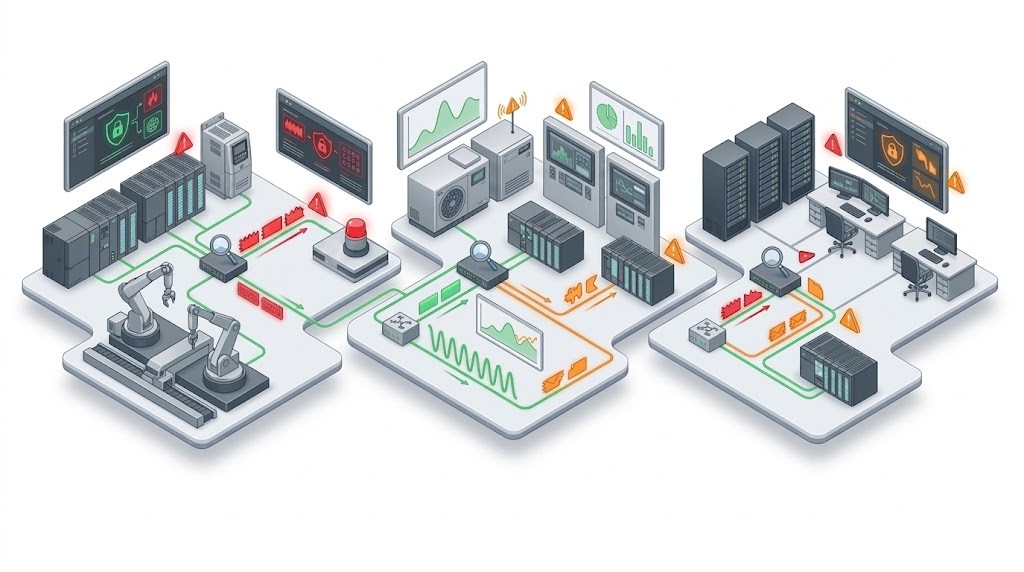
Signature-Based Detection: This method compares network traffic against a database of known attack signatures - the "fingerprints" of documented threats. It is highly effective for identifying known malware families, exploit patterns, and previously documented attack techniques. Its limitation is clear: it cannot detect threats it has never seen before.
Anomaly-Based Detection: Rather than matching against known threats, anomaly-based detection establishes a behavioral baseline for your specific network and then flags deviations from that baseline. This approach is particularly powerful in OT environments, where communication patterns between PLCs, HMIs, and historians are highly consistent. An anomaly - a device suddenly initiating communication on an unexpected port, or polling at an unusual frequency - stands out immediately.
Hybrid Detection: The most operationally effective NIDS deployments use a hybrid approach: signature-based detection catches known threats quickly, while anomaly-based detection surfaces novel or stealthy attack patterns that signatures would miss entirely. In practice, hybrid detection significantly reduces both false negatives (missed threats) and false positives (noise that fatigues security teams).
The Three Types of NIDS Detection Methods - And What They Mean for Your Security Team
Understanding how NIDS detects threats is essential for evaluating any solution. There are three primary detection methodologies:
Signature-Based Detection: This method compares network traffic against a database of known attack signatures - the "fingerprints" of documented threats. It is highly effective for identifying known malware families, exploit patterns, and previously documented attack techniques. Its limitation is clear: it cannot detect threats it has never seen before.
Anomaly-Based Detection: Rather than matching against known threats, anomaly-based detection establishes a behavioral baseline for your specific network and then flags deviations from that baseline. This approach is particularly powerful in OT environments, where communication patterns between PLCs, HMIs, and historians are highly consistent. An anomaly - a device suddenly initiating communication on an unexpected port, or polling at an unusual frequency - stands out immediately.
Hybrid Detection: The most operationally effective NIDS deployments use a hybrid approach: signature-based detection catches known threats quickly, while anomaly-based detection surfaces novel or stealthy attack patterns that signatures would miss entirely. In practice, hybrid detection significantly reduces both false negatives (missed threats) and false positives (noise that fatigues security teams).
NIDS vs. IDS vs. IPS
What's the Right Fit for OT?
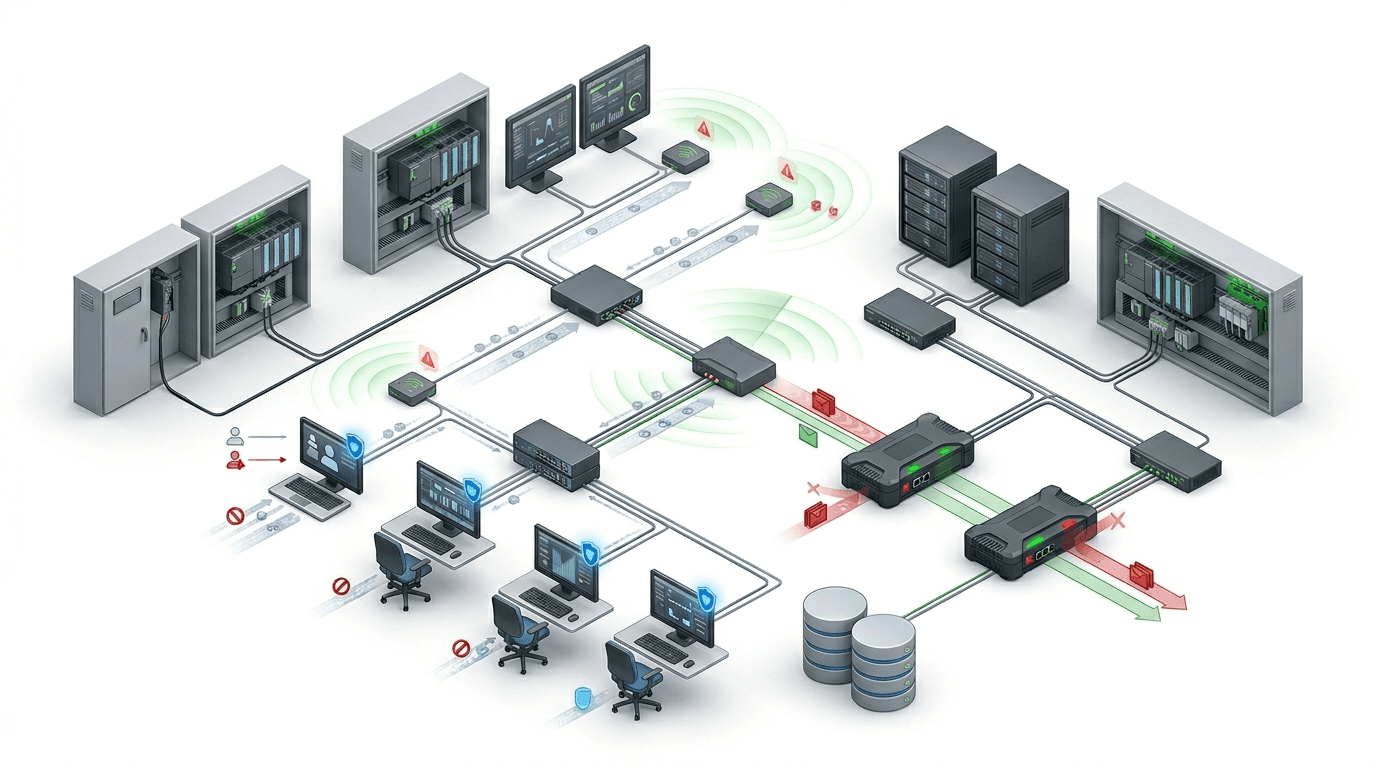
NIDS (Network Intrusion Detection System): Monitors and detects. Passive. No impact on network traffic. The right starting point for most OT environments because it carries zero operational risk.
HIDS (Host-Based Intrusion Detection System): Monitors individual endpoints - workstations, servers, engineering stations. Complementary to NIDS, not a replacement. Particularly valuable for detecting threats that have already reached a host and are attempting lateral movement or privilege escalation.
IPS (Intrusion Prevention System): Actively blocks traffic it identifies as malicious. In IT environments, IPS is a natural evolution from IDS. In OT environments, deploying an inline IPS that can actively drop or alter traffic requires extreme caution and careful tuning. A misconfigured IPS can cause more damage than the threat it was designed to stop. Most OT cybersecurity practitioners recommend NIDS as the foundational layer, with inline prevention capabilities implemented only with extensive validation and testing.
For most operational technology environments, a properly deployed and tuned NIDS - generating high-fidelity, low-noise alerts that your team can actually act on - delivers more real-world protection than an improperly configured IPS that generates false positives and carries operational risk.
NIDS vs. IDS vs. IPS
What's the Right Fit for OT?
NIDS (Network Intrusion Detection System): Monitors and detects. Passive. No impact on network traffic. The right starting point for most OT environments because it carries zero operational risk.
HIDS (Host-Based Intrusion Detection System): Monitors individual endpoints - workstations, servers, engineering stations. Complementary to NIDS, not a replacement. Particularly valuable for detecting threats that have already reached a host and are attempting lateral movement or privilege escalation.
IPS (Intrusion Prevention System): Actively blocks traffic it identifies as malicious. In IT environments, IPS is a natural evolution from IDS. In OT environments, deploying an inline IPS that can actively drop or alter traffic requires extreme caution and careful tuning. A misconfigured IPS can cause more damage than the threat it was designed to stop. Most OT cybersecurity practitioners recommend NIDS as the foundational layer, with inline prevention capabilities implemented only with extensive validation and testing.
For most operational technology environments, a properly deployed and tuned NIDS - generating high-fidelity, low-noise alerts that your team can actually act on - delivers more real-world protection than an improperly configured IPS that generates false positives and carries operational risk.
How Shieldworkz Delivers NIDS for OT/ICS and Industrial Environments
Shieldworkz is not a generalist cybersecurity firm that retrofitted an IT product for industrial use. We are purpose-built for OT, ICS, and IoT security, and our NIDS capabilities reflect that from the ground up. Here is how Shieldworkz supports your network intrusion detection program:
OT Protocol-Aware Deep Packet Inspection - Our NIDS understands Modbus TCP, DNP3, EtherNet/IP, PROFINET, BACnet, and dozens of other industrial protocols natively, enabling meaningful inspection of control plane traffic
Passive, Non-Disruptive Deployment - Our sensors deploy in monitor/span-port mode with zero network impact, preserving the operational continuity your environment demands
Asset Discovery and Inventory - As a byproduct of network monitoring, Shieldworkz automatically builds and maintains an accurate inventory of every communicating device on your OT network - a foundational requirement for any mature security program
Behavioral Baseline Modeling - We establish normal communication patterns for your specific environment and generate high-confidence alerts when deviations occur, dramatically reducing false positive fatigue
Threat Intelligence Integration - Our detection engine is continuously updated with OT-specific threat intelligence, including indicators of compromise from known ICS-targeted threat actors such as VOLTZITE, ELECTRUM, and XENOTIME
Hybrid Detection Engine - Combining signature-based detection for known threats with anomaly-based analytics for novel attack patterns
Managed Detection and Response (MDR) Option - For organizations without a dedicated OT security team, Shieldworkz provides expert-managed monitoring, triage, and response support
Compliance-Ready Reporting - Pre-built reports aligned to NERC CIP, IEC 62443, NIST CSF, and other frameworks to support your compliance and audit requirements
Seamless Integration - Our platform integrates with leading SIEM, SOAR, and ticketing platforms so NIDS alerts flow naturally into your existing security operations workflow
Book a free consultation with our experts today!
The Real Benefits of Deploying NIDS in Your Industrial Environment
When implemented correctly and tuned for your specific OT/ICS environment, NIDS delivers measurable security outcomes that justify the investment:
Early Threat Detection: Threats detected at the reconnaissance or lateral movement stage cause significantly less damage than those discovered after data exfiltration or process manipulation. NIDS is your earliest warning system.
Comprehensive Network Visibility: Many OT environments suffer from what practitioners call "visibility gaps" - portions of the network that generate no logs, host no agents, and are essentially invisible to the security team. NIDS closes those gaps by monitoring traffic at the network level, independent of endpoint capabilities.
Internal Threat Detection: Not all threats come from outside the perimeter. Compromised engineering workstations, malicious insider activity, and supply chain compromises can originate from within your trusted network. NIDS detects lateral movement and unusual internal communication patterns that external firewalls are blind to.
Regulatory and Compliance Support: Critical infrastructure operators face an expanding set of compliance obligations - NERC CIP for the energy sector, IEC 62443 for industrial automation, TSA cybersecurity directives for pipelines, and sector-specific CISA guidance. Continuous network monitoring through NIDS supports audit readiness and compliance documentation.
Faster Incident Response: Detailed alert data - including source and destination IP addresses, protocol details, timestamps, and packet captures - dramatically accelerates incident investigation. Security teams spend less time hunting for context and more time containing the threat.
The Real Benefits of Deploying NIDS in Your Industrial Environment
When implemented correctly and tuned for your specific OT/ICS environment, NIDS delivers measurable security outcomes that justify the investment:
Early Threat Detection: Threats detected at the reconnaissance or lateral movement stage cause significantly less damage than those discovered after data exfiltration or process manipulation. NIDS is your earliest warning system.
Comprehensive Network Visibility: Many OT environments suffer from what practitioners call "visibility gaps" - portions of the network that generate no logs, host no agents, and are essentially invisible to the security team. NIDS closes those gaps by monitoring traffic at the network level, independent of endpoint capabilities.
Internal Threat Detection: Not all threats come from outside the perimeter. Compromised engineering workstations, malicious insider activity, and supply chain compromises can originate from within your trusted network. NIDS detects lateral movement and unusual internal communication patterns that external firewalls are blind to.
Regulatory and Compliance Support: Critical infrastructure operators face an expanding set of compliance obligations - NERC CIP for the energy sector, IEC 62443 for industrial automation, TSA cybersecurity directives for pipelines, and sector-specific CISA guidance. Continuous network monitoring through NIDS supports audit readiness and compliance documentation.
Faster Incident Response: Detailed alert data - including source and destination IP addresses, protocol details, timestamps, and packet captures - dramatically accelerates incident investigation. Security teams spend less time hunting for context and more time containing the threat.
NIDS and Regulatory Compliance in Industrial Environments
Regulatory frameworks governing critical infrastructure and industrial cybersecurity increasingly mandate network monitoring and anomaly detection capabilities. Understanding where NIDS fits into your compliance obligations matters:
OT Security, or operational technology security, is the practice of protecting critical infrastructure and industrial systems from cyber threats. These systems, which include everything from power grids and water treatment facilities to manufacturing plants and transportation networks, are the backbone of modern society. Unlike traditional IT systems, OT systems are designed to control physical processes and often operate in real-time, making them both unique and highly vulnerable to cyberattacks.
NERC CIP
NERC CIP (North American Electric Reliability Corporation Critical Infrastructure Protection) requires utilities to monitor Electronic Security Perimeters and implement security monitoring for Bulk Electric System assets
IEC 62443
IEC 62443 the international standard for industrial cybersecurity - specifically calls for monitoring of industrial control system networks and detection of security events
NIST CSF
NIST CSF (Cybersecurity Framework) maps network monitoring and anomaly detection to the Detect function, which is foundational to the entire framework
NIS2 Directive
NIS2 Directive (relevant for organizations operating in the EU) requires operators of essential services to implement appropriate technical measures including network monitoring
A properly deployed NIDS provides documented evidence of continuous monitoring capability - a requirement that comes up repeatedly across audits and compliance assessments in the energy, water, manufacturing, and transportation sectors.
OT Security, or operational technology security, is the practice of protecting critical infrastructure and industrial systems from cyber threats. These systems, which include everything from power grids and water treatment facilities to manufacturing plants and transportation networks, are the backbone of modern society. Unlike traditional IT systems, OT systems are designed to control physical processes and often operate in real-time, making them both unique and highly vulnerable to cyberattacks.
Regulatory frameworks governing critical infrastructure and industrial cybersecurity increasingly mandate network monitoring and anomaly detection capabilities. Understanding where NIDS fits into your compliance obligations matters:
NERC CIP
NERC CIP (North American Electric Reliability Corporation Critical Infrastructure Protection) requires utilities to monitor Electronic Security Perimeters and implement security monitoring for Bulk Electric System assets
IEC 62443
IEC 62443 the international standard for industrial cybersecurity - specifically calls for monitoring of industrial control system networks and detection of security events
NIST CSF
NIST CSF (Cybersecurity Framework) maps network monitoring and anomaly detection to the Detect function, which is foundational to the entire framework
NIS2 Directive
NIS2 Directive (relevant for organizations operating in the EU) requires operators of essential services to implement appropriate technical measures including network monitoring
A properly deployed NIDS provides documented evidence of continuous monitoring capability - a requirement that comes up repeatedly across audits and compliance assessments in the energy, water, manufacturing, and transportation sectors.
The Industrial Cybersecurity Threat Landscape NIDS Is Designed to Address
The threat environment facing OT and ICS networks has changed significantly over the past five years. Threat actors - including nation-state groups with demonstrated capabilities against industrial infrastructure - have developed tools and techniques specifically designed to operate within OT environments without triggering traditional security controls. Known campaigns targeting industrial infrastructure have demonstrated adversary techniques including: living-off-the-land within OT networks using legitimate engineering software, slow and deliberate reconnaissance of process control networks over extended periods, targeting of safety instrumented systems to eliminate last lines of defense, and exploitation of remote access pathways expanded during operational necessity.
NIDS is one of the few controls capable of detecting these techniques when properly deployed and tuned. An attacker operating inside your OT network - even using legitimate tools - will generate network traffic. That traffic can be detected. The question is whether you have visibility.
OT Security, or operational technology security, is the practice of protecting critical infrastructure and industrial systems from cyber threats. These systems, which include everything from power grids and water treatment facilities to manufacturing plants and transportation networks, are the backbone of modern society. Unlike traditional IT systems, OT systems are designed to control physical processes and often operate in real-time, making them both unique and highly vulnerable to cyberattacks.
Ready to Strengthen Your Industrial Network Security?
If you are evaluating network intrusion detection for your OT, ICS, or IoT environment - or if you have an existing deployment that is generating more noise than insight - Shieldworkz can help.
Our team of OT/ICS cybersecurity specialists has deep hands-on experience across energy, utilities, manufacturing, oil and gas, water and wastewater, and transportation sectors. We understand your operational priorities, your compliance obligations, and the specific threat landscape targeting your industry.
Book a free consultation with our industrial cybersecurity experts today. Let us assess your current network visibility posture, identify gaps in your detection capability, and recommend a NIDS strategy aligned to your environment, your risk tolerance, and your operational constraints.
Request a demo
Ready to Strengthen Your Industrial Network Security?
If you are evaluating network intrusion detection for your OT, ICS, or IoT environment - or if you have an existing deployment that is generating more noise than insight - Shieldworkz can help.
Our team of OT/ICS cybersecurity specialists has deep hands-on experience across energy, utilities, manufacturing, oil and gas, water and wastewater, and transportation sectors. We understand your operational priorities, your compliance obligations, and the specific threat landscape targeting your industry.
Book a free consultation with our industrial cybersecurity experts today. Let us assess your current network visibility posture, identify gaps in your detection capability, and recommend a NIDS strategy aligned to your environment, your risk tolerance, and your operational constraints.
Request a demo