في كواليس اختراق فوكسكون: برمجية Nitrogen، وسرقة الملكية الفكرية للتصنيع، والمخاطر الجديدة التي تواجه سلاسل الإمداد

برايوكت كيه في
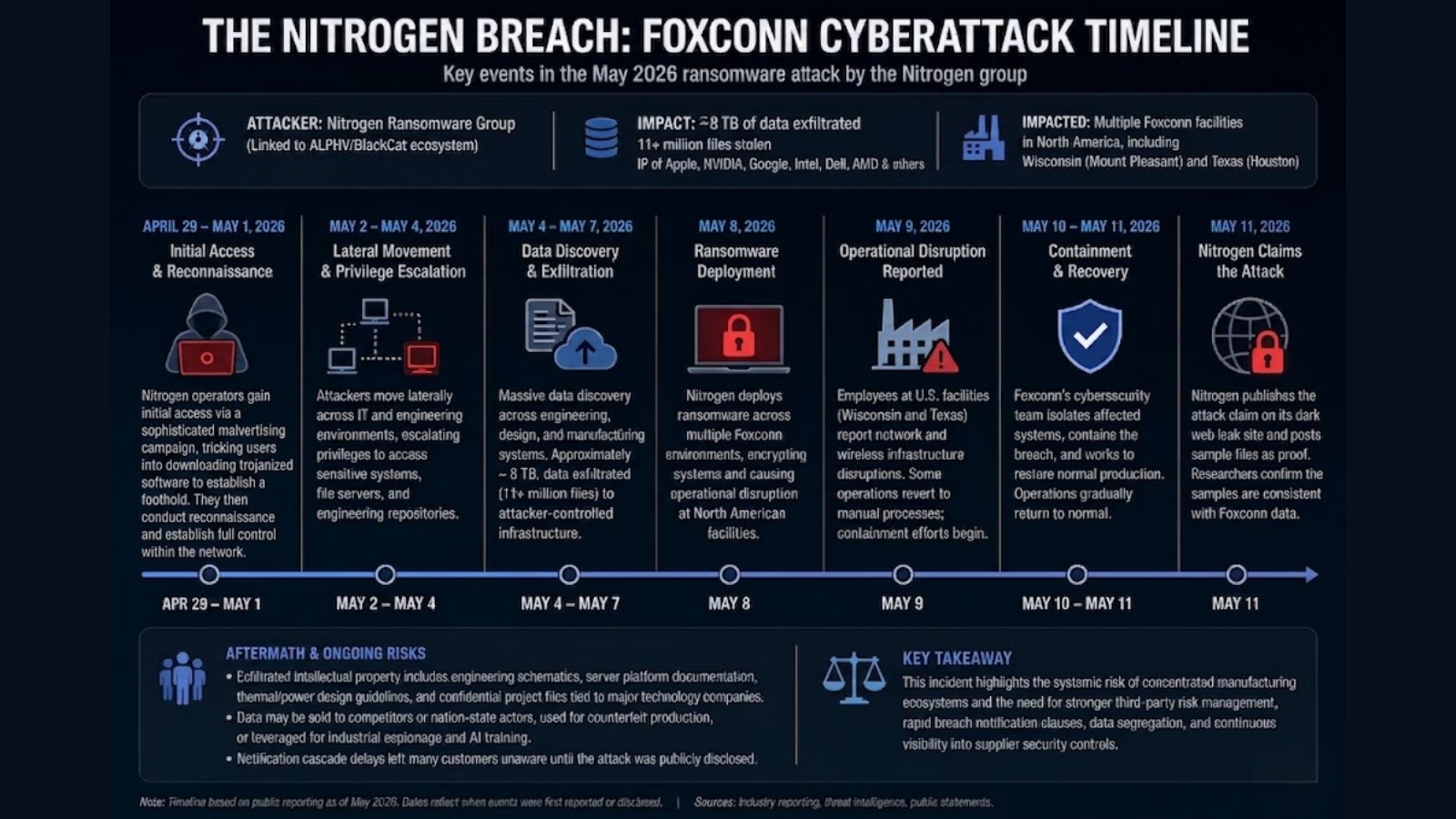
في مايو 2026، تعرضت شركة فوكسكون (Foxconn)، المعروفة رسمياً باسم مجموعة هون هاي للتكنولوجيا (Hon Hai Technology Group) وواحدة من أكبر الشركات المصنعة للأجهزة الإلكترونية بالتعاقد في العالم، لهجوم سيبراني كبير أثر على العديد من منشآتها في أمريكا الشمالية. وأسفر الاختراق الذي تبنته مجموعة برمجيات الفدية "Nitrogen" عن سرقة ما يقرب من 8 تيرابايت من البيانات موزعة على أكثر من 11 مليون ملف تحتوي على معلومات عن عملاء الشركة البارزين. وادعت فوكسكون أنها قامت باحتواء الاختراق ومعالجته، ولكن البيانات المسروقة ما زالت بحوزة مجموعة Nitrogen.
بما أن فوكسكون تصنع الأجهزة واللوحات للشركات الكبرى الرائدة في مجال التكنولوجيا عالمياً، فإن وجود نقطة فشل واحدة كان من الممكن أن يؤدي إلى تعريض البيانات المملوكة لعدة شركات مدرجة في قائمة Fortune 500 للخطر دفعة واحدة. ومنذ أكثر من عقد من الزمان، أدى التصنيع الحديث للإلكترونيات إلى إنشاء مستودعات مركزة للمعلومات الهندسية والتميز، حيث يجمع عدد صغير من الشركات المصنعة بالتعاقد الآن بيانات حساسة عن المنتجات، والبنية التحتية، وسلسلة التوريد من مئات بائعي التكنولوجيا في وقت واحد. وينطبق هذا على الهواتف المحمولة تماماً كما ينطبق على صناعة الطائرات. ونتيجة لذلك، بات المهاجمون ينظرون بشكل متزايد إلى الأنظمة البيئية للتصنيع ليس فقط كأهداف تشغيلية، بل كمراكز استخبارات استراتيجية يتم اختراقها لسرقة البيانات وبيعها.
على الرغم من أن هجمات برمجيات الفدية في قطاع التصنيع أصبحت شائعة بشكل متزايد الآن، إلا أن هذا الحادث يبرز بوضوح نظراً للتركيز الهائل للملكية الفكرية عالية القيمة التي تم اختراقها ونقاط الضعف النظامية في سلسلة التوريد التي كشف عنها.
قبل قراءة بقية هذه المقالة، لا تنسَ قراءة منشور مدونتنا السابق حول رؤية أصول تكنولوجيا العمليات (OT) ومعيار IEC 62443 من هنا.
أبرز النقاط الرئيسية
تعرضت فوكسكون لهجوم برمجيات فدية كبير أدى إلى فقدان ما يقرب من 8 تيرابايت من البيانات
أعلنت عصابة الجرائم السيبرانية Nitrogen مسؤوليتها عن الهجوم. ووفقاً لتحليلنا، فإن ما يقرب من 11 مليون ملف باتت في حوزة هذا الفاعل المهدد. وتشتهر مجموعة برمجيات الفدية هذه بشكل خاص بهجمات الفدية ذات الابتزاز المزدوج، حيث لا تقوم ببساطة بتشفير البيانات للتفاوض على دفع الفدية، بل تقوم أيضاً بنسخها وتخزينها وبيعها لمشترين متعددين
يعد هذا أحد أكبر الاختراقات لعام 2026
حتى لو لم يتم دفع أي فدية، ستظل مجموعة Nitrogen تجني الأموال من بيع البيانات المسروقة
يمكن لمجرمي الإنترنت الذين حصلوا على البيانات المسروقة من مجموعة Nitrogen استخدام هذه البيانات لتدريب نماذج الذكاء الاصطناعي، كما يمكن للمجموعة بيع الملكية الفكرية المسروقة في المزاد العلني أو حتى إجبار فوكسكون على دفع فدية ضخمة
تشريح الهجوم
ظهر الحادث في البداية على شكل اضطرابات تشغيلية في جميع منشآت فوكسكون في الولايات المتحدة، بما في ذلك مواقع في ويسكونسن وتكساس. وأبلغ الموظفون عن اضطرابات واسعة النطاق في الشبكة والبنية التحتية اللاسلكية عبر المواقع، واضطر بعضهم إلى العودة إلى العمليات الورقية التقليدية، بينما تم تعليق بعض العمليات مؤقتاً أثناء تنفيذ أنشطة الاحتواء. وقد استجاب فريق الاستجابة للأمن السيبراني في فوكسكون بسرعة واحتوى الاختراق لاستعادة الإنتاج الطبيعي.
ومع ذلك، وكما ذكرنا سابقاً، استخدم مشغلو Nitrogen نموذج الابتزاز المزدوج. فبينما تم تشفير الأنظمة لوقف العمليات، كانت نقطة الضغط الحقيقية متمثلة في تسريب البيانات (والذي كان أحد أهداف مجموعة Nitrogen). ونشرت المجموعة عينات من الملفات على موقع التسريبات الخاص بها على الشبكة المظلمة (dark web)، وتم التحقق من صحتها وموثوقيتها منذ ذلك الحين.
الجوانب الفريدة لاختراق فوكسكون
يكشف تحليل هذا الحادث من قِبل Shieldworkz عن العديد من الخصائص الفريدة التي ترفعه بشكل استثنائي من مجرد اختراق مؤسسي قياسي إلى أزمة سلسلة توريد عالمية.
كنز الملكية الفكرية الدفين
على عكس اختراقات القطاع المالي التي تكشف عادةً عن بيانات المستهلكين، كشف هجوم فوكسكون عن ملكية فكرية خام. وبما أن فوكسكون تصنع الأجهزة واللوحات بالتعاقد للشركات الكبرى الرائدة في مجال التكنولوجيا عالمياً، فإن نقطة فشل واحدة قد عرضت البيانات المملوكة لعدة شركات مدرجة في قائمة Fortune 500 للخطر في وقت واحد.
تشمل البيانات المسروقة ما يلي:
المخططات الهندسية، ووثائق منصات الخوادم، والرسومات الفنية.
إرشادات توزيع الطاقة ومكافحة تسرب السوائل/التسريبات الحرارية.
وثائق مشاريع سرية قد تكون مرتبطة بشركات Apple وNVIDIA وGoogle وIntel وDell وAMD.
معلومات عن علاقات وعقود عالية القيمة
تفاصيل تشغيلية سرية قد تكون ذات قيمة لأي منافس
يشكل هذا تهديدات تبعية فريدة من نوعها. فالملكية الفكرية المسروقة بهذا الحجم تحتفظ بقيمتها لسنوات ويمكن بيعها للمؤسسات المنافسة أو الدول المعادية لإنتاج أجهزة مقلدة. علاوة على ذلك، يشير خبراء الأمن إلى إمكانية استخدام هذه المخططات المسروقة من قِبل الفاعلين المهددين لتدريب نماذج الذكاء الاصطناعي أو إجراء تجسس صناعي مستهدف على البنية التحتية الحيوية للذكاء الاصطناعي ومراكز البيانات.
تتابع الإشعارات وفشل الحوكمة
يسلط الحادث الضوء على خلل هيكلي في إدارة مخاطر الأطراف الخارجية الحديثة: مشكلة تتابع الإشعارات. فعندما يتم اختراق مورد مركزي مثل فوكسكون، فإن عملائه يعملون في حالة من عدم التماثل الكامل للمعلومات.
وبدون وجود بنود تعاقدية ملزمة ومفصلة تفرض الكشف عن الاختراق في غضون 24 إلى 72 ساعة، لا يمكن للمؤسسات العميلة (مثل NVIDIA أو Apple) تفعيل بروتوكولات الاستجابة للحوادث الخاصة بها بدقة أو تلبية التزامات الإخطار التنظيمية (بموجب أطر عمل مثل GDPR أو NIS2). وفي هذه الحالة، لم يدرك جزء كبير من الصناعة الأوسع نطاقاً البيانات المحددة التي تم اختراقها إلا عندما ادعت Nitrogen علناً مسؤوليتها عن الهجوم ونشرت الأدلة على الشبكة المظلمة، بدلاً من الإخطار الاستباقي من قِبل المورد. ولهذا الأمر تداعيات على الصناعة ككل.
الاستهداف الاستراتيجي لمجموعة Nitrogen
تستهدف عصابة Nitrogen، التي تحافظ على روابط تشغيلية واسعة النطاق مع شبكة ALPHV/BlackCat الشهيرة، بيئات التصنيع عمداً بسبب تحملها المنخفض للغاية لفترات التوقف عن العمل. ومن خلال استهداف مورد من المستوى الأول بدلاً من الأهداف المباشرة المحصنة بشدة، تمكنت Nitrogen من الوصول غير المباشر إلى بيئات ذات قيمة عالية للغاية، مما أتاح لها فرض نفوذ حقيقي على ملكية فكرية حساسة للغاية تعود لشركات تكنولوجيا كبرى.
نمط رائد من الثغرات الأمنية المتكررة
لم يكن هذا أول مواجهة رئيسية لشركة فوكسكون مع برمجيات الفدية، مما يسلط الضوء على التحديات النظامية في تأمين بيئات تكنولوجيا العمليات (OT) الضخمة والموزعة. فقد تعرضت الشركة سابقاً لهجوم برمجيات الفدية DoppelPaymer في منشأة مكسيكية عام 2020 (والذي انطوى على طلب فدية ضخمة بقيمة 34 مليون دولار) وهجوم LockBit في عام 2022. ويثبت هجوم Nitrogen لعام 2026 أنه على الرغم من الموارد الهائلة، فإن شبكات التصنيع الموزعة عالمياً تظل عرضة بشكل كبير للحركة الجانبية وتصعيد الامتيازات من قِبل الفاعلين المهددين المتقدمين.
الدروس المستفادة
يعد اختراق فوكسكون بمثابة تذكير صارخ بأن محيط الأمن السيبراني لا ينتهي عند حدود شبكة المؤسسة نفسها. وللحد من هذه المخاطر، يجب على الشركات نقل حوكمة الأطراف الخارجية من عمليات التدقيق الأمني الدورية إلى المرونة المستمرة والمتعددة الطبقات. ويتضمن ذلك المطالبة بممارسات صارمة لفصل البيانات، وفرض بنود الإخطار السريع بالاستجابة للحوادث في عقود الموردين، والحصول على رؤية أعمق لضوابط أمن تكنولوجيا العمليات لدى الموردين الأكثر أهمية لديهم.
موارد إضافية
تقرير مشهد تهديدات الأمن السيبراني العالمي لتكنولوجيا العمليات (OT) من هنا.
معيار IEC 62443 - الدليل العملي لأمن تكنولوجيا العمليات/أنظمة التحكم الصناعي (OT/ICS) وإنترنت الأشياء الصناعي (IIoT) من هنا
أدلة المعالجة من هنا
دليل جرد أصول تكنولوجيا العمليات (OT) وإدارة الأجهزة لتحسين الأمن من هنا
مجموعة أدوات التدريب على التوعية بأمن أنظمة التحكم الصناعي (ICS) للمشغلين من هنا
قائمة مراجعة إدارة المخاطر السيبرانية من هنا
احصل على تحديثات أسبوعية
الموارد والأخبار
تعرف على كيفية معالجة حلولنا الرائدة في مجال أمن تكنولوجيا التشغيل (OT) للتحديات الأمنية الحيوية
قد تود أيضًا

What the French supermarket cyberattack reveals about OT security
Prayukth K V

Inside the Albert Heijn cyber incident: Investigating the attack, the IT/OT exposure, and the risks to critical operations
Team Shieldworkz

50°C by cyberattack? Inside France’s supermarket refrigeration crisis
Prayukth K V

Automating IEC 62443 Compliance Assessments Without Losing Expert Control
Team Shieldworkz

Investigative cyber threat intelligence report: Daiichi Kosho supply-chain data exposure
Prayukth K V

How AI Is Changing IEC 62443 Assessments
Team Shieldworkz