OT Security vs IT Security
A Complete Guide for Industrial Organizations
OT Security vs IT Security
A Complete Guide for Industrial Organizations
OT Security vs IT Security
A Complete Guide for Industrial Organizations
IT vs OT Security
Understanding the Critical Differences Between Information Technology and Operational Technology Security
The convergence of digital and industrial systems has permanently altered the cybersecurity calculus for every organization operating critical infrastructure, manufacturing facilities, energy grids, utilities, and industrial automation. For decades, Information Technology (IT) and Operational Technology (OT) existed as parallel but disconnected universes ,each governed by different priorities, architectures, and risk tolerances.
That separation is gone. Today, the integration of IT and OT environments ,driven by Industrial IoT, cloud adoption, remote access requirements, and digital transformation mandates,has created an expanded attack surface that legacy security models were never designed to protect. The consequences of this gap are no longer theoretical. From the Stuxnet attack on Iranian nuclear centrifuges to the Colonial Pipeline ransomware shutdown that disrupted fuel supplies across the U.S. Eastern Seaboard, adversaries have demonstrated both the capability and intent to weaponize OT environments.
Understanding the fundamental differences between IT security and OT security is not an academic exercise. It is operational imperative. Organizations that apply IT-centric security thinking to OT environments consistently discover ,often at catastrophic cost ,that the tools, processes, and priorities built for enterprise networks fail profoundly when confronted with industrial systems where a misconfigured patch, a triggered safety interlock, or a disrupted control loop can result in physical damage, environmental harm, or loss of life.
This guide, developed by the industrial cybersecurity experts at Shieldworkz, provides a definitive, research-driven examination of IT vs OT security ,covering architecture, threat landscapes, compliance frameworks, incident response, convergence risks, and the operational realities that every security leader must understand before deploying any industrial protection strategy.
OT Security, or operational technology security, is the practice of protecting critical infrastructure and industrial systems from cyber threats. These systems, which include everything from power grids and water treatment facilities to manufacturing plants and transportation networks, are the backbone of modern society. Unlike traditional IT systems, OT systems are designed to control physical processes and often operate in real-time, making them both unique and highly vulnerable to cyberattacks.
What Is Information Technology (IT)?
Information Technology encompasses the full spectrum of digital systems used to collect, process, store, transmit, and protect data across enterprise environments. IT systems form the operational backbone of modern business ,enabling ERP platforms, email infrastructure, financial systems, customer databases, HR platforms, and cloud-based applications.
From a cybersecurity perspective, IT security operates under a well-established framework centered on the CIA Triad: Confidentiality, Integrity, and Availability ,with Confidentiality historically receiving the greatest weight. The underlying assumption is that protecting data from unauthorized access and exfiltration represents the most critical security objective.
Core Components of IT Environments
• Servers, workstations, laptops, and mobile devices
• Enterprise networks, LAN/WAN, SD-WAN, and cloud infrastructure
• Business applications (ERP, CRM, SaaS platforms)
• Identity and access management (IAM) systems
• Firewalls, SIEM platforms, endpoint detection and response (EDR)
• Data storage systems, backup infrastructure, and databases
• Standard operating systems: Windows, Linux, macOS
• Internet connectivity and cloud service integration
IT environments are characterized by relatively short technology lifecycles (typically 3-7 years), frequent patch cycles, and standardized security tooling that has matured over three decades of enterprise deployments. The global IT security market has produced a rich ecosystem of solutions ,from next-generation firewalls and XDR platforms to zero trust architectures ,that are calibrated for the business-data processing world.
What Is Information Technology (IT)?
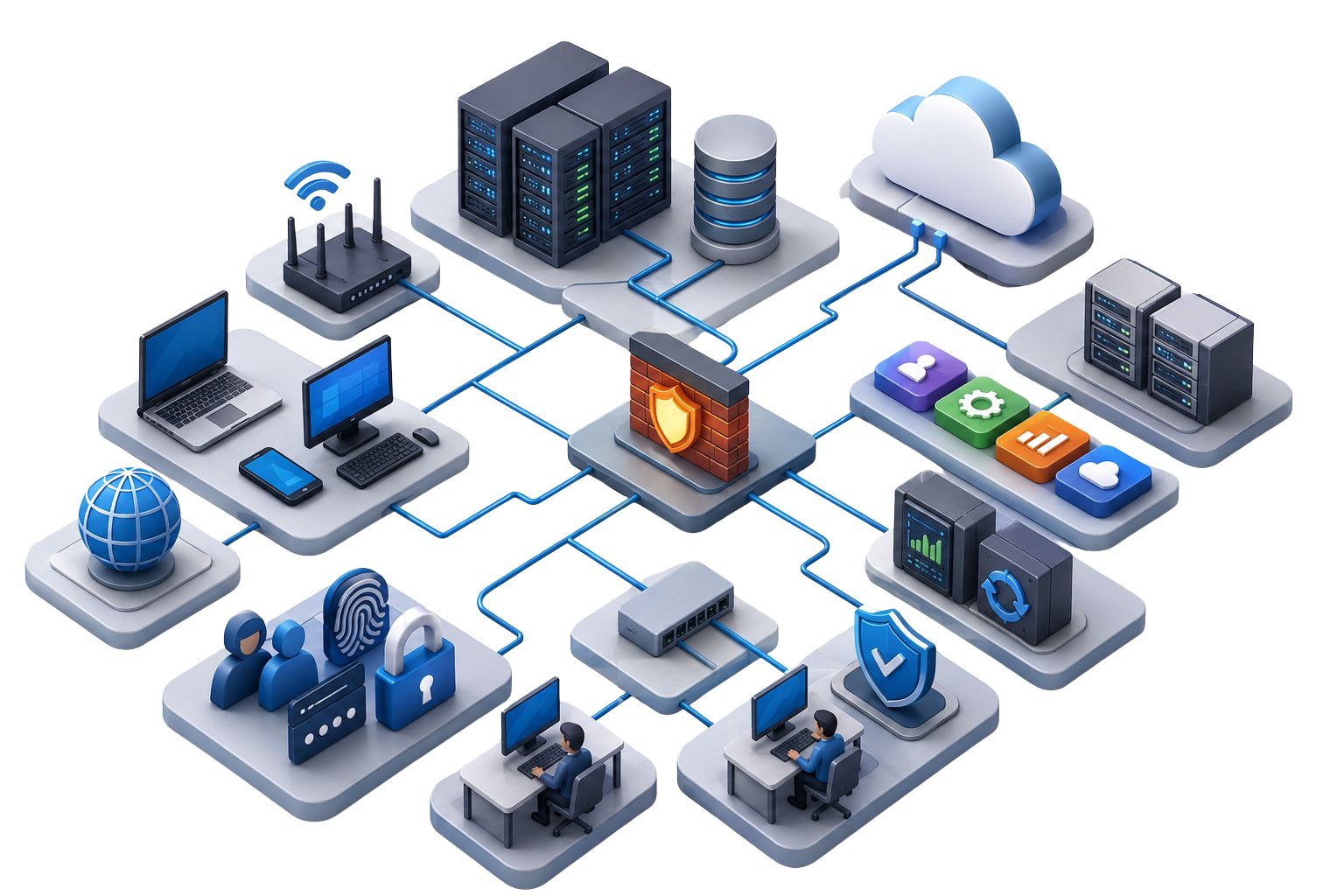
Information Technology encompasses the full spectrum of digital systems used to collect, process, store, transmit, and protect data across enterprise environments. IT systems form the operational backbone of modern business ,enabling ERP platforms, email infrastructure, financial systems, customer databases, HR platforms, and cloud-based applications.
From a cybersecurity perspective, IT security operates under a well-established framework centered on the CIA Triad: Confidentiality, Integrity, and Availability ,with Confidentiality historically receiving the greatest weight. The underlying assumption is that protecting data from unauthorized access and exfiltration represents the most critical security objective.
Core Components of IT Environments
• Servers, workstations, laptops, and mobile devices
• Enterprise networks, LAN/WAN, SD-WAN, and cloud infrastructure
• Business applications (ERP, CRM, SaaS platforms)
• Identity and access management (IAM) systems
• Firewalls, SIEM platforms, endpoint detection and response (EDR)
• Data storage systems, backup infrastructure, and databases
• Standard operating systems: Windows, Linux, macOS
• Internet connectivity and cloud service integration
IT environments are characterized by relatively short technology lifecycles (typically 3-7 years), frequent patch cycles, and standardized security tooling that has matured over three decades of enterprise deployments. The global IT security market has produced a rich ecosystem of solutions ,from next-generation firewalls and XDR platforms to zero trust architectures ,that are calibrated for the business-data processing world.
What Is Operational Technology (OT)?
Operational Technology refers to the hardware and software systems that directly monitor, control, and automate physical processes, industrial equipment, and critical infrastructure. OT is the invisible backbone of modern civilization ,managing the systems that generate electricity, purify water, manufacture goods, process chemicals, and move energy across pipelines.
Where IT manages data, OT manages the physical world. A misconfiguration in an IT environment might expose sensitive data. A misconfiguration in an OT environment might disable a power grid, rupture a chemical pipeline, or destroy industrial machinery valued at tens of millions of dollars.
Core Components of OT Environments
• Industrial Control Systems (ICS)
• Supervisory Control and Data Acquisition (SCADA) systems
• Programmable Logic Controllers (PLCs)
• Remote Terminal Units (RTUs)
• Distributed Control Systems (DCS)
• Human-Machine Interfaces (HMIs)
• Industrial sensors, actuators, and field devices
• Historian servers and data aggregation systems
• Safety Instrumented Systems (SIS)
• Industrial communication networks (PROFIBUS, Modbus, DNP3, EtherNet/IP)
Unlike IT systems, OT devices are frequently designed to operate continuously for 10-25+ years. Many PLCs and SCADA systems in active production today were installed before modern cybersecurity concepts existed. They were never designed to be network-connected ,and were never built with cyber resilience in mind.
What Is Operational Technology (OT)?
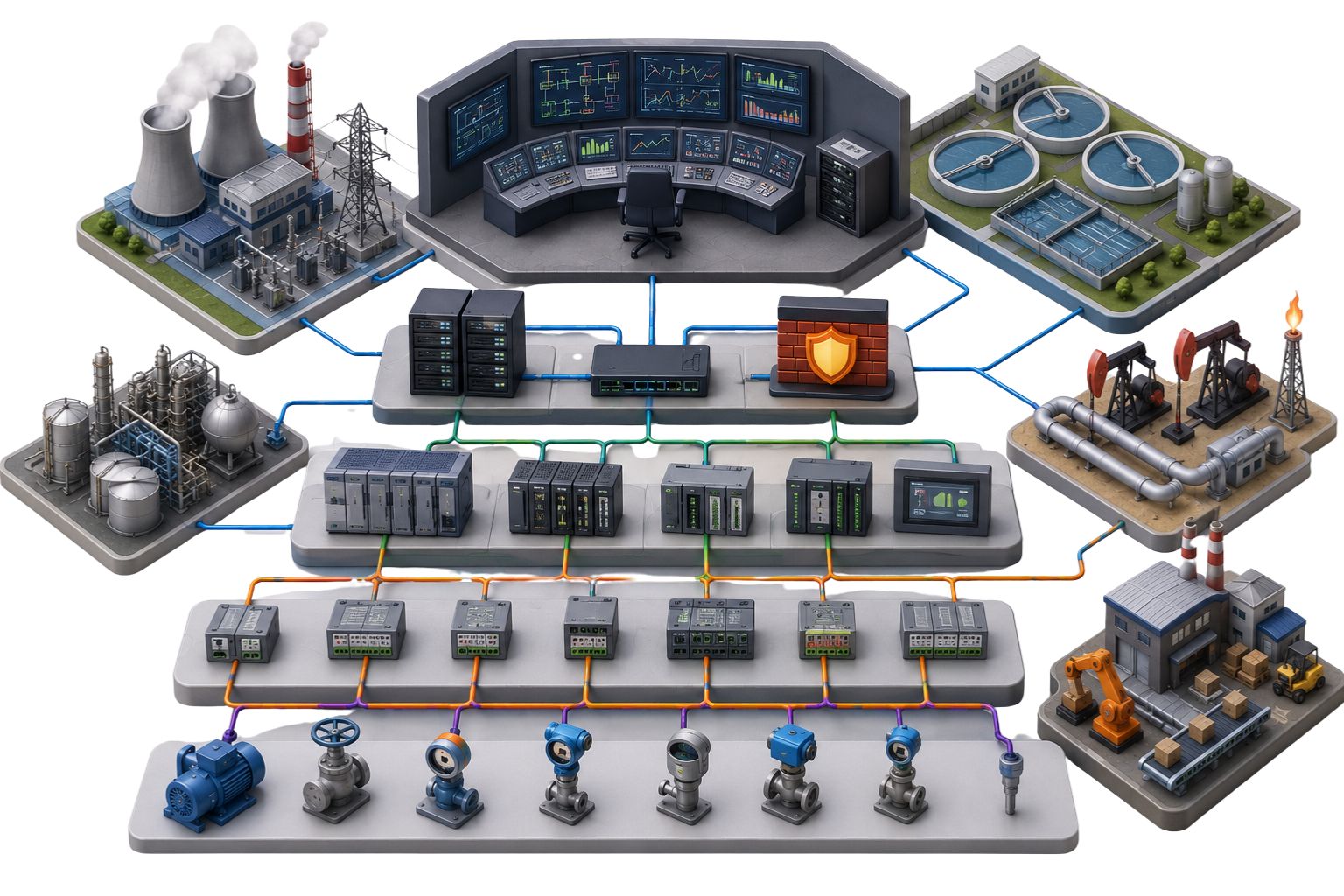
Operational Technology refers to the hardware and software systems that directly monitor, control, and automate physical processes, industrial equipment, and critical infrastructure. OT is the invisible backbone of modern civilization ,managing the systems that generate electricity, purify water, manufacture goods, process chemicals, and move energy across pipelines.
Where IT manages data, OT manages the physical world. A misconfiguration in an IT environment might expose sensitive data. A misconfiguration in an OT environment might disable a power grid, rupture a chemical pipeline, or destroy industrial machinery valued at tens of millions of dollars.
Core Components of OT Environments
• Industrial Control Systems (ICS)
• Supervisory Control and Data Acquisition (SCADA) systems
• Programmable Logic Controllers (PLCs)
• Remote Terminal Units (RTUs)
• Distributed Control Systems (DCS)
• Human-Machine Interfaces (HMIs)
• Industrial sensors, actuators, and field devices
• Historian servers and data aggregation systems
• Safety Instrumented Systems (SIS)
• Industrial communication networks (PROFIBUS, Modbus, DNP3, EtherNet/IP)
Unlike IT systems, OT devices are frequently designed to operate continuously for 10-25+ years. Many PLCs and SCADA systems in active production today were installed before modern cybersecurity concepts existed. They were never designed to be network-connected ,and were never built with cyber resilience in mind.
History & Evolution of IT and OT
To fully appreciate why IT and OT security differ so profoundly, it is essential to understand how each domain evolved. Their technological lineages diverged over 50 years ago and only recently began to intersect ,creating security challenges that neither domain was originally equipped to address
The Evolution of IT: Information technology emerged from the mainframe computing era of the 1960s and 70s, evolved through the personal computer revolution of the 1980s, and reached its current enterprise form through the internet boom of the 1990s and the cloud transformation of the 2000s. Throughout this evolution, IT security developed organically, antivirus tools, firewalls, IDS/IPS systems, encryption standards, and eventually SIEM, EDR, and zero trust architectures.
The pace of IT innovation has been rapid, iterative, and driven by competitive commercial markets. Security became a central concern after high-profile data breaches in the 2000s and 2010s, leading to regulatory frameworks like PCI-DSS, HIPAA, GDPR, and SOC 2 that codified IT security expectations for enterprises globally.
The Evolution of OT: Operational technology has roots in the analog industrial control systems of the early 20th century. The first Programmable Logic Controllers were introduced in 1969 by Dick Morley to replace relay-based automation in automotive manufacturing. SCADA systems emerged through the 1970s and 80s as a means of remotely monitoring and controlling geographically dispersed infrastructure ,power substations, pipeline monitoring stations, water treatment facilities.
Critically, these early OT systems were designed as isolated, proprietary systems with no expectation of external network connectivity. Security was achieved through physical isolation ,air gaps, locked control rooms, and the operational obscurity of proprietary protocols like Modbus (1979), PROFIBUS, and DNP3. The concept of cybersecurity as an OT concern simply did not exist.
The advent of Ethernet-based industrial networks, Windows-based HMIs, and remote access capabilities in the 1990s and 2000s began eroding that isolation, often without corresponding security investment. Today, Industry 4.0 and IIoT mandates are completing the convergence, connecting systems that were never designed for a networked, threat-rich environment.
History & Evolution of IT and OT
To fully appreciate why IT and OT security differ so profoundly, it is essential to understand how each domain evolved. Their technological lineages diverged over 50 years ago and only recently began to intersect ,creating security challenges that neither domain was originally equipped to address
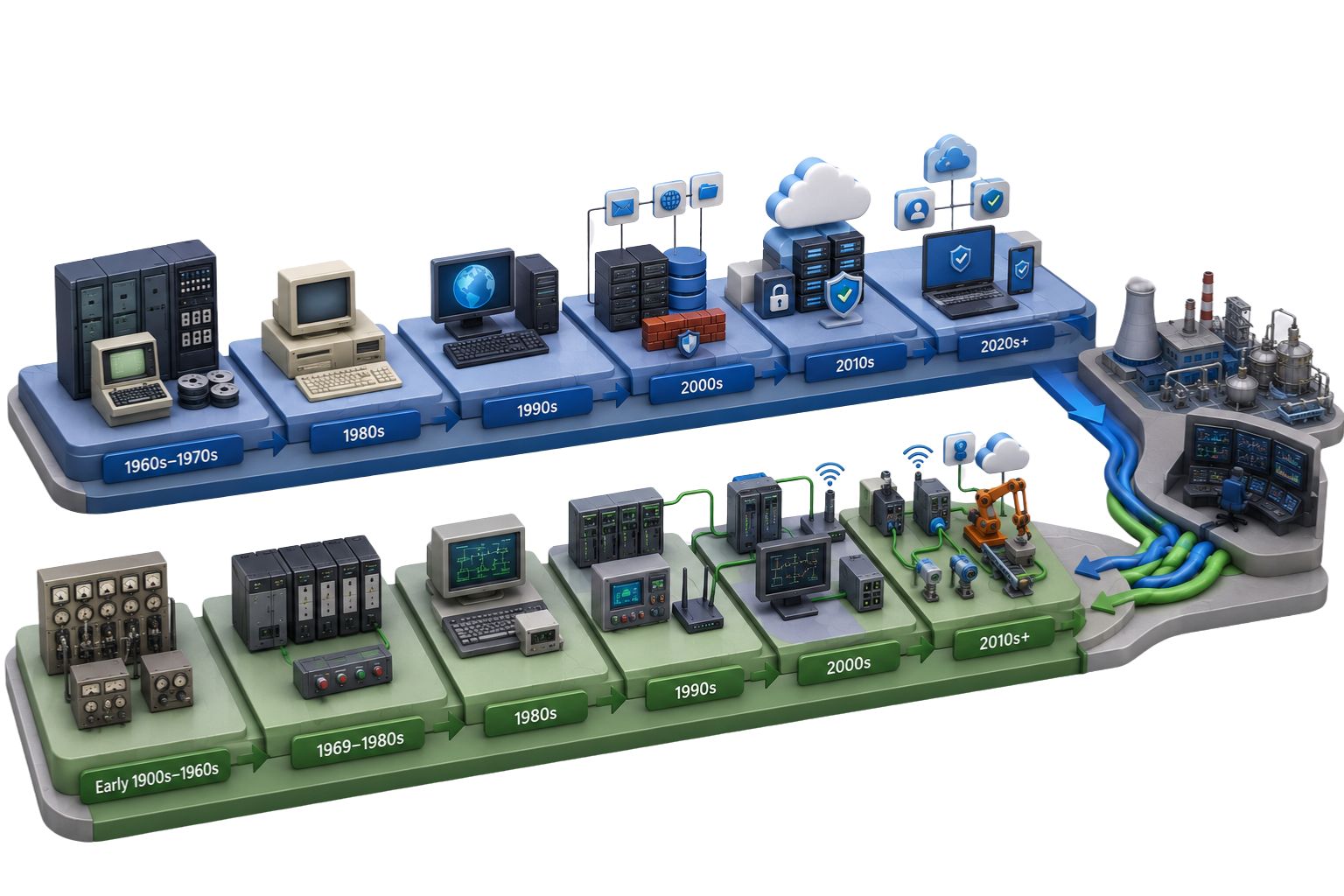
The Evolution of IT: Information technology emerged from the mainframe computing era of the 1960s and 70s, evolved through the personal computer revolution of the 1980s, and reached its current enterprise form through the internet boom of the 1990s and the cloud transformation of the 2000s. Throughout this evolution, IT security developed organically, antivirus tools, firewalls, IDS/IPS systems, encryption standards, and eventually SIEM, EDR, and zero trust architectures.
The pace of IT innovation has been rapid, iterative, and driven by competitive commercial markets. Security became a central concern after high-profile data breaches in the 2000s and 2010s, leading to regulatory frameworks like PCI-DSS, HIPAA, GDPR, and SOC 2 that codified IT security expectations for enterprises globally.
The Evolution of OT: Operational technology has roots in the analog industrial control systems of the early 20th century. The first Programmable Logic Controllers were introduced in 1969 by Dick Morley to replace relay-based automation in automotive manufacturing. SCADA systems emerged through the 1970s and 80s as a means of remotely monitoring and controlling geographically dispersed infrastructure ,power substations, pipeline monitoring stations, water treatment facilities.
Critically, these early OT systems were designed as isolated, proprietary systems with no expectation of external network connectivity. Security was achieved through physical isolation ,air gaps, locked control rooms, and the operational obscurity of proprietary protocols like Modbus (1979), PROFIBUS, and DNP3. The concept of cybersecurity as an OT concern simply did not exist.
The advent of Ethernet-based industrial networks, Windows-based HMIs, and remote access capabilities in the 1990s and 2000s began eroding that isolation, often without corresponding security investment. Today, Industry 4.0 and IIoT mandates are completing the convergence, connecting systems that were never designed for a networked, threat-rich environment.
Why IT and OT Are Converging And Why It Creates Security Risk
The convergence of IT and OT is not a product of reckless decision-making. It is driven by legitimate and compelling business imperatives: the need for operational visibility, predictive maintenance analytics, supply chain integration, remote operational management, and competitive efficiency. Digital transformation in manufacturing, energy, and utilities is real, measurable, and economically valuable.
Primary Drivers of IT/OT Convergence
Industrial IoT (IIoT) deployments connecting OT sensors to enterprise networks and cloud analytics platforms
Remote access requirements accelerated by COVID-19 and the normalization of remote industrial monitoring
ERP and MES integration connecting business planning systems directly to production floor data
Predictive maintenance and digital twin technologies requiring real-time data flows from OT environments
Cloud-based SCADA and historian platforms replacing on-premises infrastructure
Vendor remote access for OT equipment maintenance, updates, and diagnostics
Each of these drivers introduces network pathways between previously isolated OT systems and the broader enterprise or internet-connected environment. The Purdue Reference Model ,long the governing architectural framework for industrial network segmentation ,is being challenged by flat network implementations, cloud connectivity, and IoT deployments that bypass traditional demilitarized zone (DMZ) structures.
Book a free consultation with our experts today!
Core Differences Between IT Security and OT Security
The distinction between IT and OT security is not simply a matter of different tools applied to different devices. It reflects fundamentally different risk philosophies, operational constraints, and consequence models. Understanding these differences is prerequisite to building any effective industrial security program.
1. Security Priority Model: CIA vs AIC: IT security prioritizes the CIA Triad in the traditional order: Confidentiality first, Integrity second, Availability third. The underlying logic is that protecting sensitive data from unauthorized access is the most critical objective for business and compliance reasons.
OT security inverts this entirely. In industrial environments, the priority hierarchy is Availability, Integrity, Confidentiality ,with Safety as an overarching imperative that supersedes all three. A manufacturing line must run. A power grid must deliver electricity. A water treatment plant must continuously process water. Availability is not a luxury in OT environments; it is the core operational mandate.
2. Patch Management and Update Cycles: In IT environments, patch management is a routine, well-understood process. Monthly Patch Tuesday cycles, automated update mechanisms, and standardized vulnerability management tools enable organizations to maintain current software baselines across enterprise environments with manageable operational impact.
OT environments operate under entirely different constraints. Patches must frequently be validated by equipment manufacturers before deployment ,a process that can take months. Applying patches to PLCs, SCADA servers, or DCS components typically requires system downtime, which translates directly to production loss.
3. System Lifecycles: Enterprise IT infrastructure typically cycles through hardware and software replacements every 3-7 years, driven by vendor support lifecycles, performance requirements, and feature development. This creates regular opportunities to introduce modern security capabilities.
OT equipment is designed and procured to operate for 15-25+ years. Industrial control systems represent significant capital investments in custom-engineered, vendor-specific hardware and software. A refinery PLC installed in 2002 may still be actively controlling process chemistry today ,running on Windows XP or an embedded RTOS for which no security patches have been issued in over a decade. These are not edge cases. They are the norm across energy, water, manufacturing, and transportation sectors globally.
4. Real-Time Operational Constraints: IT systems are designed to handle variable latency, temporary interruptions, and processing delays with relatively graceful degradation. A web server that experiences 200ms additional latency is suboptimal but rarely dangerous.
OT systems frequently require deterministic, real-time operation where microsecond-level timing precision governs safety-critical processes. A safety instrumented system that fails to execute a shutdown command within its design response time due to network interference or processing latency can result in catastrophic physical consequences. Security tools that introduce latency, disrupt communication timing, or require system reboots present genuine operational hazards in OT environments.
Core Differences Between IT Security and OT Security
The distinction between IT and OT security is not simply a matter of different tools applied to different devices. It reflects fundamentally different risk philosophies, operational constraints, and consequence models. Understanding these differences is prerequisite to building any effective industrial security program.
1. Security Priority Model: CIA vs AIC: IT security prioritizes the CIA Triad in the traditional order: Confidentiality first, Integrity second, Availability third. The underlying logic is that protecting sensitive data from unauthorized access is the most critical objective for business and compliance reasons.
OT security inverts this entirely. In industrial environments, the priority hierarchy is Availability, Integrity, Confidentiality ,with Safety as an overarching imperative that supersedes all three. A manufacturing line must run. A power grid must deliver electricity. A water treatment plant must continuously process water. Availability is not a luxury in OT environments; it is the core operational mandate.
2. Patch Management and Update Cycles: In IT environments, patch management is a routine, well-understood process. Monthly Patch Tuesday cycles, automated update mechanisms, and standardized vulnerability management tools enable organizations to maintain current software baselines across enterprise environments with manageable operational impact.
OT environments operate under entirely different constraints. Patches must frequently be validated by equipment manufacturers before deployment ,a process that can take months. Applying patches to PLCs, SCADA servers, or DCS components typically requires system downtime, which translates directly to production loss.
3. System Lifecycles: Enterprise IT infrastructure typically cycles through hardware and software replacements every 3-7 years, driven by vendor support lifecycles, performance requirements, and feature development. This creates regular opportunities to introduce modern security capabilities.
OT equipment is designed and procured to operate for 15-25+ years. Industrial control systems represent significant capital investments in custom-engineered, vendor-specific hardware and software. A refinery PLC installed in 2002 may still be actively controlling process chemistry today ,running on Windows XP or an embedded RTOS for which no security patches have been issued in over a decade. These are not edge cases. They are the norm across energy, water, manufacturing, and transportation sectors globally.
4. Real-Time Operational Constraints: IT systems are designed to handle variable latency, temporary interruptions, and processing delays with relatively graceful degradation. A web server that experiences 200ms additional latency is suboptimal but rarely dangerous.
OT systems frequently require deterministic, real-time operation where microsecond-level timing precision governs safety-critical processes. A safety instrumented system that fails to execute a shutdown command within its design response time due to network interference or processing latency can result in catastrophic physical consequences. Security tools that introduce latency, disrupt communication timing, or require system reboots present genuine operational hazards in OT environments.
Compliance and Regulatory Requirements for OT Security
The regulatory landscape for OT security has developed significantly over the past decade, driven by high-profile incidents and increasing government recognition that critical infrastructure cybersecurity represents a national security imperative.
OT Security, or operational technology security, is the practice of protecting critical infrastructure and industrial systems from cyber threats. These systems, which include everything from power grids and water treatment facilities to manufacturing plants and transportation networks, are the backbone of modern society. Unlike traditional IT systems, OT systems are designed to control physical processes and often operate in real-time, making them both unique and highly vulnerable to cyberattacks.
IEC 62443 ,The Industrial Cybersecurity Standard
IEC 62443 is the internationally recognized standard series for industrial automation and control system security. Developed through collaboration between the International Electrotechnical Commission, ISA, and global industry stakeholders, IEC 62443 provides a comprehensive framework covering security management systems, security levels for zones and conduits, product development requirements, and system integration security.
NERC CIP ,North American Electric Reliability Corporation Critical Infrastructure Protection
NERC CIP standards apply to bulk electric system operators in North America and represent some of the most prescriptive OT security requirements globally. CIP-007 (Systems Security Management), CIP-010 (Configuration Change Management and Vulnerability), and CIP-013 (Supply Chain Risk Management) establish specific technical and procedural requirements for electric utility cybersecurity. Non-compliance penalties can reach $1 million per day per violation.
NIST SP 800-82 ,Guide to ICS Security
NIST Special Publication 800-82 provides comprehensive guidance on securing industrial control systems ,covering network architecture, security controls, and operational considerations specific to ICS environments. The publication aligns with the NIST Cybersecurity Framework and provides ICS-specific implementation guidance for each framework function: Identify, Protect, Detect, Respond, and Recover
CISA ICS Security Advisories
The Cybersecurity and Infrastructure Security Agency (CISA) publishes Industrial Control Systems Security Advisories (ICS-CERT) documenting vulnerabilities in OT products from major vendors including Siemens, Schneider Electric, Rockwell Automation, and others. CISA's OT security guidance, cross-sector cybersecurity performance goals, and incident response resources provide essential reference material for industrial security programs.
The regulatory landscape for OT security has developed significantly over the past decade, driven by high-profile incidents and increasing government recognition that critical infrastructure cybersecurity represents a national security imperative.
IEC 62443 ,The Industrial Cybersecurity Standard
IEC 62443 is the internationally recognized standard series for industrial automation and control system security. Developed through collaboration between the International Electrotechnical Commission, ISA, and global industry stakeholders, IEC 62443 provides a comprehensive framework covering security management systems, security levels for zones and conduits, product development requirements, and system integration security.
NERC CIP ,North American Electric Reliability Corporation Critical Infrastructure Protection
NERC CIP standards apply to bulk electric system operators in North America and represent some of the most prescriptive OT security requirements globally. CIP-007 (Systems Security Management), CIP-010 (Configuration Change Management and Vulnerability), and CIP-013 (Supply Chain Risk Management) establish specific technical and procedural requirements for electric utility cybersecurity. Non-compliance penalties can reach $1 million per day per violation.
NIST SP 800-82 ,Guide to ICS Security
NIST Special Publication 800-82 provides comprehensive guidance on securing industrial control systems ,covering network architecture, security controls, and operational considerations specific to ICS environments. The publication aligns with the NIST Cybersecurity Framework and provides ICS-specific implementation guidance for each framework function: Identify, Protect, Detect, Respond, and Recover
CISA ICS Security Advisories
The Cybersecurity and Infrastructure Security Agency (CISA) publishes Industrial Control Systems Security Advisories (ICS-CERT) documenting vulnerabilities in OT products from major vendors including Siemens, Schneider Electric, Rockwell Automation, and others. CISA's OT security guidance, cross-sector cybersecurity performance goals, and incident response resources provide essential reference material for industrial security programs.
Real-World Cyberattacks on OT Environments
The following incidents are not hypothetical scenarios. They represent documented attacks that have reshaped the global understanding of OT cybersecurity risk ,and provide the clearest possible evidence that industrial systems are actively targeted by sophisticated adversaries.
Stuxnet (2009-2010)
Stuxnet remains the most technically sophisticated cyberattack in documented history at the time of its discovery. Designed as a joint U.S.-Israeli intelligence operation codenamed Operation Olympic Games, Stuxnet targeted Siemens S7-315 and S7-417 PLCs controlling uranium enrichment centrifuges at Iran's Natanz facility. The malware introduced subtle modifications to centrifuge speed parameters while reporting normal operations to monitoring systems ,causing physical destruction while maintaining the appearance of normal operation. Stuxnet established the paradigm of cyber weapons capable of producing kinetic physical effects, fundamentally changing the threat landscape for OT environments globally.
Industroyer / CrashOverride (2016)
Developed by the Sandworm APT group (attributed to Russian GRU), Industroyer targeted Ukraine's power grid and caused a blackout affecting approximately 230,000 customers in December 2015. The 2016 variant, CrashOverride, was the first malware specifically designed to disrupt power grid operations ,implementing native support for IEC 104, IEC 61850, IEC 101, and GOOSE communication protocols. The significance: adversaries were no longer adapting IT malware for OT environments. They were developing OT-native attack capabilities.
Triton / TRISIS (2017)
Triton targeted Schneider Electric Triconex Safety Instrumented System (SIS) controllers at a Saudi Arabian petrochemical facility. SIS systems are the last line of defense against catastrophic industrial accidents ,designed to detect abnormal process conditions and execute emergency shutdowns to prevent fires, explosions, and toxic releases. Triton's objective was to disable these safety systems, potentially to enable a simultaneous process attack that would have caused a catastrophic physical incident. The attack was accidentally revealed when a coding error triggered safety system failsafes. Triton is widely considered the most dangerous ICS malware ever discovered due to its explicit targeting of physical safety systems.
Colonial Pipeline Ransomware (2021)
The DarkSide ransomware attack against Colonial Pipeline Company in May 2021 forced a five-day shutdown of the largest fuel pipeline in the United States ,disrupting gasoline, diesel, and jet fuel supply across the U.S. East Coast and triggering a declaration of regional emergency. Critically, the initial intrusion targeted Colonial's IT environment, not its OT systems directly. The company shut down its pipeline OT systems as a precautionary measure to prevent the ransomware from potentially migrating to operational systems ,demonstrating how IT compromises can produce OT operational consequences even without direct OT system infection.
BlackEnergy and Industroyer2 (2022)
Russian threat actors, again attributed to Sandworm, deployed an updated ICS-targeting capability in April 2022 against Ukrainian electrical infrastructure during the ongoing conflict. Industroyer2 targeted high-voltage electrical substations, with a supporting wiper malware designed to destroy industrial computers after the attack. Ukrainian CERT, ESET, and international partners successfully disrupted the attack before widespread grid damage occurred ,but the incident demonstrated the continued evolution of OT-targeted offensive capabilities in nation-state arsenals.
OT Security, or operational technology security, is the practice of protecting critical infrastructure and industrial systems from cyber threats. These systems, which include everything from power grids and water treatment facilities to manufacturing plants and transportation networks, are the backbone of modern society. Unlike traditional IT systems, OT systems are designed to control physical processes and often operate in real-time, making them both unique and highly vulnerable to cyberattacks.
Conclusion
The differences between IT and OT security are not minor technical distinctions. They represent fundamentally different environments, risk models, operational constraints, and consequence profiles that demand purpose-built security approaches. Organizations that recognize this distinction and invest in OT security programs calibrated to industrial realities will build genuine resilience. Those that attempt to extend enterprise IT security into OT environments without adaptation will continue to leave critical operations exposed ,discovering the gaps at the worst possible moment.
The threat landscape targeting operational technology is evolving faster than most industrial organizations' security programs. Nation-state actors have demonstrated operational OT attack capabilities. Ransomware operators have learned that industrial disruption dramatically amplifies extortion leverage. And the IT/OT convergence driving Industry 4.0 is eliminating the isolation that once served as the primary defense for industrial environments.
The question for every CISO, plant manager, and operational technology leader is no longer whether OT security warrants investment. The question is whether your security program is calibrated to the actual risks, constraints, and requirements of industrial environments ,or whether it is an IT security program applied to a world it was never designed to protect.
Shieldworkz exists to close that gap.
Request a demo
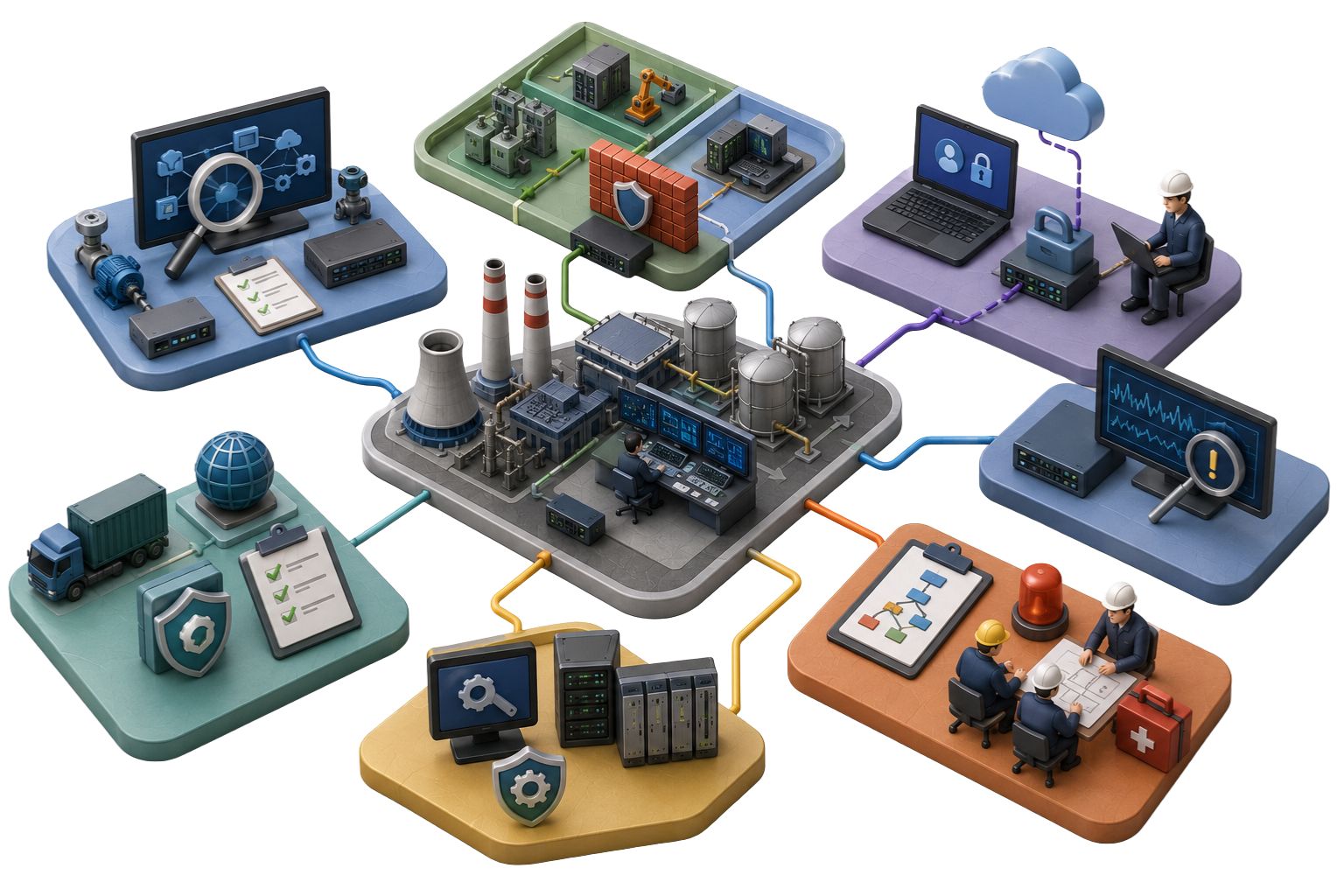
Conclusion
The differences between IT and OT security are not minor technical distinctions. They represent fundamentally different environments, risk models, operational constraints, and consequence profiles that demand purpose-built security approaches. Organizations that recognize this distinction and invest in OT security programs calibrated to industrial realities will build genuine resilience. Those that attempt to extend enterprise IT security into OT environments without adaptation will continue to leave critical operations exposed ,discovering the gaps at the worst possible moment.
The threat landscape targeting operational technology is evolving faster than most industrial organizations' security programs. Nation-state actors have demonstrated operational OT attack capabilities. Ransomware operators have learned that industrial disruption dramatically amplifies extortion leverage. And the IT/OT convergence driving Industry 4.0 is eliminating the isolation that once served as the primary defense for industrial environments.
The question for every CISO, plant manager, and operational technology leader is no longer whether OT security warrants investment. The question is whether your security program is calibrated to the actual risks, constraints, and requirements of industrial environments ,or whether it is an IT security program applied to a world it was never designed to protect.
Shieldworkz exists to close that gap.
Request a demo