Team Shieldworkz
Every modern factory floor, water treatment plant, refinery, and energy grid now runs on a dense mesh of sensors, controllers, and software that quietly decide when a valve opens, when a turbine spins faster, and when a safety interlock should trip. These systems are known as cyber-physical systems, or CPS, and they sit at the exact point where a digital command turns into a physical consequence. When something goes wrong inside a traditional IT environment, the outcome is usually data loss, downtime, or a costly cleanup. When something goes wrong inside a CPS environment, the outcome can be a halted production line, an unplanned plant shutdown, a chemical release, or a safety event that puts people at risk.
For a long time, industrial environments stayed largely isolated from corporate networks and the public internet, and that isolation offered a natural layer of protection. That isolation is gone. Industrial IoT sensors, remote monitoring platforms, cloud-based analytics, and vendor remote-support tools have connected physical operations to digital networks in ways that were unthinkable a decade ago. This convergence has delivered real operational value, including better visibility into performance, predictive maintenance, and faster decision-making, but it has also opened a category of risk that most traditional IT security programs were never built to handle.
This Blog is written for the people who carry that risk every day, including OT security leaders, ICS engineers, plant managers, CISOs, and the operators who keep critical infrastructure running safely. It explains what cyber-physical system cybersecurity actually means, where the real risk lives, what a practical CPS security framework looks like, and how organizations can build resilience without slowing down the processes that keep the business running.
The stakes involved are rarely abstract. A single unplanned shutdown at a mid-sized manufacturing plant can cost far more in a single day than an entire year of preventive security investment, and that figure does not account for regulatory scrutiny, customer trust, or the safety of the people on the floor. This is precisely why cyber-physical system cybersecurity has moved from a specialized IT concern to a standing item on the board agenda, discussed alongside safety performance, environmental compliance, and operational reliability rather than treated as a separate technology budget line.
What Is CPS Security? Understanding the Fundamentals
A cyber-physical system is any system in which computation and networking are tightly integrated with a physical process, so that software-driven decisions translate directly into mechanical action, sensing, or control. Programmable logic controllers, supervisory control and data acquisition platforms, distributed control systems, remote terminal units, smart grid substations, building automation controllers, connected medical devices, and industrial robotics are all examples of CPS. What ties them together is the fact that a line of code, a network packet, or a corrupted command can move a physical object, change a chemical process, or alter the state of equipment that people depend on.
This is where CPS security fundamentally diverges from conventional IT security. In a typical IT environment, the guiding priority is confidentiality first, then integrity, then availability, because the primary asset at risk is information. In a CPS environment, that order usually reverses. Availability and safety typically come first, because a control system that unexpectedly stops working can halt production, damage equipment, or endanger people. Integrity comes next, since a manipulated sensor reading or altered setpoint can be just as dangerous as an outage. Confidentiality, while still important, is rarely the primary concern on the plant floor.
Add to this a set of operational realities that most IT programs never encounter: equipment with a service life of fifteen to twenty-five years, real-time performance constraints that leave no room for a security tool to introduce even a few milliseconds of latency, maintenance windows measured in months rather than days, and communication protocols such as Modbus, DNP3, Profibus, and BACnet that were designed decades ago for reliability, not for authentication or encryption. Understanding these differences is the starting point for any serious CPS security program.
Dimension | Traditional IT Security | Cyber-Physical / OT Security |
Primary priority | Confidentiality, then Integrity, then Availability | Availability and safety first, then Integrity, then Confidentiality |
Typical asset lifecycle | Three to five years | Fifteen to twenty-five years |
Patch cadence | Regular, often automated | Infrequent, scheduled around planned outages |
Downtime tolerance | Often acceptable for updates | Rarely acceptable without advance planning |
Common protocols | TCP/IP, HTTPS, REST APIs | Modbus, DNP3, Profibus, OPC, proprietary vendor protocols |
Consequence of compromise | Data breach, financial loss, reputational harm | Physical damage, safety incident, environmental impact, production loss |
Table 1: How security priorities shift between IT and cyber-physical / OT environments
Why Cyber-Physical System Cybersecurity Matters Now
Several forces are converging at the same time to make CPS security an urgent boardroom conversation rather than a back-office technical concern. IT-OT convergence keeps accelerating as organizations chase efficiency gains from data-driven operations. Remote work culture has pushed remote access deeper into industrial networks than most security teams originally intended. Ransomware groups have learned that industrial targets tend to pay faster, because operational disruption creates immediate, visible pressure that a stalled spreadsheet never does. Nation-state actors have shown sustained interest in critical infrastructure, often focused on long-term positioning rather than immediate disruption. At the same time, regulatory expectations are tightening across sectors, from power and energy reliability standards to international industrial security standards and national critical infrastructure directives, all of which raise the bar for what "reasonable security" looks like.
Lessons from Real-World Incidents
The industrial sector does not lack real-world evidence of what can go wrong. A coordinated attack on a European power grid resulted in remote manipulation of breakers within distribution management systems, cutting electricity to a large number of customers and using a companion telephone denial-of-service campaign to slow the utility's response. Malware built specifically to interact with a safety instrumented system was later discovered inside a petrochemical facility, targeting the very layer of protection designed to prevent catastrophic failure. A wiper disguised as ransomware spread through a compromised software update and shut down operations across shipping, logistics, and manufacturing companies worldwide, causing losses in the billions even though industrial control was never its direct target.
Closer to daily operations, a water treatment facility experienced an unauthorized remote access attempt in which an intruder briefly increased the level of a chemical used to control water alkalinity, an attempt that was only caught because an operator happened to notice the mouse moving on its own. A major fuel pipeline operator took its own pipeline offline as a precaution after ransomware hit its business systems, showing how an incident confined entirely to IT can still force a full operational shutdown. A global aluminum producer was forced to switch large parts of its production to manual operation for weeks after a ransomware event, at significant cost. None of these cases were isolated flukes. Each one illustrates a repeatable pattern: attackers exploit the connection between digital systems and physical outcomes, and the organizations best prepared were the ones that had already invested in visibility, segmentation, and response planning before the incident occurred.
Sector | What Happened | Business Impact |
Energy / Power Grid | Remote manipulation of breakers through compromised distribution management systems | Widespread, multi-hour power outage affecting hundreds of thousands of customers |
Petrochemical | Malware designed to interact with a safety instrumented system | Risk of catastrophic physical failure, narrowly avoided |
Global Manufacturing & Logistics | Wiper malware spread through a trusted software update | Billions of dollars in losses, weeks of halted operations |
Manufacturing (Metals) | Ransomware forced a shift to manual production | Weeks of reduced output and significant recovery cost |
Water Utility | Unauthorized remote access to a treatment control system | Contained by an alert operator before physical impact occurred |
Energy / Fuel Distribution | Ransomware on IT systems triggered a precautionary OT shutdown | Regional fuel shortages and public disruption |
Table 2: Notable cyber-physical and industrial control system incidents at a glance
Common Attack Vectors in CPS Environments
• Remote access tools and VPN configurations that were never fully inventoried or reviewed
• Legacy industrial protocols that lack built-in authentication or encryption
• Removable media and USB devices used for firmware updates or diagnostics
• Third-party and vendor remote support connections left open longer than necessary
• Flat networks with little or no meaningful separation between IT and OT
• Compromised engineering workstations used to push unauthorized logic to controllers
• Firmware and supply chain tampering that occurs before equipment even reaches the site
Business and Safety Impact
• Unplanned downtime and lost production output
• Safety incidents and potential harm to personnel
• Environmental damage and associated regulatory exposure
• Regulatory penalties and mandatory incident reporting obligations
• Reputational damage with customers, insurers, and investors
• Rising cyber insurance premiums and stricter underwriting requirements
The CPS Attack Surface: Where Risk Really Lives
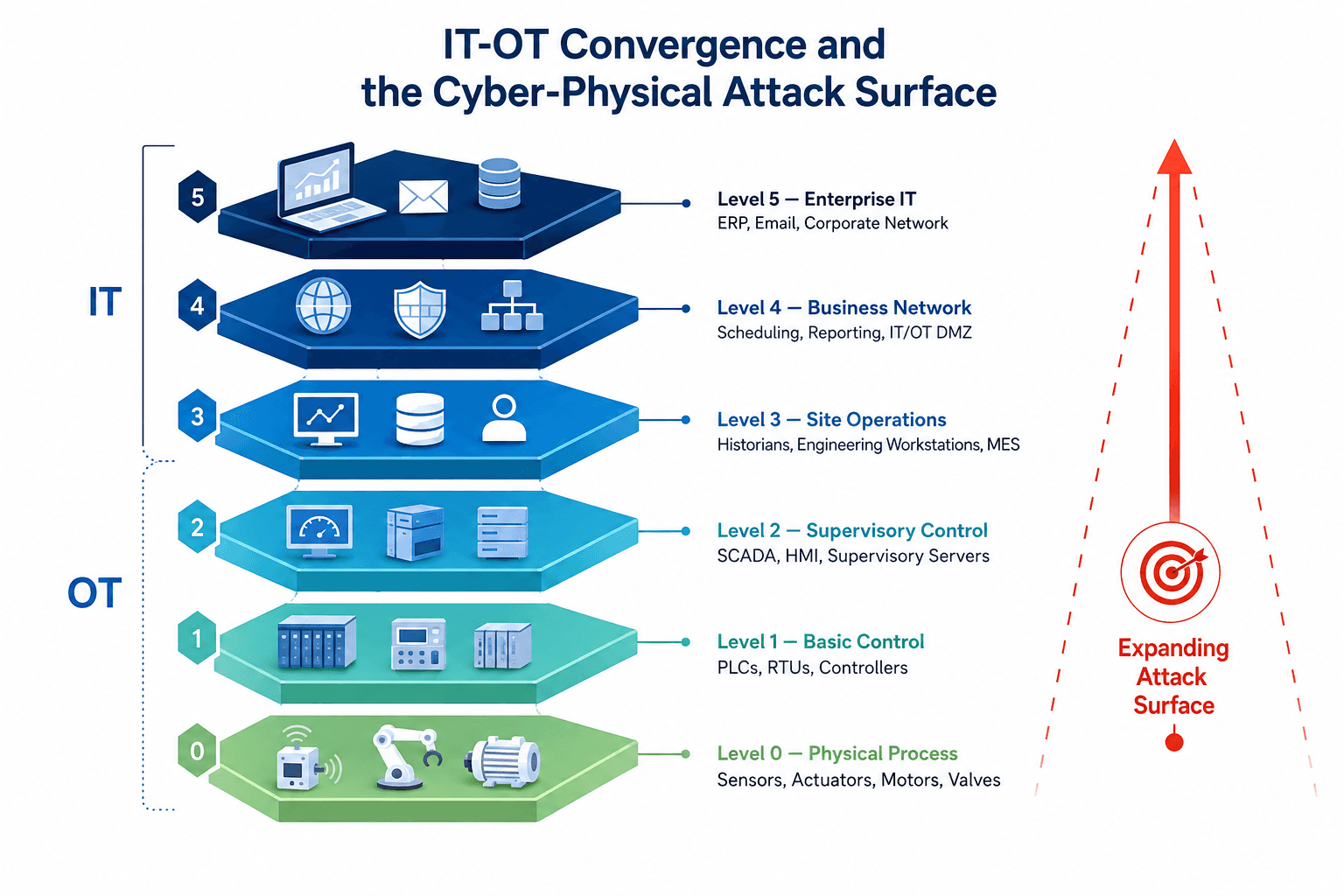
Figure 1: IT-OT convergence widens the attack surface as digital and physical layers connect
Industrial environments are traditionally described in layers, moving from enterprise IT systems at the top down to the physical process itself at the bottom. Enterprise resource planning and email sit at the highest layer, business and scheduling systems sit just below, site operations such as historians and engineering workstations sit in the middle, supervisory control systems such as SCADA and HMI sit below that, basic controllers such as PLCs and RTUs sit near the bottom, and the physical process itself, including sensors, actuators, motors, and valves, sits at the base. Attack surface tends to concentrate exactly where these layers meet, particularly around the boundary between business systems and site operations, because that is where convenience and connectivity are strongest and security controls have historically been weakest.
IT-OT Convergence
As organizations connect production data to business systems for reporting, forecasting, and optimization, the boundary between IT and OT becomes porous. A compromised laptop in a corporate office can, without proper segmentation, become a stepping stone into a control network. Convergence is not inherently bad, and the operational benefits are real, but it requires a deliberate architecture rather than an accidental one.
Legacy and Brownfield Assets
Much of the equipment running critical processes today was installed decades ago and was never designed with cybersecurity in mind. Replacing an entire fleet of controllers is rarely realistic, both financially and operationally, so organizations need compensating controls, such as network-level protection and monitoring, that reduce risk around assets that cannot be changed directly.
Remote Connectivity and Third-Party Access
Vendors, system integrators, and remote maintenance providers often need access to industrial equipment, and that access point is frequently under-documented and under-monitored. A jump box set up years ago for a one-time integration project can remain active long after the project ends, quietly expanding the attack surface without anyone actively tracking it.
The Human Factor and Workforce Gaps
OT engineers are trained to prioritize safety and process reliability, not necessarily cybersecurity, while IT security staff are often unfamiliar with the operational constraints of a live production environment. This gap is one of the most persistent challenges in CPS security, and closing it requires structured cross-training and genuine collaboration between engineering, operations, and security teams rather than security policies handed down without operational context.
Building a Strong CPS Security Framework
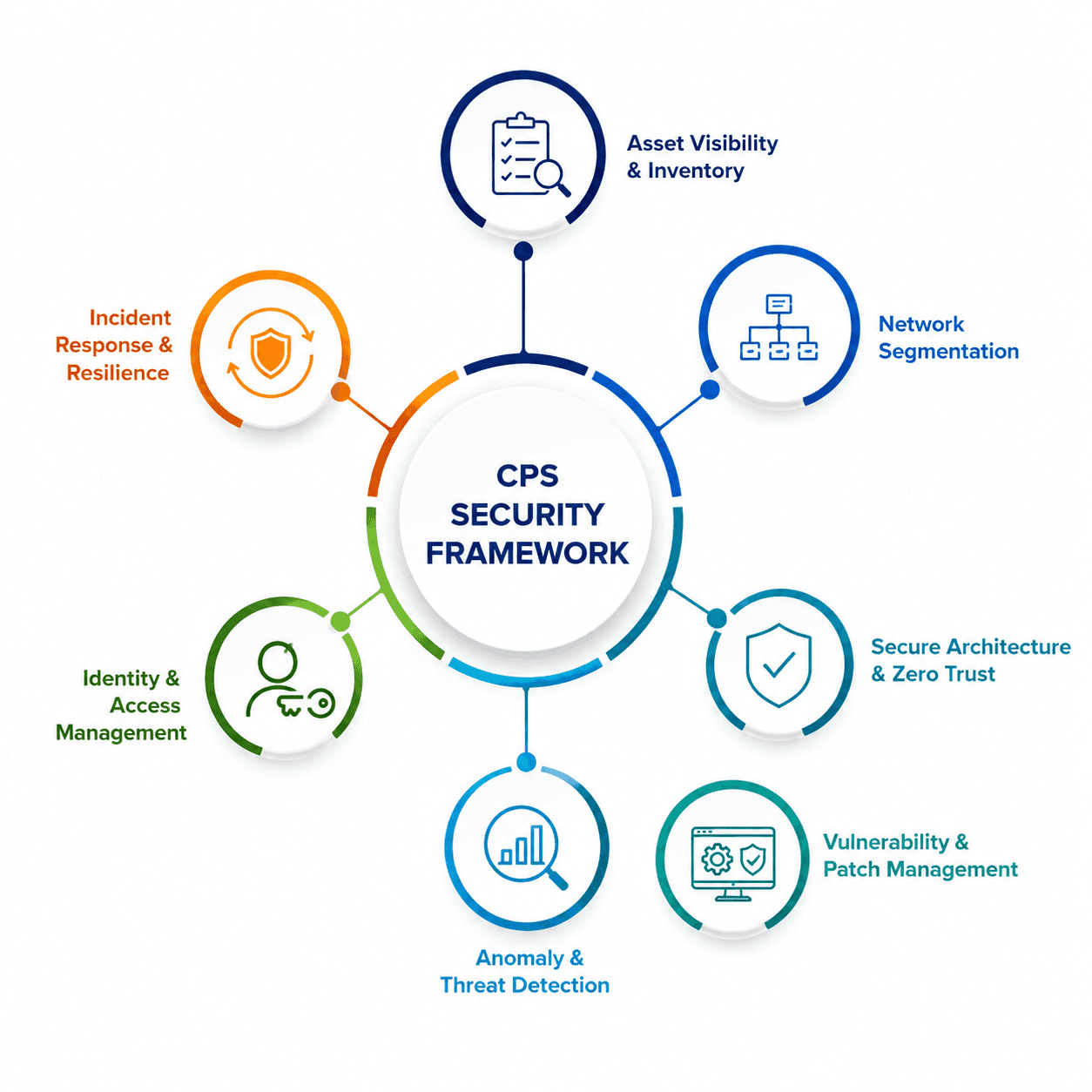
Figure 2: The core pillars of a practical cyber-physical system security framework
A credible CPS security framework does not try to force IT security tools onto the plant floor. Instead, it adapts recognized security principles, including those found in international industrial security standards, to the operational realities of a live physical process. The following seven pillars form the backbone of a workable program.
Asset Visibility and Inventory
You cannot protect what you cannot see, and most industrial organizations are surprised by how many devices exist on their control networks that were never formally documented. Passive discovery methods, which listen to network traffic without sending queries to sensitive controllers, are generally preferred over active scanning in OT environments, since some legacy devices can behave unpredictably when probed. A useful inventory captures make, model, firmware version, communication protocol, and operational criticality for every asset.
Network Segmentation and Zoning

Figure 3: A zones-and-conduits approach separates enterprise, operations, control, and safety systems
Segmentation groups assets into zones based on function and criticality, and controls the conduits, or connection points, between them. A well-designed zone structure separates the enterprise network from the DMZ, the DMZ from site operations, site operations from the control zone, and the control zone from safety systems, ensuring that a compromise in one area does not automatically cascade into the next.
Secure Architecture and Zero Trust Principles for OT
Zero trust in an OT context does not mean constant re-authentication that interrupts a running process. It means applying least privilege to engineering access, routing remote sessions through monitored jump servers, and, in the most sensitive zones, using one-way data diodes so that information can flow out for monitoring purposes without allowing any command to flow back in.
Vulnerability and Patch Management
Many OT vulnerabilities cannot be patched immediately, since patching often requires scheduled downtime that may only be available a few times a year. A practical program prioritizes vulnerabilities based on actual exploitability and operational exposure, applies compensating controls such as network isolation when a patch cannot be deployed right away, and plans patch cycles around maintenance windows rather than vendor release schedules.
Anomaly and Threat Detection
Detection in industrial environments works best when it is tuned to the specific protocols and process behavior of the facility rather than relying on generic IT signatures. Establishing a baseline of normal operational behavior allows security teams to catch subtle deviations, such as an unusual command sequence or an out-of-range setpoint change, before they translate into a physical consequence.
Identity and Access Management
Shared logins remain common on legacy control systems, which makes it nearly impossible to trace who took a specific action. Moving toward unique credentials, applying multi-factor authentication wherever it is operationally feasible, and managing privileged access for vendors and contractors closes one of the most exploited gaps in industrial environments.
Incident Response and Operational Resilience
An OT-specific incident response plan looks different from a typical IT playbook, because it must account for safety procedures, manual operation fallback, and close coordination between security, engineering, and operations teams. Regularly testing that plan, including tabletop exercises that involve plant personnel, is what turns a document into a real capability when an incident actually occurs.
Aligning the Framework with Recognized Standards
None of these seven pillars need to be invented from scratch. International industrial security standards already describe zone-based segmentation, security levels tied to risk, and lifecycle-based vulnerability management in detail, and national regulatory frameworks for power, water, and other critical sectors increasingly expect organizations to demonstrate exactly this kind of structured approach. Aligning an internal program with recognized standards does two things at once: it gives engineering and operations teams a common language to work from, and it gives leadership a defensible way to show regulators, insurers, and boards that the organization's security posture was built on established practice rather than improvised after the fact.
Framework Pillar | Primary Objective | Typical Outcome |
Asset Visibility & Inventory | Establish a complete, accurate picture of connected devices | Reduced blind spots and faster risk assessment |
Network Segmentation | Contain incidents within defined zones | Limited lateral movement and reduced blast radius |
Secure Architecture | Apply least privilege without disrupting operations | Controlled, monitored access paths |
Vulnerability Management | Prioritize and manage risk realistically | Fewer exploitable gaps despite patching constraints |
Anomaly Detection | Identify deviations before physical impact | Earlier warning and faster response |
Identity & Access Management | Ensure accountability for every action taken | Clear audit trail and reduced insider risk |
Incident Response & Resilience | Recover quickly and safely from disruption | Shorter downtime and preserved safety margins |
Table 3: How each framework pillar contributes to overall CPS security posture
Practical Recommendations and Best Practices for CPS Security
Building CPS security does not require solving everything at once. Organizations that make the fastest, most sustainable progress tend to sequence their efforts, starting with visibility and quick wins before moving toward deeper architectural change. Trying to implement every control simultaneously, without regard for maintenance windows or process criticality, tends to create friction with operations teams and can stall a program before it delivers any measurable benefit. A phased approach also gives leadership visible, early proof points, which makes it easier to secure ongoing budget and support for the longer-term architectural work that follows.
Timeframe | Recommended Actions |
First 30 Days | Run passive asset discovery, review and document every remote access point, disable vendor connections that are no longer needed, and confirm backup and restore procedures for critical controllers. |
30 to 90 Days | Implement meaningful network segmentation between IT and OT, deploy passive monitoring tuned to industrial protocols, and formalize least-privilege access for engineering accounts. |
90 Days and Beyond | Build and test an OT-specific incident response plan, align the security program with recognized industrial standards, establish an ongoing vulnerability management cadence, and invest in cross-training between IT security and OT engineering teams. |
Table 4: A phased roadmap for strengthening cyber-physical system cybersecurity
Treat OT security as a shared responsibility between engineering, operations, and security teams rather than a purely technical initiative
Prioritize compensating controls when direct patching is not possible within an acceptable maintenance window
Choose monitoring and detection tools that were purpose-built for industrial protocols and process behavior
Document every remote access path, including vendor and integrator connections, and review them on a regular schedule
Build incident response plans that account for safety procedures and manual operation fallback, not just data recovery
Measure progress with practical indicators, such as reduced unmanaged assets and improved detection time, rather than compliance checklists alone
How Shieldworkz Supports Organizations
Shieldworkz works alongside industrial organizations to close the gap between traditional IT security thinking and the operational realities of the plant floor. Our approach is built around collaboration with engineering and operations teams, not around them, so that stronger security and uninterrupted production can move forward together.
OT and ICS-focused asset visibility assessments that map every connected device across your environment
Passive, non-intrusive monitoring designed for sensitive control systems that cannot tolerate active scanning
Network segmentation guidance built around recognized zones-and-conduits principles for industrial environments
Vulnerability and risk prioritization grounded in operational context, not generic severity scores
Threat detection tuned to industrial protocols, with a focus on early warning before physical impact
Incident response planning and tabletop exercises designed specifically for OT and safety-critical operations
Compliance mapping support aligned with recognized industrial cybersecurity standards and regulatory expectations
A collaborative engagement model that respects production schedules, safety requirements, and engineering workflows
Conclusion
Cyber-physical system cybersecurity is no longer a specialized concern reserved for a handful of high-risk sectors. Any organization that runs connected physical operations, from manufacturing plants to utilities to critical infrastructure, now faces the same fundamental challenge: protecting the point where digital commands meet real-world consequences. The organizations that manage this risk well are not the ones with the largest security budgets. They are the ones that understand their assets, segment their networks thoughtfully, detect anomalies early, and plan for incidents before they happen, all while respecting the safety and operational demands that make their business run in the first place.
Getting there does not require a complete overhaul on day one. It requires a clear-eyed view of where your organization stands today, a practical roadmap for closing the most urgent gaps, and a partner who understands both the engineering and the security side of the conversation.
Book a Free Consultation with Our Experts Every plant, grid, and production line carries its own risk profile, and there is no one-size-fits-all fix for cyber-physical system security. If you want a clear, practical view of where your organization stands today, our team is ready to walk through it with you. Talk to a Shieldworkz OT security specialist and get a practical, no-obligation assessment of your cyber-physical system risk, book your free consultation today. |
Additional resources
Comprehensive Guide to Network Detection and Response NDR in 2026 here
OT Security Risk Exposure Calculator Workbook here
A downloadable report on the Stryker cyber incident here
Remediation Guides here
OT Security Best Practices and Risk Assessment Guidance here
IEC 62443-based OT/ICS risk assessment checklist for the food and beverage manufacturing sector here
Get Weekly
Resources & News
See How Our Industry-Leading OT Security Solutions Address Critical Security Challenges
You may also like

Investigative cyber threat research report: Colorado water utilities OT attacks
Prayukth K V

CEA Cyber Incident Response Requirements: How Power Utilities Can Build a Practical Security Plan
Team Shieldworkz

IEC 62443 for Pharmaceutical Manufacturing: Secure Critical Production OT
Team Shieldworkz

Investigative cyber threat research report: Cyberattacks on U.S.-bound energy tankers
Team Shieldworkz

The OT Lull: What a 30-day decline in direct intrusion activity actually tells us
Prayukth K V

Inside the Revolut data disclosure incident
Prayukth K V