ما هو جهاز التحكم المنطقي القابل للبرمجة (PLC) ولماذا تستخدمه القطاعات الصناعية؟

فريق شيلدوركز
مقدمة: العمود الفقري غير المرئي للعمليات الصناعية
ادخل إلى أي مصنع تصنيع، أو منشأة لمعالجة المياه، أو مصفاة نفط، أو محطة لتوليد الطاقة، وستجدها تعمل بهدوء خلف الكواليس، وتتحكم في الصمامات، وتدير المحركات، وتراقب درجات الحرارة، وتنفذ آلاف القرارات في كل ثانية. إن أجهزة التحكم المنطقي القابلة للبرمجة، أو PLCs، هي الأبطال المجهولون في العالم الصناعي.
ومع ذلك، وعلى الرغم من دورها الحاسم، فإن العديد من المهنيين خارج مجال الأتمتة وأمن تكنولوجيا العمليات (OT) لا يزالون غير متأكدين مماهية الـ PLC في الواقع، وكيف يعمل، والأهم من ذلك، لماذا أصبح أحد أكثر الأصول استهدافاً في الهجمات السيبرانية الصناعية الحديثة.
سواء كنت مهندساً صناعياً يتطلع إلى تعزيز معرفتك التأسيسية، أو رئيساً لأمن المعلومات (CISO) يحاول فهم بيئة تكنولوجيا العمليات لديك، أو مديراً للمصنع يقوم بتقييم وضع المخاطر التشغيلية، فإن هذا الدليل يغطي ما تحتاج إلى معرفته حول أجهزة الـ PLC، من بنيتها الأساسية إلى تحدياتها الأمنية المتطورة.
قبل أن نمضي قدماً، لا تنسَ مراجعة منشور مدونتنا السابق حول "دليل أمن أنظمة SCADA: تعزيز الدفاعات الصناعية باستخدام NIST و IEC 62443" هنا.
ما هو جهاز التحكم المنطقي القابل للبرمجة (PLC)؟
جهاز التحكم المنطقي القابل للبرمجة (PLC) هو كمبيوتر رقمي ذو بنية متينة مصمم خصيصاً لأتمتة العمليات الكهروميكانيكية الصناعية والتحكم فيها. وعلى عكس أجهزة الكمبيوتر العامة، تم بناء أجهزة الـ PLC لتعمل بشكل موثوق في البيئات القاسية، ودرجات الحرارة المرتفعة، والاهتزازات، والغبار، والرطوبة، وهي كلها ظروف شائعة في البيئات الصناعية.
في جوهره، يقرأ جهاز الـ PLC المدخلات من الأجهزة الحقلية (المستشعرات، والمفاتيح، والمشغلات)، ويعالج تلك البيانات وفقاً لمنطق مبرمج مسبقاً، ويرسل أوامر المخرجات للتحكم في الآلات أو الأنظمة أو العمليات. تحدث دورة المدخلات والمعالجة والمخرجات هذه في أجزاء من الثانية وتتكرر باستمرار، مما يجعل أجهزة الـ PLC مثالية للتحكم الصناعي في الوقت الفعلي.
كيف تختلف أجهزة الـ PLC عن أجهزة الكمبيوتر التقليدية
على الرغم من أن كلاهما جهازا حوسبة، إلا أن أجهزة الـ PLC مصممة خصيصاً للتحكم المحدد والحتمي. وتشمل الاختلافات الرئيسية ما يلي:
• تعمل أجهزة الـ PLC في الوقت الفعلي مع دورات مسح متوقعة ومتسقة
• تم تصميمها لتوفر إتاحة عالية، وغالباً ما تعمل على مدار الساعة طوال أيام الأسبوع لسنوات دون الحاجة لإعادة التشغيل
• يستخدم برمجة الـ PLC لغات متخصصة مثل Ladder Logic (المخطط السلمي)، وStructured Text (النص الهيكلي)، وFunction Block Diagrams (مخططات الكتل الوظيفية)
• تتفاعل مباشرة مع الأجهزة المادية من خلال وحدات الإدخال والإخراج (I/O) المنفصلة
• لم يكن الأمن في الماضي من اعتبارات التصميم ولكنه أصبح مصدر قلق كبير اليوم
بنية الـ PLC: داخل وحدة التحكم
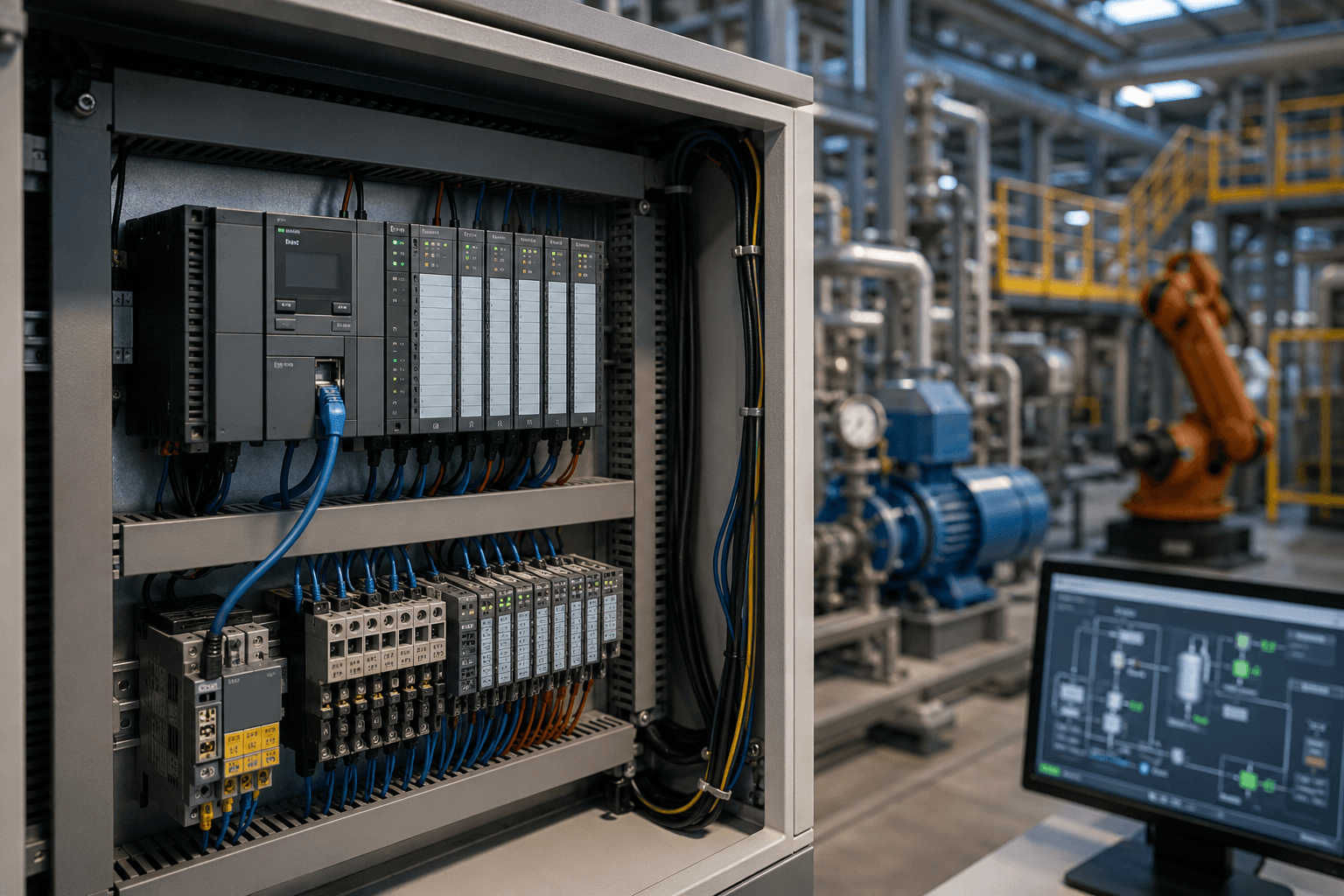
يساعد فهم بنية الـ PLC في توضيح قدراته ونقاط ضعفه على السواء. ويتكون نظام الـ PLC النموذجي من المكونات الأساسية التالية:
1. وحدة المعالجة المركزية (CPU)
وحدة المعالجة المركزية هي العقل المدبر لجهاز الـ PLC. وهي تقوم بتنفيذ برنامج التحكم، وإدارة الذاكرة، وتنسيق عمليات الإدخال والإخراج، والتواصل مع الأجهزة المتصلة. وتحدد سرعة وطاقة المعالجة لوحدة المعالجة المركزية مدى سرعة استجابة الـ PLC لظروف العملية المتغيرة.
2. وحدات الإدخال/الإخراج (I/O)
تثمل وحدات الإدخال/الإخراج جسراً بين جهاز الـ PLC والعالم المادي. وتستقبل المدخلات الرقمية إشارات ثنائية (تشغيل/إيقاف) من المفاتيح والمستشعرات، بينما تعالج المدخلات التناظرية الإشارات المستمرة من أدوات مثل مرسلات الضغط ومقاييس التدفق. وترسل وحدات المخرجات إشارات التحكم إلى المشغلات، والمحركات، والصمامات، والمرحلات.
3. الذاكرة
تخزن ذاكرة الـ PLC برنامج التحكم، وبيانات النظام، والمتغيرات التشغيلية. وتحتفظ ذاكرة البرنامج بتعليمات المنطق، بينما تخزن ذاكرة البيانات قيم العملية في الوقت الفعلي ومعلومات حالة النظام.
4. واجهات الاتصال
تتواصل أجهزة الـ PLC الحديثة عبر بروتوكولات صناعية مثل Modbus و DNP3 و EtherNet/IP و PROFIBUS و OPC-UA. وتسمح إمكانيات الاتصال هذه لأجهزة الـ PLC بالتكامل مع أنظمة SCADA وواجهات الـ HMI وشبكات تكنولوجيا المعلومات الخاصة بالمؤسسات، كما أنها تمثل سطح الهجوم الرئيسي للمهاجمين الذين يستهدفون بيئات تكنولوجيا العمليات (OT).
5. مزود الطاقة
توفر وحدة إمداد الطاقة المخصصة طاقة مستقرة ومنظمة لجهاز الـ PLC ووحداته. وتعتبر تكوينات الطاقة الاحتياطية شائعة في عمليات نشر البنية التحتية الحيوية لضمان استمرار التشغيل.
أين تُستخدم أجهزة الـ PLC: التطبيقات الصناعية
يتم نشر أجهزة الـ PLC في كل قطاع تقريباً من قطاعات الاقتصاد الصناعي. ويوضح الجدول أدناه اتساع نطاق تطبيقها ومستوى مخاطر الأمن السيبراني المرتبط بها:
القطاع الصناعي | حالة استخدام الـ PLC | الأنظمة المتكاملة | مستوى المخاطر |
النفط والغاز | مراقبة خطوط الأنابيب، والتحكم بالصمامات | وحدات الطرفية البعيدة (RTUs) | مخاطر عالية للتوقف التشغيلي |
التصنيع | أتمتة خطوط التجميع، ومراقبة الجودة | HMI، SCADA | مخاطر عالية لتوقف الإنتاج |
مرافق المياه | التحكم بالمضخات، وتنظيم التدفق | SCADA، DCS | خطورة عالية على السلامة العامة |
توليد الطاقة | موازنة الأحمال، والتحكم في الشبكة | EMS، SCADA | خطورة عالية على استقرار الشبكة |
الصناعات الدوائية | معالجة الدفعات، والامتثال | DCS، MES | متوسطة إلى عالية - مخاطر تنظيمية |
الأغذية والمشروبات | التعبئة، وأتمتة التغليف | HMI، SCADA | متوسطة، استمرارية الإنتاج |
إن النطاق الهائل لنشر أجهزة الـ PLC عبر البنية التحتية الحيوية يجعلها هدفاً رئيساً للجهات الفاعلة المدعومة من الدول، ومجموعات برامج الفدية الإجرامية، وحملات التجسس الصناعي.
لماذا تعتمد الصناعات على أجهزة الـ PLC: الفوائد التشغيلية الأساسية
إن الاعتماد الواسع النطاق لأجهزة الـ PLC في البيئات الصناعية ليس وليد الصدفة. حيث تقدم هذه الأنظمة فوائد تشغيلية يصعب تكرارها باستخدام تقنيات بديلة.
الدقة والتكرارية
تنقذ أجهزة الـ PLC المنطق المبرمج بدقة متناهية، دورة تلو الأخرى، دون تعب أو تباين أو خطأ بشري. وفي الصناعات التي يمكن أن يعني فيها انحراف درجات الحرارة ببضع درجات أو اختلاف التوقيت بأجزاء من الثانية الفرق بين جودة المنتج وهدره، أو بين السلامة والكارثة، فإن هذه الدقة لا تقدر بثمن.
المرونة وقابلية إعادة البرمجة
على عكس الأنظمة القائمة على المرحلات السلكية، يمكن إعادة برمجة أجهزة الـ PLC للتكيف مع تغيرات العمليات، أو تكوينات المنتجات الجديدة، أو تحديث متطلبات السلامة دون استبدال الأجهزة المادية. وتقلل هذه المرونة بشكل كبير من التكلفة ووقت التوقف المرتبط بتعديلات العمليات.
المرونة في التوسع
بدءاً من وحدة تحكم صغيرة مستقلة تدير مضخة واحدة إلى شبكة PLC موزعة تنسق مئات الأجهزة عبر مصنع مترامي الأطراف، تتوسع هذه الأنظمة بفعالية لتلبية المتطلبات التشغيلية بأي حجم.
الموثوقية ووقت التشغيل المستمر
تتطلب البيئات الصناعية أنظمة تعمل بشكل مستمر دون انقطاع. وقد هُندست أجهزة الـ PLC لتحقيق وقت متوسط طويل بين الأعطال (MTBF) ودعم التكوينات الاحتياطية التي تتحول تلقائياً في حالة حدوث خلل في أحد المكونات، وهو متطلب حاسم للعمليات حيث يؤدي التوقف إلى عواقب مالية وأمنية مباشرة.
التكامل مع أنظمة SCADA و HMI
تعد أجهزة الـ PLC بمثابة الطبقة التأسيسية في بنيات أنظمة التحكم الصناعي الأوسع (ICS). وهي تغذي منصات SCADA وواجهات HMI بالبيانات في الوقت الفعلي، مما يمكن المشغلين من مراقبة العمليات الصناعية والتحكم فيها من غرف التحكم المركزية أو المواقع البعيدة. وتعد قدرة التكامل هذه هي ما يجعل الأتمتة الصناعية الحديثة ممكنة، وهي أيضاً ما يخلق مسارات للتهديدات السيبرانية.
لغات برمجة الـ PLC: نظرة عامة
يحدد معيار IEC 61131-3 خمس لغات برمجة مستخدمة لتطوير الـ PLC. تلبي كل منها حالات استخدام مختلفة وتفضيلات الممارسين:
• المخطط السلمي (LD) - اللغة الأكثر استخداماً، وتشبه مخططات المنطق للمرحلات الكهربائية. وهي مثالية لتطبيقات التحكم المنفصلة.
• النص الهيكلي (ST) - لغة عالية المستوى شبيهة بلغتي Pascal أو C. تستخدم للحسابات الرياضية المعقدة ومعالجة البيانات.
• مخطط الكتل الوظيفية (FBD) - لغة رسومية تمثل منطق التحكم ككتل وظيفية مترابطة. شائعة في تطبيقات التحكم في العمليات.
• قائمة التعليمات (IL) - لغة منخفضة المستوى شبيهة بلغة التجميع تستخدم في البيئات ذات الموارد المحدودة.
• المخطط الوظيفي المتتالي (SFC) - يستخدم لتمثيل العمليات المتتالية والآلات ذات الحالات المحددة. شائع في تطبيقات معالجة الدفعات.
إن فهم بيئة البرمجة أمر مهم من منظور أمني لأن التعديلات غير المصرح بها على برامج الـ PLC - سواء من خلال التهديدات الداخلية أو الهجمات السيبرانية الخارجية - يمكن أن تؤدي إلى عواقب مادية وخطيرة فورية.
مخاطر الأمن السيبراني لأجهزة الـ PLC: ما يجب على كل مهني صناعي معرفته
لعقود من الزمن، كانت أجهزة الـ PLC تعمل في بيئات معزولة مادياً (air-gapped) مع تعرض ضئيل للشبكات الخارجية. لقد انتهى هذا العصر. فتقارب شبكات تكنولوجيا المعلومات (IT) وتكنولوجيا العمليات (OT)، وإمكانيات الوصول عن بعد، والاتصال بإنترنت الأشياء الصناعي (IIoT) قد غير بشكل جذري مشهد التهديدات للأنظمة القائمة على أجهزة الـ PLC.
لا تقتصر عواقب الهجوم السيبراني الناجح على أجهزة الـ PLC على سرقة البيانات أو توقف النظام عن العمل. إذ يمكن للمهاجمين الذين يسيطرون على أجهزة الـ PLC تغيير معايير العملية، وتعطيل أنظمة السلامة، وإلحاق الضرر بالمعدات، وفي أسوأ الحالات، مما يؤدي إلى حدوث وقائع تعرض حياة البشر والمجتمعات المحيطة للخطر.
أمثلة على هجمات بارزة استهدفت أجهزة الـ PLC
يقدم التاريخ أدلة واقعية واضحة على شكل استغلال أجهزة الـ PLC في الممارسة العملية. فدودة Stuxnet، التي تعتبر على نطاق واسع واحدة من أكثر الأسلحة السيبرانية تطوراً التي تم نشرها على الإطلاق، استهدفت تحديداً أجهزة الـ PLC من Siemens لتخريب أجهزة الطرد المركزي لتخصيب اليورانيوم. وفي الآونة الأخيرة، أظهرت الحوادث التي وقعت في منشآت معالجة المياه والبنية التحتية للطاقة أن الهجمات على أجهزة الـ PLC ليست مجرد افتراضات نظرية.
نقاط الضعف الشائعة في أجهزة الـ PLC
يلخص الجدول التالي أكثر نقاط الضعف المتعلقة بأجهزة الـ PLC التي لوحظت في بيئات تكنولوجيا العمليات:
نقطة الضعف | ناقل الهجوم | التأثير المحتمل |
أجهزة الـ PLC القديمة بدون تحديثات | استغلال الثغرات في البرامج الثابتة غير المحدثة | سيطرة تشغيلية كاملة |
غياب تجزئة الشبكة | التحرك الجانبي من تكنولوجيا المعلومات إلى تكنولوجيا العمليات | انتشار برامج الفدية عبر أرضية المصنع |
بيانات الاعتماد الافتراضية | الوصول غير المصرح به عن بعد | حقن أوامر خبيثة |
شبكات تكنولوجيا عمليات مسطحة | اتصال غير مقيد بين الأجهزة | اختراق واسع النطاق للنظام |
غياب مراقبة الأنشطة غير الطبيعية | اختراقات غير مكتشفة لأسابيع/أشهر | تسريب صامت للبيانات أو تخريب غير محسوس |
أفضل الممارسات لتأمين أنظمة الـ PLC
يتطلب تأمين أجهزة الـ PLC بفعالية استراتيجية دفاع متعددة الطبقات مصممة خصيصاً للخصائص الفريدة للبيئات الصناعية. وتعكس التوصيات التالية الأطر المقبولة في هذا المجال بما في ذلك NIST SP 800-82، وIEC 62443، وNERC CIP.
1. تجزئة الشبكة ونموذج بيردو (Purdue Model)
قم بتطبيق التجزئة المناسبة بين شبكات تكنولوجيا المعلومات (IT) وتكنولوجيا العمليات (OT) باستخدام المناطق منزوعة السلاح الصناعية (DMZs) وجدران الحماية. ويلتزم نموذج بيردو المرجعي بتقديم نهج منظم لفصل مستويات شبكة التحكم والحد من نطاق تأثير أي اختراق محتمل.
2. إدارة البرامج الثابتة والتحديثات
حافظ على جرد محدث لجميع إصدارات البرامج الثابتة لأجهزة الـ PLC وقم بتطبيق تحديثات الأمان الصادرة عن الشركات المصنعة من خلال عملية تحديث خاضعة للرقابة والاختبار. وحيثما لا يمكن تطبيق التحديثات دون حدوث انقطاع تشغيلي، يجب إعطاء الأولوية للضوابط التعويضية مثل تجزئة الشبكة والمراقبة المعززة.
3. ضوابط الوصول ذو الصلاحيات
تخلص من بيانات الاعتماد الافتراضية في جميع أنظمة الـ PLC. وقم بتطبيق ضوابط الوصول المستندة إلى الأدوار، وفرض آليات مصادقة قوية، واستخدم خوادم القفز المخصصة (jump servers) للوصول إلى أجهزة الـ PLC عن بعد. ويجب تسجيل كل عملية وصول إلى جهاز الـ PLC وتدقيقها.
4. المراقبة المستمرة المخصصة لتكنولوجيا العمليات (OT)
انشر أنظمة كشف التسلل ذات المعايير الصناعية القادرة على فهم بروتوكولات تكنولوجيا العمليات (OT). ويمكن لحلول المراقبة السلبية اكتشاف الأوامر الشاذة، وتغييرات التكوين غير المصرح بها، وسلوك الشبكة غير المعتاد دون تعطيل العمليات الإنتاجية.
5. التخطيط للاستجابة للحوادث
قم بتطوير واختبار خطط الاستجابة للحوادث المخصصة لتكنولوجيا العمليات بشكل دوري، والتي تأخذ في الاعتبار تداعيات السلامة المادية للهجمات السيبرانية الصناعية. وتأكد من أن إجراءات الاستجابة لا تتسبب عن غير قصد في مخاطر تشغيلية عند عزل الأنظمة أو إيقاف تشغيلها استجابةً لاختراق مشتبه به.
كيف تدعم Shieldworkz المؤسسات في أمن الـ PLC وتكنولوجيا العمليات (OT)
تم بناء Shieldworkz خصيصاً لمواجهة تحديات الأمن السيبراني الصناعي. ويجمع فريقنا بين الخبرة العميقة في تكنولوجيا العمليات وأنظمة التحكم الصناعي (OT/ICS) والخبرة التشغيلية عبر قطاعات التصنيع، والطاقة، والمرافق، والنفط والغاز، وبيئات البنية التحتية الحيوية. نحن ندرك أن حماية أجهزة الـ PLC تعني حماية العمليات المادية والأشخاص الذين تديرهم وتتحكم بهم.
إليك كيف نساعد المؤسسات على تأمين بيئات الـ PLC الخاصة بها:
• اكتشاف وجرد أصول تكنولوجيا العمليات (OT): نحدد كل جهاز PLC، ووحدة تحكم، وجهاز متصل عبر بيئة تكنولوجيا العمليات الخاصة بك، مما يوفر الرؤية الكاملة التي يتطلبها الأمن الفعال.
• تقييم مخاطر ICS/OT: يجري مهندسونا تقييمات شاملة للمخاطر في الموقع وعن بعد تتماشى مع أطر عمل IEC 62443، وNIST SP 800-82، وNERC CIP لتحديد الثغرات القابلة للاستغلال في بنية الـ PLC التحتية لديك.
• تصميم تجزئة الشبكة: نقوم بتصميم وتنفيذ استراتيجيات تجزئة شبكة IT/OT التي تقلل من مساحة الهجوم دون المساس بالأداء التشغيلي أو وقت التشغيل.
• اختبار اختراق الـ PLC و SCADA: يجري متخصصو الأمن لدينا في مجال تكنولوجيا العمليات اختبارات اختراق خاضعة للرقابة وغير تخريبية لأنظمة الـ PLC و SCADA للكشف عن نقاط الضعف القابلة للاستغلال قبل أن يستغلها المهاجمون.
• المراقبة المستمرة لـ OT والكشف عن التهديدات: نقوم بنشر وإدارة منصات مراقبة ذات معايير صناعية توفر رؤية في الوقت الفعلي لاتصالات الـ PLC، وتغييرات التكوين، والسلوكيات الشاذة عبر شبكة تكنولوجيا العمليات الخاصة بك.
• الاستجابة للحوادث في البيئات الصناعية: في حالة حدوث اختراق مشتبه به لجهاز الـ PLC أو حادث أمني في تكنولوجيا العمليات، يقدم فريق الاستجابة السريعة لدينا إرشادات الخبراء التي توازن بين الاستجابة للأمن السيبراني والسلامة التشغيلية.
• التدريب على التوعية بأمن تكنولوجيا العمليات (OT): نقدم تدريباً مخصصاً للأدوار المختلفة لمهندسي أرضية المصنع، والمشغلين، وفرق الإدارة لبناء ثقافة تشغيلية واعية أمنياً من الأساس.
الخاتمة
تعتبر أجهزة التحكم المنطقي القابلة للبرمجة حجر الزاوية للأنظمة الصناعية التي تدعم المجتمع الحديث، من المصانع التي تنتج السلع اليومية إلى المرافق التي تحافظ على إضاءة الأنوار. وإن فهم ماهية أجهزة الـ PLC، وكيفية عملها، وأماكن نشرها يعد معرفة أساسية لأي شخص مسؤول عن بيئات تكنولوجيا العمليات.
ولكن المعرفة وحدها لا تكفي. ومع تزايد ترابط الأنظمة الصناعية، تحولت أجهزة الـ PLC من مكونات معزولة إلى أصول يمكن الوصول إليها عبر الشبكة ومستهدفة بنشاط من قبل جهات تهديد متطورة. والمؤسسات التي تزدهر في هذه البيئة هي تلك التي تتعامل مع أمن أجهزة الـ PLC بنفس الصرامة التي تطبقها لتحقيق التميز التشغيلي؛ بشكل منهجي، واستباقي، وبتوجيه من الخبراء.
المخاطر ليست مالية فحسب. فجهاز الـ PLC المخترق ليس مجرد خرق للبيانات، بل هو حدث مادي محتمل. وهذا التمييز يجب أن يشكل كل نقاش حول استراتيجية الأمن السيبراني الصناعي.
تستحق عملياتك الصناعية ما هو أكثر من مجرد أمن تكنولوجيا المعلومات العام. تقدم لك Shieldworkz خبرة مخصصة في تكنولوجيا العمليات لحماية أجهزة الـ PLC الخاصة بك وأنظمة SCADA والبنية التحتية الحيوية، بدءاً من تقييم المخاطر وحتى المراقبة النشطة.
مصادر إضافية
تقرير Shieldworkz لعام 2026 حول مشهد تهديدات أمن تكنولوجيا العمليات (OT) هنا
IEC 62443 - دليل عملي لأمن OT/ICS وإنترنت الأشياء الصناعي IIoT هنا
أدلة المعالجة والحلول هنا
احصل على تحديثات أسبوعية
الموارد والأخبار
تعرف على كيفية معالجة حلولنا الرائدة في مجال أمن تكنولوجيا التشغيل (OT) للتحديات الأمنية الحيوية
قد تود أيضًا

What the French supermarket cyberattack reveals about OT security
Prayukth K V

Inside the Albert Heijn cyber incident: Investigating the attack, the IT/OT exposure, and the risks to critical operations
Team Shieldworkz
50°C by cyberattack? Inside France’s supermarket refrigeration crisis
Prayukth K V

Automating IEC 62443 Compliance Assessments Without Losing Expert Control
Team Shieldworkz

Investigative cyber threat intelligence report: Daiichi Kosho supply-chain data exposure
Prayukth K V

How AI Is Changing IEC 62443 Assessments
Team Shieldworkz