تحليل عميق للهجوم السيبراني على شركة بوسطن ساينتيفيك (Boston Scientific)


فريق شيلدوركز
في الأسبوع الماضي، رصدت شركة "بوسطن ساينتيفيك كوربوريشن" (Boston Scientific Corporation) حادثة أمن سيبراني كبرى أدت إلى انقطاع الشبكة على مستوى الشركة بأكملها وأثرت بشدة على عملياتها التجارية العالمية. وقدمت الشركة لاحقاً نموذج الإفصاح 8-K إلى هيئة الأوراق المالية والبورصات الأمريكية (SEC) في 26 أغسطس 2026 لمشاركة تفاصيل الحادثة.
تصنيف الحقائق والتقييم
الحقائق المؤكدة
الرصد: تم رصده في 25 أغسطس 2026.
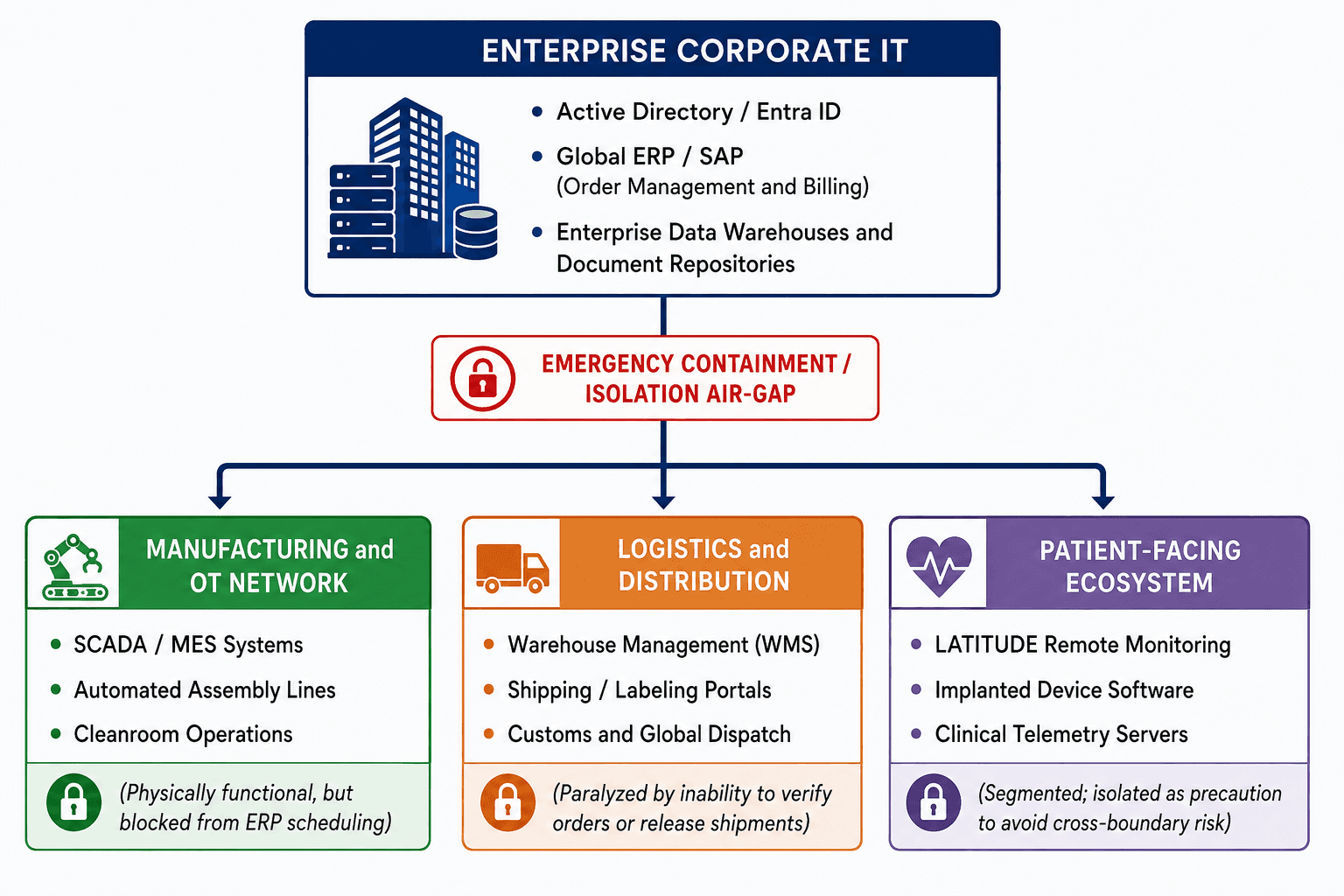
الأنظمة المتأثرة: انقطاع واسع النطاق في الشبكة تسبب في اضطراب تشغيلي حاد لأنظمة تشغيل تكنولوجيا المعلومات وتطبيقات الأعمال، وتحديداً إيقاف معالجة طلبات العملاء العالمية والتوزيع/الشحن.
تفعيل الاستجابة للحوادث: تم تفعيل بروتوكولات الاستجابة للحوادث، والاستعانة بشركات خارجية متخصصة في التحقيق الجنائي الرقمي والاحتواء في مجال الأمن السيبراني.
التقارير التنظيمية: تم تقديم نموذج 8-K إلى هيئة الأوراق المالية والبورصات في 26 أغسطس 2026.
تفاعل السوق: انخفض سهم BSX بنسبة ~3.5% في تداولات ما قبل السوق مباشرة بعد الإفصاح.
التقييم: ثقة عالية
نمط اختراق الفدية التشغيلي / ابتزاز البيانات: إن العزل القسري المفاجئ للبنية التحتية المركزية لتكنولوجيا المعلومات، والشلل التشغيلي لمعالجة الطلبات، والنطاق العالمي، والاستعانة بخبراء الاستجابة للحوادث يتماشى مع هجوم برمجيات الفدية مزدوج الابتزاز الذي استهدف البنية التحتية للمؤسسة (مثل Active Directory، والتخزين الافتراضي).
أزمة سلسلة توريد الرعاية الصحية الأولية: حتى لو ظلت صالات التصنيع تعمل فيزيائياً، فإن عدم القدرة على معالجة المخزون أو التحقق من صحته أو توجيهه أو شحنه يخلق اختناقاً فورياً في سلسلة توريد الرعاية الصحية للمستشفيات التي تعتمد على عمليات التسليم في الوقت المناسب للأجهزة الحيوية (مثل أجهزة تنظيم ضربات القلب، والدعامات، والقساطر).
السيناريوهات المحتملة
تسريب البيانات: تقوم مجموعات الابتزاز التي تعمل ضد قطاع التكنولوجيا الطبية والتصنيع في عام 2026 بتسريب البيانات الحساسة بشكل روتيني (الملكية الفكرية، سجلات الموظفين/المرضى، العقود التجارية) قبل أيام أو أسابيع من نشر حمولات التعطيل.
عزل استشاري لمنصات المراقبة الخارجية: تشير التقارير إلى أنه تم نصح العملاء السريريين بفصل الاتصال بشبكة LATITUDE لإدارة المرضى عن بُعد من باب الحيطة والحذر لمنع التلوث العرضي الجانبي بين شبكات المؤسسة ونقاط النهاية في المستشفيات.
ما يزال مجهولاً
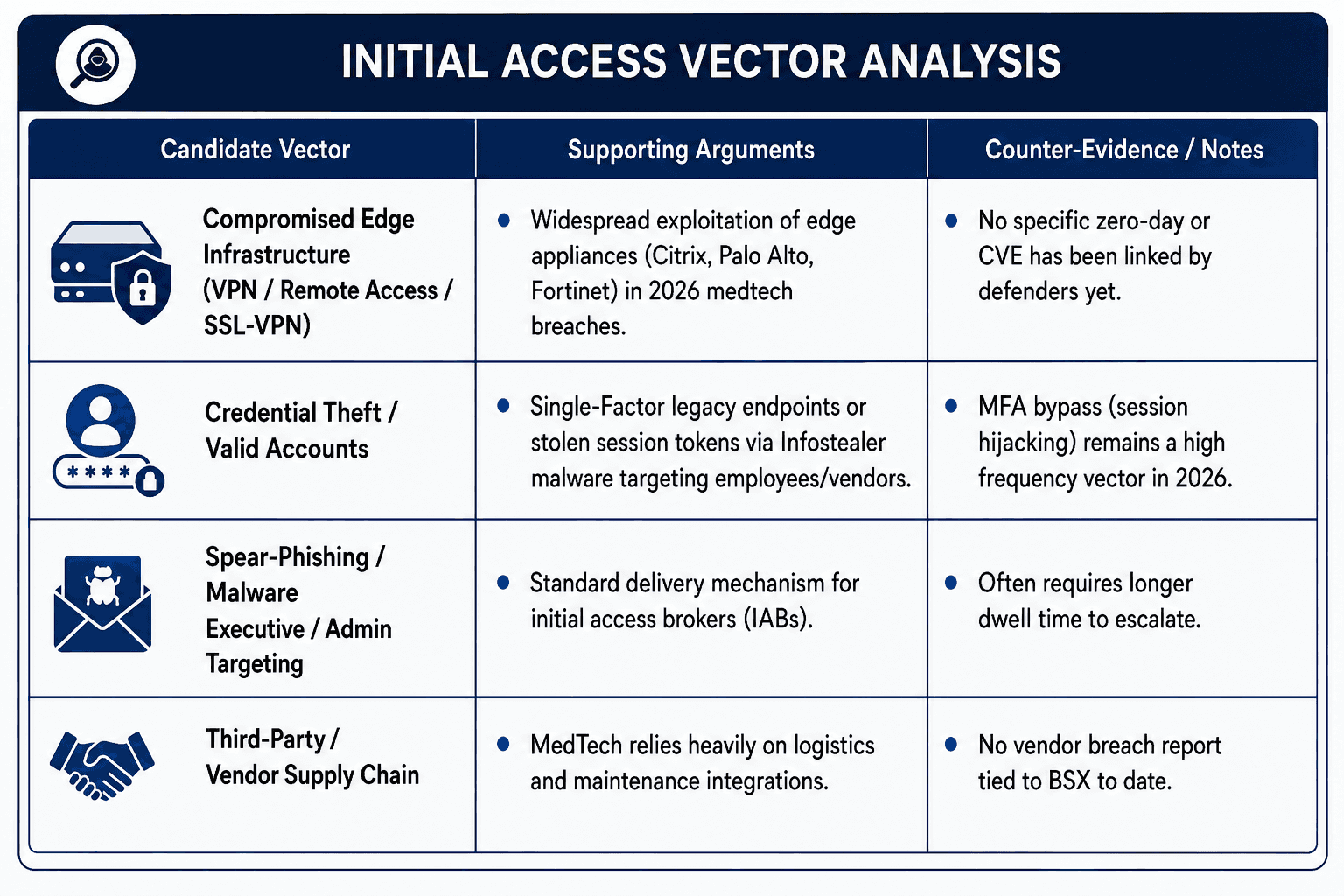
ناقل الوصول الأولي: آلية دخول محددة (مثل التصيد الاحتيالي، أو استغلال ثغرة في شبكة VPN، أو اختراق الهوية).
الجهة المسؤولة: لم تعلن أي جهة تهديد أو مجموعة برمجيات فدية مسؤوليتها علناً حتى 31 أغسطس 2026.
الجدول الزمني للاستعادة: لا يزال الوقت المتوقع للتعافي الكامل غير معلن من قبل Boston Scientific.
الجدول الزمني للحادثة
التاريخ / الوقت | وصف الحدث | المصدر | مستوى الثقة |
قبل 25 أغسطس 2026 | الاختراق الأولي ومدة البقاء تكتسب جهة التهديد وصولاً أولياً غير مصرح به، وتجري عمليات استطلاع، وتصعد الصلاحيات. | استنتاج معلومات التهديدات | محتمل |
25 أغسطس 2026 | رصد نشاط غير طبيعي تكتشف مراقبة الأمن سلوكاً غير طبيعي؛ ويبدأ انقطاع شبكة تكنولوجيا المعلومات في المؤسسة. | نموذج SEC 8-K / بيان Boston Scientific | حقيقة مؤكدة |
25 أغسطس 2026 | الاحتواء وتفعيل الاستجابة للحوادث تفعيل بروتوكولات الاستجابة للحوادث. إيقاف تشغيل تطبيقات الأعمال والبوابات الإلكترونية الرئيسية لعزل الشبكات. الاستعانة بشركة خارجية للاستجابة للحوادث. | الإفصاح المؤسسي | حقيقة مؤكدة |
26 أغسطس 2026 | الإفصاح التنظيمي والإشعار العام تقديم نموذج 8-K إلى هيئة الأوراق المالية والبورصات؛ وإصدار بيان عام يشير إلى تعطل العمليات والشحن على مستوى العالم. انخفاض الأسهم بنسبة 3.5%. | إيداع هيئة الأوراق المالية والبورصات / وسائل الإعلام | حقيقة مؤكدة |
27 أغسطس 2026 | توجيهات سريرية وتنبيهات للعملاء ظهور تقارير حول نصائح سريرية بشأن فحوصات سلامة الاتصال بشبكة LATITUDE وحلول بديلة يدوية لترتيب الطلبات. | التقارير الصناعية والسريرية | تقييم عالي الثقة |
28-31 أغسطس 2026 | الاستعادة والتحقيق المستمران استمرار التحقيق الجنائي الرقمي؛ عدم تأكيد أي وقت متوقع رسمي للاستعادة أو إعلان مسؤولية من أي جهة تهديد. | تحديثات البوابة الرسمية | حقيقة مؤكدة |
ملاحظة: التاريخ والآلية الدقيقة للوصول الأولي لا يزالان مجهولين.
ماذا حدث؟
تبعيات النظام التقني وانهيار البنية التحتية
التحليل التقني: التعطيل المحلي مقابل السحابي
أفصحت الشركة أن النشاط غير المصرح به أثر على بعض البنى التحتية المحلية لتكنولوجيا المعلومات وتطبيقات الأعمال، في حين ظلت الأنظمة السحابية غير متأثرة إلى حد كبير.
ما يوضحه لنا هذا:
عزل البنية التحتية: أنشأت جهة التهديد موطئ قدم مستمر ونفذت أنشطة ضارة في المقام الأول داخل بيئات Active Directory المحلية، أو برامج الهوية الافتراضية المحلية، أو مجموعات الخوادم المادية.
المرونة السحابية: نجحت ضوابط حدود الهوية الهجينة (مثل الوصول المشروط وضمانات المصادقة الموحدة) في منع أو تأخير الاختراق الكامل للبيئة السحابية.
ما لا يوضحه لنا هذا:
الحصانة التشغيلية: حتى لو ظلت تطبيقات SaaS المستضافة على السحابة (مثل Salesforce وWorkday) غير مخترقة، فإنها غالباً ما تعتمد على موصلات البيانات الهجينة لدفع البيانات إلى قواعد بيانات ERP المحلية. وإذا كانت قاعدة البيانات المحلية معزولة أو مشفرة، فإن عملية العمل الشاملة تنهار.
غياب سرقة البيانات: غالباً ما يقوم المهاجمون داخل الأنظمة المحلية بتسريب البيانات المخزنة في مستودعات المزامنة الهجينة أو أجهزة النسخ الاحتياطي المحلية قبل حدوث التعطيل.
ناقل الهجوم والوصول الأولي
ناقل الوصول الأولي: لم يتم تحديده علناً بعد.
تحديد جهة التهديد المسؤولة
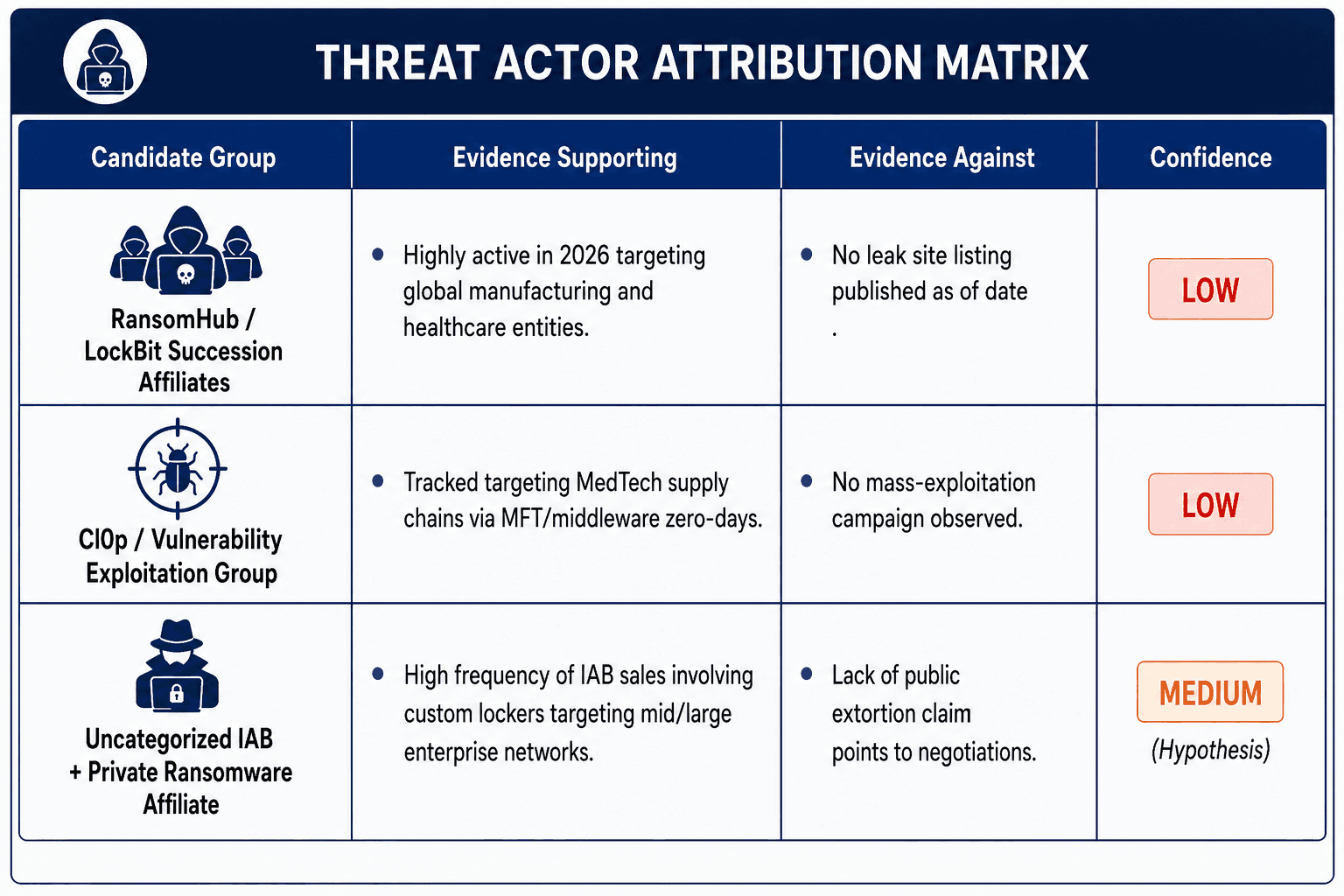
حالة تحديد المسؤولية: مجهولة / لم يعلن عنها أحد.
هل كان هذا هجوماً بفيروس الفدية؟

التصنيف: تقييم عالي الثقة — اختراق تشغيلي بفيروس الفدية / الابتزاز.
على الرغم من أن Boston Scientific استخدمت مصطلحات تنظيمية قياسية ("حادثة أمن سيبراني تسببت في انقطاع الشبكة")، إلا أن المؤشرات التشغيلية تماثل تماماً الجرائم السيبرانية القائمة على الابتزاز:
الأثر التجاري والتشغيلي
الأثر التشغيلي المباشر
معالجة الطلبات وتلبيتها: أدى شلل نظام تخطيط موارد المؤسسات (ERP) إلى إيقاف تأكيد الطلبات، وتخصيص المخزون، وعمليات الشحن على مستوى العالم.
اختناق الخدمات اللوجستية: أصبحت المستودعات غير قادرة مؤقتاً على معالجة طلبات التعبئة والتغليف أو طباعة ملصقات الامتثال المعتمدة للتوزيع التنظيمي.
الأثر السريري والرعاية الصحية التبعي
سلاسل توريد المستشفيات: تعمل المستشفيات وفقاً لنماذج مخزون رشيقة للمستلزمات الجراحية المتخصصة (مثل قساطر القلب، والدعامات، وأسلاك أجهزة تنظيم ضربات القلب). وتؤدي توقفات معالجة الطلبات إلى خلق عقبات فورية أمام الإجراءات التدخلية الاختيارية وغير الطارئة المجدولة.
انتقال المخاطر السريرية: حتى بدون العبث بالأجهزة، فإن تعطيل خط الإمداد يحول حادثة تكنولوجيا المعلومات إلى قيد حرج في سلسلة توريد الرعاية الصحية.
بعد الأجهزة الطبية وسلامة المرضى
التمييز بين السلامة والإمداد
أمن الأجهزة المزروعة: تستخدم الأجهزة القلبية (أجهزة تنظيم ضربات القلب، أجهزة تقويم نظم القلب وإزالة الرجفان القابلة للزرع) ضوابط أمنية على مستوى الأجهزة، ومصافحات تشفير، وبروتوكولات التردد اللاسلكي/البلوتوث قصيرة المدى التي تتطلب قرباً فيزيائياً للبرمجة المباشرة.
الارتباط بالبنية التحتية للمؤسسة: تكمن المخاطر في التكنولوجيا الطبية الحديثة في الاعتماد على المنظومة الشاملة. فإذا تعرضت شبكات المؤسسة للاختراق، تعزل الشركات الواجهات السريرية (مثل LATITUDE) لمنع المخاطر، مما قد يؤدي مؤقتاً إلى تعطيل تدفق بيانات القياس عن بعد.
تحليل نمط الهجوم
تتبع حادثة Boston Scientific في أغسطس 2026 نمطاً واضحاً لاستهداف كبار مصنعي الأجهزة الطبية، بما في ذلك Medtronic وAbbott وStryker في وقت سابق من عام 2026.
تحليل نموذج التهديد: أهداف قطاع التكنولوجيا الطبية
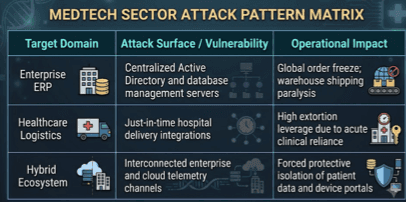
تستهدف مجموعات برمجيات الفدية مصنعي الأجهزة الطبية لأن وقت التوقف التشغيلي يولد على الفور ضغطاً شديداً للدفع. ويعني اعتماد المستشفيات على المخزونات في الوقت المناسب أن اضطرابات الشحن يمكن أن تؤخر العمليات الجراحية، مما يزيد من حالة الاستعجال.
مخطط MITRE ATT&CK
تمثل جميع التقنيات المحددة تقييماً تحليلياً يستند إلى مؤشرات الحوادث المرصودة.
التكتيك | معرف التقنية | اسم التقنية | الدليل / الاستنتاج | الثقة | الحالة |
الوصول الأولي | T1190 | استغلال التطبيقات المواجهة للإنترنت | فرضية استغلال جهاز الحافة أو نقطة وصول عن بعد. | منخفضة | مستنتج |
التنفيذ | T1059 | مترجم الأوامر والبرامج النصية | نشر البرامج النصية المؤتمتة لشل خدمات النظام. | متوسطة | مستنتج |
تصعيد الصلاحيات | T1078 | الحسابات الصالحة | اختراق بيانات اعتماد مسؤول النطاق (Domain Admin) مما يؤدي إلى السيطرة على البنية التحتية الأساسية. | عالية | مستنتج |
تجنب الدفاع | T1562.001 | إضعاف الدفاعات: تعطيل الأدوات | تعطيل أمن نقاط النهاية/تسجيل الأحداث لتمكين انقطاع واسع النطاق. | متوسطة | مستنتج |
الأثر | T1486 | البيانات المشفرة للأثر | انقطاع واسع النطاق يؤثر على نظام تخطيط موارد المؤسسات (ERP)، وعمليات الأعمال، والشحن. | عالية | مستنتج |
إعادة بناء دورة حياة الهجوم
[ الوصول الأولي ] (مستنتج: استغلال ثغرة الحافة / اختراق بيانات الاعتماد)
↓
[ تصعيد الصلاحيات ] (مستنتج: مسؤول النطاق / الاستيلاء على الهوية)
↓
[ الحركة الجانبية ] (مستنتج: الانتقال الأفقي عبر Active Directory)
↓
[ الأثر / تعطيل النظام ] (مؤكد: انقطاع تكنولوجيا المعلومات ونظام ERP المحلي)
↓
[ العزل والاستجابة ] (مؤكد: الأنظمة خارج الخدمة؛ تفعيل الاستجابة للحوادث؛ تقديم نموذج SEC 8-K)
↓
[ الاستعادة وإعادة البناء ] (مستمر: التحقق من النظام والاستعادة التدريجية للطلبات)
تقييم الرصد والاستجابة
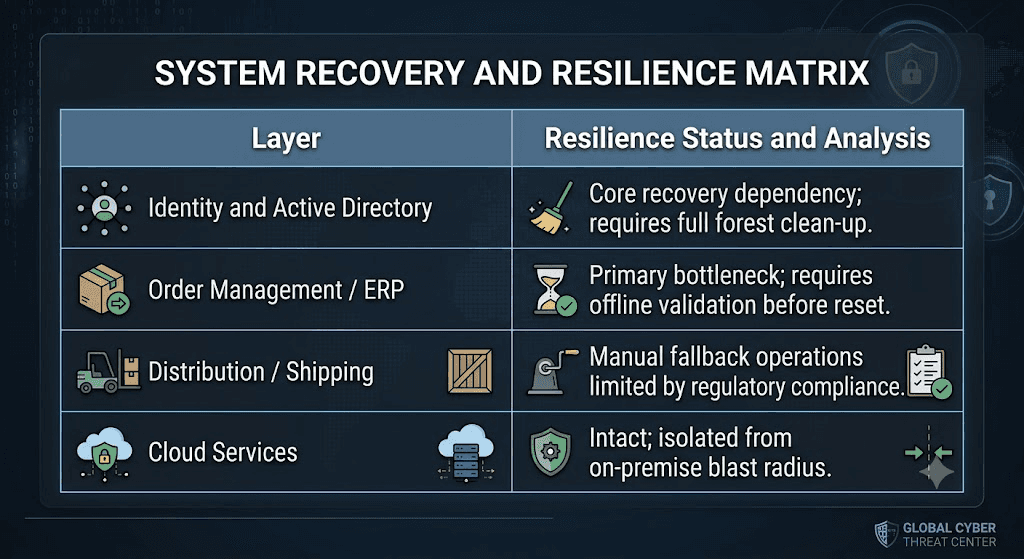
سرعة الرصد: سمح الرصد السريع في 25 أغسطس بالعزل الفوري للشبكات الرئيسية، مما منع الانتقال الجانبي المحتمل إلى البيئات السحابية.
إستراتيجية الاحتواء: يمثل قرار إيقاف تشغيل بوابات الأعمال وأنظمة الشحن نهج احتواء صارم مصمم لحماية حدود الشبكة الأوسع.
الامتثال التنظيمي: يتماشى الإفصاح عبر نموذج 8-K في غضون 24 ساعة مع معايير التقارير الخاصة بهيئة الأوراق المالية والبورصات.
الاستعادة والمرونة
الأثر المالي والإستراتيجي
الأثر على القيمة السوقية: انخفضت الأسهم بنسبة ~3.5% مباشرة بعد الإفصاح.
التعرض للإيرادات: يحدث بالتزامن مع برنامج إعادة هيكلة أوسع وأهداف نمو الإيرادات العضوية المعدلة (تم تخفيضها إلى 5-6% في أواخر يوليو 2026).
التكاليف على المدى الطويل: تساهم تكاليف معالجة الحادثة، والرسوم القانونية، والتحقيقات الجنائية الرقمية، وخسائر إلغاء الطلبات المحتملة في الأثر المالي الإجمالي.
الدروس المستفادة
بنية الهوية والوصول
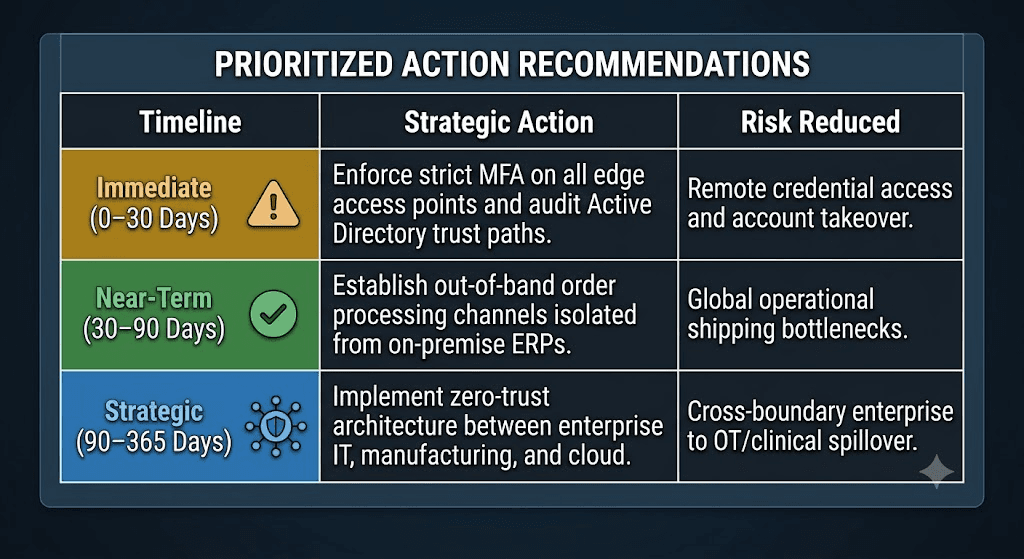
عزل الهوية: يجب فصل البنية التحتية الإدارية عن نظام Active Directory الخاص بالمؤسسة للحد من الحركة الجانبية.
المرونة التشغيلية
معالجة الطلبات خارج النطاق: تحتاج شركات التكنولوجيا الطبية إلى إجراءات تلبية طلبات يدوية أو معزولة سحابياً حتى يستمر الشحن أثناء انقطاع تكنولوجيا المعلومات المركزية.
تجزئة الشبكة
عزل التكنولوجيا التشغيلية (OT) والأنظمة السريرية: يمنع العزل المنطقي الصارم بين أنظمة ERP الخاصة بالمؤسسة، وشبكات التصنيع، ومنصات القياس عن بعد للمرضى الاضطرابات عابرة النطاقات.
التوصيات الإستراتيجية
مؤشرات الاختراق وفرص الرصد
الحالة: لم يتم نشر أي مؤشرات اختراق (IOCs) موثوقة وعامة (مثل قيم الهاش، أو عناوين IP، أو أسماء النطاقات) من قبل Boston Scientific أو الجهات المحققة حتى 31 أغسطس 2026.
التقييم العام
الطبيعة الأساسية للحادثة: كانت هذه الحادثة في الأساس حادثة أمن تكنولوجيا معلومات في المؤسسة تصاعدت لتصبح تعطيلاً لاستمرارية الأعمال العالمية وسلسلة توريد الرعاية الصحية.
سلامة سلامة الأجهزة: ظلت الأجهزة الطبية وأنظمة القياس عن بعد للمرضى معزولة عن الاختراق المباشر، مما حافظ على سلامة المرضى.
ديناميكيات الابتزاز: تستهدف الهجمات السيبرانية الحديثة ضد التكنولوجيا الطبية توفر عمليات الأعمال، وتحديداً معالجة الطلبات والشحن، لزيادة الأثر التشغيلي إلى أقصى حد.
ضعف سلسلة التوريد: يؤدي الاعتماد الكبير على بيئات ERP المركزية إلى خلق نقاط فشل تشغيلية فردية عبر شبكات الخدمات اللوجستية الدولية.
الضرورة الإستراتيجية: يجب أن تركز إستراتيجية أمن التكنولوجيا الطبية على فصل تدفقات العمل الأساسية للشحن والتعامل مع المرضى عن بيئات تكنولوجيا المعلومات العامة للمؤسسة.
تعرف على المزيد حول منصة أمن التكنولوجيا التشغيلية (OT) من Shieldworkz
تنزيل تقرير عن الحادثة السيبرانية في مجموعة مطارات مانشستر
تنزيل تقرير عن الحادثة في منشأة توليد الطاقة في المملكة المتحدة
احصل على تحديثات أسبوعية
الموارد والأخبار
تعرف على كيفية معالجة حلولنا الرائدة في مجال أمن تكنولوجيا التشغيل (OT) للتحديات الأمنية الحيوية
قد تود أيضًا

Inside the Albert Heijn cyber incident: Investigating the attack, the IT/OT exposure, and the risks to critical operations
Team Shieldworkz

50°C by cyberattack? Inside France’s supermarket refrigeration crisis
Prayukth K V

Automating IEC 62443 Compliance Assessments Without Losing Expert Control
Team Shieldworkz

Investigative cyber threat intelligence report: Daiichi Kosho supply-chain data exposure
Prayukth K V

How AI Is Changing IEC 62443 Assessments
Team Shieldworkz

Deep investigative threat intelligence report: Alleged SafePay cyberattack on T-Systems
Team Shieldworkz