لوائح الأمن السيبراني الصادرة عن هيئة تنظيم المياه والكهرباء لعام 2026 لأنظمة تخزين الطاقة: المتطلبات


فريق شيلدوركز
كيف يغير الإطار التنظيمي القانوني الجديد للأمن السيبراني في الهند مسار النقاش حول المخاطر المتعلقة بأنظمة تخزين البطاريات على نطاق الشبكة، وما يجب على قادة الأمن السيبراني لتكنولوجيا العمليات (OT) القيام به حيال ذلك قبل أبريل 2027.
لم يعد تخزين الطاقة مجرد جهة داعمة في قطاع الطاقة، بل أصبح سريعاً العمود الفقري الذي يحافظ على استقرار الشبكات كثيفة الاعتماد على الطاقة المتجددة وقابليتها للتوزيع والمرونة. ومع توسع أنظمة تخزين طاقة البطاريات (BESS) من التركيبات التجريبية إلى أساطيل من جيجاواط/ساعة، فإنها تتبنى أيضاً مستوى من الاتصال الرقمي الذي لم تضطر معظم أصول التوليد التقليدية إلى إدارته مطلقاً. وتتضمن منصات إدارة الطاقة القائمة على الحوسبة السحابية، ووصول الجهات المصنعة للمعدات الأصلية (OEM) عن بُعد لتحديث البرامج الثابتة، وأنظمة إدارة البطاريات المترابطة بشكل وثيق، مما يعني أن موقع التخزين اليوم يبدو أقل شبهاً بالأصل الكهربائي السلبي وأشبه ببيئة تحكم صناعية متصلة بالشبكة.
إن هذا التحول الهيكلي هو بالضبط السبب الذي دفع هيئة الكهرباء المركزية إلى تقديم لوائح هيئة الكهرباء المركزية (الأمن السيبراني في قطاع الطاقة) لعام 2026، وهو إطار قانوني، وليس توجيهاً طوعياً، يفرض التزامات ملزمة بالأمن السيبراني على الكيانات التي تشغل البنية التحتية لتكنولوجيا العمليات (OT) المتصلة بنظام الطاقة المترابط في الهند. ولأول مرة، تم تسمية أنظمة تخزين الطاقة التي تزيد سعتها عن حد معين صراحة إلى جانب محطات التوليد والمحطات المملوكة ككيانات يجب عليها بناء وتوثيق وإثبات نضج الأمن السيبراني لديها.
يكشف هذا الدليل عما تطلبه اللائحة بالفعل، ولماذا تحمل بيئات التخزين ملف مخاطر متميزاً مقارنة بالتوليد التقليدي، وكيف يبدو نهج الامتثال العملي القائم على دورة حياة النظام، من لحظة شراء نظام التخزين وحتى العمليات اليومية. وهو يستند إلى حوادث حقيقية من قطاع التخزين والشبكات العالمي لتوضيح سبب وجود هذه المتطلبات، وليس فقط ما تنص عليه.
ما تغطيه لوائح الأمن السيبراني الصادرة عن هيئة الكهرباء المركزية لعام 2026 فعلياً
صيغت هذه اللوائح من قبل هيئة الكهرباء المركزية بموجب المادة 177 المقروءة مع المادة 73(ج) من قانون الكهرباء لعام 2003، وبموافقة وزارة الإلكترونيات وتكنولوجيا المعلومات. وتم نشرها في الجريدة الرسمية للهند في 31 يوليو 2026، وتحدد معايير دفاع سيبراني ملزمة لأي كيان يمتلك أو يشغل أو يدير بنية تحتية لتكنولوجيا العمليات (OT) متصلة بنظام الطاقة المترابط، إلى جانب أنظمة تكنولوجيا المعلومات المرتبطة مادياً أو منطقياً ببيئة تكنولوجيا العمليات تلك.
وتصبح معظم الأحكام إلزامية اعتباراً من 1 أبريل 2027، مما يمنح الكيانات المشمولة مساراً محدداً لبناء القدرات بدلاً من مواجهة عقبة امتثال مفاجئة. وسيتم تطبيق عدد صغير من اللوائح الفرعية تدريجياً في التواريخ التي تحددها هيئة الكهرباء المركزية بشكل منفصل، وهو أمر يستحق المتابعة عن كثب إذا كانت مؤسستك تقع ضمن إحدى هذه الفئات.
من هم المشمولون باللوائح بشكل مباشر
نطاق التطبيق واسع بطبيعته، لكن حدود السعة تخلق خطاً فاصلاً عملياً للأصول المرتبطة بالتوليد، بما في ذلك التخزين:
نوع الكيان | حد قابلية التطبيق |
شركات التوليد | سعة مركبة تبلغ 50 ميجاواط أو أكثر |
محطات التوليد الخاصة (المملوكة) | سعة مركبة تبلغ 50 ميجاواط أو أكثر |
أنظمة تخزين الطاقة (ESS) | سعة مركبة تبلغ 50 ميجاواط أو أكثر |
مرافق النقل والتوزيع | مشمولة دون تحديد حد السعة |
مشغلو الشبكات/الأنظمة | مشمولون دون تحديد حد السعة |
بورصات الطاقة ومنصات التداول خارج البورصة (OTC) | مشمولة دون تحديد حد السعة |
موردو التكنولوجيا والمعدات | يخضعون لأحكام أمن الموردين ذات الصلة |
الجدول 1: قابلية تطبيق لوائح الأمن السيبراني الصادرة عن هيئة الكهرباء المركزية لعام 2026 حسب نوع الكيان
لا تُعفى أنظمة التخزين التي تقل عن حد 50 ميجاواط من المسؤولية، حيث تشجع اللائحة هذه الكيانات الأصغر على اعتماد ضوابط أساسية موصى بها من قبل CERT-In للمؤسسات المتناهية الصغر والصغيرة والمتوسطة. من الناحية العملية، سيتجاوز العديد من المطورين الذين يبنون مشاريع تخزين متعددة المراحل هذا الحد مع إضافة السعة، لذلك يجدر تصميم بنية الأمن السيبراني للفئة التنظيمية الخاضعة للوائح حتى قبل أن يتطلب الرقم المكتوب ذلك.
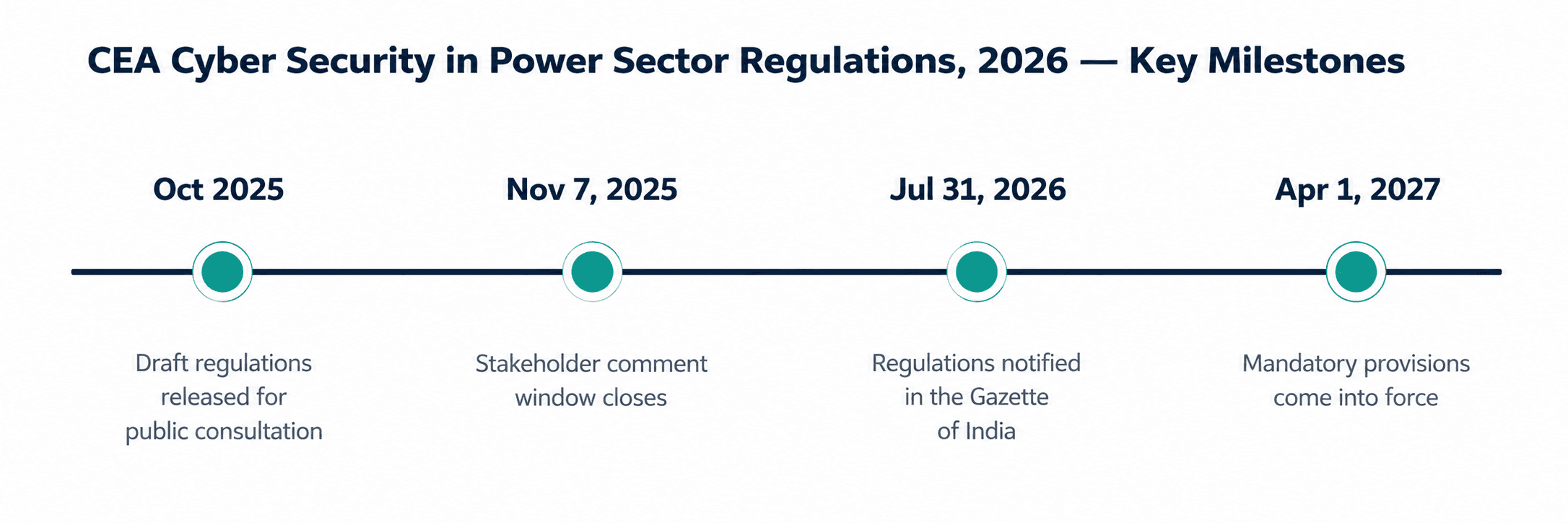
الشكل 1: المعالم التنظيمية الرئيسية من مسودة الاستشارة إلى الإنفاذ الإلزامي
لماذا تحمل أنظمة تخزين الطاقة ملف مخاطر متميزاً
من المغري معاملة موقع تخزين البطارية باعتباره نظيراً أبسط لمحطة حرارية أو مائية؛ حيث يحتوي على أجزاء ميكانيكية متحركة أقل، وبصمة مادية أصغر، وأحياناً فريق عمل أصغر في الموقع. ولكن من منظور الأمن السيبراني، فإن هذه المقارنة تقلل من حجم التهديد. إذ يركز أصل التخزين على نطاق الشبكة العديد من الخصائص الأكثر خطورة لبيئات التحكم الصناعية في موقع واحد مدمج.
طبقة تحكم متقاربة. لا تقتصر وظيفة نظام إدارة البطارية ونظام إدارة الطاقة على لوحات معلومات المراقبة فحسب، بل إنهما يتحكمان في معدل الشحن وحالة الشحن ودرجة حرارة الخلايا في الوقت الفعلي. والمهاجم الذي يصل إلى طبقة التحكم هذه يلمس المنطق البرمجي نفسه الذي يحافظ على البطارية ضمن حدود التشغيل الآمنة، وليس مجرد تغذية بيانات التقارير.
العمليات عن بُعد أولاً بشكل افتراضي. غالباً ما تتم مراقبة أصول التخزين والتحكم فيها من خلال منصات قائمة على السحابة وبوابات وصول الجهات المصنعة للمعدات الأصلية عن بُعد، وغالباً عبر مواقع متعددة من لوحة معلومات واحدة. وتعد هذه السهولة أيضاً سطح هجوم مركّزاً إذا لم يتم تقييد الوصول عن بُعد بإحكام.
تبعيات مكثفة للبرامج الثابتة والموردين. عادةً ما تأتي العواكس وحوامل البطاريات وأجهزة التحكم من جهات تصنيع معدات أصلية متعددة، ولكل منها وتيرة تحديث البرامج الثابتة وترتيبات الدعم عن بُعد الخاصة بها، مما يضاعف عدد الأطراف الخارجية التي لها موطئ قدم تقني داخل بيئة تكنولوجيا العمليات.
بروتوكولات الاتصال القديمة. لا تزال العديد من أنظمة التحكم في التخزين والعواكس تعتمد على بروتوكولات صُممت لتحقيق الموثوقية في الشبكات المعزولة، وليس للمصادقة أو التشفير ضد جهة معادية على شبكة متصلة.
إشارات من الواقع يشهدها القطاع بالفعل
هذه المخاوف ليست افتراضية. على مدى السنوات القليلة الماضية، شهد قطاع التخزين والشبكات سلسلة من الحوادث التي توضح بالضبط سبب انتقال الجهات التنظيمية من التوجيه الطوعي إلى الالتزام القانوني.
بولندا، ديسمبر 2025: أثر حادث سيبراني على البنية التحتية للاتصالات وأنظمة التحكم في حوالي 30 موقعاً لطاقة الرياح والطاقة الشمسية، مما أدى إلى تعطيل الرؤية بين أصول التوليد ومشغل نظام التوزيع. واستمر التوليد في المواقع المتضررة، لكن هذه الواقعة منحت شركات التأمين ومالكي الأصول مثالاً واقعياً ومثبتاً على مسار هجوم ضد البنية التحتية للطاقة الموزعة بدلاً من مجرد نموذج نظري، وأشار المحللون إلى أنه بالنسبة لتخزين البطاريات على وجه الخصوص، فإن طبقة التحكم نفسها المعرضة للاختراق في مثل هذا الهجوم هي أيضاً الطبقة التي تحكم سلامة الخلايا، مما يجعل هامش الخطأ أصغر.
أوكرانيا، 2015: أظهر هجوم منسق ضد شبكة الكهرباء أن الجهات الفاعلة التابعة لدول يمكنها التلاعب بأنظمة التحكم الصناعية عن بُعد للتسبب في انقطاع تيار كهربائي واسع النطاق ومستمر، وهي دراسة حالة أساسية توضح سبب أهمية الفصل والمراقبة الخاصة بتكنولوجيا العمليات مقارنة بأمن تكنولوجيا المعلومات العام.
أستراليا، 2021: استُهدفت شركة طاقة بهجوم برامج فدية يهدف إلى الحصول على موطئ قدم في شبكات الشركة. وتم احتواء الهجوم قبل أن يصل إلى عمليات الشبكة، لكنه أكد مدى سرعة تهديد الاختراق من جانب تكنولوجيا المعلومات بالانتقال إلى الأنظمة التشغيلية إذا كان الفصل بينهما ضعيفاً.
الدنمارك، 2023: استغل المهاجمون ثغرة أمنية في جدار الحماية واخترقوا أنظمة 22 مؤسسة في قطاع الطاقة خلال أيام، مما أجبر الشركات المتضررة على عزل نفسها عن الشبكة لحماية استقرار الشبكة العام، وهو توضيح واضح لمدى سرعة انتشار فئة واحدة من الثغرات الأمنية عبر قطاع مترابط.
لم تحدث أي من هذه الحوادث بسبب إهمال المشغلين. بل حدثت لأن سطح الهجوم للبنية التحتية للطاقة الحديثة والمتصلة قد نما بشكل أسرع من أطر الحوكمة المبنية لتأمينه. وهذه الفجوة هي بالتحديد ما صُممت لوائح هيئة الكهرباء المركزية لسده في قطاع الطاقة في الهند، وتأتي أصول التخزين في صميم هذا النطاق.
المتطلبات الأساسية بموجب لوائح هيئة الكهرباء المركزية لبيئات التخزين
عند قراءتها معاً، تترجم أحكام اللوائح إلى عدد قليل من الالتزامات التشغيلية الملموسة. ويلخص الجدول أدناه فئات المتطلبات الأكثر صلة بمشغلي تخزين الطاقة؛ ويجب على المؤسسات الرجوع إلى نص الجريدة الرسمية المنشور للحصول على الصياغة الرسمية وقابلية تطبيق كل بند.
مجال المتطلبات | ما يتضمنه |
الحوكمة وتعيين رئيس مسؤولي الأمن السيبراني (CISO) | تعيين رئيس مسؤولي أمن معلومات رفيع المستوى ونائب له، مع حد أدنى لفترة الخدمة، مدعومين بقسم مخصص لأمن المعلومات. |
الفصل بين شبكة تكنولوجيا المعلومات (IT) وتكنولوجيا العمليات (OT) | العزل المادي والمنطقي لتكنولوجيا العمليات والبنية التحتية للمعلومات الحيوية عن شبكة الإنترنت العامة وشبكات تكنولوجيا المعلومات العامة. |
الإبلاغ عن الحوادث | الإبلاغ عن حوادث الأمن السيبراني إلى CSIRT-Power وCERT-In عموماً في غضون ست ساعات؛ والإبلاغ عن الحوادث المصنفة كخيانة سيبرانية للأنظمة الحيوية في غضون أربع وعشرين ساعة. |
التدقيق وإغلاق الثغرات الأمنية | عمليات تدقيق ما قبل التشغيل، بما في ذلك تقييم الثغرات الأمنية واختبار الاختراق، للأنظمة الحيوية الجديدة، بالإضافة إلى دورات تدقيق متكررة. |
إدارة الأزمات والسياسات | سياسات أمن سيبراني موثقة وخطة لإدارة الأزمات، يتم اختبارها وتحديثها بانتظام وفق دورة محددة. |
حماية البيانات وتوطينها | الضوابط التي تحكم كيفية تخزين ومعالجة البيانات التشغيلية والأمنية، وحيثما ينطبق، توطينها. |
مسؤولية الموردين والبائعين | توسيع توقعات الأمن لتشمل بائعي التكنولوجيا ومصنعي المعدات الأصلية الذين تلامس معداتهم أو وصولهم عن بُعد أنظمة تكنولوجيا العمليات. |
الجدول 2: ملخص لفئات متطلبات هيئة الكهرباء المركزية لعام 2026 الأساسية ذات الصلة بمشغلي التخزين
بالنسبة لبيئات التخزين الخاصة، تستحق ثلاثة من مجالات المتطلبات هذه اهتماماً خاصاً: الفصل بين الشبكات، والجداول الزمنية للإبلاغ عن الحوادث، ومسؤولية الموردين، لأنها تتقاطع مباشرة مع كيفية تصميم أنظمة التخزين ودعمها اليوم.
فصل الشبكات أصعب مما يبدو بالنسبة للتخزين
غالباً ما يتم تصميم أنظمة التخزين مع مراعاة الاتصال السحابي المستمر لمراقبة الأداء، وتحليل التدهور، وإدارة البرامج الثابتة عن بُعد. وتلبية متطلبات الفصل الصارمة لا تعني قطع تلك الرؤية، بل تعني توجيهها عبر منطقة منزوعة السلاح خاضعة للرقابة مع تدفق البيانات في اتجاه واحد خارج بيئة تكنولوجيا العمليات، ووصول خاضع لرقابة صارمة ومسجل ومحدد بوقت في الحالات النادرة التي يحتاج فيها المورد فعلياً إلى الوصول إلى طبقة التحكم.
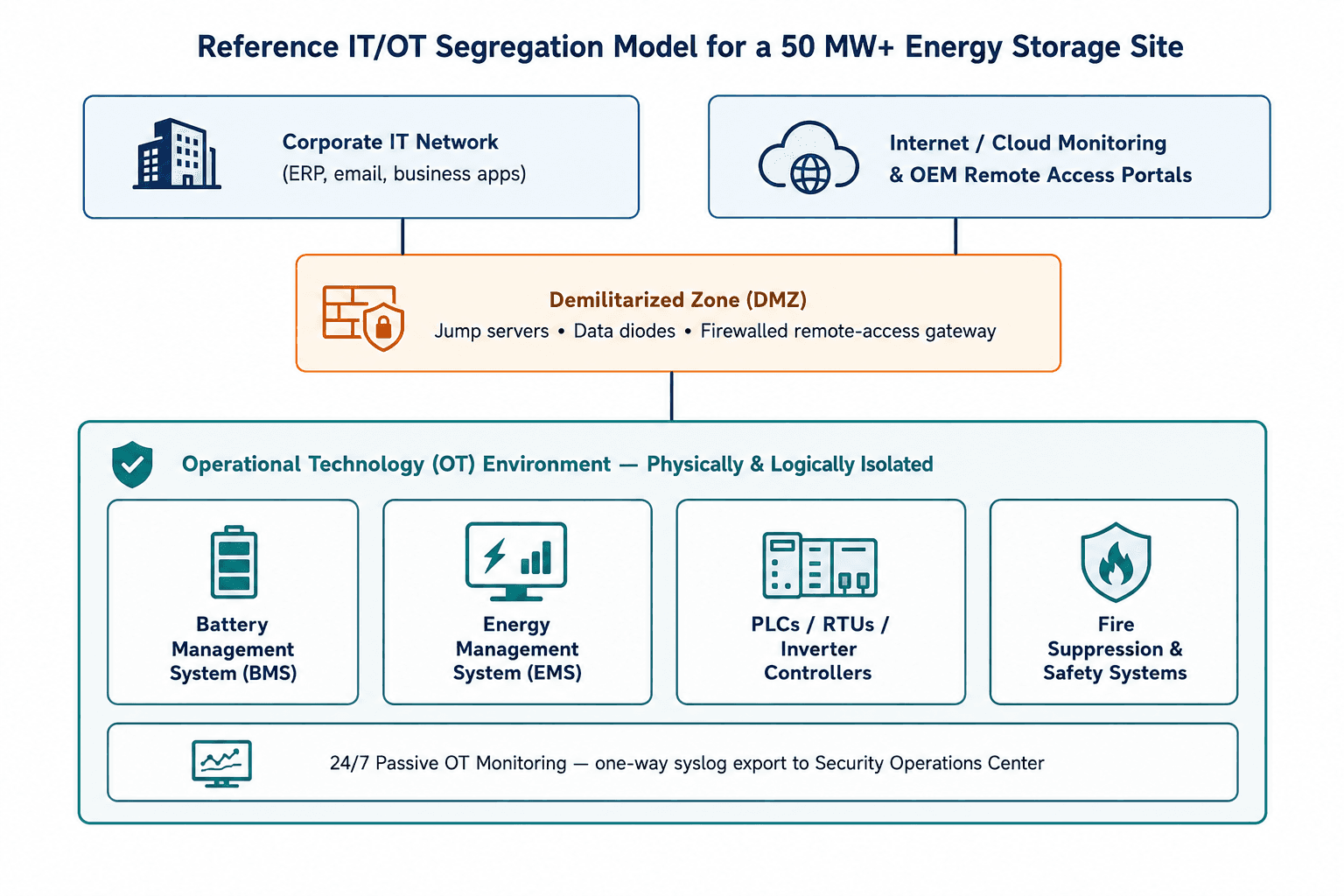
الشكل 2: نموذج مرجعي للفصل بين تكنولوجيا المعلومات وتكنولوجيا العمليات مناسب لموقع تخزين طاقة بسعة 50 ميجاواط فأكثر
تتطلب الجداول الزمنية للإبلاغ عن الحوادث سرعة الكشف، وليس مجرد وثيقة سياسات
إن نافذة الإبلاغ التي تبلغ ست ساعات للحوادث العامة، وأربع وعشرين ساعة لأعمال التخريب السيبراني للأنظمة الحيوية، هي التزام امتثال حقيقي فقط إذا كانت المؤسسة قادرة بالفعل على كشف الخلل بهذه السرعة. تعتمد العديد من مواقع التخزين اليوم على المراجعة الدورية للسجلات أو التنبيهات المقدمة من الموردين والتي تم تصميمها لمراقبة الأداء، وليس لاكتشاف التهديدات الأمنية. وتلبية هذا المتطلب في الممارسة العملية تعني مراقبة مستمرة ومدركة لتكنولوجيا العمليات يمكنها التمييز بين الحدث الأمني الحقيقي والضوضاء التشغيلية الروتينية، ومسار تصعيد لا يعتمد على ملاحظة شخص ما يدوياً لخلل في لوحة المعلومات.
تعكس مسؤولية الموردين قلقاً حقيقياً بشأن سلسلة التوريد
تشتمل أنظمة التخزين عادةً على حوامل بطاريات وعواكس وبرامج تحكم من عدة موردين مختلفين، يحتفظ كل منهم بقناة دعم خاصة به عن بُعد. ويُعد توسيع نطاق المسؤولية ليشمل الموردين استجابة مباشرة لمخاوف موثقة في القطاع: لقد أثارت آليات الوصول والتحديث عن بُعد المدمجة في معدات المصنعين الأصليين، في أكثر من حالة معلنة، تساؤلات حول مسارات اتصال غير معلنة في معدات التخزين والشبكات المصنعة من قبل شركات معينة، وهي مخاوف هامة بما يكفي لدفع مقترحات تشريعية تقيد شراء البطاريات من مصادر محددة في بعض الولايات القضائية. ومهما كانت قرارات التوريد التي تتخذها المؤسسة، فإن الدرس العملي واحد: كل مسار وصول عن بُعد إلى بيئة تكنولوجيا العمليات، بما في ذلك المسارات المدمجة من قبل مورد المعدات، يجب جردها والمصادقة عليها ومراقبتها.
المخاطر والتحديات التي يواجهها قادة القطاع في الوقت الحالي
بصرف النظر عن الامتثال، يواجه قادة أمن تكنولوجيا العمليات الذين يقيمون أسطول التخزين الخاص بهم مقابل هذه اللائحة بعض التحديات الهيكلية التي يجدر ذكرها بوضوح.
رؤية محدودة للأصول. لا تستطيع العديد من المؤسسات تقديم جرد كامل ومحدث لكل جهاز تحكم، وبوابة اتصالات، وإصدار برنامج ثابت عبر مواقع التخزين الخاصة بها، ومن الصعب تأمين ما لم يتم رسم خريطة له بالكامل.
ملكية مجزأة. غالباً ما تشتمل مشاريع التخزين على مقاول هندسة وتوريد وبناء (EPC)، ومصنع معدات أصلي (OEM)، ومدير أصول، وفريق عمليات، ولكل منهم رؤية جزئية للموقف الأمني السيبراني للنظام بأكمله. ومع ذلك، فإن المسؤولية التنظيمية لا توزع نفسها بدقة كما تفعل العقود.
مراقبة مصممة للأداء وليس للأمن. لوحات المعلومات المصممة لتتبع حالة الشحن وكفاءة الرحلة الذهاب والإياب ليست هي نفسها حزمة المراقبة المصممة لاكتشاف حقن الأوامر غير المصرح بها أو أنماط المصادقة الشاذة.
قيود الكفاءات والقدرات. لا تزال الخبرة المتخصصة في الأمن السيبراني لتكنولوجيا العمليات نادرة مقارنة بالطلب، ويُعد متطلب وجود قسم أمني يعمل على مدار الساعة طوال أيام الأسبوع عبئاً تشغيلياً حقيقياً للمؤسسات التي اعتادت العمل بفرق أمنية محدودة العدد تاريخياً.
تعقيد التحديث التحديثي. غالباً ما تم تصميم مواقع التخزين قيد التشغيل بالفعل قبل أن يصبح الفصل بين الشبكات متطلباً رسمياً، مما يعني أن الامتثال غالباً ما يتطلب إعادة تهيئة الهيكل حول أصول حية ومدرة للدخل بدلاً من تصميمه منذ اليوم الأول.
توصيات عملية: بناء الأمن في دورة حياة أصول التخزين
المؤسسات التي ستجد هذا التحول أقل إزعاجاً هي تلك التي تتعامل مع الأمن السيبراني كمنهجية مستمرة طوال دورة الحياة بدلاً من كونه تدافعاً يسبق عملية التدقيق. يوضح الجدول أدناه الإجراءات العملية لكل مرحلة من مراحل عمر أصل التخزين، بدءاً من قرار الشراء وحتى العمليات المستقرة.
مرحلة دورة الحياة | الإجراءات الأمنية العملية |
المشتريات | تضمين متطلبات الأمن السيبراني في طلبات تقديم العروض من الموردين؛ والمطالبة بعملية موثقة لتحديث البرامج الثابتة والكشف عن الثغرات الأمنية؛ وتقييم بنية الوصول عن بُعد قبل التوقيع وليس بعده. |
التصميم والهندسة | تصميم حدود الفصل بين تكنولوجيا المعلومات وتكنولوجيا العمليات والمنطقة المنزوعة السلاح في تصميم الشبكة منذ البداية؛ وتحديد الأنظمة التي تتطلب اتصالاً بالإنترنت والسبب في ذلك. |
ما قبل التشغيل | إجراء تقييم الثغرات الأمنية واختبار الاختراق على أنظمة التحكم قبل بدء التشغيل الفعلي؛ والتحقق من إغلاق بيانات الاعتماد الافتراضية والمنافذ المفتوحة والخدمات غير الضرورية. |
التشغيل | إنشاء جرد للأصول وخطوط أساسية للتكوين؛ وتسجيل تغذية مراقبة الموقع مع قسم العمليات الأمنية قبل بدء التشغيل التجاري. |
العمليات المستقرة | الحفاظ على مراقبة مستمرة ومدركة لتكنولوجيا العمليات؛ وفرض وصول مقيد بوقت ومسجل للموردين عن بُعد؛ وإجراء عمليات تدقيق متكررة وتمارين محاكاة للاستجابة للحوادث. |
إيقاف التشغيل / إعادة تزويد الطاقة | ضمان الإزالة الآمنة أو إعادة تعيين بيانات اعتماد نظام التحكم وبيانات التكوين قبل انتقال ملكية المعدات أو إحالتها إلى التقاعد. |
الجدول 3: الإجراءات الأمنية القائمة على دورة الحياة لأنظمة تخزين الطاقة
ممارسات فضلى إضافية تستحق إعطاءها الأولوية
التعامل مع وسائط USB وأجهزة الكمبيوتر المحمولة الخاصة بالصيانة كأحد أهم نواقل العدوى الرئيسية. يجب أن يمر أي جهاز محمول يتصل بمعدات تكنولوجيا العمليات، بما في ذلك أجهزة الكمبيوتر المحمولة الخاصة بالموردين والمهندسين، عبر عملية فحص خاضعة للرقابة، مع فرض رقابة مادية أو برمجية على منافذ USB في محطات الهندسة.
بناء خارطة طريق للنضج الأمني، وليس مجرد هدف تدقيق فردي. تحديد الموقف الحالي مقابل مقياس نضج بسيط، من الممارسات المخصصة غير المنظمة، إلى العمليات الموثقة والقابلة للتكرار، وصولاً إلى الضوابط المقاسة بالكامل والمراقبة باستمرار مع مسارات أدلة كاملة، حتى تتمكن القيادة من تتبع التقدم بدلاً من التعامل مع الامتثال كحدث نجاح أو رسوب.
التدرب على سير عمل الإبلاغ عن الحوادث. إن مهلة الإبلاغ المحددة بـ 6 ساعات لا ترحم إذا لم تكن مسارات التصعيد وقائمة الاتصال وعملية جمع الأدلة قد تم التدرب عليها بالفعل قبل وقوع حادث حقيقي.
توسيع نطاق الحوكمة لتشمل مركز العمليات الأمنية (SOC) وليس فقط مجلس الإدارة. يحتاج محللو مركز العمليات الأمنية إلى كتيبات تشغيل مخصصة لتكنولوجيا العمليات تعكس كيف يبدو الخلل الحقيقي في نظام إدارة البطارية أو إدارة الطاقة، بشكل متميز عن تنبيهات تكنولوجيا المعلومات التقليدية.
كيف تدعم Shieldworkz المؤسسات
تعمل Shieldworkz جنباً إلى جنب مع قادة أمن تكنولوجيا العمليات، ومديري المحطات، ورؤساء مسؤولي الأمن السيبراني في قطاعات الطاقة والتصنيع والبنية التحتية الحيوية لترجمة الالتزامات التنظيمية مثل لوائح الأمن السيبراني الصادرة عن هيئة الكهرباء المركزية لعام 2026 إلى برنامج أمني عملي ومرتب حسب الأولويات، وليس مجرد تمرين لوضع علامة على خانة الامتثال. بالنسبة للمؤسسات التي تشغل أو تطور أصول تخزين الطاقة، يشمل هذا الدعم عادةً ما يلي:
اكتشاف وجرد شامل لأصول تكنولوجيا العمليات عبر أنظمة إدارة البطاريات وإدارة الطاقة وأنظمة التحكم، لضمان عدم ترك أي شيء حيوي دون رسم خريطة له.
تصميم والتحقق من صحة بنية الفصل بين شبكتي تكنولوجيا المعلومات وتكنولوجيا العمليات، بما في ذلك تصميم المنطقة المنزوعة السلاح وبوابات الوصول عن بُعد ومسارات المراقبة أحادية الاتجاه المناسبة لعمليات موقع التخزين.
مراقبة مستمرة للتهديدات ومدركة لتكنولوجيا العمليات، ومصممة لتمييز الثغرات الأمنية الحقيقية عن السلوك التشغيلي الروتينية، مما يدعم الجداول الزمنية الواقعية للإبلاغ خلال 6 ساعات و24 ساعة.
تقييم الثغرات الأمنية واختبار الاختراق قبل التشغيل وبشكل دوري بما يتماشى مع توقعات التدقيق التنظيمي.
تقييم مخاطر الموردين وسلسلة التوريد الذي يغطي مسارات وصول مصنعي المعدات الأصلية عن بُعد، وعمليات تحديث البرامج الثابتة، ومسؤولية الأطراف الخارجية.
تخطيط الاستجابة للحوادث وتمارين المحاكاة المخصصة لبيئات تكنولوجيا العمليات للتخزين والمتصلة بالشبكة.
تقييم نضج منظم يقيس الموقف الحالي مقارنة بمتطلبات هيئة الكهرباء المركزية ويضع خارطة طريق مرحلية وواقعية للأعمال باتجاه تاريخ الامتثال في أبريل 2027.
الهدف طوال الوقت هو الجاهزية العملية: بنية أمنية وعمليات تشغيلية تصمد في مواجهة تدقيق حقيقي وحادث حقيقي، وليس مجرد مراجعة للوثائق.
الخاتمة
تمثل لوائح الأمن السيبراني الصادرة عن هيئة الكهرباء المركزية لعام 2026 نقطة تحول في كيفية تعامل قطاع الطاقة في الهند مع الأمن السيبراني، حيث تنقله من كونه ممارسة فضلى طوعية إلى التزام قانوني بجدول زمني حقيقي للإبلاغ وتوقعات حوكمة ومتطلبات تدقيق. بالنسبة لأنظمة تخزين الطاقة على وجه الخصوص، يأتي هذا التحول في اللحظة المناسبة تماماً. فأصبحت هذه الأصول أكثر اتصالاً، وأكثر أهمية من الناحية المركزية لاستقرار الشبكة، وأكثر عرضة لمخاطر طبقة التحكم التي جعلتها الحوادث العالمية الأخيرة حقيقة ملموسة وليست مجرد نظرية.
إن المؤسسات التي تبدأ في بناء بنية الفصل وقدرات المراقبة وحوكمة الموردين الآن، وقبل وقت طويل من تاريخ الإنفاذ في أبريل 2027، ستجد أن الامتثال يمثل امتداداً طبيعياً للممارسات الهندسية الجيدة بدلاً من كونه تدافعاً في اللحظات الأخيرة. أما الجهات التي ستنتظر فستتسابق مع الزمن لإجراء تغييرات في البنية التحتية يستغرق تصميمها واختبارها وتشغيلها بشكل صحيح وقتاً طويلاً.
إن تخزين الطاقة أمر حيوي للغاية للشبكة، ومعرض بشكل كبير لسطح الهجوم، بحيث لا يمكن التعامل مع الأمن السيبراني كفكرة ثانوية طارئة. والمؤسسات التي ستنجح في هذا الأمر هي تلك التي بدأت مبكراً، وتعاملت معه كمنهجية مستمرة طوال دورة الحياة، واستعانت بالخبرة المناسبة لسد الفجوات التي غالباً ما لا تستطيع الفرق الداخلية وحدها رؤيتها.
احجز استشارة مجانية مع خبرائنا
إذا كانت مؤسستك تشغل أو تطور أصل تخزين طاقة يزيد عن 50 ميجاواط، فقد حان الوقت الآن لفهم أين تقف بنيتك الهيكلية وعملياتك الحالية بدقة مقابل لوائح الأمن السيبراني الصادرة عن هيئة الكهرباء المركزية لعام 2026. يمكن لفريقنا استعراض بيئتك الخاصة وتحديد الفجوات ذات الأولوية القصوى ورسم مسار واقعي للجاهزية قبل الموعد النهائي في أبريل 2027.
حدد موعداً لاستشارة مجانية وبدون التزام مع خبير الأمن لتكنولوجيا العمليات من Shieldworkz لمناقشة بيئة التخزين الخاصة بك والخطوات التالية.
تحميل
قائمة التحقق للامتثال لأمن تكنولوجيا العمليات بموجب لوائح CEA 2026 من هنا
لوائح هيئة الكهرباء المركزية (الأمن السيبراني في قطاع الطاقة) لعام 2026 من هنا
خارطة طريق تنفيذ أمن تكنولوجيا العمليات للامتثال لوائح CEA من هنا
لوائح الأمن السيبراني لهيئة الكهرباء المركزية لعام 2026: ما الذي يتعين على شركات الطاقة الهندية القيام به من هنا
احصل على تحديثات أسبوعية
الموارد والأخبار
تعرف على كيفية معالجة حلولنا الرائدة في مجال أمن تكنولوجيا التشغيل (OT) للتحديات الأمنية الحيوية
قد تود أيضًا

Inside the Albert Heijn cyber incident: Investigating the attack, the IT/OT exposure, and the risks to critical operations
Team Shieldworkz

50°C by cyberattack? Inside France’s supermarket refrigeration crisis
Prayukth K V

Automating IEC 62443 Compliance Assessments Without Losing Expert Control
Team Shieldworkz

Investigative cyber threat intelligence report: Daiichi Kosho supply-chain data exposure
Prayukth K V

How AI Is Changing IEC 62443 Assessments
Team Shieldworkz

Deep investigative threat intelligence report: Alleged SafePay cyberattack on T-Systems
Team Shieldworkz