
site-logo
site-logo
site-logo

Secure Remote Access for OT 

Industry: Utilities (Power & Water) 

Secure remote access that preserves availability, safety and compliance 

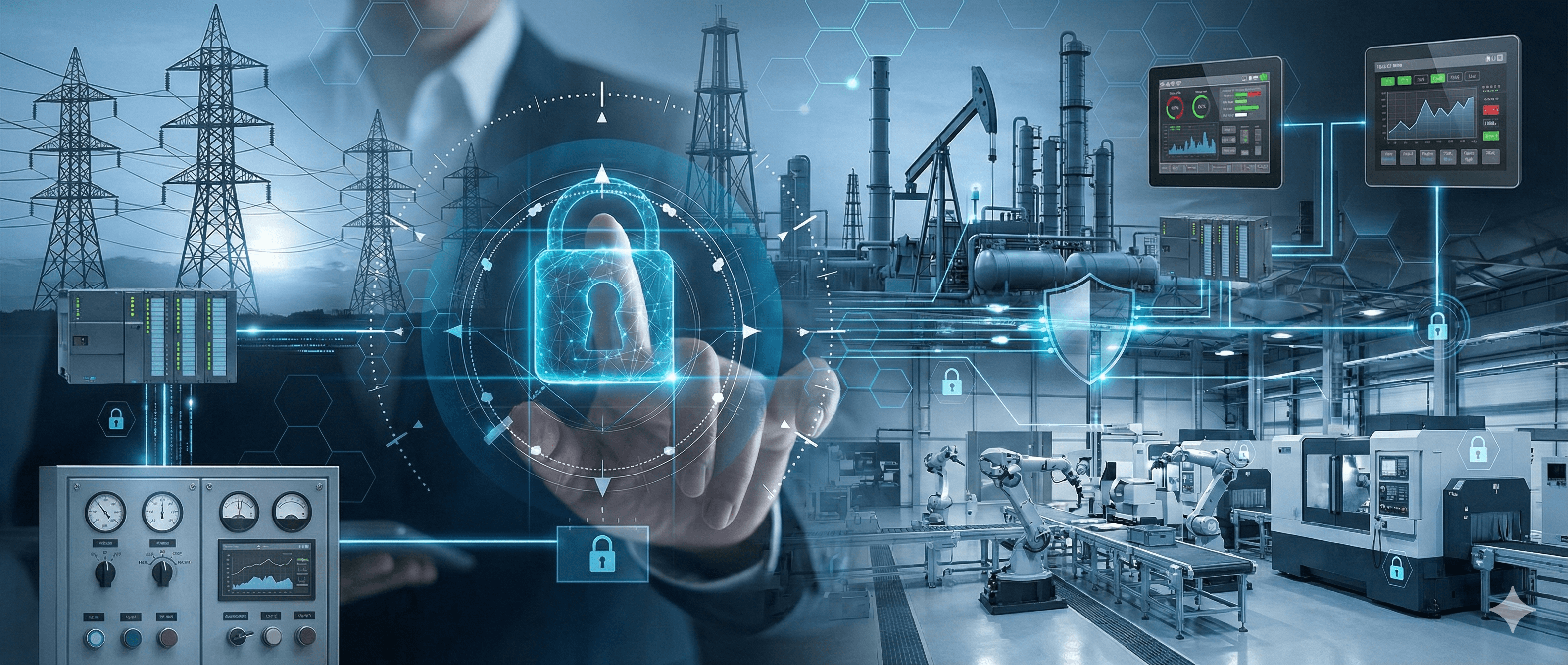
Power plants, transmission and distribution substations, pumping stations and water treatment facilities need fast, precise remote access for operators, field engineers and third-party vendors. But unmanaged remote access - VPNs with broad privileges, jump servers, and unrecorded vendor sessions - creates one of the clearest attack vectors into OT networks. Shieldworkz delivers a Zero-Trust, OT-aware Secure Remote Access capability that provides least-privilege connectivity, full session auditability, and OT-safe enforcement so utilities can enable remote work without exposing critical control systems. 

The operational reality for power & water operators 

Utilities run continuous, safety-critical services across widely distributed sites. Many field assets - RTUs, IEDs, PLCs, protection relays and legacy SCADA components - have long lifecycles and limited patchability. Remote access must support these constraints while delivering rapid troubleshooting and maintenance. Security controls that interrupt control loops, impede time-sensitive operations, or produce opaque alerts are unacceptable. Shieldworkz is purpose-built to balance security with operational continuity: granular access, OT protocol awareness, and controls that default to non-disruptive containment. 

Threats driven by insecure remote access (real-world risks) 

Compromised third-party credentials: Vendor or contractor credentials abused to reach engineering workstations, HMIs, or historians. 

Jump-box pivoting: Static jump servers create a single point of compromise enabling ransomware or attacker lateral movement. 

Over-privileged VPN access: Broad network VPNs circumvent segmentation and allow escalation from IT into OT. 

Session hijacking & telemetry manipulation: Unrecorded or unmonitored sessions let adversaries inject commands or spoof sensor and meter data. 

Insufficient forensics: Incomplete session logs and missing packet captures slow investigations and complicate regulatory reporting. 

Use cases - how insecure remote access becomes an incident (and how Shieldworkz prevents it) 

Our guide distills complex concepts into actionable insights, empowering you to conduct a thorough OT cybersecurity gap analysis. Here are the key takeaways:

1. Emergency firmware patch at a remote substation

A vendor must update a protection relay in a remote substation. Instead of giving broad VPN access or a jump server credential, Shieldworkz issues just-in-time access scoped to the specific device and a narrow time window. The session is brokered through a protocol-aware proxy, recorded for audit, and limited to the permitted commands - enabling work to proceed without exposing the wider control network.

2. Rapid triage following anomalous HMI commands

Operators observe unexpected setpoint changes on a feeder HMI. Shieldworkz correlates active remote sessions with network telemetry and historian trends, reconstructs the command timeline, and provides packet-level evidence. Suspect sessions can be suspended or narrowed immediately while preserving essential control traffic, shortening investigation time and reducing outage risk. 

3. Replace jump servers and reduce attack surface 

A utility relies on dozens of jump servers for remote maintenance across hundreds of sites. Shieldworkz replaces jump servers with role-based, per-asset access policies, MFA, and session recording. Static admin pathways are eliminated, lateral movement opportunities shrink, and operator productivity increases because authorized sessions are faster and auditable. 

4. Secure field crews with intermittent connectivity

Field teams at pumping stations often work with low bandwidth or intermittent links. Shieldworkz uses lightweight field gateways and resilient session brokering so technicians can connect, complete maintenance tasks, and have the session captured for later review - all without opening inbound ports on the site firewall.

How Shieldworkz detects risky remote access - technical approach 

Identity and device assurance: Enforce MFA, device posture checks, and contextual risk scoring (user, device, location, time) before any session is allowed. 

Just-in-time, least-privilege sessions: Connections are brokered to a single asset or application for a defined time window; no blanket network access is granted. 

Protocol-aware brokering: Sessions are proxied and translated in a way that respects industrial protocols (DNP3, IEC 61850, Modbus, OPC), preventing direct exposure of control interfaces. 

Full session visibility and recording: Command streams, file transfers and optional screen/video captures create immutable audit trails for compliance and forensic readiness. 

Behavioral baselining for sessions: Compare session activity against maintenance baselines to surface unusual commands, file changes, or out-of-hours access. 

Integrated correlation: Combine session metadata with network telemetry, historian data and endpoint events to produce high-confidence alerts tied to operational impact. 

OT-safe response mechanisms 

Detection without safe response is incomplete. Shieldworkz enforces a layered, safety-first response model: 

Non-disruptive containment: Automatically revoke or narrow a session when high-risk behavior is detected, avoiding automatic shutdowns that would compromise safety. 

Dynamic micro-segmentation: Temporarily isolate suspicious endpoints or vendor sessions at the edge while allowing essential control traffic to proceed. 

On-demand forensic capture: Preserve packet captures, command logs and device snapshots instantly for investigations and regulator evidence. 

Human-in-the-loop escalation: High-impact enforcement actions require engineer approval; automated measures default to containment that keeps control loops intact. 

Deployment models that meet utility constraints 

On-premise and hybrid architectures to satisfy air-gap, latency and data-sovereignty requirements typical in power and water environments. 

Lightweight field gateways for remote substations, pumping stations and distributed assets with constrained connectivity. 

Managed Secure Remote Access service for utilities that want an outsourced model with SLA-backed monitoring and 24/7 support. 

APIs and integrations with IAM, CMDB, SIEM and compliance evidence collection systems so access governance plugs into existing operational workflows. 

Security services to complement technology 

Shieldworkz pairs platform capability with specialist services designed for utility operational realities: 

Remote access policy design: Define least-privilege workflows for vendors, engineers and operators with approval and auditing controls. 

Threat hunting and session analytics tuning: Tailor detection rules to the utility’s operating patterns and seasonal maintenance windows. 

Incident response runbooks and tabletop exercises: Rehearse OT/IT coordination without risking production. 

Compliance readiness and evidence mapping: Produce audit artifacts aligned to regulatory controls and reporting cycles. 

Operator training: Practical training that aligns security actions with process safety and operational procedures. 

Measurable business outcomes 

Adopting Shieldworkz Secure Remote Access delivers tangible benefits that utility leaders track: 

Reduced lateral-movement exposure by removing broad VPNs and jump servers. 

Faster vendor intervention through secure just-in-time access while maintaining full auditability. 

Decreased incident impact and recovery time via real-time session visibility and immediate containment. 

Simplified compliance evidence collection with immutable session logs and packet captures. 

Operational efficiency gains from a single standardized access model for field crews, OEMs and remote operators. 

Common KPIs: reduction in privileged access surface, mean-time-to-isolate (MTTI), time to complete vendor maintenance, and audit evidence preparation time. 

Why Shieldworkz for power & water operators 

Shieldworkz is engineered for the realities of utility OT: distributed assets, legacy devices, high safety requirements and stringent regulatory oversight. We apply Zero-Trust access controls in a way that preserves control-system availability, translates cleanly to industrial protocols, and produces the forensic evidence operators and regulators expect. The result: secure remote access that enables operations rather than obstructs them. 

Next steps - secure remote access without compromise 

If your teams or vendors still rely on unmanaged VPNs, jump servers, or unrecorded remote tools, you’re exposing the grid and water systems to avoidable risk. Book a free consultation with Shieldworkz OT security experts to map your remote access attack surface, see a tailored demo for power and water architectures, and receive a practical roadmap to secure remote access that protects availability, safety and compliance. 

Book your free consultation today - tighten access, speed maintenance, and protect critical infrastructure with Shieldworkz.

Book Your Consultation Today!

By submitting, I consent to receive communications from Shieldworkz, its subsidiaries, partners, and affiliates.

Secure remote access that preserves availability, safety and compliance 

Power plants, transmission and distribution substations, pumping stations and water treatment facilities need fast, precise remote access for operators, field engineers and third-party vendors. But unmanaged remote access - VPNs with broad privileges, jump servers, and unrecorded vendor sessions - creates one of the clearest attack vectors into OT networks. Shieldworkz delivers a Zero-Trust, OT-aware Secure Remote Access capability that provides least-privilege connectivity, full session auditability, and OT-safe enforcement so utilities can enable remote work without exposing critical control systems. 

The operational reality for power & water operators 

Utilities run continuous, safety-critical services across widely distributed sites. Many field assets - RTUs, IEDs, PLCs, protection relays and legacy SCADA components - have long lifecycles and limited patchability. Remote access must support these constraints while delivering rapid troubleshooting and maintenance. Security controls that interrupt control loops, impede time-sensitive operations, or produce opaque alerts are unacceptable. Shieldworkz is purpose-built to balance security with operational continuity: granular access, OT protocol awareness, and controls that default to non-disruptive containment. 

Threats driven by insecure remote access (real-world risks) 

Compromised third-party credentials: Vendor or contractor credentials abused to reach engineering workstations, HMIs, or historians. 

Jump-box pivoting: Static jump servers create a single point of compromise enabling ransomware or attacker lateral movement. 

Over-privileged VPN access: Broad network VPNs circumvent segmentation and allow escalation from IT into OT. 

Session hijacking & telemetry manipulation: Unrecorded or unmonitored sessions let adversaries inject commands or spoof sensor and meter data. 

Insufficient forensics: Incomplete session logs and missing packet captures slow investigations and complicate regulatory reporting. 

Use cases - how insecure remote access becomes an incident (and how Shieldworkz prevents it) 

Our guide distills complex concepts into actionable insights, empowering you to conduct a thorough OT cybersecurity gap analysis. Here are the key takeaways:

1. Emergency firmware patch at a remote substation

A vendor must update a protection relay in a remote substation. Instead of giving broad VPN access or a jump server credential, Shieldworkz issues just-in-time access scoped to the specific device and a narrow time window. The session is brokered through a protocol-aware proxy, recorded for audit, and limited to the permitted commands - enabling work to proceed without exposing the wider control network.

2. Rapid triage following anomalous HMI commands

Operators observe unexpected setpoint changes on a feeder HMI. Shieldworkz correlates active remote sessions with network telemetry and historian trends, reconstructs the command timeline, and provides packet-level evidence. Suspect sessions can be suspended or narrowed immediately while preserving essential control traffic, shortening investigation time and reducing outage risk. 

3. Replace jump servers and reduce attack surface 

A utility relies on dozens of jump servers for remote maintenance across hundreds of sites. Shieldworkz replaces jump servers with role-based, per-asset access policies, MFA, and session recording. Static admin pathways are eliminated, lateral movement opportunities shrink, and operator productivity increases because authorized sessions are faster and auditable. 

4. Secure field crews with intermittent connectivity

Field teams at pumping stations often work with low bandwidth or intermittent links. Shieldworkz uses lightweight field gateways and resilient session brokering so technicians can connect, complete maintenance tasks, and have the session captured for later review - all without opening inbound ports on the site firewall.

How Shieldworkz detects risky remote access - technical approach 

Identity and device assurance: Enforce MFA, device posture checks, and contextual risk scoring (user, device, location, time) before any session is allowed. 

Just-in-time, least-privilege sessions: Connections are brokered to a single asset or application for a defined time window; no blanket network access is granted. 

Protocol-aware brokering: Sessions are proxied and translated in a way that respects industrial protocols (DNP3, IEC 61850, Modbus, OPC), preventing direct exposure of control interfaces. 

Full session visibility and recording: Command streams, file transfers and optional screen/video captures create immutable audit trails for compliance and forensic readiness. 

Behavioral baselining for sessions: Compare session activity against maintenance baselines to surface unusual commands, file changes, or out-of-hours access. 

Integrated correlation: Combine session metadata with network telemetry, historian data and endpoint events to produce high-confidence alerts tied to operational impact. 

OT-safe response mechanisms 

Detection without safe response is incomplete. Shieldworkz enforces a layered, safety-first response model: 

Non-disruptive containment: Automatically revoke or narrow a session when high-risk behavior is detected, avoiding automatic shutdowns that would compromise safety. 

Dynamic micro-segmentation: Temporarily isolate suspicious endpoints or vendor sessions at the edge while allowing essential control traffic to proceed. 

On-demand forensic capture: Preserve packet captures, command logs and device snapshots instantly for investigations and regulator evidence. 

Human-in-the-loop escalation: High-impact enforcement actions require engineer approval; automated measures default to containment that keeps control loops intact. 

Deployment models that meet utility constraints 

On-premise and hybrid architectures to satisfy air-gap, latency and data-sovereignty requirements typical in power and water environments. 

Lightweight field gateways for remote substations, pumping stations and distributed assets with constrained connectivity. 

Managed Secure Remote Access service for utilities that want an outsourced model with SLA-backed monitoring and 24/7 support. 

APIs and integrations with IAM, CMDB, SIEM and compliance evidence collection systems so access governance plugs into existing operational workflows. 

Security services to complement technology 

Shieldworkz pairs platform capability with specialist services designed for utility operational realities: 

Remote access policy design: Define least-privilege workflows for vendors, engineers and operators with approval and auditing controls. 

Threat hunting and session analytics tuning: Tailor detection rules to the utility’s operating patterns and seasonal maintenance windows. 

Incident response runbooks and tabletop exercises: Rehearse OT/IT coordination without risking production. 

Compliance readiness and evidence mapping: Produce audit artifacts aligned to regulatory controls and reporting cycles. 

Operator training: Practical training that aligns security actions with process safety and operational procedures. 

Measurable business outcomes 

Adopting Shieldworkz Secure Remote Access delivers tangible benefits that utility leaders track: 

Reduced lateral-movement exposure by removing broad VPNs and jump servers. 

Faster vendor intervention through secure just-in-time access while maintaining full auditability. 

Decreased incident impact and recovery time via real-time session visibility and immediate containment. 

Simplified compliance evidence collection with immutable session logs and packet captures. 

Operational efficiency gains from a single standardized access model for field crews, OEMs and remote operators. 

Common KPIs: reduction in privileged access surface, mean-time-to-isolate (MTTI), time to complete vendor maintenance, and audit evidence preparation time. 

Why Shieldworkz for power & water operators 

Shieldworkz is engineered for the realities of utility OT: distributed assets, legacy devices, high safety requirements and stringent regulatory oversight. We apply Zero-Trust access controls in a way that preserves control-system availability, translates cleanly to industrial protocols, and produces the forensic evidence operators and regulators expect. The result: secure remote access that enables operations rather than obstructs them. 

Next steps - secure remote access without compromise 

If your teams or vendors still rely on unmanaged VPNs, jump servers, or unrecorded remote tools, you’re exposing the grid and water systems to avoidable risk. Book a free consultation with Shieldworkz OT security experts to map your remote access attack surface, see a tailored demo for power and water architectures, and receive a practical roadmap to secure remote access that protects availability, safety and compliance. 

Book your free consultation today - tighten access, speed maintenance, and protect critical infrastructure with Shieldworkz.

Book Your Consultation Today!

By submitting, I consent to receive communications from Shieldworkz, its subsidiaries, partners, and affiliates.

Secure remote access that preserves availability, safety and compliance 

Power plants, transmission and distribution substations, pumping stations and water treatment facilities need fast, precise remote access for operators, field engineers and third-party vendors. But unmanaged remote access - VPNs with broad privileges, jump servers, and unrecorded vendor sessions - creates one of the clearest attack vectors into OT networks. Shieldworkz delivers a Zero-Trust, OT-aware Secure Remote Access capability that provides least-privilege connectivity, full session auditability, and OT-safe enforcement so utilities can enable remote work without exposing critical control systems. 

The operational reality for power & water operators 

Utilities run continuous, safety-critical services across widely distributed sites. Many field assets - RTUs, IEDs, PLCs, protection relays and legacy SCADA components - have long lifecycles and limited patchability. Remote access must support these constraints while delivering rapid troubleshooting and maintenance. Security controls that interrupt control loops, impede time-sensitive operations, or produce opaque alerts are unacceptable. Shieldworkz is purpose-built to balance security with operational continuity: granular access, OT protocol awareness, and controls that default to non-disruptive containment. 

Threats driven by insecure remote access (real-world risks) 

Compromised third-party credentials: Vendor or contractor credentials abused to reach engineering workstations, HMIs, or historians. 

Jump-box pivoting: Static jump servers create a single point of compromise enabling ransomware or attacker lateral movement. 

Over-privileged VPN access: Broad network VPNs circumvent segmentation and allow escalation from IT into OT. 

Session hijacking & telemetry manipulation: Unrecorded or unmonitored sessions let adversaries inject commands or spoof sensor and meter data. 

Insufficient forensics: Incomplete session logs and missing packet captures slow investigations and complicate regulatory reporting. 

Use cases - how insecure remote access becomes an incident (and how Shieldworkz prevents it) 

Our guide distills complex concepts into actionable insights, empowering you to conduct a thorough OT cybersecurity gap analysis. Here are the key takeaways:

1. Emergency firmware patch at a remote substation

A vendor must update a protection relay in a remote substation. Instead of giving broad VPN access or a jump server credential, Shieldworkz issues just-in-time access scoped to the specific device and a narrow time window. The session is brokered through a protocol-aware proxy, recorded for audit, and limited to the permitted commands - enabling work to proceed without exposing the wider control network.

2. Rapid triage following anomalous HMI commands

Operators observe unexpected setpoint changes on a feeder HMI. Shieldworkz correlates active remote sessions with network telemetry and historian trends, reconstructs the command timeline, and provides packet-level evidence. Suspect sessions can be suspended or narrowed immediately while preserving essential control traffic, shortening investigation time and reducing outage risk. 

3. Replace jump servers and reduce attack surface 

A utility relies on dozens of jump servers for remote maintenance across hundreds of sites. Shieldworkz replaces jump servers with role-based, per-asset access policies, MFA, and session recording. Static admin pathways are eliminated, lateral movement opportunities shrink, and operator productivity increases because authorized sessions are faster and auditable. 

4. Secure field crews with intermittent connectivity

Field teams at pumping stations often work with low bandwidth or intermittent links. Shieldworkz uses lightweight field gateways and resilient session brokering so technicians can connect, complete maintenance tasks, and have the session captured for later review - all without opening inbound ports on the site firewall.

How Shieldworkz detects risky remote access - technical approach 

Identity and device assurance: Enforce MFA, device posture checks, and contextual risk scoring (user, device, location, time) before any session is allowed. 

Just-in-time, least-privilege sessions: Connections are brokered to a single asset or application for a defined time window; no blanket network access is granted. 

Protocol-aware brokering: Sessions are proxied and translated in a way that respects industrial protocols (DNP3, IEC 61850, Modbus, OPC), preventing direct exposure of control interfaces. 

Full session visibility and recording: Command streams, file transfers and optional screen/video captures create immutable audit trails for compliance and forensic readiness. 

Behavioral baselining for sessions: Compare session activity against maintenance baselines to surface unusual commands, file changes, or out-of-hours access. 

Integrated correlation: Combine session metadata with network telemetry, historian data and endpoint events to produce high-confidence alerts tied to operational impact. 

OT-safe response mechanisms 

Detection without safe response is incomplete. Shieldworkz enforces a layered, safety-first response model: 

Non-disruptive containment: Automatically revoke or narrow a session when high-risk behavior is detected, avoiding automatic shutdowns that would compromise safety. 

Dynamic micro-segmentation: Temporarily isolate suspicious endpoints or vendor sessions at the edge while allowing essential control traffic to proceed. 

On-demand forensic capture: Preserve packet captures, command logs and device snapshots instantly for investigations and regulator evidence. 

Human-in-the-loop escalation: High-impact enforcement actions require engineer approval; automated measures default to containment that keeps control loops intact. 

Deployment models that meet utility constraints 

On-premise and hybrid architectures to satisfy air-gap, latency and data-sovereignty requirements typical in power and water environments. 

Lightweight field gateways for remote substations, pumping stations and distributed assets with constrained connectivity. 

Managed Secure Remote Access service for utilities that want an outsourced model with SLA-backed monitoring and 24/7 support. 

APIs and integrations with IAM, CMDB, SIEM and compliance evidence collection systems so access governance plugs into existing operational workflows. 

Security services to complement technology 

Shieldworkz pairs platform capability with specialist services designed for utility operational realities: 

Remote access policy design: Define least-privilege workflows for vendors, engineers and operators with approval and auditing controls. 

Threat hunting and session analytics tuning: Tailor detection rules to the utility’s operating patterns and seasonal maintenance windows. 

Incident response runbooks and tabletop exercises: Rehearse OT/IT coordination without risking production. 

Compliance readiness and evidence mapping: Produce audit artifacts aligned to regulatory controls and reporting cycles. 

Operator training: Practical training that aligns security actions with process safety and operational procedures. 

Measurable business outcomes 

Adopting Shieldworkz Secure Remote Access delivers tangible benefits that utility leaders track: 

Reduced lateral-movement exposure by removing broad VPNs and jump servers. 

Faster vendor intervention through secure just-in-time access while maintaining full auditability. 

Decreased incident impact and recovery time via real-time session visibility and immediate containment. 

Simplified compliance evidence collection with immutable session logs and packet captures. 

Operational efficiency gains from a single standardized access model for field crews, OEMs and remote operators. 

Common KPIs: reduction in privileged access surface, mean-time-to-isolate (MTTI), time to complete vendor maintenance, and audit evidence preparation time. 

Why Shieldworkz for power & water operators 

Shieldworkz is engineered for the realities of utility OT: distributed assets, legacy devices, high safety requirements and stringent regulatory oversight. We apply Zero-Trust access controls in a way that preserves control-system availability, translates cleanly to industrial protocols, and produces the forensic evidence operators and regulators expect. The result: secure remote access that enables operations rather than obstructs them. 

Next steps - secure remote access without compromise 

If your teams or vendors still rely on unmanaged VPNs, jump servers, or unrecorded remote tools, you’re exposing the grid and water systems to avoidable risk. Book a free consultation with Shieldworkz OT security experts to map your remote access attack surface, see a tailored demo for power and water architectures, and receive a practical roadmap to secure remote access that protects availability, safety and compliance. 

Book your free consultation today - tighten access, speed maintenance, and protect critical infrastructure with Shieldworkz.
Book Your Consultation Today!

By submitting, I consent to receive communications from Shieldworkz, its subsidiaries, partners, and affiliates.